

The act of celebrating a birthday in the Republic of Turkey is a sophisticated blend of modern Western customs and deeply rooted Anatolian traditions, expressed through a language that has undergone significant evolution over the past century. As Turkey continues to be a focal point for international tourism, expatriate relocation, and diplomatic engagement, understanding the linguistic specificities of social milestones such as birthdays has become an essential component of cross-cultural literacy. The Turkish language, a member of the Turkic language family spoken by approximately 80 million people globally, offers a diverse array of greetings for birthdays, each carrying distinct connotations ranging from the formal and religious to the intimate and modern.
The Linguistic Framework of Turkish Birthday Greetings
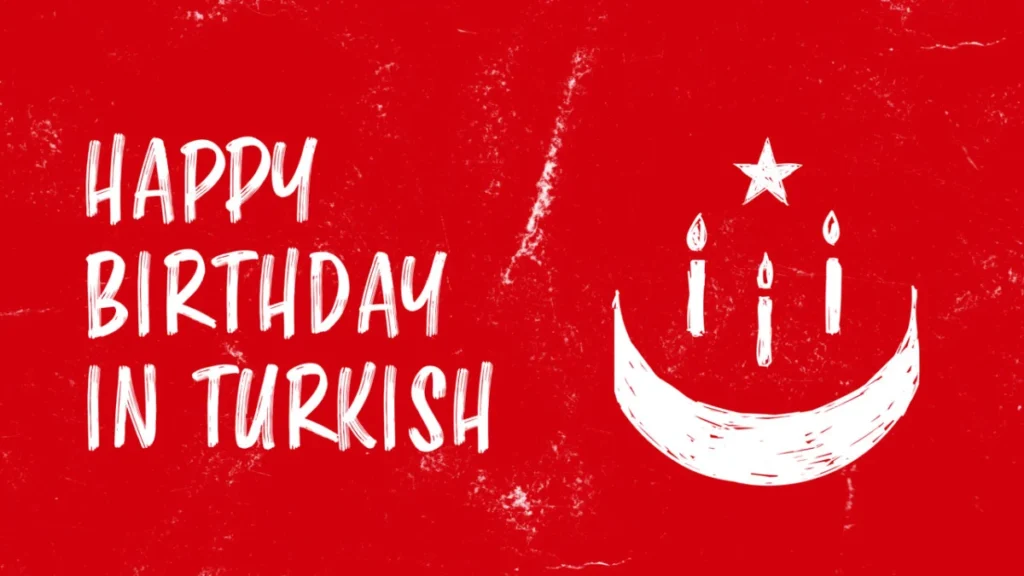
To comprehend the various ways to wish someone a "Happy Birthday" in Turkish, one must first recognize the structural nature of the language. Turkish is an agglutinative language, meaning that prefixes and suffixes are added to root words to modify meaning, tense, and social context. In the context of birthdays, the most standardized and widely recognized phrase is "Doğum günün kutlu olsun."
This primary phrase can be deconstructed into its constituent parts to reveal its literal meaning: "Doğum" (birth), "günün" (your day), and "kutlu olsun" (may it be blessed or celebrated). While "kutlu" historically carries a connotation of being "blessed" or "sacred," in modern parlance, it serves as the standard equivalent to "happy" in the context of celebrations. For more formal or plural settings—such as addressing an elder or a group—the phrase is modified to "Doğum gününüz kutlu olsun," reflecting the Turkish grammar’s distinction between formal and informal "you."
In recent years, the digital revolution has prompted a shift toward linguistic brevity. Much like the English acronym "HBD," Turkish youth and social media users frequently employ "DGKO." This abbreviation represents "Doğum günün kutlu olsun" and has become a staple of communication on platforms such as WhatsApp, Instagram, and X (formerly Twitter). This trend reflects a broader global movement toward the "alphabetization" of emotional expression, though traditionalists continue to advocate for the full spoken phrase during face-to-face encounters.
Chronology of a Turkish Birthday Celebration
A typical birthday celebration in Turkey follows a specific cultural chronology that mirrors European traditions but is infused with local hospitality. The process generally begins with the "tebrik" (congratulation) phase, which occurs early in the day.
-
The Morning Greeting: Family members and close friends are expected to call or message early. The phrase "İyi ki doğdun" is frequently used here. Translating literally to "It is good that you were born," this expression is considered more sentimental and intimate than the standard "Doğum günün kutlu olsun." It is often paired with "İyi ki varsın," meaning "I am glad you exist," emphasizing the value of the individual’s presence in the speaker’s life.
-
The Gathering: Whether held at a home or a "meyhane" (a traditional tavern), the gathering is centered around food. Unlike some Western cultures where the birthday individual might pay for guests, in many Turkish circles, the friends or family of the celebrant will often insist on covering the bill as a gesture of "misafirperverlik" (hospitality).
-
The Cake Ceremony: The centerpiece of the celebration is the "pasta." Interestingly, the Turkish word "pasta" refers specifically to cake, while the English "pasta" (noodles) is referred to in Turkish as "makarna." This linguistic divergence is a common point of confusion for tourists. During the cake-cutting ceremony, guests sing "Mutlu Yıllar Sana," which follows the exact melody of the English "Happy Birthday to You."
-
The Closing: As the event concludes, guests often use the phrase "Nice senelere" or "Nice yıllara." Both phrases translate to "To many more years," signaling a wish for longevity and continued health.
Comparative Analysis of Synonyms: Sene versus Yıl
A unique feature of the Turkish language is the presence of near-perfect synonyms resulting from the language reforms of the 1930s. Under the leadership of Mustafa Kemal Atatürk, the Turkish Language Association (Türk Dil Kurumu) sought to replace Arabic and Persian loanwords with "Öztürkçe" (pure Turkish) equivalents.
The word "sene" is of Arabic origin and was the standard term for "year" during the Ottoman Empire. The word "yıl" is of Turkic origin and was promoted during the republican era. Today, both are used interchangeably in birthday greetings. One might say "Mutlu yıllar" (Happy years) or "Nice senelere" (To many more years). While "yıl" is often seen as more modern or secular, "sene" remains deeply embedded in the vernacular of older generations and in certain poetic contexts.
Statistical data from linguistic surveys suggest that while "yıl" is more prevalent in official academic and journalistic writing, "sene" maintains a 40% usage rate in colloquial speech, particularly in the context of wishing someone a "happy new year" or "happy birthday."
Supporting Data: The Demographics of Celebration
The importance of birthday celebrations in Turkey is bolstered by the nation’s demographic profile. According to the Turkish Statistical Institute (TÜİK), Turkey has a relatively young population compared to the European Union average, with a median age of approximately 33.5 years. This "youth bulge" has fostered a vibrant commercial industry centered around birthdays.
In major urban centers like Istanbul, Ankara, and Izmir, the "celebration economy" has seen a 15% year-on-year growth in sectors such as event planning, boutique bakeries, and gift retail. Furthermore, the rise of the "expat" community—which includes over 1.5 million foreign residents—has led to an increased demand for Turkish language resources. For these residents, mastering birthday greetings is often the first step toward social integration.
Official Responses and Cultural Implications
Sociologists at institutions such as Boğaziçi University have noted that birthday celebrations in Turkey serve as a vital "social glue." In a society that places a high premium on "akrabalık" (kinship) and "dostluk" (friendship), the birthday serves as a mandatory touchpoint for maintaining social networks.
Statements from cultural analysts suggest that the shift from religious-based birthday wishes to more secular ones reflects Turkey’s complex identity. For example, the phrase "Hayırlı yaşlar" (Blessed ages) is still common in more conservative or religious households. The word "Hayırlı" implies a wish for a life that is auspicious and aligned with divine favor. In contrast, "Mutlu yaşlar" (Happy ages) is a more secular, modern alternative.
The linguistic choice between "Hayırlı" and "Mutlu" can often signal the speaker’s social or ideological background, making the simple act of a birthday wish a subtle exercise in cultural navigation.
Broader Impact and Global Reach
The global popularity of Turkish television dramas (Dizi) has had an unexpected impact on the spread of the Turkish language. These shows, exported to over 150 countries, frequently depict elaborate birthday celebrations, introducing international audiences to phrases like "İyi ki doğdun."
As a result, Turkish has become one of the fastest-growing languages on digital learning platforms. For the international community, learning to say "Happy Birthday" in Turkish is not merely about vocabulary; it is about acknowledging the Turkish emphasis on the "önem" (importance) of the individual within the collective.
Conclusion of Linguistic Assets
To summarize the essential vocabulary for any observer or participant in a Turkish birthday event:
- Standard Greeting: Doğum günün kutlu olsun (May your birthday be blessed).
- Sentimental Greeting: İyi ki doğdun (I am glad you were born).
- Longevity Wish: Nice senelere (To many more years).
- General Year Wish: Mutlu yıllar (Happy years—also used for New Year’s).
- Religious/Traditional: Hayırlı yaşlar (Auspicious ages).
By employing these phrases, one does more than communicate a date; one participates in a rich tapestry of Anatolian history and modern Turkish identity. As the language continues to adapt to the digital age, these core expressions remain the foundation of social etiquette in the Republic of Turkey. Whether through a handwritten card signed "En İyi Dileklerimle" (With my best wishes) or a quick "DGKO" text, the sentiment remains the same: a celebration of life, longevity, and the enduring bonds of the Turkish social fabric.