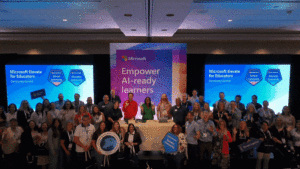


In an era defined by the rapid integration of large language models and generative intelligence, Microsoft has unveiled a comprehensive suite of initiatives aimed at fundamentally restructuring the educational landscape. This expansion, headlined by the "Microsoft Elevate for Educators" program, represents a significant escalation in the company’s long-standing commitment to the academic sector. By combining secure, education-specific technology with aggressive skill-building programs, the initiative seeks to address the dual challenges of teacher burnout and the widening digital divide in the AI era. The announcement comes as part of a broader corporate commitment to help more than 20 million people gain in-demand AI credentials over the next two years, positioning Microsoft as a central architect in the global transition toward AI-augmented learning.
The rollout of these tools and programs is timed to coincide with major industry benchmarks, including the upcoming Bett UK 2026 conference in London. This strategic timing underscores the urgency with which technology providers are moving to capture the education market, which is currently undergoing a paradigm shift. Educators today are faced with the task of not only teaching traditional curricula but also preparing students for a workforce where AI literacy is no longer optional. Microsoft’s latest offerings, ranging from automated lesson planning assistants to on-device AI for student engagement, are designed to serve as a bridge between current pedagogical practices and the requirements of a technology-driven future.
Strategic Vision: The Microsoft Elevate Commitment
The Microsoft Elevate for Educators program is the latest pillar in the company’s "Microsoft Elevate" initiative, a global effort to expand economic opportunity through technical proficiency. For educators, this program offers more than just software; it provides access to one of the world’s largest peer-to-peer educator networks and a repository of free professional development resources. The goal is to demystify AI, moving it from a perceived threat to academic integrity into a functional tool for instructional design.
Central to this mission is the democratization of AI skilling. Microsoft’s target of 20 million credentials by 2027 reflects a massive investment in human capital. In the higher education sector, this is being realized through the AI Skills Navigator and the Microsoft Learn for Educators program. These platforms provide faculty with ready-to-use "Official Courseware," allowing institutions to integrate AI ethics and application into their curricula without the years of lead time typically required for new course development. By providing these resources at no cost to existing Microsoft 365 Education customers, the company is lowering the barrier to entry for underfunded districts and institutions.

A Chronology of Educational Integration
Microsoft’s involvement in education spans over five decades, beginning with basic productivity software and evolving into complex cloud ecosystems. The current shift toward AI-centric tools began in earnest in early 2023 with the initial integration of Copilot into the Microsoft 365 suite. Throughout 2024, the company conducted extensive pilot programs in diverse school districts, including Brisbane Catholic Education in Australia and Broward County Schools in the United States.
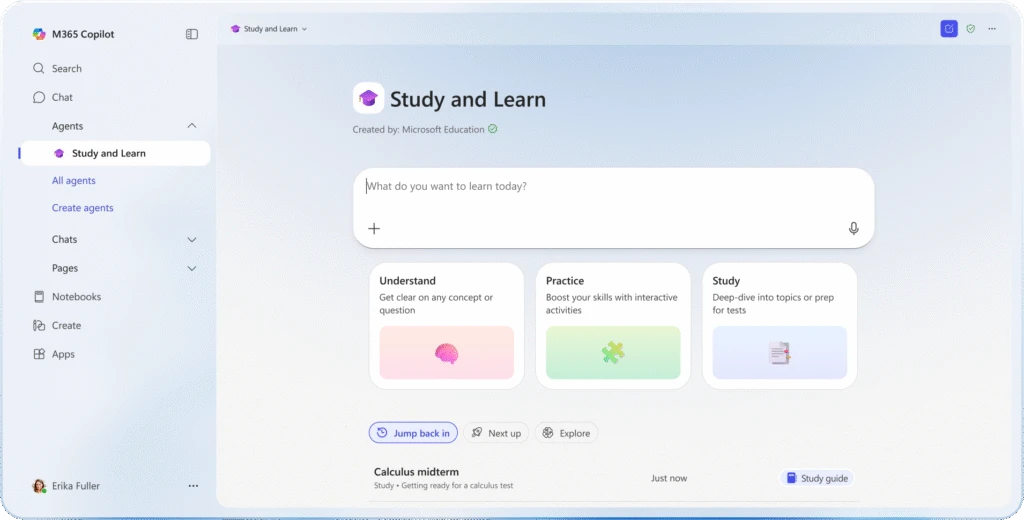
The roadmap for 2025 and 2026 indicates an acceleration of this rollout. The "Teach" assistant and the "Study and Learn Agent" are available immediately for qualifying institutions, while the "Microsoft Learning Zone" is currently optimized for the latest generation of Copilot+ PCs. Looking ahead to late 2026, Microsoft plans to expand its language support for these tools to include Portuguese, French, and German, and will deepen integration with third-party Learning Management Systems (LMS). This timeline suggests a phased approach designed to stabilize the technology in English-speaking markets before a broader global deployment.
Advancing Instructional Efficiency: The "Teach" AI Assistant
One of the primary friction points in modern education is the administrative burden placed on teachers, which often detracts from face-to-face instruction. To combat this, Microsoft has introduced "Teach," a purpose-built AI assistant integrated into the Microsoft 365 Copilot app. Unlike general-purpose AI, Teach is tuned for pedagogical standards. It allows educators to generate lesson plans, design rubrics, and create quizzes with high degrees of customization.
A standout feature of the Teach assistant is its ability to adapt instructional materials to different reading levels. For a classroom with diverse learning needs, a teacher can take a single complex text and use Teach to generate three versions: one for advanced readers, one for the general population, and one for students requiring additional support. This process, which would traditionally take hours of manual labor, can now be completed in minutes. By automating these "back-office" tasks, the tool aims to reclaim time for human connection, which research consistently shows is the primary driver of student success.
Hardware-Software Synergy: The Microsoft Learning Zone and Copilot+ PCs
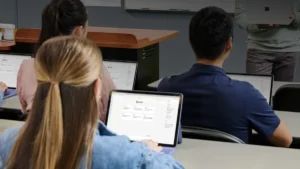
The announcement also highlights the "Microsoft Learning Zone," an application that leverages the Neural Processing Units (NPUs) found in Copilot+ PCs. By moving AI processing from the cloud to the device, Microsoft is able to offer more responsive and secure interactive experiences. The Learning Zone has already received the ISTE Seal of Alignment, a prestigious recognition indicating that the software adheres to research-backed teaching practices and high standards of usability.
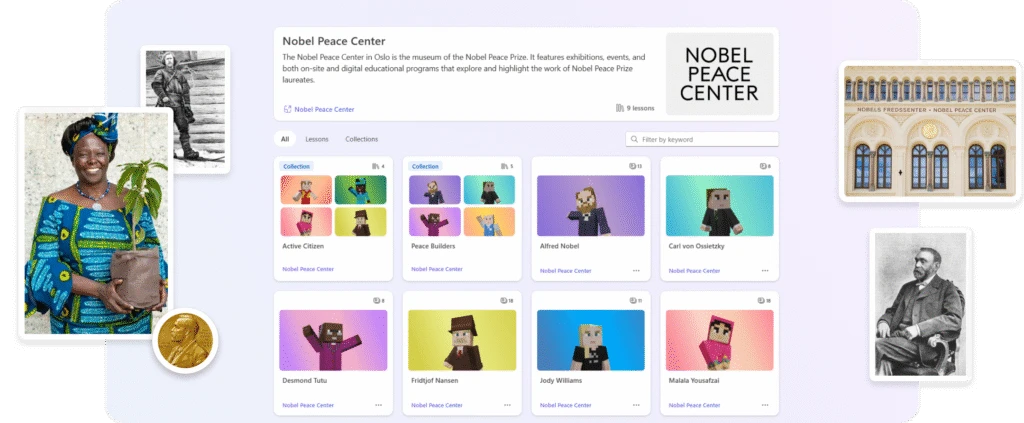
The content within the Learning Zone is curated from a prestigious list of partners, including NASA, OpenStax, and the Nobel Peace Center. For example, a new lesson collection from the Nobel Peace Center allows students to explore the lives of laureates like Malala Yousafzai through interactive storytelling and companion activities in Minecraft Education. This multi-modal approach—combining text, AI-driven feedback, and gamified environments—is designed to increase student engagement in subjects that are often perceived as abstract or distant.
Empowering Student Autonomy: The Study and Learn Agent
For students aged 13 and older, Microsoft has launched the Study and Learn Agent. This tool is built on established learning science principles, such as scaffolding and retrieval practice. Rather than simply providing answers to questions—a common criticism of early generative AI—the Study and Learn Agent acts as a tutor. It guides students through complex concepts, offers adaptive exercises, and helps them build critical thinking skills through guided inquiry.
The agent includes features such as digital flashcards, matching exercises, and practice quizzes that adapt in difficulty based on the student’s performance. This level of personalization mimics the experience of one-on-one tutoring, which has long been considered the "gold standard" of education but has historically been inaccessible to the average student due to cost. By providing this as part of the Microsoft 365 Education package, the company is effectively scaling personalized learning to millions of users simultaneously.
Bridging the Gap Between Academia and Industry
In the higher education sector, Microsoft is addressing the "skills gap" that often exists between graduation and employment. For a limited time, eligible higher education students can access a 12-month bundle of Microsoft 365 Premium and LinkedIn Premium Career at no additional cost. This offer is designed to assist students in the transition from campus life to the professional world.
LinkedIn Premium Career provides students with insights into how they compare to other applicants for specific roles, while Microsoft 365 Premium offers the AI-powered tools needed to create professional portfolios and research papers. This move is supported by data from the IDC White Paper, "A Blueprint for AI-Ready Schools," which suggests that institutions focusing on "career readiness" via AI integration see higher rates of student placement and satisfaction.
Cybersecurity and Responsible AI Implementation
As AI tools become more prevalent, the risks associated with data privacy and cybersecurity have intensified. Education institutions are frequent targets for ransomware and data breaches. In response, Microsoft has introduced the "Microsoft Education Security Toolkit." This resource provides school leaders with a framework for strengthening their cybersecurity posture while navigating the complexities of AI adoption.
The company is also emphasizing "Responsible AI," a set of ethical guidelines intended to prevent bias and ensure transparency in AI-generated content. The "Microsoft Education AI Toolkit" provides snapshots of AI usage and real-world case studies to help administrators implement these technologies without compromising student safety or institutional integrity. By providing these frameworks, Microsoft is positioning itself as a "trusted advisor" rather than just a software vendor.
Industry Analysis: The Broader Implications for Global Education
The introduction of Microsoft Elevate for Educators marks a pivotal moment in the "AI arms race" between major technology firms. While competitors like Google and Apple have also introduced AI features into their educational ecosystems, Microsoft’s deep integration across hardware (Copilot+ PCs), software (Microsoft 365), and professional networking (LinkedIn) creates a formidable and cohesive environment.
Analysts suggest that the long-term impact of these tools will be measured by their ability to reduce educational inequity. If AI tools can indeed provide high-quality tutoring and instructional support to students in under-resourced areas, the "achievement gap" could theoretically begin to close. However, the reliance on high-end hardware like Copilot+ PCs for certain features remains a point of contention, as it may create a new form of the digital divide between schools that can afford the latest devices and those that cannot.
Ultimately, Microsoft’s strategy hinges on the belief that AI is a "powerful complement to educator expertise" rather than a replacement for it. By focusing on "reclaiming time" for teachers and "nurturing curiosity" in students, the company is attempting to frame AI as a human-centric evolution of the classroom. As these tools roll out globally through 2026, the education sector will serve as a primary testing ground for whether AI can fulfill its promise of transforming potential into reality on a global scale.