
Microsoft has announced a sweeping expansion of its artificial intelligence ecosystem within the global education sector, introducing a suite of specialized tools designed to alleviate administrative burdens for educators and enhance personalized learning for students. The technological roadmap includes the debut of "Teach," an AI-driven platform for instructional design, and "Study and Learn," an advanced learning agent, alongside a significant pricing adjustment for Microsoft 365 Copilot specifically tailored for academic institutions. These developments come as the tech giant seeks to consolidate its position in the competitive educational technology market, moving beyond simple generative text toward sophisticated, curriculum-aligned agents.
A Strategic Shift in Educational Technology
The announcement is grounded in findings from the 2025 AI in Education Report, which indicates that more than 80% of stakeholders in the academic community have already integrated some form of artificial intelligence into their workflows. However, the report also highlighted a gap between general-purpose AI usage and the specific, nuanced needs of the classroom. Microsoft’s latest offerings are positioned as a response to this gap, focusing on "learning science" rather than mere content generation.
By prioritizing tools that support the process of knowledge acquisition, Microsoft is attempting to pivot the conversation away from concerns regarding AI-assisted academic dishonesty and toward the potential for "nurturing the growth of skills over time." This strategy involves deep integration into the existing Microsoft 365 suite, which is already a staple in many of the world’s largest school districts and higher education institutions.
Empowering Educators through the Teach Platform
At the center of the new educator-focused rollout is "Teach," a feature set within the Microsoft 365 Copilot app. Designed to function as a digital teaching assistant, Teach allows educators to streamline the more labor-intensive aspects of instructional design. The platform provides a centralized hub where teachers can generate lesson plans, draft comprehensive rubrics, and create quizzes with minimal manual input.
Beyond basic drafting, the Teach tool includes advanced modification capabilities. Educators can instruct the AI to adjust the reading level of a text, translate materials into different languages to support ESL students, or align content with specific state or national academic standards. This functionality is being rolled out at no additional cost for existing education customers. While the initial release focuses on the Copilot app, Microsoft has confirmed that future updates will include direct integration into major Learning Management Systems (LMS), allowing teachers to manage their AI-enhanced curriculum directly within platforms like Canvas or Blackboard.
Enhancing Student Agency with Study and Learn
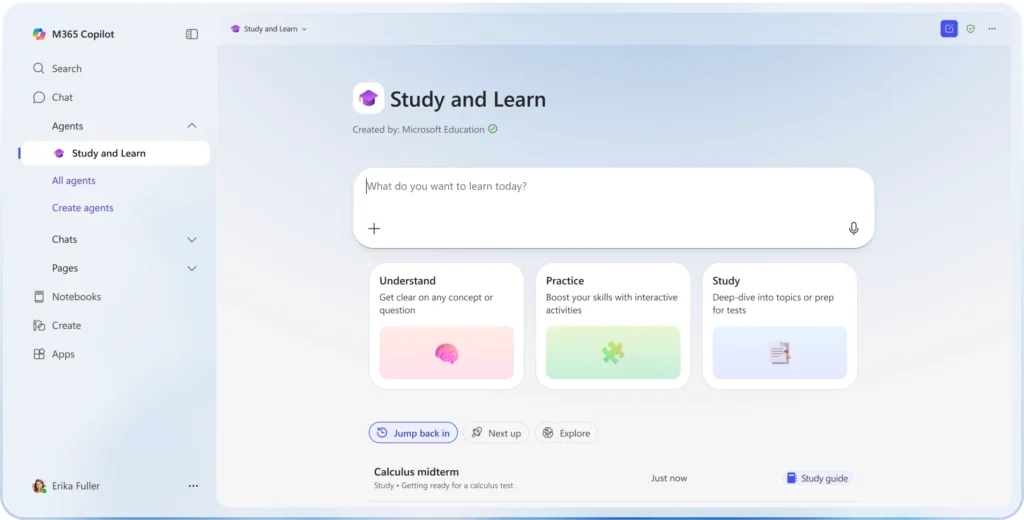
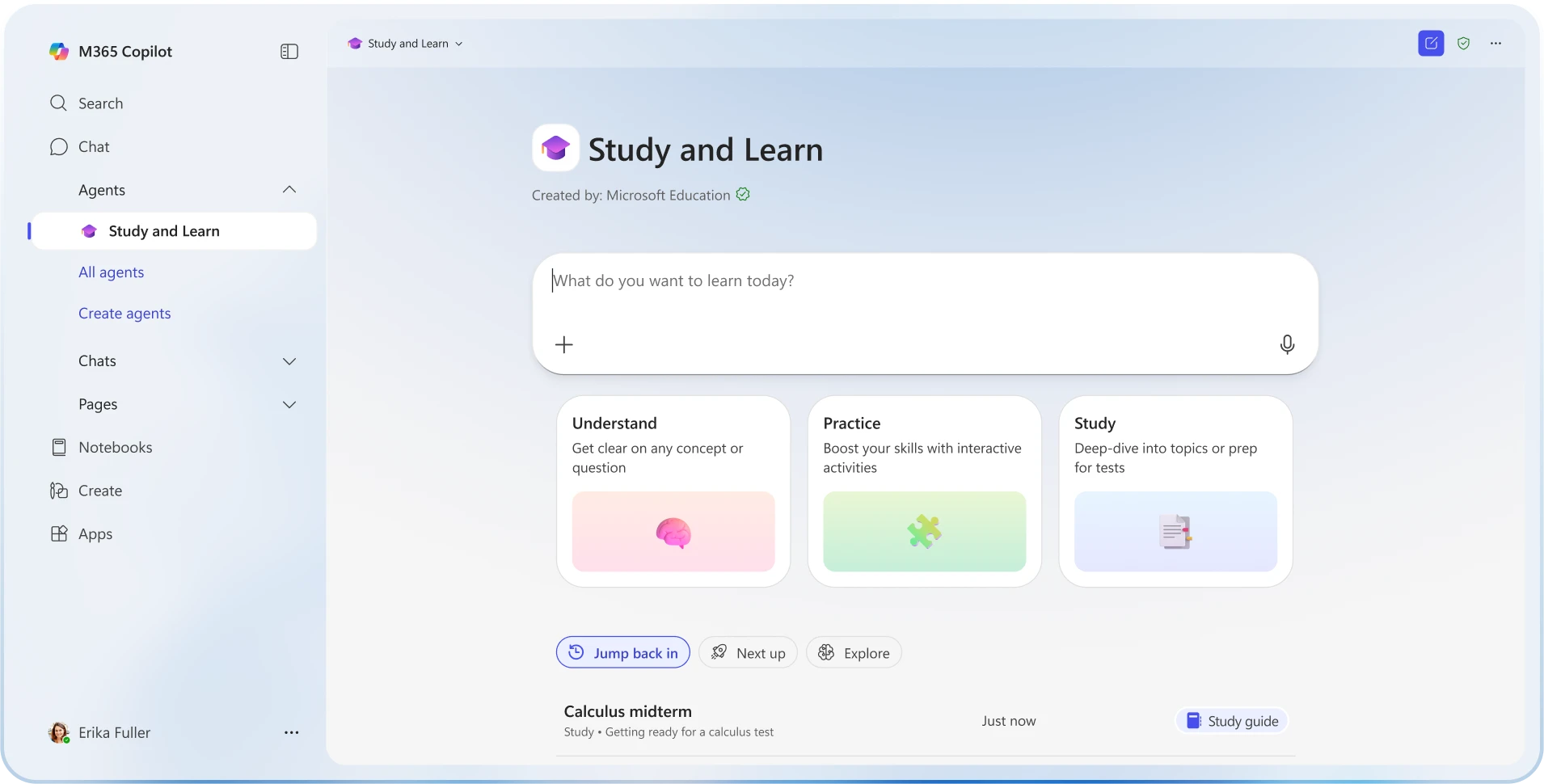
For the student demographic, Microsoft is introducing "Study and Learn," an advanced AI agent scheduled for preview in November 2025. Unlike standard chatbots, this agent is built on principles of adaptive learning. It is designed to foster critical and reflective thinking by offering a variety of interactive modes. Students can choose to engage in a traditional chat for clarification on complex topics or utilize built-in activities such as digital flashcards, matching exercises, and fill-in-the-blank quizzes.

The objective of Study and Learn is to provide a low-stakes environment for practice and mastery. By providing immediate feedback, the tool mimics the benefits of one-on-one tutoring, a luxury often unavailable in large classroom settings. Like the Teach platform, Study and Learn will be available at no additional cost, reflecting a broader corporate strategy to democratize access to high-end AI tools in the public sector.
Chronology of Rollouts and Pricing Structures
Microsoft has outlined a clear timeline for these implementations to allow institutional IT departments to prepare for the transition.
- Current Rollout: The "Teach" features are currently beginning their rollout within the Microsoft 365 Copilot app for existing education customers.
- November 2025: The "Study and Learn" student agent will enter its preview phase.
- December 2025: Microsoft will launch its specific academic offering for Microsoft 365 Copilot. This will be priced at $18 per user per month for educators, staff, and students aged 13 and older. This price point is significantly lower than the standard commercial rate, signaling a concerted effort to capture the academic market.
- December 2025 (Integration): Copilot Chat will become accessible within major LMS platforms, including Canvas, Schoology, Brightspace, Blackboard, and Moodle, through the Microsoft 365 Learning Tools Interoperability (LTI) standard.
Data-Driven Results: Institutional Case Studies
The expansion is supported by empirical evidence gathered from early adopters across various academic tiers. These case studies provide a glimpse into the potential productivity gains afforded by deeply integrated AI.
At Brisbane Catholic Education, a CIO-led initiative found that educators and staff saved an average of nine hours per week on administrative and planning tasks. Leigh Williams, the institution’s CIO, noted that this time recovery allows staff to refocus on student wellbeing and personalized instruction—areas that often suffer due to the volume of paperwork.
Similarly, the University of South Carolina reported that 84% of its Copilot users, including students, saved between one and five hours weekly. Professors at the university highlighted an improvement in the quality of academic output, noting that the AI handled the synthesis of data and preliminary research, allowing them to dedicate more time to high-value mentoring and original research. Administrators also cited faster decision-making processes facilitated by the AI’s ability to summarize complex institutional data.
The Rise of Custom AI Agents in Campus Operations
A significant portion of Microsoft’s announcement focused on the transformative power of "agents"—AI entities designed to perform specific tasks or workflows autonomously. The University of South Florida (USF) has emerged as a leader in this space, utilizing Microsoft’s framework to build custom agents for diverse campus needs.
The USF IT team has developed agents to handle travel policy inquiries, IT help desk support, and commencement logistics. Furthermore, the College of Medicine is partnering with IT to create an advanced accreditation system and interactive student handbooks. These agents are not merely informational; they are operational tools that reduce manual reporting time and expedite inventory analysis.
In the K-12 sector, Broward County Public Schools is experimenting with agents for career readiness. Their initiatives include a resume and job description analyzer and an interactive quiz engine designed to boost engagement. By building these tools on top of the Microsoft 365 ecosystem, these institutions are ensuring that their data remains protected within a secure enterprise environment, addressing one of the primary concerns regarding AI adoption in schools: data privacy.
Broader Implications and Industry Analysis
Microsoft’s move to offer these tools at no additional cost, while simultaneously launching a subsidized $18 premium tier, reflects the "freemium" model common in software-as-a-service (SaaS), but with a high-stakes academic twist. By embedding these tools into the foundational layers of the educational experience, Microsoft is building long-term ecosystem loyalty among students who will eventually enter the professional workforce.
The inclusion of GPT-5 capabilities and enterprise data protection is a direct challenge to competitors like Google Workspace for Education and OpenAI’s ChatGPT Team. Microsoft’s advantage lies in its "Copilot Control System," which gives institutional IT administrators granular control over how data is used and shared. This is a critical factor for schools bound by strict student privacy laws such as FERPA in the United States or GDPR in Europe.
Furthermore, the integration of "Learning Accelerators" like Reading Coach and partnerships with organizations like Khan Academy (through Khanmigo) demonstrates a holistic approach. Microsoft is not just providing a tool; it is providing a curated curriculum environment. This level of integration suggests that the future of education will be defined by a hybrid model where AI manages the "mechanics" of learning—grading, scheduling, and basic tutoring—while human educators focus on the "socio-emotional" and "critical thinking" aspects of pedagogy.
Conclusion and Future Outlook
As the academic world moves toward the 2025-2026 school year, the impact of these AI integrations will become more pronounced. The success of Microsoft’s strategy will likely depend on the ease of adoption and the actualized time savings for overworked educators. If the results from Brisbane and South Carolina can be replicated at scale, the $18 monthly investment for the premium Copilot tier may become a standard line item in institutional budgets worldwide.
For now, Microsoft is offering various entry points for those hesitant to commit to a full-scale rollout. With GitHub Copilot Pro remaining free for students and educators, and a 50% discount on Microsoft 365 Personal for college students, the company is ensuring that the next generation of researchers, developers, and leaders is fundamentally trained on Microsoft-aligned AI technology. The journey toward a fully AI-integrated classroom is no longer a theoretical projection; it is a rapidly unfolding reality supported by significant corporate infrastructure and institutional buy-in.