




The inherent human tendency to visualize complex ideas is a powerful pedagogical asset, one expertly harnessed by the strategic application of concept maps. When individuals seek to elucidate intricate subjects, the spontaneous inclination to "show rather than tell" frequently leads to the creation of visual aids. While some concepts, such as mechanical diagrams or architectural blueprints, are intrinsically visual, many abstract ideas benefit immensely from graphic representation. Flowcharts illustrate processes, timelines depict historical sequences, and, perhaps most effectively for fostering deep understanding, concept maps provide a structured visual framework for knowledge. These graphic organizers, sometimes referred to as mind maps or spider maps, fundamentally operate by placing key concepts within "nodes"—typically boxes or bubbles—and connecting them with lines or arrows that clearly delineate their interrelationships. Despite their deceptive simplicity and lack of reliance on advanced technology, concept maps represent an exceptionally potent learning tool, particularly when implemented with an understanding of established cognitive principles.
Leading experts in cognitive science, such as Dr. Kripa Sundar, a specialist in concept mapping research, and Dr. Pooja Agarwal, editor of "Smart Teaching Stronger Learning: Practical Tips from 10 Cognitive Scientists," consistently advocate for the integration of concept mapping into educational practices. Dr. Sundar’s contributions to this collaborative work, which convenes insights from ten cognitive scientists on actionable, evidence-based classroom strategies, highlight the profound impact of visual knowledge representation. Her chapter, specifically dedicated to concept mapping, unpacks the scientific rationale behind its effectiveness and provides concrete methodologies for optimal utilization. This perspective builds upon earlier discussions from the book, which have previously elucidated powerful retrieval practice strategies, further emphasizing a holistic approach to enhancing learning through cognitive science.
The Historical Roots and Theoretical Underpinnings of Concept Mapping
To fully appreciate the efficacy of concept maps, it is essential to trace their intellectual lineage. The concept map was originally developed in the 1970s by Joseph D. Novak, a research scientist and professor emeritus at Cornell University, and his research team. Their work was part of a broader project exploring changes in children’s understanding of science concepts, particularly within the framework of David Ausubel’s assimilation theory of meaningful learning. Ausubel, a prominent educational psychologist, posited that meaningful learning occurs when new information is consciously and non-arbitrarily linked to relevant existing knowledge in a learner’s cognitive structure. This contrasts sharply with rote learning, where information is memorized without being integrated into a broader conceptual framework.
Novak’s innovation was to create a tool that could externalize and visually represent these cognitive structures. He observed that students often struggled to connect disparate pieces of information, leading to fragmented understanding. Concept maps provided a method for students (and teachers) to literally "map out" their knowledge, making the hierarchical and relational aspects of concepts explicit. This foundational work underscored that learning is not merely about accumulating facts but about constructing interconnected networks of meaning. The visual nature of concept maps inherently supports Ausubel’s theory by requiring learners to identify primary concepts, subordinate concepts, and the propositional relationships that bind them, thereby facilitating the assimilation of new knowledge into existing cognitive schema.
Cognitive Science: Why Concept Maps Supercharge Learning

Dr. Sundar consistently describes concept mapping as a "packed strategy," underscoring its multifaceted benefits rooted deeply in cognitive science. As highlighted in an article for the American Federation of Teachers (AFT), numerous meta-analyses have consistently demonstrated the superior effectiveness of concept maps compared to more traditional instructional methods like lectures, unstructured discussions, or mere text summaries. These findings often report moderate to large effect sizes, indicating a significant positive impact on learning outcomes across various disciplines and educational levels.
The profound effectiveness of concept maps can be attributed to their engagement with all three critical stages of memory formation: encoding, storage, and retrieval.
-
Encoding: Concept mapping demands active processing during the encoding phase. Rather than passively receiving information, learners must actively identify key concepts, determine their relative importance, and articulate the relationships between them. This active construction process, involving selection, organization, and integration of information, strengthens the initial learning trace. The visual-spatial organization inherent in concept maps also aligns with the Dual Coding Theory proposed by Allan Paivio, which suggests that combining verbal and visual information creates richer, more robust memory representations, making the information more accessible for later recall. The act of drawing, labeling, and linking requires deeper cognitive engagement than simply reading or listening.
-
Storage: For information to be stored effectively in long-term memory, it needs to be organized into coherent, interconnected networks. Concept maps facilitate this by creating a highly structured and interconnected cognitive framework. When concepts are linked propositionally, they form a web of knowledge rather than isolated facts. This rich network reduces cognitive load during recall because accessing one concept can activate related concepts, creating multiple pathways for retrieval. The hierarchical arrangement often employed in concept maps also mirrors how knowledge is typically organized in expert minds, aiding in the development of more sophisticated mental models.
-
Retrieval: Concept maps act as powerful retrieval cues. When learners construct a map, they are essentially creating an external representation of their internal knowledge structure. Revisiting or reconstructing these maps serves as a potent form of retrieval practice, strengthening memory traces and identifying gaps in understanding. The visual layout provides a contextual framework that can trigger the recall of specific details and relationships. Furthermore, the act of attempting to recall and reconstruct a concept map is itself a form of "desirable difficulty," challenging the learner in a way that deepens retention more effectively than simply re-reading notes. This active recall helps solidify knowledge, making it more resistant to forgetting.
Beyond these memory mechanisms, concept mapping also significantly fosters metacognition. As students build maps, they are constantly reflecting on their own understanding, identifying what they know, what they don’t know, and how different pieces of information fit together. This self-monitoring and self-regulation are crucial for developing independent, strategic learners who can effectively manage their own learning processes.
Best Practices for Maximizing Concept Map Efficacy
While concept maps are inherently powerful, their impact is amplified through strategic implementation. Dr. Sundar emphasizes several best practices that transform these visual tools into truly robust learning instruments.
-
Clarify the Motivation: The initial step in deploying any instructional strategy, including concept mapping, is to articulate its specific purpose. As Dr. Sundar notes, "the first question is why?" Concept maps are versatile and can serve various pedagogical functions: as a group brainstorming activity, a whole-class knowledge synthesis exercise, an individual learning or note-taking aid, or even a formal assessment tool. Understanding the objective—whether it’s to introduce a new unit, review complex material, facilitate problem-solving, or gauge understanding—will dictate the design, complexity, and expected outcomes of the map. For instance, a map designed for collaborative brainstorming might prioritize breadth and novelty, while one for summative assessment would demand accuracy and depth of propositional links.
-
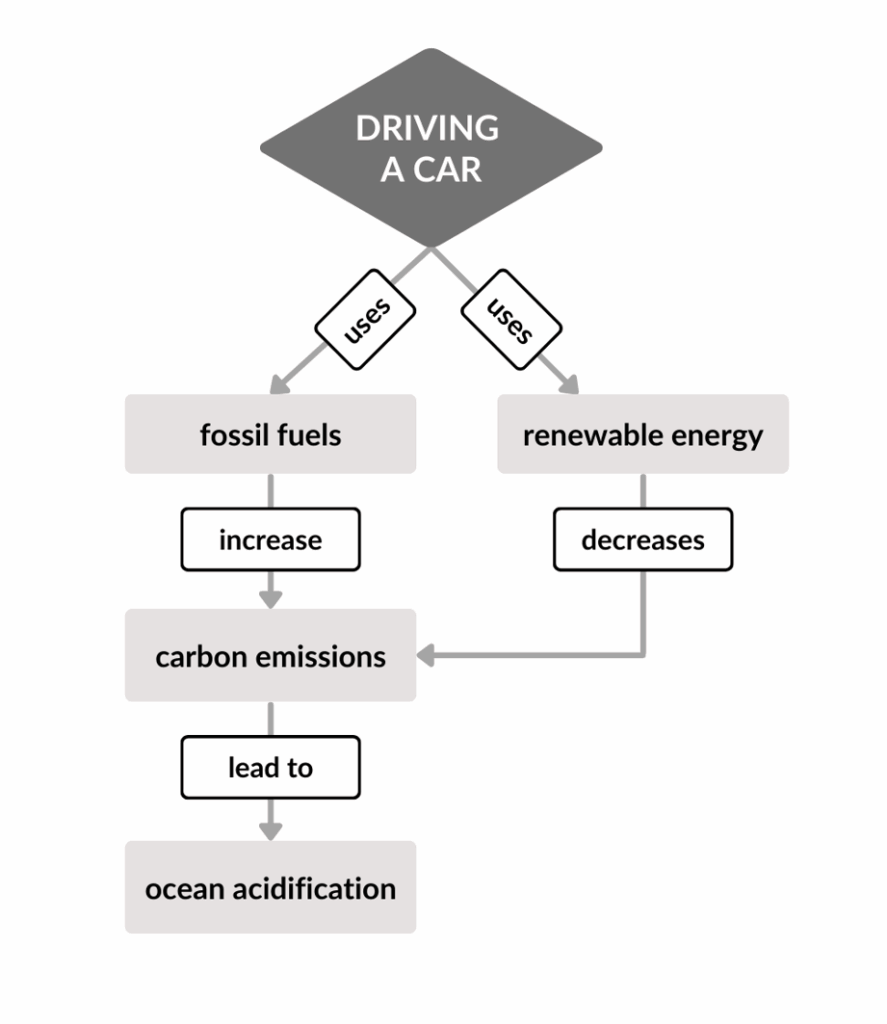
Establish a Guiding Question: To prevent overwhelm and ensure focus, a well-defined guiding question is paramount. This question acts as an anchor, limiting the scope of concepts included and directing the relationships explored. Without a specific query, maps can become sprawling, disorganized collections of terms, losing their analytical power. Dr. Sundar illustrates this with examples related to ocean acidification. A guiding question like "What is the relationship between driving a car and ocean acidification?" leads to a relatively contained and linear map, tracing the specific causal chain from fossil fuel combustion to CO2 emissions, atmospheric accumulation, oceanic absorption, and subsequent acidification effects. In contrast, "What is the relationship between human activities and ocean acidification?" necessitates a far more complex and branching map, encompassing a multitude of industrial, agricultural, and domestic contributions to greenhouse gas emissions, requiring a broader synthesis of human impact. The specificity of the guiding question directly influences the depth and breadth of the conceptual understanding being targeted.
-
Incorporate Linking Words and Directional Arrows: This is arguably the most critical best practice for elevating concept maps from simple visual outlines to sophisticated representations of knowledge. Merely connecting nodes with lines is insufficient; the lines must be accompanied by directional arrows and explicitly labeled with "linking words" (also known as "linking phrases" or "propositions") that precisely describe the nature of the relationship between the connected concepts. For example, instead of just a line between "Driving Car" and "CO2 Emissions," a map should state "Driving Car produces CO2 Emissions." Similarly, "CO2 Emissions contribute to Atmospheric CO2," and "Atmospheric CO2 is absorbed by Ocean Water."
While Dr. Sundar candidly acknowledges that "it is a pain in the beep," the cognitive effort required to formulate these precise linking words is precisely what makes the map such a powerful learning tool. This process forces learners to articulate the semantic relationships between concepts, transforming isolated terms into meaningful propositions. It moves beyond simple recognition to deep comprehension, demanding higher-order thinking skills such as analysis, synthesis, and evaluation. The directional arrows further clarify causality, sequence, or influence, preventing ambiguity and ensuring an accurate depiction of knowledge structure.
Versatile Classroom Applications of Concept Maps
The practical applications of concept maps in educational settings are extensive, offering diverse ways to integrate this powerful tool into daily instruction and assessment.

-
Expert Maps (Teacher-Created): Teachers can construct "expert maps" that visually represent the key concepts and their interrelationships within a specific unit of study. These maps serve as invaluable reference tools for students throughout the unit, providing a coherent "big picture" from the outset. Dr. Sundar emphasizes that expert maps can combat "concept map shock"—the overwhelming feeling students experience when presented with too much information at once. To mitigate this, teachers can strategically reveal the map in stages, beginning with only the most overarching concepts and gradually adding finer details as the unit progresses. This scaffolding approach allows students to incrementally build their understanding, seeing how new information connects to the broader framework rather than perceiving it as disparate facts. Expert maps can also function as "advance organizers," preparing students for upcoming content by providing a conceptual framework into which new information can be integrated.
-
Note-Taking: Concept mapping offers a highly efficient and effective alternative to traditional linear note-taking. Rather than transcribing lengthy paragraphs, students can distill information into key concepts and visually represent their relationships. This method encourages active listening and critical thinking during lectures or reading, as students must identify main ideas, prioritize information, and synthesize content on the fly. Dr. Sundar highlights that visual representations can often capture more information with fewer words, eliminating the need for lengthy explanations and fostering a more concise, interconnected understanding. A practical approach is to maintain a running list of key terms (e.g., on a whiteboard or in student notebooks) and periodically task students with constructing maps that illustrate how these terms are interconnected, reinforcing learning over time.
-
Formative Assessment: Concept maps are an exceptional tool for formative assessment, providing teachers with immediate, granular insights into student understanding and potential misconceptions. By analyzing a student’s concept map, educators can quickly ascertain not only what concepts a student knows but also how they connect those concepts—revealing the depth and accuracy of their cognitive structures. Effective formative assessment strategies include:
- Partially Completed Maps: Presenting students with a map containing some nodes or links and asking them to complete it. This can target specific learning objectives.
- Error Correction: Providing a map with deliberate errors or missing links and asking students to identify and rectify them.
- Specific Node Connection: Giving students a set of concepts and asking them to map out their relationships based on a guiding question.
- Rubric-Based Evaluation: Developing clear rubrics to assess maps based on criteria such as the accuracy of concepts, validity of linking words, presence of hierarchy, and inclusion of cross-links (connections between different branches of the map), which indicate sophisticated understanding. This not only provides grades but offers specific feedback for improvement.
-
Collaborative Learning: Concept mapping lends itself exceptionally well to collaborative activities. Students working in pairs or small groups can collectively construct a map, fostering rich discussions, peer teaching, and the negotiation of meaning. This collaborative process encourages students to articulate their understanding, challenge assumptions, and arrive at a shared conceptual model, strengthening both individual and collective learning.
-
Activating Prior Knowledge: At the commencement of a new unit or topic, asking students to create a concept map of what they already know about the subject can serve as a powerful pre-assessment and a way to activate prior knowledge. This not only helps the teacher gauge the class’s baseline understanding but also helps students connect new information to their existing cognitive frameworks more effectively.
Broader Educational Implications and the Future Landscape
The widespread adoption of concept mapping has significant implications for various facets of education. For curriculum design, it suggests a move towards structuring learning around central concepts and their relationships rather than isolated facts, fostering a more integrated and meaningful learning experience. Teacher training programs increasingly recognize the need to equip educators with the skills to effectively teach and utilize concept mapping, shifting pedagogical focus from content delivery to knowledge construction.
Beyond specific classroom applications, concept mapping empowers student autonomy and critical thinking. By actively constructing their knowledge, students become more engaged, reflective, and capable of self-directed learning. They learn to identify gaps in their understanding and take ownership of their learning journey.
While the fundamental principles of concept mapping remain low-tech and accessible with just paper and pen, the advent of digital tools has expanded its potential. Software like CmapTools (developed by Joseph Novak’s team), MindMeister, Miro, and various online diagramming tools allow for easier editing, collaboration, and integration into digital learning environments. These tools can facilitate the creation of complex, dynamic maps that can be easily shared and modified, further enhancing their utility in modern education. However, it is crucial to remember that the cognitive benefits stem from the process of construction, not merely the aesthetic appeal of the digital output.
Looking ahead, ongoing research continues to explore advanced applications of concept mapping, including its role in personalized learning paths, AI-assisted knowledge assessment through map analysis, and its utility in interdisciplinary studies. As educational policy increasingly emphasizes deeper learning, critical thinking, and transferable skills, evidence-based strategies like concept mapping are poised to play an even more central role in shaping effective pedagogical practices.
In conclusion, concept maps are far more than simple diagrams; they are powerful cognitive tools that align seamlessly with principles of how the human brain learns and remembers. By demanding active processing, fostering organized knowledge storage, and facilitating robust retrieval, they offer a scientifically validated pathway to deeper, more enduring understanding. The insights from cognitive scientists like Dr. Kripa Sundar and Dr. Pooja Agarwal reaffirm that embracing concept mapping is not just an instructional choice, but a strategic investment in cultivating truly meaningful and effective learning experiences for all students.