




The sudden and pervasive rise of the "ShantyTok" phenomenon in early 2021 caught the digital world by surprise, transforming century-old maritime ballads into viral sensations. What began with Scottish singer Nathan Evans’ rendition of "The Wellerman"—a mid-19th-century New Zealand whaling song—quickly evolved into a global appreciation for the rhythmic structures of traditional work songs. While social media users were drawn to the infectious melodies and communal harmonies, new research from cognitive scientists suggests that the true utility of these songs lies far deeper than mere entertainment. According to a study recently published in the Proceedings of the Royal Society B, the structural elements of sea shanties and other work songs serve a critical evolutionary and psychological function: they prevent "joint rushing," a natural human tendency for groups to unintentionally accelerate their pace during repetitive tasks.
The study, led by cognitive researcher Thomas Wolf and his colleagues at Central European University (CEU) in Austria, provides some of the first empirical evidence regarding the efficacy of work songs in a controlled laboratory environment. By analyzing how solo vocalization and rhythmic subdivisions influence group timing, the researchers have shed light on how laborers throughout history managed to maintain grueling physical tempos for hours on end without succumbing to fatigue-induced errors or synchronization failures.
The Viral Catalyst: From Whaling Ships to Social Media
To understand the scientific interest in these folk traditions, one must first look at their cultural resurgence. In late 2020 and early 2021, TikTok and Instagram became unlikely repositories for maritime history. "The Wellerman," which details the arrival of a supply ship owned by the Weller Brothers, resonated with a pandemic-weary public due to its themes of perseverance and collective effort. As millions of users layered their own harmonies over Evans’ original video using the "duet" feature, they inadvertently recreated the very environment for which these songs were designed: a collaborative, rhythmic space where multiple voices align to a single pulse.
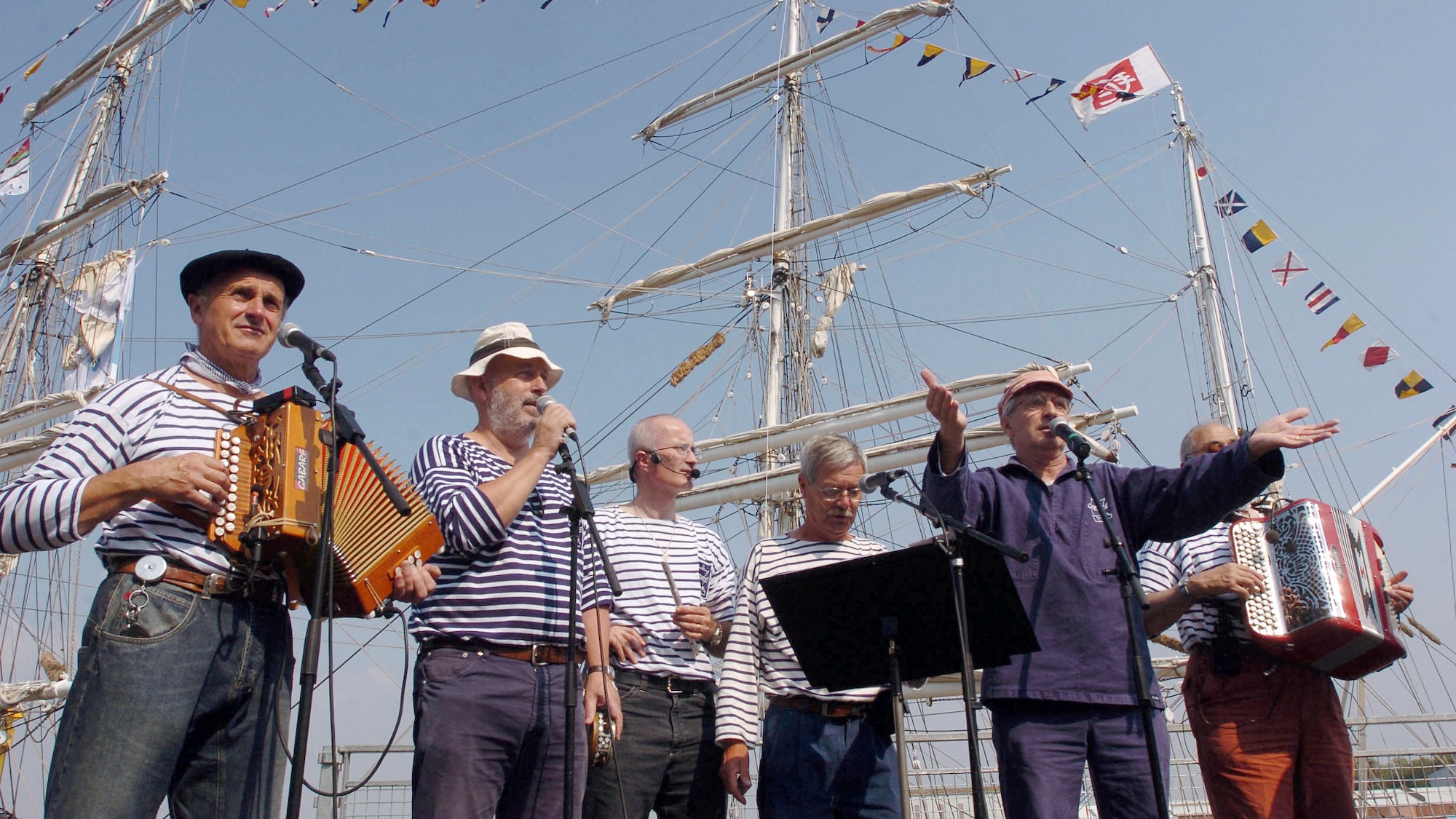
Historically, sea shanties were never intended for the stage. They were functional tools of the maritime trade during the age of sail. Different types of shanties corresponded to different tasks. "Short-drag" or "short-haul" shanties were used for tasks requiring quick, heavy pulls, such as shortening sail. "Halyard" shanties were used for heavier work that required a sustained rhythm, such as hoisting a sail. "Capstan" shanties, which are more melodic and continuous, accompanied the repetitive, circular walking required to raise a heavy anchor. In every instance, the music acted as a metronome for the human body, ensuring that every sailor applied force at the exact same millisecond.
The Phenomenon of Joint Rushing
The CEU study identifies a persistent problem in human group dynamics known as "joint rushing." This phenomenon occurs when individuals working together on a rhythmic task—such as rowing, hammering, or even playing music—unintentionally speed up the tempo over time. This acceleration often happens even when the participants are consciously trying to maintain a steady pace.
"This can happen even when they try to keep a steady tempo, and even among trained musicians," Thomas Wolf noted regarding the findings. Joint rushing is particularly problematic in labor-intensive environments. If a team of rowers or sailors speeds up too much, they risk premature exhaustion, loss of coordination, and mechanical failure of the equipment they are operating.
In cognitive science, this is often attributed to the way the human brain processes feedback from others. When we hear a partner performing an action slightly ahead of us, our natural instinct is to compensate by speeding up our own next action. This creates a feedback loop that results in a steadily increasing tempo. The CEU researchers hypothesized that work songs evolved specific structural features—specifically solo leads and metric subdivisions—to act as a psychological brake on this process.
Methodology: Testing the "Work Song Condition"
To test their theories, Wolf’s team designed a laboratory experiment involving pairs of volunteers. The participants were tasked with tapping a rhythm in synchronization, a common proxy for collective labor in cognitive studies.
The experiment was divided into several phases:
- The Metronome Phase: Participants tapped along to an electronic metronome to establish a baseline tempo.
- The Silent Phase: The metronome was removed, and the pairs were asked to maintain the established tempo on their own. Consistent with previous research, most pairs began to "rush," gradually increasing their tapping speed.
- The Work Song Condition: In this phase, the researchers introduced elements common to the work song tradition. One participant was designated as the "leader" and instructed to count out loud ("one, two, one, two") in time with the tapping. The "one" coincided with the physical action (the tap), while the "two" occupied the "metric subdivision"—the empty space between the actions.
The results were statistically significant. When one person provided a vocalized lead and filled the gaps between actions with rhythmic subdivisions, the joint rushing effect was not merely reduced—it was entirely eliminated. The "work song condition" allowed pairs to maintain a near-perfect tempo for extended periods, far outperforming groups that worked in silence or without a designated leader.
The Role of the Shanty-Man and Metric Subdivision
The study highlights two specific features of the sea shanty that are essential for coordination: the role of the lead singer (often called the "shanty-man") and the use of syllables to fill rhythmic gaps.
In the maritime tradition, the shanty-man was a vital crew member, often excused from the heaviest labor so he could focus on leading the song. By singing the verses solo, the shanty-man provided a stable, external temporal reference for the rest of the crew. Because the crew only joined in for the chorus or specific rhythmic "hits," they were less likely to influence each other’s timing in a way that would lead to rushing.
Furthermore, the lyrics of work songs often include "filler" syllables or rhythmic grunts that coincide with the "backswing" of a task. For example, in a hauling shanty, the lyrics might dictate a pull on a specific beat, but the syllables leading up to that beat help the worker gauge the distance and timing of their movement. This is what cognitive scientists call "metric subdivision." By mentally or vocally dividing a single beat into smaller units, the brain can more accurately track the passage of time, preventing the urge to move too early.

Broader Historical Context of Work Songs
While sea shanties have dominated recent headlines, the CEU study emphasizes that these findings apply to a vast array of global folk traditions. Work songs have emerged independently in nearly every culture where collective physical labor was required.
- Appalachian Coal Miners: Rhythmic chants helped miners coordinate the swinging of pickaxes in cramped, dark quarters where visual cues were impossible.
- Prison Chain Gangs: In the American South, work songs were used to pace the clearing of land and the laying of railroad tracks, often incorporating a call-and-response format that allowed a leader to dictate the speed of work.
- Scottish "Waulking" Songs: Women processing wool (waulking) would sing rhythmic songs to ensure the heavy, wet fabric was beaten against boards at a consistent rate to prevent damage to the fibers.
- Oyster Dredging: As noted by Thomas Wolf, Scottish oyster fishers utilized specific melodies to keep the rowing of their boats steady, ensuring the dredges moved along the seabed at the optimal speed for harvesting.
These traditions demonstrate that the "science" of work songs was understood intuitively by laborers long before it was studied in a lab. The songs were a form of "social technology" that optimized human performance.
Implications for Modern Industry and Safety
The findings of the CEU team extend beyond historical curiosity. The study suggests that the principles of work songs could be applied to modern high-stress environments where group synchronization is essential.
In occupational safety, "joint rushing" remains a risk factor in industries such as construction, assembly line manufacturing, and emergency response. When a team feels pressured or fatigued, they may unintentionally speed up their movements, leading to accidents or reduced quality control. By implementing vocalized cues or rhythmic subdivisions—much like the "one, two" count in the CEU study—teams could potentially mitigate these risks.
The research also has implications for:
- Sports Science: Rowing teams, dragon boat racers, and cycling pelotons already use rhythmic cues. Understanding the cognitive basis of "metric subdivision" could help coaches refine these techniques to prevent mid-race pacing errors.
- Physical Rehabilitation: For patients recovering from strokes or neurological disorders that affect motor control, rhythmic auditory stimulation (RAS) is a known therapy. This study suggests that "solo-lead" vocalization could be a particularly effective way to help patients regulate their movements.
- High-Stress Team Coordination: In surgical suites or military operations, the use of rhythmic verbal protocols may help maintain calm and prevent the "rushing" that often accompanies high-adrenaline situations.
Conclusion: The Enduring Rhythm of Labor
The resurgence of the sea shanty on social media may have been a fleeting trend, but the underlying psychology of the genre remains a fundamental part of the human experience. The research conducted at Central European University proves that these songs were much more than a way to pass the time; they were a sophisticated solution to a complex problem of human biology.
By leveraging the power of a lead voice and the precision of rhythmic subdivision, work songs allowed our ancestors to overcome the natural tendency to rush, enabling them to build the infrastructure of the modern world through collective, synchronized effort. As we move further into a digital age, the study serves as a reminder that some of the most effective solutions to modern coordination problems may be found in the rhythmic traditions of the past. Whether on the deck of a 19th-century whaler or in a 21st-century laboratory, the steady beat of the work song remains a powerful tool for bringing people together in perfect time.