

Microsoft has officially announced the general availability of the Study and Learn agent within Microsoft 365 Copilot, marking a significant strategic shift in how generative artificial intelligence is deployed within academic environments. This new tool, available at no additional cost to Microsoft 365 Education customers, represents a move away from the "answer-bot" model that has characterized early consumer AI, favoring instead a scaffolded, learning-first approach designed specifically for students aged 13 and older. By integrating this agent directly into the existing Microsoft 365 ecosystem, the company aims to address the growing tension between the rapid adoption of AI by students and the concerns of educational institutions regarding academic integrity and cognitive development.
The Evolution of AI in the Classroom: A Necessary Pivot
The release of the Study and Learn agent comes at a critical juncture for global education. Since the public emergence of large language models (LLMs) in late 2022, the primary challenge for educators has been the "shortcut" nature of the technology. Traditional AI interfaces are optimized for speed and completion, often providing direct answers to complex prompts. While efficient for corporate productivity, this model frequently bypasses the struggle and synthesis required for deep learning.
Microsoft’s internal research and broader industry data suggest that while students are eager to use AI to streamline their study habits, many existing tools prioritize "output" over "understanding." This has led to a fragmented landscape where some institutions have banned AI entirely, while others struggle to find tools that align with pedagogical goals. The Study and Learn agent is positioned as a middle ground—a "coaching" interface that facilitates active engagement rather than passive consumption.
Chronology of Microsoft’s Educational AI Development
The trajectory toward the Study and Learn agent reflects a multi-year effort to modernize the classroom through the Microsoft 365 suite.
- Late 2022 – Early 2023: The rapid rise of generative AI prompts a wave of bans across major school districts in the United States and Europe. Microsoft begins testing "Bing Chat" (later Copilot) with enterprise-grade data protection to address privacy concerns.
- Late 2023: Microsoft introduces Copilot for Microsoft 365, focusing initially on teacher productivity—automating lesson plans, grading rubrics, and administrative tasks.
- Early 2024: Feedback from the education sector highlights a gap: students need a controlled environment where AI acts as a tutor rather than a ghostwriter. Pilot programs for "Learning Accelerators" begin.
- May 2024: Microsoft previews specialized agents for education. The "Teach" agent is introduced to assist educators, while the "Study and Learn" agent is developed to focus on the student experience.
- Current Phase: The Study and Learn agent reaches general availability, integrated into the Copilot app and optimized for English (United States), with broader language support scheduled for the coming months.
Pedagogical Foundations: Moving Beyond Generative Output
Unlike standard chat interfaces, the Study and Learn agent is built upon established principles of learning science. Microsoft has identified four research-based pillars that govern every interaction within the agent: scaffolding, retrieval practice, spaced repetition, and metacognitive reflection.

Scaffolding and Socratic Tutoring
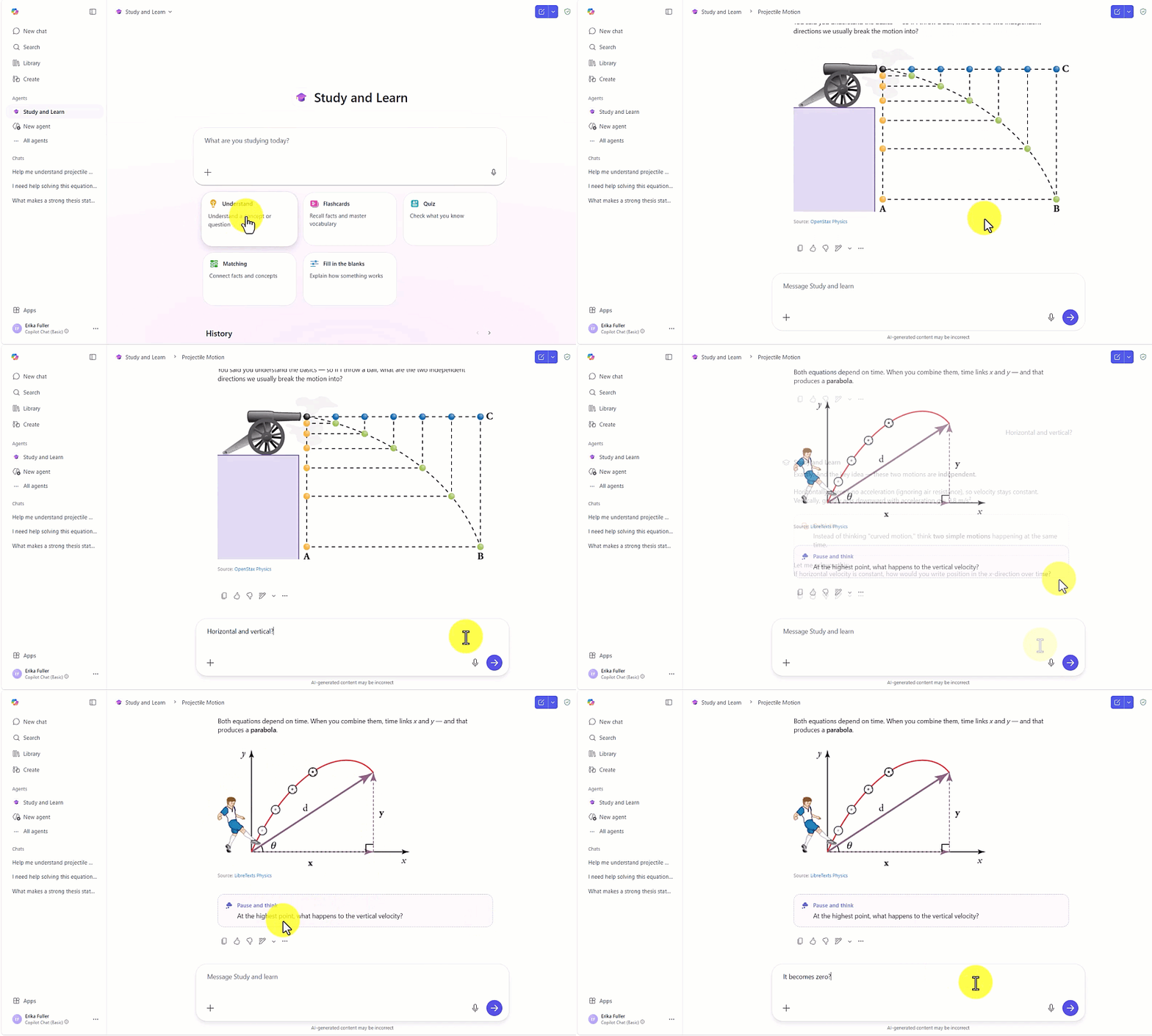
When a student presents a problem—such as a complex calculus equation or a request for a summary of a historical event—the agent is programmed not to provide the final answer immediately. Instead, it breaks the concept down into manageable steps. This "scaffolding" ensures that the student remains the primary driver of the cognitive work. The agent may ask a student to identify the first step of a process or to explain their current understanding before offering further guidance.
Active Retrieval and Interactive Practice
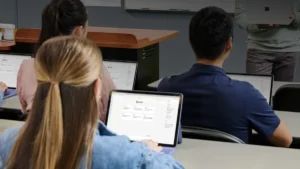
The agent transforms static study materials into active learning sessions. For instance, a student can upload a set of biology notes, and the Study and Learn agent can automatically generate a series of flashcards or matching activities. This leverages "retrieval practice," a proven method for moving information from short-term to long-term memory. By quizzing the student and providing immediate, corrective feedback, the AI simulates the experience of working with a human tutor.
Adapting to Individual Needs
The AI’s ability to pivot based on student input is a cornerstone of the experience. If a student struggles with a particular concept, the agent can provide alternative explanations, utilize visual aids, or offer analogous examples to clarify the material. Conversely, if a student demonstrates mastery, the agent can increase the complexity of the questions to maintain an optimal level of challenge.
Institutional Controls and Data Privacy Frameworks
For school administrators and IT departments, the deployment of AI in K-12 and higher education necessitates rigorous safety protocols. Microsoft has structured the Study and Learn agent to exist within the "walled garden" of an institution’s Microsoft Entra ID (formerly Azure Active Directory) environment.
For K-12 institutions, Copilot Chat is disabled by default for students. Access must be proactively granted by an IT administrator, ensuring that schools retain control over when and how the technology is introduced. Furthermore, because the agent is "first-party," it adheres to Microsoft’s Responsible AI principles and enterprise-grade privacy standards. This means that student data is not used to train the underlying large language models, a common concern with free, consumer-grade AI tools.
The integration into the existing Microsoft 365 app eliminates the need for separate logins or third-party applications, which often pose security risks. By keeping the student within the familiar ecosystem of Word, OneNote, and Teams, the Study and Learn agent provides a seamless transition from content creation to content mastery.

Supporting Data: The Rising Demand for AI Literacy
The urgency of this rollout is supported by recent data regarding AI adoption in schools. According to a 2024 report by the Pew Research Center, roughly 20% of teens who have heard of ChatGPT say they have used it to help with schoolwork. However, a significant percentage of educators (nearly 44%) report that AI use in the classroom is a "major problem" for academic honesty.
Market analysis suggests that the "tutor-bot" market is expected to grow as schools seek ways to provide personalized instruction at scale. By offering the Study and Learn agent at no additional cost to existing license holders, Microsoft is positioning itself as the primary infrastructure provider for "Responsible AI" in education, competing directly with Google Workspace for Education’s recent AI integrations.
Official Responses and Educational Impact
While official reactions from school boards are still emerging as the tool enters general availability, early feedback from Microsoft’s pilot partners suggests a cautious but optimistic reception. Educators have noted that when AI is framed as a "coach," it can actually reduce the workload of teachers by handling routine queries and providing basic tutoring for students who are stuck on homework.
"The goal is not to replace the teacher, but to ensure that the time spent outside the classroom is productive," a Microsoft Education spokesperson noted during a recent briefing. "We want to move the conversation from ‘how do we stop students from using AI’ to ‘how do we ensure the AI they use is actually helping them learn.’"
By providing a tool that "does the thinking for the student," Microsoft is attempting to redefine the utility of the AI agent. In a history context, for example, the agent doesn’t just write an essay; it asks the student to defend their thesis or suggests areas where their argument might need more evidence. This shift encourages independent thinking and helps students develop the "AI literacy" skills that will be required in the future workforce.
Broader Implications and the Future of Personalized Learning
The introduction of the Study and Learn agent is part of a broader "Copilot for Education" vision. This ecosystem includes the "Teach" agent, which assists educators in curriculum design and administrative efficiency. Together, these tools represent a bidirectional approach to AI: one focused on the supply side of education (teaching) and the other on the demand side (learning).
The long-term implications of this technology could be profound. As the Study and Learn agent expands into more languages and incorporates more sophisticated multimodal capabilities—such as the ability to analyze handwritten notes or provide real-time audio tutoring—the barrier to personalized instruction may continue to lower. For students in overcrowded classrooms or those without access to private tutoring, such tools could bridge significant achievement gaps.
However, the success of the Study and Learn agent will ultimately depend on its adoption by IT administrators and the willingness of educators to integrate AI coaching into their curricula. Microsoft has provided a suite of resources, including video walkthroughs and configuration guides, to assist in this transition.
As the 2024-2025 academic year progresses, the education sector will be watching closely to see if "learning-first" AI can truly solve the dilemma of academic integrity while fulfilling the promise of a personalized, 24/7 tutor for every student. For now, Microsoft has laid the groundwork for a more disciplined, scientifically grounded approach to artificial intelligence in the classroom, ensuring that even in an age of automation, the learner remains the one doing the thinking.