


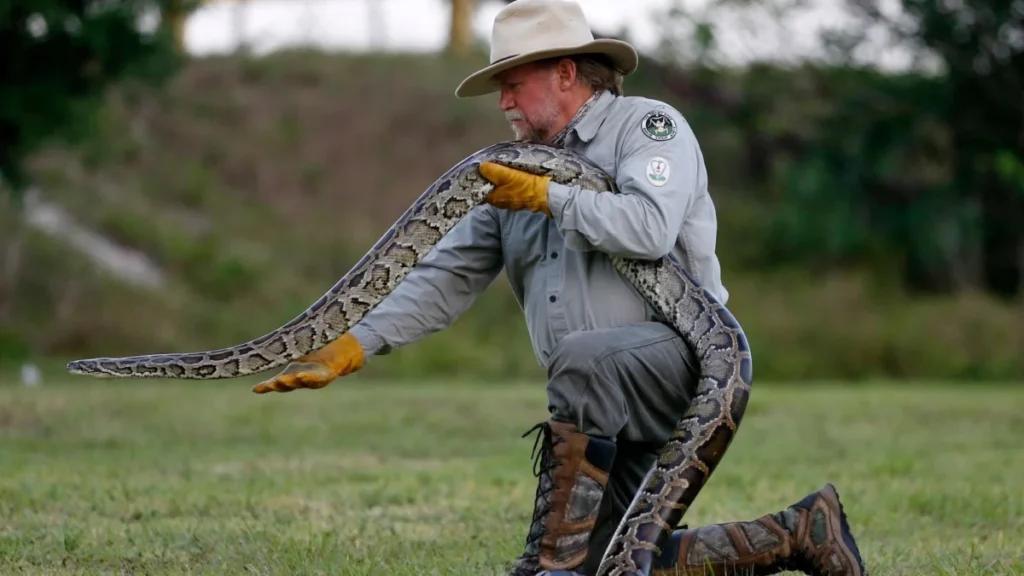
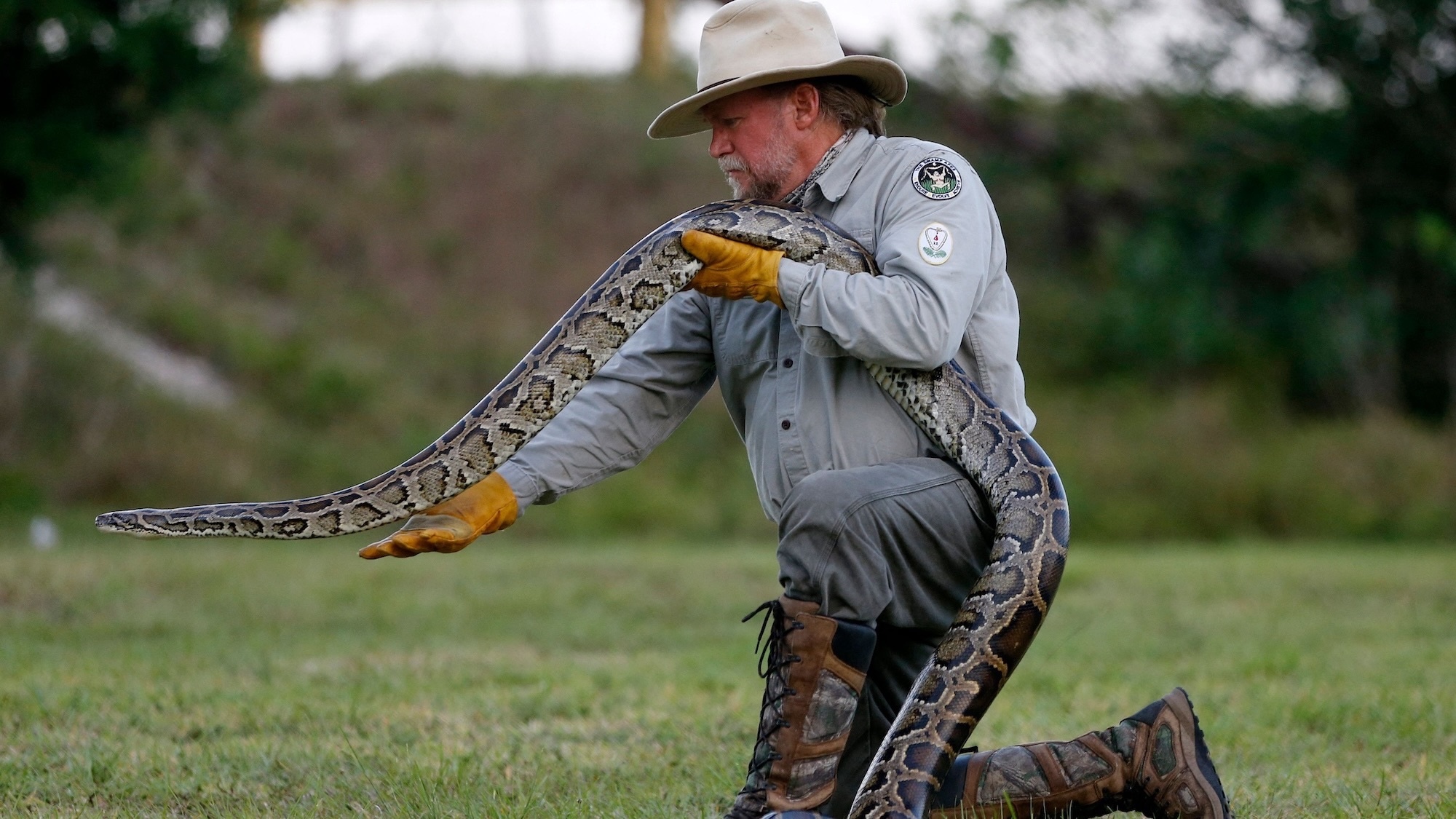
The 2026 Florida Python Challenge officially commenced on July 10, drawing hundreds of participants into the dense, subtropical wetlands of the Everglades for a 10-day intensive effort to mitigate one of the most significant ecological threats in the United States. This annual event, sanctioned by the Florida Fish and Wildlife Conservation Commission (FWC), tasks both professional and amateur hunters with locating and removing the invasive Burmese python (Python bivittatus). With a grand prize of $10,000 for the most snakes captured and an additional $15,000 distributed across categories such as the longest snake retrieved, the competition serves as a high-stakes component of Florida’s broader multi-million-dollar strategy to protect its native biodiversity.
The Scale of the Invasive Threat
The Burmese python is not native to Florida; its presence in the Everglades is the result of the exotic pet trade, with sightings dating back to the 1970s. Over the decades, these constrictors have transitioned from escaped or released pets into the region’s apex predators. Conservationists and biologists estimate that the population now ranges between 100,000 and 300,000 individuals. Their success is attributed to a lack of natural predators in the Western Hemisphere, a highly adaptable diet, and a prolific reproductive rate. A single pregnant female can lay between 50 and 100 eggs in a single clutch, allowing the population to recover quickly even after significant removal efforts.
The impact on the local ecosystem has been nothing short of catastrophic. In areas where pythons have become established, populations of small mammals have plummeted. Research conducted by the U.S. Geological Survey (USGS) has indicated that since the late 1990s, sightings of raccoons have dropped by 99.3%, opossums by 98.9%, and bobcats by 87.5%. In some regions, marsh rabbits and foxes have effectively disappeared. The pythons have also been known to consume larger prey, including white-tailed deer and even American alligators, disrupting the natural food web and outcompeting native predators for resources.
Competition Rules and Participant Safety
As of July 7, over 600 individuals had registered for the 2026 challenge, representing a diverse cross-section of the public, from seasoned professional contractors to out-of-state enthusiasts. The 2025 competition saw more than 900 participants, highlighting the growing public interest in environmental stewardship—and the allure of the cash prizes. However, the FWC emphasizes that the event is a regulated conservation effort rather than a "free-for-all."
Every participant is required to complete an online training course prior to the hunt. This curriculum focuses on species identification—ensuring that native snakes, such as the look-alike water snakes or the protected eastern indigo snake, are not harmed—and safety protocols for navigating the treacherous terrain of the Everglades. While the use of firearms is permitted on private lands with the express permission of the landowner, the majority of the competition takes place on state-managed lands where specific humane euthanasia guidelines must be strictly followed.
The Ethical Mandate: Why Decapitation is Prohibited
One of the most critical aspects of the Florida Python Challenge is the requirement for humane euthanasia. To the uninitiated, decapitation might seem like a quick method of dispatching a snake, but biological experts warn that it is actually a cruel and ineffective practice for reptiles.
Burmese pythons possess exceptionally slow metabolisms and are highly tolerant of low-oxygen environments (hypoxia). Because of this unique physiology, a python’s brain can remain conscious and continue to feel pain for a significant period—sometimes hours—after the head has been severed from the body. Consequently, the FWC prohibits decapitation as a primary means of killing.
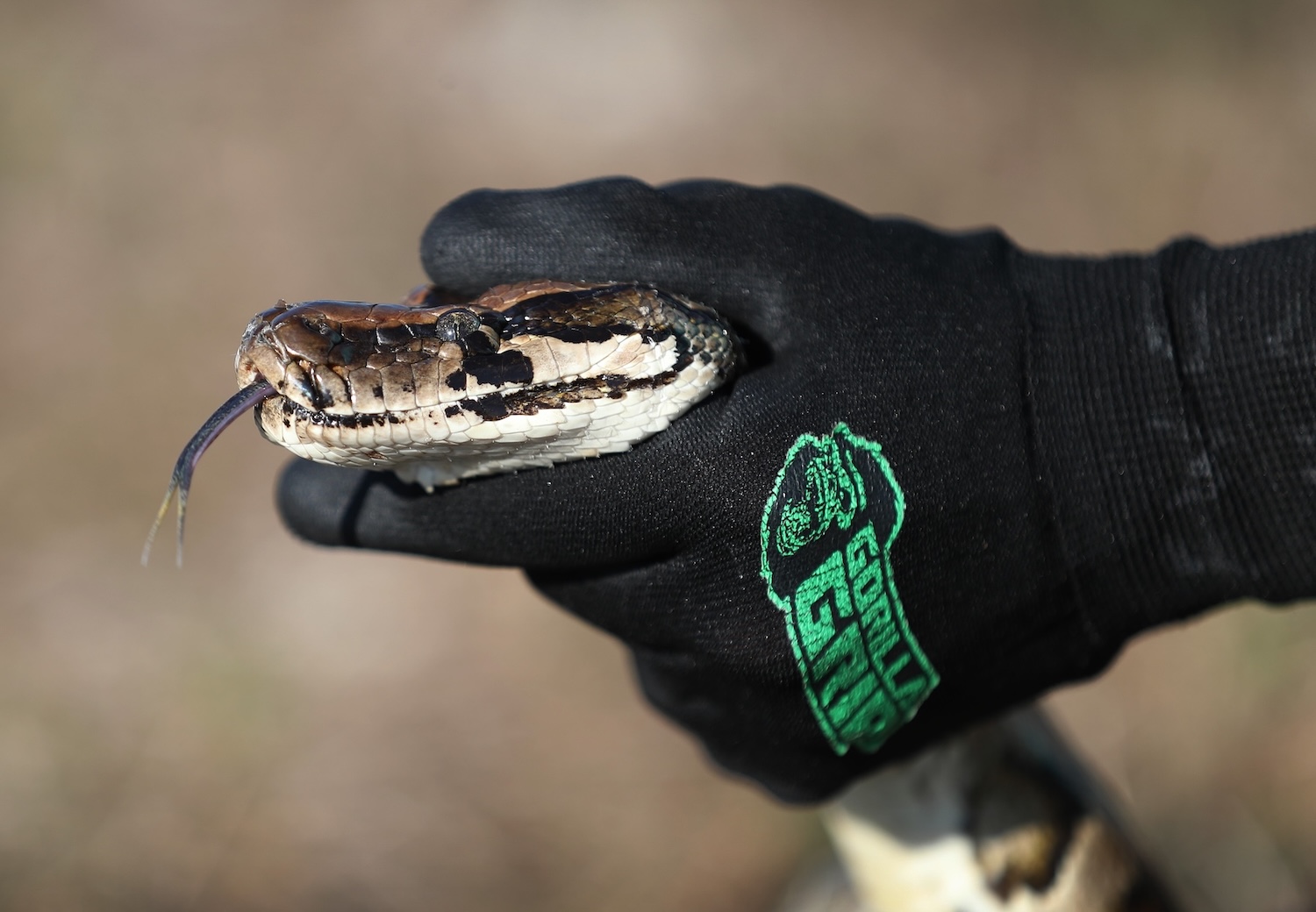
Instead, hunters are instructed to use a method known as "pithing." This involves identifying the precise location of the brain by drawing an imaginary "X" between the snake’s eyes and the opposite jawbones. A sharp tool, such as a dedicated pithing spike or a heavy-duty screwdriver, is used to penetrate the skull and destroy the brain tissue. This ensures an immediate loss of consciousness and a rapid death. The requirement for such a visceral method underscores the grim reality of invasive species management; while the pythons are not at fault for their presence in Florida, their removal is a biological necessity for the survival of the Everglades.
A History of the Invasion: A Chronology of Control
The timeline of the Burmese python in Florida is a cautionary tale of environmental mismanagement and the risks of the global wildlife trade.
- 1970s-1980s: Initial sightings of Burmese pythons are reported in the Everglades. Most are believed to be former pets that outgrew their enclosures.
- 1992: Hurricane Andrew destroys a python breeding facility near the Everglades, leading to the release of an unknown number of snakes. While this event accelerated the invasion, experts believe the population was already establishing itself prior to the storm.
- 2000: The National Park Service officially recognizes the Burmese python as a breeding population within Everglades National Park.
- 2012: The U.S. Fish and Wildlife Service bans the importation and interstate transport of Burmese pythons under the Lacey Act.
- 2013: The first "Python Challenge" is held to raise public awareness and remove snakes.
- 2017: The South Florida Water Management District (SFWMD) and the FWC begin year-round professional removal programs, paying contractors hourly rates plus incentives for every snake caught.
- 2026: The annual challenge continues as a cornerstone of public engagement, occurring alongside year-round professional efforts.
The Challenge of Detection and Removal
Despite their massive size—with some individuals in Florida reaching lengths of nearly 19 feet—pythons are notoriously difficult to find. Their mottled brown and tan skin provides near-perfect camouflage in the sawgrass and murky waters of the Everglades. Wildlife biologists estimate that even experienced hunters only detect about 5% of the pythons present in a given area. This means that for every snake captured during the 10-day challenge, 19 others likely remain hidden in the brush.
The difficulty of manual detection has led scientists to explore high-tech solutions. These include the use of thermal imaging drones, environmental DNA (eDNA) sampling to detect snake presence in water, and the "Judas snake" program. In the latter, male pythons are captured, fitted with radio transmitters, and released. During the breeding season, these males lead biologists directly to large, reproductive females, which can then be removed along with their eggs.
Broader Impact and Economic Implications
The Florida Python Challenge is more than just a hunt; it is a vital part of a massive economic investment in the restoration of the Everglades. The "Comprehensive Everglades Restoration Plan" (CERP) is the largest hydrologic restoration project in U.S. history, with billions of dollars allocated to restoring natural water flow. However, as officials often note, "restoring the plumbing" is useless if the native wildlife has been eaten into extinction.
The cost of managing invasive species in Florida exceeds $100 million annually. By incentivizing the public to participate in the python removal through the challenge, the state leverages citizen science and volunteer labor to supplement the work of professional contractors. While the 10-day event may only remove a few hundred snakes—a small fraction of the total population—the data collected from the captured snakes provides invaluable insights. Biologists weigh, measure, and often perform necropsies on the snakes to study their diet, health, and reproductive status, helping to refine future management strategies.
Looking Ahead: The Future of the Everglades
As the 2026 Florida Python Challenge continues through July 19, the eyes of the conservation world are on the Everglades. The results of the competition will be announced shortly after the 5 p.m. EDT deadline, but the true measure of success lies beyond the leaderboard. Each snake removed represents thousands of native mammals and birds saved over the course of that predator’s potential lifespan.
While total eradication of the Burmese python in Florida is considered unlikely with current technology, events like the Python Challenge are essential for containment. They prevent the population from expanding further north into the Lake Okeechobee region and beyond. As climate change continues to warm the southeastern United States, the potential habitat for these tropical snakes expands, making the frontline battle in the Everglades more critical than ever. For the hundreds of hunters currently wading through the swamps, the mission is clear: to reclaim the natural balance of one of the world’s most unique and threatened ecosystems.