



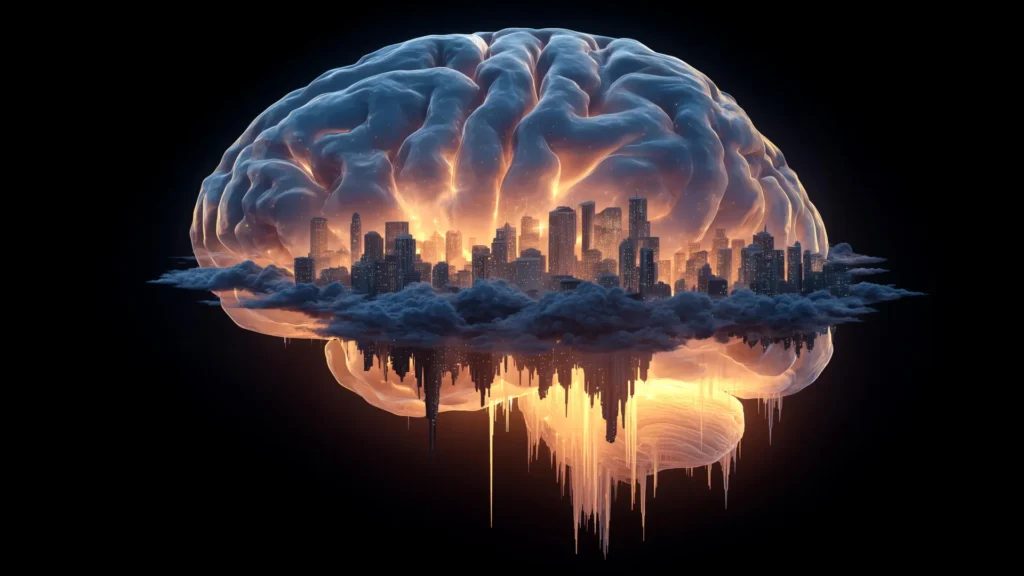
The enigmatic realm of dreams, long a subject of fascination and conjecture, is beginning to yield its secrets to the scrutiny of modern science. New research emerging from the IMT School for Advanced Studies Lucca offers compelling insights into why some dreams are vividly lifelike and deeply memorable, while others dissolve into a confusing haze. The study posits that the very fabric of our nocturnal experiences is woven from a complex interplay of individual personality traits and the shared tapestry of our collective life experiences, influencing both the content and emotional intensity of what we perceive while asleep.
Published in the esteemed journal Communications Psychology, this groundbreaking investigation meticulously analyzed over 3,700 dream reports, alongside detailed accounts of waking life, collected from 287 participants ranging in age from 18 to 70. Over a two-week period, participants diligently maintained daily records of their conscious experiences, while researchers simultaneously gathered extensive data on their sleep patterns, cognitive abilities, distinct personality traits, and comprehensive psychological profiles. This multi-faceted approach allowed for an unprecedented depth of analysis into the factors that contribute to the richness and coherence of our dreamscapes.
AI Deciphers the Hidden Structures of the Subconscious
A pivotal aspect of this research was the innovative application of advanced natural language processing (NLP) tools to navigate and interpret the vast dataset of dream descriptions. Traditional dream analysis, often reliant on subjective interpretation or labor-intensive manual coding, has historically struggled with scalability and objectivity. The deployment of sophisticated AI algorithms marked a significant methodological leap, enabling researchers to systematically study the semantic meaning and underlying structural patterns within these highly personal narratives.
The findings unequivocally demonstrated that dreams are far from random, chaotic phenomena. Instead, they manifest as highly structured reflections, intricately shaped by a dynamic interaction between intrinsic individual characteristics and extrinsic environmental influences. Among the individual characteristics identified were tendencies such as mind-wandering during waking hours, the personal value or interest an individual places on their dreams, and objective measures of sleep quality. These internal factors were found to coalesce with external influences, particularly significant societal events like the global COVID-19 pandemic, to sculpt the nocturnal reality.
A striking discovery emerged when researchers meticulously compared participants’ descriptions of their daily waking lives with their corresponding dream narratives. The brain, it appears, does not merely serve as a passive projector, replaying waking experiences verbatim during sleep. Rather, it acts as an active architect, profoundly reshaping and reimagining those experiences. Familiar settings – be they bustling workplaces, sterile hospital corridors, or echoing school halls – are rarely reproduced with photographic fidelity. Instead, they are transmuted into vivid, immersive scenes, often blending disparate elements and shifting perspectives in ways that defy waking logic, creating new and sometimes surreal scenarios that actively reconstruct reality rather than passively reflect it. This process suggests a sophisticated cognitive function wherein the brain synthesizes memories with imagined or anticipated events, forging novel experiences that may hold keys to understanding memory consolidation and creative thought processes.
Personality as a Blueprint for Dream Style
The study unveiled distinct patterns in dreaming styles, directly correlating with individual personality traits. Participants who reported a higher propensity for mind-wandering during their waking hours tended to experience dreams characterized by fragmentation and constant shifts in narrative. These dreams often lacked a singular coherent storyline, reflecting the diffuse attentional style observed in their waking cognition. Conversely, individuals who ascribed greater importance to their dreams and held a belief in their inherent meaning or significance consistently reported richer, more immersive, and often more emotionally resonant dream environments. This suggests a feedback loop where an individual’s conscious engagement with their dream life might actively contribute to the complexity and vividness of subsequent dream experiences.
This observation aligns with broader psychological theories linking personality traits to cognitive styles. For instance, individuals high in ‘Openness to Experience’ (one of the Big Five personality traits) are often characterized by vivid imaginations, a willingness to explore novel ideas, and an appreciation for aesthetic experiences. It is logical to infer that such individuals might, therefore, exhibit a predisposition towards more elaborate and immersive dream worlds. Similarly, traits like neuroticism have been linked to more frequent and intense negative dreams, reflecting heightened emotional reactivity and anxiety in waking life. While the IMT study focused on mind-wandering and dream importance, these broader personality frameworks provide a rich backdrop against which to interpret the individual variations in dream style.
The Pandemic’s Shadow: A Chronology of Collective Dreaming
The research also provided a poignant illustration of how large-scale societal events can profoundly impact the collective unconscious. By incorporating data meticulously collected during the initial phase of the COVID-19 lockdown by researchers at Sapienza University of Rome, and subsequently comparing these findings with the IMT team’s broader dataset, a clear chronology of dream evolution during a period of unprecedented global upheaval emerged.
During the stringent lockdown periods, dreams were notably more emotionally intense and frequently permeated by themes of restriction, limitation, and confinement. Participants often reported scenarios involving being trapped, unable to move freely, or experiencing a sense of impending threat, directly mirroring the anxieties and physical constraints imposed by the pandemic. These findings resonate with numerous other independent studies conducted worldwide during the early stages of the pandemic, which consistently documented a surge in vivid, anxiety-laden, and often bizarre dreams. For instance, a study published in Sleep Medicine in 2020 reported a significant increase in dreams related to contamination, illness, and death among healthcare workers and the general population during the peak of the pandemic.
However, the IMT research further illuminated a crucial adaptive dimension: as time progressed and individuals began to psychologically adjust to the ‘new normal’ – developing coping mechanisms, adapting to remote work, and gradually resuming some social activities – these intense, lockdown-specific dream patterns gradually receded. This temporal shift strongly suggests that dream content is not static but dynamically evolves in tandem with an individual’s psychological adaptation to major life changes and collective traumas. It underscores the role of dreams as a barometer of our mental and emotional states, reflecting our attempts to process and integrate significant life events.
Dreams: A Dynamic Window into the Mental Process
"Our findings demonstrate unequivocally that dreams are not merely a static reflection of past experiences, but rather a profoundly dynamic process, intricately shaped by who we are as individuals and the entirety of our lived experiences," explained Valentina Elce, a researcher at the IMT School and the lead author of the pivotal paper. "By synergistically combining the power of large-scale data collection with cutting-edge computational methods, we achieved an unprecedented ability to uncover subtle yet significant patterns within dream content that were previously elusive and exceedingly difficult to detect through traditional analytical approaches." Her statement underscores the methodological breakthrough that allowed for these nuanced observations.
Professor Marco Cioni, a cognitive neuroscientist at Sapienza University of Rome and a collaborator on the study, further elaborated on the significance of the findings: "The ability of AI to identify these complex interactions between personality, experience, and dream structure is revolutionary. It moves us beyond anecdotal evidence and subjective recall, offering a more objective and scalable lens through which to examine the deepest workings of the human mind during sleep. This interdisciplinary approach, merging psychology, neuroscience, and computational linguistics, is truly pushing the boundaries of what we can understand about consciousness."
AI’s Ascendancy: New Frontiers in Dream Research
The study powerfully highlights the transformative potential of artificial intelligence in advancing the long-standing scientific inquiry into dreams. The NLP models employed in this research demonstrated an impressive capacity to capture the nuanced meaning and intricate structure of dream reports, achieving a level of accuracy and consistency comparable to, and in some aspects even surpassing, that of human evaluators. This technological leap represents a paradigm shift, as it offers a robust solution to the inherent limitations of relying solely on subjective self-reporting, which can be prone to recall bias, selective memory, and individual differences in descriptive ability.
The implications of this AI-driven approach are far-reaching. It could significantly streamline and enhance the study of profoundly complex topics such as consciousness, memory consolidation, emotional regulation, and mental health on a much larger and more consistent scale than ever before. Imagine the potential for personalized dream analysis to aid in therapeutic interventions, where recurring dream themes could signal underlying psychological stressors or even pre-clinical indicators of certain mental health conditions. By analyzing vast repositories of dream data, researchers might identify universal dream archetypes or cultural specificities with unprecedented precision, enriching our understanding of the human psyche across diverse populations.
Historically, dream research has traversed a long and winding path, from ancient civilizations attributing divine or prophetic significance to dreams, through the seminal psychoanalytic theories of Freud and Jung in the early 20th century, to the more recent neuroscientific explorations linking dreams to REM sleep and brain activity. While Freud proposed dreams as the ‘royal road to the unconscious,’ revealing repressed desires, and Jung explored collective archetypes, modern cognitive neuroscience largely focuses on dreams’ role in memory consolidation, emotional processing, and even threat simulation. The IMT study, by integrating advanced computational methods, offers a bridge between these historical perspectives and a data-driven future, allowing for the systematic validation or refutation of long-held theories and the generation of entirely new hypotheses.
While the ethical considerations surrounding AI and personal data, particularly highly sensitive dream content, require careful navigation, the promise of this technology for objective and large-scale insights is undeniable. Future research, building upon the foundations laid by the IMT School, may explore the predictive power of dream patterns, the efficacy of dream incubation techniques, or even delve into the neural correlates of dream content with greater precision.
This pioneering research was made possible through the generous support of a grant from the BIAL Foundation (#091/2020) and further bolstered by the TweakDreams ERC Starting Grant (#948891). The collaborative spirit of the scientific community was evident throughout the project, with the core work conducted at the IMT School for Advanced Studies Lucca in close collaboration with esteemed researchers from Sapienza University of Rome and the University of Camerino. The findings serve as a powerful testament to the evolving understanding of our inner worlds, reaffirming that dreams are not merely ephemeral illusions but a dynamic, deeply personal, and socially influenced mental process, offering a profound window into the complex architecture of human experience.