

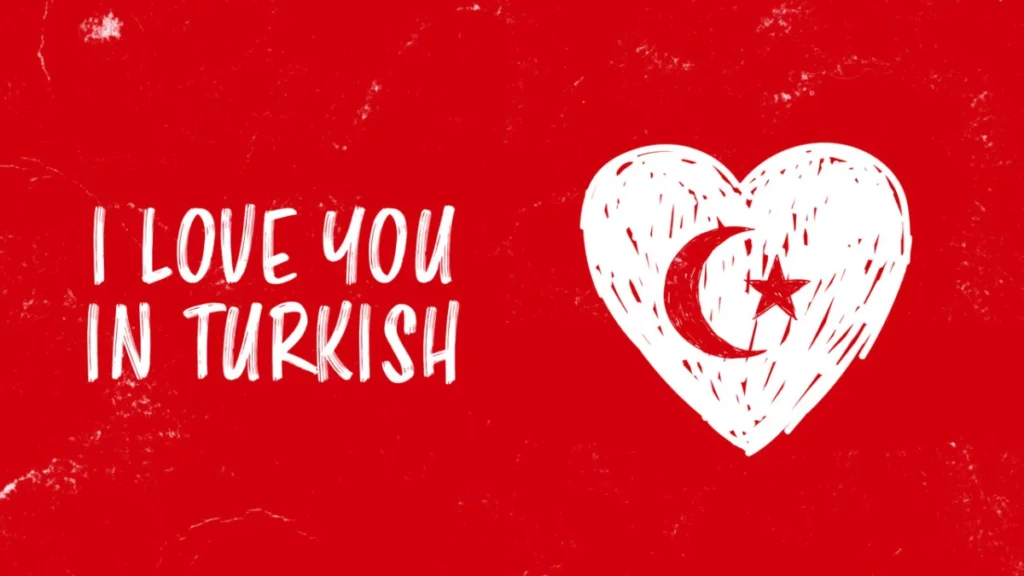
The globalization of Turkish media, spearheaded by the international success of Turkish television dramas—known locally as "dizi"—has sparked a significant surge in global interest in the Turkish language. Central to this linguistic fascination is the art of romantic expression, a cornerstone of Turkish interpersonal communication. As Turkey continues to expand its cultural footprint across Europe, the Middle East, and Latin America, understanding the specific linguistic structures used to convey affection has become an essential endeavor for language learners and cultural enthusiasts alike. This report examines the fundamental phrases of romance in Turkish, the historical evolution of the language’s romantic lexicon, and the socio-cultural implications of these expressions in contemporary society.
Linguistic Foundations of Turkish Romantic Phrases
Turkish is an agglutinative language, belonging to the Turkic language family, which means that meanings are often modified by adding suffixes to a root word. This structural characteristic allows for a high degree of precision in emotional expression. The most fundamental phrase for expressing love is "Seni seviyorum." Linguistically, "seni" is the accusative form of "sen" (you), and "seviyorum" is the present continuous form of the verb "sevmek" (to love).
Beyond this basic declaration, the Turkish language offers a tiered system of intimacy. "Senden hoşlanıyorum" serves as the primary phrase for the early stages of attraction, translating to "I like you." As a relationship progresses, "Sana aşığım" represents a more profound declaration, meaning "I am in love with you." The word "aşk" denotes a passionate, often transcendental love, distinct from the more general "sevgi." For those seeking to express deep adoration, "Sana bayılıyorum" (I adore you) provides a versatile option that can be used in both romantic and highly affectionate platonic contexts.
Historical Evolution and the Chronology of Expression
The way romantic sentiments are expressed in Turkish has undergone a dramatic transformation over the last century, reflecting the broader sociopolitical changes in the Turkish Republic.
-
The Ottoman Era (Pre-1928): During the Ottoman Empire, romantic language was heavily influenced by Persian and Arabic literature. Expressions were often metaphorical and indirect, utilizing a complex vocabulary that emphasized longing and spiritual devotion. Romantic prose of this era was characterized by its "Aruz" meter and flowery descriptions.
-
The Alphabet Revolution and Language Reform (1928–1940s): Following the establishment of the Republic of Turkey, Mustafa Kemal Atatürk initiated a series of reforms, including the transition from the Arabic script to the Latin alphabet. This period saw the "Öztürkçe" (Pure Turkish) movement, which aimed to replace foreign loanwords with Turkic roots. The modern "Seni seviyorum" gained prominence during this era as a direct, accessible alternative to more archaic Ottoman constructs.
-
The Rise of Modern Literature (1950s–1980s): Poets like Nazım Hikmet and Orhan Veli Kanık revolutionized romantic expression by using "the language of the street." They moved away from elitist structures, making romantic declarations more egalitarian and emotionally transparent.
-
The Digital and Media Age (1990s–Present): The proliferation of Turkish pop music and television has standardized romantic vocabulary across the Turkic world. Phrases once confined to regional dialects or high literature have become part of a globalized Turkish romantic lexicon.
Statistical Analysis of Turkish Language Acquisition
Data from the Yunus Emre Institute, Turkey’s state-run cultural organization, indicates a 40% increase in Turkish language enrollment globally over the past decade. A significant portion of this interest is attributed to the "Dizi Effect." According to the Turkish Ministry of Culture and Tourism, Turkey is now the second-largest exporter of television series worldwide, trailing only the United States.
Surveys conducted among international students of the Turkish language reveal that "emotional resonance" is a primary motivator for learning. Approximately 65% of learners in regions such as the Balkans and Latin America cite the desire to understand romantic dialogues in Turkish media as a key reason for their studies. This has led to "Seni seviyorum" being one of the most recognized Turkish phrases globally, alongside common greetings like "Merhaba" (Hello).
The Nuances of Endearment: Beyond the Verb

In Turkish culture, the use of endearment terms is not merely a romantic habit but a fundamental aspect of social etiquette. These terms are almost always used with the first-person possessive suffix "-im" or "-ım," meaning "my."
- Aşkım (My love): Perhaps the most common term used between romantic partners.
- Canım (My soul/My dear): Derived from "can" (life/soul), this is used both in romantic contexts and among close friends or family members.
- Hayatım (My life): Indicates that the person is central to one’s existence.
- Bir tanem (My one and only): Used to emphasize the unique importance of the individual.
- Sevgilim (My darling/My lover): A formal yet deeply romantic way to address a partner.
Linguistic experts note that the frequency of these terms in Turkish conversation is significantly higher than in English. In a typical Turkish household or relationship, these "terms of affection" often replace the use of proper names, serving to constantly reinforce the emotional bond between speakers.
The Mechanics of Modern Dating: Interrogative Phrases
For those navigating the initial phases of a relationship, the Turkish language provides a structured set of phrases for social engagement. Journalistic observation of modern social interactions in urban centers like Istanbul and Ankara shows a blend of traditional politeness and modern directness.
Common phrases for initiating a date include:
- "Benimle yemeğe çıkmak ister misin?" (Would you like to go out to dinner with me?)
- "Birlikte bir kahve içmek ister misin?" (Would you like to grab a coffee together?)
- "Yarın akşam boş musun?" (Are you free tomorrow evening?)
These phrases follow the standard Turkish question format, utilizing the "mi/mı" interrogative particle. The use of the "siz" (formal you) versus "sen" (informal you) remains a critical social distinction; however, in romantic contexts, the transition to "sen" usually occurs rapidly once a mutual interest is established.
Official Responses and Cultural Implications
The Turkish Language Association (Türk Dil Kurumu – TDK) continues to monitor the evolution of the language, particularly the influence of English on romantic slang among the youth. While traditionalists express concern over the "Internet slang" used on social media platforms, cultural diplomats view the global spread of Turkish romantic phrases as a vital component of Turkey’s "soft power."
Dr. Ahmet Erten, a sociolinguist specializing in Turkic languages, suggests that the "emotional weight" of Turkish words is what makes them attractive to foreigners. "Turkish allows for a specific type of vulnerability," Erten notes. "When you say ‘Sana aşığım,’ the grammar itself—placing the ‘you’ at the start and the ‘I’ as a suffix at the end—symbolically places the object of affection before the self."
Broader Impact on International Relations and Tourism
The linguistic bridge built by romantic expressions has tangible economic and social impacts. "Romance Tourism" has seen a marked increase, with an uptick in international weddings held in scenic Turkish locations such as Cappadocia and Bodrum. Additionally, the rise of international couples—where one partner is a non-native Turkish speaker—has created a new demographic of "heritage learners" who study the language to connect with their partners’ families and culture.
The implications extend to the digital realm, where Turkish romantic poetry and quotes are among the most shared content in the Middle East and Central Asia. This digital footprint fosters a positive image of Turkish culture, emphasizing themes of hospitality, passion, and loyalty.
Conclusion
The mastery of romantic expressions in Turkish is more than a linguistic exercise; it is an entry point into a complex cultural landscape defined by deep emotional history and modern media influence. From the foundational "Seni seviyorum" to the nuanced terms of endearment like "Canım," these phrases reflect a society that values the overt and frequent expression of affection. As the Turkish language continues to grow in global importance, these romantic constructs will remain essential tools for fostering cross-cultural understanding and personal connection. Whether through the lens of a television screen or a personal relationship, the language of love in Turkey continues to be a powerful vehicle for cultural exchange in the 21st century.