



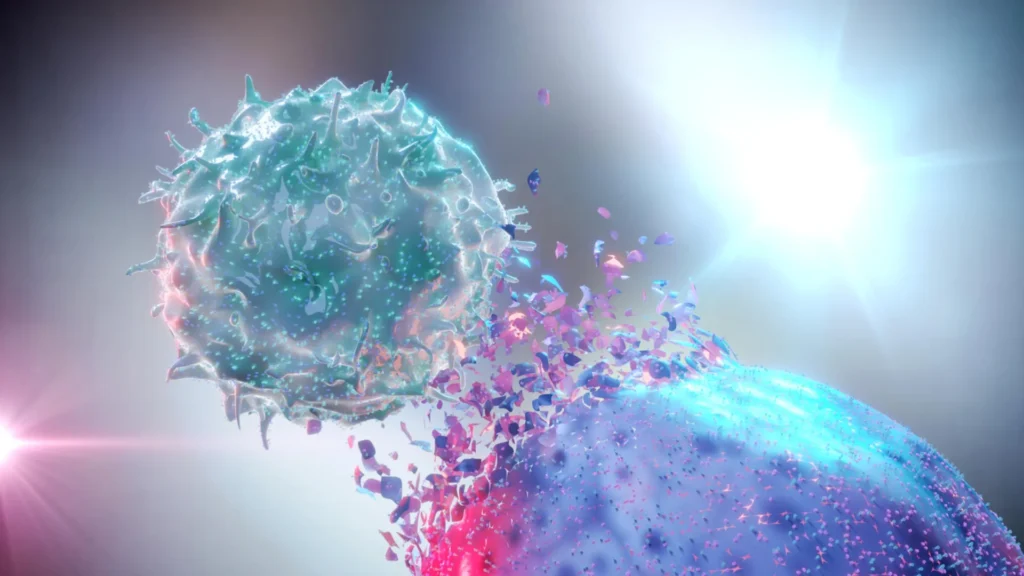
Natural killer (NK) cells act as key defenders within the immune system, forming a crucial part of the body’s innate immunity. These specialized lymphocytes are frontline responders, adept at identifying and eliminating invading microbes, foreign materials, and damaged or infected cells early in the course of an assault, thereby limiting the spread of pathogens and cellular dysfunction. NK cells execute their surveillance either by circulating through the bloodstream or by residing in specific tissues and organs, acting as vigilant sentinels. A significant decline in NK cell numbers can critically compromise immune function, elevating an individual’s susceptibility to a spectrum of illnesses, from infections to certain cancers.
The intricate interplay between psychological states and physiological health has long been a subject of scientific inquiry, giving rise to the field of psychoneuroimmunology. It is well-established that chronic psychological stressors, such as anxiety and sleep disturbances, can profoundly disrupt the delicate balance of the immune system. With anxiety disorders and insomnia reaching epidemic proportions globally, particularly among younger demographics, understanding their direct physiological consequences has become paramount for public health.
The Study’s Focus and Context: Unpacking a Saudi Arabian Investigation
Against this backdrop, researchers in Saudi Arabia embarked on a focused investigation into the relationship between symptoms of anxiety, insomnia, and the levels of natural killer cells among young female students. This demographic group is particularly relevant given documented increases in mental health challenges and sleep disturbances in academic environments worldwide. The findings of this seminal study, which shed new light on the immunological impact of these prevalent conditions, were meticulously peer-reviewed and subsequently published in the esteemed journal, Frontiers in Immunology.
"We found that in students with insomnia symptoms, count and percentage of total NK cells and their sub-populations were declined," stated first author Dr. Renad Alhamawi, an assistant professor of immunology and immunotherapy at Taibah University, summarizing one of the study’s key revelations. "Students with general anxiety symptoms, on the other hand, had a lower percentage and number of circulatory NK cells and their sub-populations, compared to symptom-free students." This direct correlation underscores a significant physiological vulnerability linked to common psychological stressors.
Global Rise in Anxiety and Insomnia: A Pervasive Public Health Challenge
The prevalence of anxiety disorders and chronic insomnia has surged dramatically over the past few decades, evolving into a global public health crisis that affects millions. According to the World Health Organization (WHO), anxiety disorders are the most common mental disorders worldwide, impacting an estimated 301 million people in 2019, including 58 million children and adolescents. Insomnia, too, is a pervasive issue, with studies suggesting that approximately 10-30% of the general population suffers from chronic insomnia, and up to 50-60% experience transient or acute insomnia in any given year. Among university students, these figures are often even higher, exacerbated by academic pressures, social transitions, financial concerns, and the pervasive influence of digital technologies.
The period of late adolescence and early adulthood, spanning roughly ages 17 to 23, is recognized as a critical developmental stage characterized by significant psychological, social, and physiological changes. This phase often coincides with entry into higher education, which, while enriching, can also be a source of considerable stress due to demanding curricula, competitive environments, and new social dynamics. Research consistently indicates that young women, in particular, report higher rates of anxiety and sleep disturbances compared to their male counterparts, making them a key demographic for targeted health interventions and research.
In Saudi Arabia, similar trends have been observed, with national health surveys indicating a significant burden of mental health conditions. The specific demographic of young female students is frequently cited as particularly susceptible to these pressures, navigating cultural expectations alongside the universal demands of higher education. This heightened vulnerability makes the Saudi Arabian study’s focus on this group especially pertinent, offering critical insights into a demographic facing unique stressors. The increasing recognition of these conditions has prompted calls for more integrated mental health support within educational institutions and broader public health initiatives to mitigate the long-term health consequences.
Study Design and Student Health Profiles: A Detailed Look at the Methodology
The research involved a carefully selected cohort of 60 female students, ranging in age from 17 to 23 years, all enrolled in higher education institutions in Saudi Arabia. To gather comprehensive data, each participant underwent a multi-faceted assessment process. Initially, they completed a series of three detailed questionnaires designed to capture sociodemographic information, along with self-reported symptoms related to anxiety and insomnia. The reliance on self-described reports for anxiety and sleep disturbance, while a common practice in epidemiological studies due to its feasibility, was acknowledged by the researchers as a potential limitation, prompting considerations for future studies to incorporate objective diagnostic tools or clinical interviews for verification.
The survey results painted a concerning picture of the students’ mental and sleep health. Approximately 53 percent of the participants reported experiencing sleep difficulties consistent with clinical insomnia, indicating a significant prevalence within this young female cohort. Furthermore, a staggering 75 percent of the students disclosed anxiety symptoms, with the severity distribution revealing that approximately 17 percent fell into the moderate anxiety category and 13 percent experienced severe anxiety symptoms. These figures highlight the substantial mental health burden faced by a majority of the student population examined, underscoring the urgent need for support mechanisms.
Beyond self-assessments, the study incorporated a crucial biological component: the collection of blood samples from each participant. These samples were meticulously analyzed using flow cytometry to quantify and characterize different types of natural killer cells, providing an objective measure of immune status. NK cells are broadly categorized into two primary subgroups based on the expression of specific surface markers, CD16 and CD56:
- CD16+CD56dim cells: This subgroup constitutes the vast majority (typically 90-95%) of NK cells found in the peripheral blood. These cells are highly cytotoxic, meaning their primary function is to directly identify and destroy target cells, such as those infected with viruses or cancerous cells. Their rapid response and potent killing mechanisms are essential for early immune defense and form a critical component of innate immunity.
- CD16+CD56high cells: Representing a smaller proportion (5-10%) of circulatory NK cells, this subgroup is less cytotoxic but plays a significant role in immunoregulation. These cells are potent producers of various cytokines and chemokines – proteins that act as chemical messengers – which help to modulate and coordinate other immune responses, recruit other immune cells to sites of infection or inflammation, and support overall immune homeostasis. They are particularly abundant in secondary lymphoid organs.
Both of these subgroups are considered circulatory NK cells, essential for systemic immune surveillance and maintaining immune balance. By precisely measuring the counts and percentages of these specific NK cell populations, the researchers aimed to establish a definitive immunological profile linked to the participants’ self-reported anxiety and insomnia symptoms, providing a biological basis for the observed psychological distress.
Unveiling the Immunological Impact: Key Findings on NK Cell Levels
The comprehensive analysis of blood samples, correlated with the detailed self-reported questionnaires, yielded compelling results regarding the adverse effects of anxiety and insomnia on the immune system, specifically on natural killer cells. The findings delineated distinct yet often overlapping immunological signatures associated with each condition.
For students who reported experiencing general anxiety symptoms, the study revealed a significant decline in both the overall percentage and the absolute number of circulatory NK cells, including their crucial sub-populations (CD16+CD56dim and CD16+CD56high), when compared to their symptom-free peers. This suggests that even the presence of general anxiety, not necessarily severe, can initiate a measurable suppression of these vital immune defenders, indicating a broad systemic impact.
Crucially, the severity of anxiety emerged as a critical determinant of the extent of NK cell depletion. Participants categorized with moderate or severe anxiety symptoms exhibited a notably pronounced reduction in the percentage of circulatory NK cells. In contrast, those reporting minimal or mild anxiety symptoms showed only a marginal decrease, which was not statistically significant. This ‘dose-response’ relationship underscores that as anxiety intensifies, its detrimental impact on NK cell populations becomes more profound, suggesting a cumulative physiological toll. This finding is particularly significant for clinical practice, as it highlights the importance of addressing even moderate levels of anxiety to preserve immune integrity and prevent further immunological compromise.
The impact of insomnia symptoms was equally striking. Students grappling with insomnia displayed a significant reduction in the total count and percentage of NK cells, encompassing both the highly cytotoxic CD16+CD56dim cells and the immunoregulatory CD16+CD56high cells. This broad suppression across NK cell populations indicates a systemic weakening of both immediate cellular defense and the broader coordination of immune responses, compromising the body’s ability to fight off pathogens and abnormal cells.
Furthermore, the study identified an interesting interplay between the two conditions: among students who reported insomnia symptoms, higher anxiety scores were independently associated with a lower proportion of total peripheral NK cells. This suggests a potentially compounding effect, where the co-occurrence of anxiety and insomnia may synergistically exacerbate the negative impact on immune defenses, leading to an even greater depletion of NK cells. This observed synergy is critical, as anxiety and insomnia frequently co-occur in clinical populations, presenting a more complex challenge for both mental and physical health.
Dr. Renad Alhamawi reiterated the importance of these specific findings, emphasizing their potential broader implications. "Understanding how these psychological stressors influence the distribution and activity of immune cells, especially peripheral NK cells, may provide valuable insights into the mechanisms underlying inflammation and tumorigenesis," she explained. This statement points to the potential long-term consequences of chronically suppressed NK cell function, extending beyond immediate infection risk to chronic inflammatory states and an elevated susceptibility to cancer development. The study thus reinforces the profound biological consequences of unmanaged psychological distress.
Consequences of Declining Immune Defenses: A Broader Health Perspective
The implications of a sustained drop in natural killer cell numbers extend far beyond a simple increased risk of common colds. A compromised NK cell defense system fundamentally weakens the body’s overall immune performance, making individuals more vulnerable to a wide array of health issues that can significantly diminish quality of life and even life expectancy. This weakening of immune surveillance can lead to a cascade of adverse health outcomes:
- Increased Susceptibility to Infectious Diseases: As primary components of the innate immune system, NK cells are crucial for rapid responses against viral infections (e.g., influenza, herpes viruses) and certain bacterial pathogens. Their depletion means the body is less equipped to mount an effective initial defense, leading to more frequent, severe, and prolonged infections. Chronic viral infections, in particular, can thrive in environments with suppressed NK cell activity.
- Elevated Cancer Risk: One of the most critical roles of NK cells is immune surveillance against nascent cancer cells. They are capable of recognizing and destroying tumor cells without prior sensitization, acting as a crucial first line of defense against oncogenesis. A significant reduction in NK cell activity or numbers is strongly linked to an increased risk of developing various cancers and can also impact the prognosis and recurrence rates of existing cancers. This makes the findings particularly concerning for long-term health.
- Autoimmune Conditions: While NK cells primarily target ‘non-self’ or damaged ‘self’ cells, their regulatory functions are also vital for maintaining immune homeostasis and preventing excessive or misdirected immune responses. Dysregulation or depletion can contribute to an imbalance that may predispose individuals to autoimmune disorders, where the immune system mistakenly attacks healthy body tissues. The nuanced role of NK cells in modulating inflammation is key here.
- Exacerbation of Mental Health Conditions: The relationship between immune function and mental health is increasingly recognized as bidirectional. While psychological stressors can suppress immunity, chronic inflammation and a weakened immune system can also exacerbate or even contribute to the development of mental health conditions such as depression and anxiety. The interplay between low NK cell counts and increased inflammation could create a vicious cycle, worsening both physical and psychological well-being and potentially hindering recovery from mental illnesses.
Dr. Anya Sharma, an independent immunologist specializing in psychoneuroimmunology, commented on the broader significance of these findings, "This study provides compelling evidence that the mental health challenges prevalent among young adults are not merely psychological burdens but have tangible, measurable impacts on fundamental immune defenses. The link between anxiety, insomnia, and NK cell depletion highlights a critical window for intervention. Ignoring these psychological stressors could predispose a generation to increased health risks down the line, from chronic infections to a higher lifetime risk of certain cancers. This research underscores that mental health is intrinsically linked to physical immunity."
Similarly, Dr. Omar Hassan, a public health expert, added, "The data underscores the urgent need for integrated health strategies within educational institutions and broader community settings. Mental health support, sleep hygiene education, and stress management programs should no longer be seen as optional extras but as essential components of preventative health care, particularly for vulnerable populations like university students. Investing in mental well-being is an investment in public health and future productivity."
Limitations and Future Research Directions
While the Saudi Arabian study provides invaluable insights, the researchers were careful to acknowledge several limitations inherent to its design, which necessarily constrain the generalizability of its findings. The primary limitation was the specific demographic focus: only young female participants aged 17 to 23 were included. This group was deliberately chosen because anxiety and sleep problems have been increasing at a disproportionately high rate within this cohort globally, making them a critical population for investigation. However, this narrow focus means that the results cannot be directly extrapolated to males, older adults, or individuals from different cultural or socioeconomic backgrounds without further, broader research.
Another factor was the reliance on self-reported questionnaires for assessing anxiety and insomnia symptoms. While widely used and practical for large-scale studies, self-report measures can be subject to recall bias, social desirability bias, or variations in individual interpretation of symptoms. For instance, individuals might underreport symptoms due to stigma or simply have a less accurate perception of their sleep quality. Future studies would benefit from incorporating objective measures, such as clinical diagnoses based on standardized psychiatric interviews for anxiety disorders (e.g., using DSM-5 criteria), and polysomnography or actigraphy for a more precise and objective assessment of sleep architecture and quality, which could provide more robust data.
Recognizing these limitations, the research team emphasized the imperative for future studies to expand the scope of investigation significantly. They called for studies involving a wider range of ages, sexes, and diverse geographic regions to achieve a more complete and nuanced understanding of how anxiety and insomnia influence NK cell levels and function across the broader human population. Furthermore, longitudinal studies would be crucial to establish causality, observing how changes in anxiety and insomnia over time directly correlate with subsequent changes in NK cell populations and overall immune function. Such research could also delve deeper into the specific neurobiological pathways through which psychological stress and sleep deprivation modulate NK cell activity, potentially identifying novel therapeutic targets for immune modulation. Investigating the role of specific stress hormones, neurotransmitters, and inflammatory cytokines in mediating these effects would add further depth to the understanding.
Lifestyle Interventions and the Profound Impact of Stress on Immunity
The findings of this study, coupled with a growing body of scientific literature, underscore the critical importance of holistic health management in maintaining robust immune function. Previous research has consistently suggested that adopting healthy lifestyle habits can play a significant role in improving natural killer cell levels and enhancing their performance, thereby bolstering the body’s innate defenses. These proactive measures include:
- Consistent Physical Activity: Regular, moderate exercise is known to have powerful immunomodulatory effects, including increasing NK cell activity and numbers. It helps reduce chronic inflammation and stress hormones like cortisol, creating an environment more conducive to optimal immune function. Even short bursts of activity can have beneficial effects.
- Effective Stress Reduction Techniques: Chronic stress is a powerful immunosuppressant. Techniques such as mindfulness meditation, yoga, deep breathing exercises, cognitive behavioral therapy (CBT), and engaging in fulfilling hobbies can effectively reduce psychological stress. By mitigating the physiological stress response, these practices can help prevent the depletion of NK cells and maintain overall immune competence, fostering a sense of calm and control.
- A Balanced and Nutrient-Rich Diet: Nutrition plays a foundational role in immune health. A diet rich in fruits, vegetables, whole grains, lean proteins, and healthy fats provides essential vitamins, minerals, and antioxidants that