



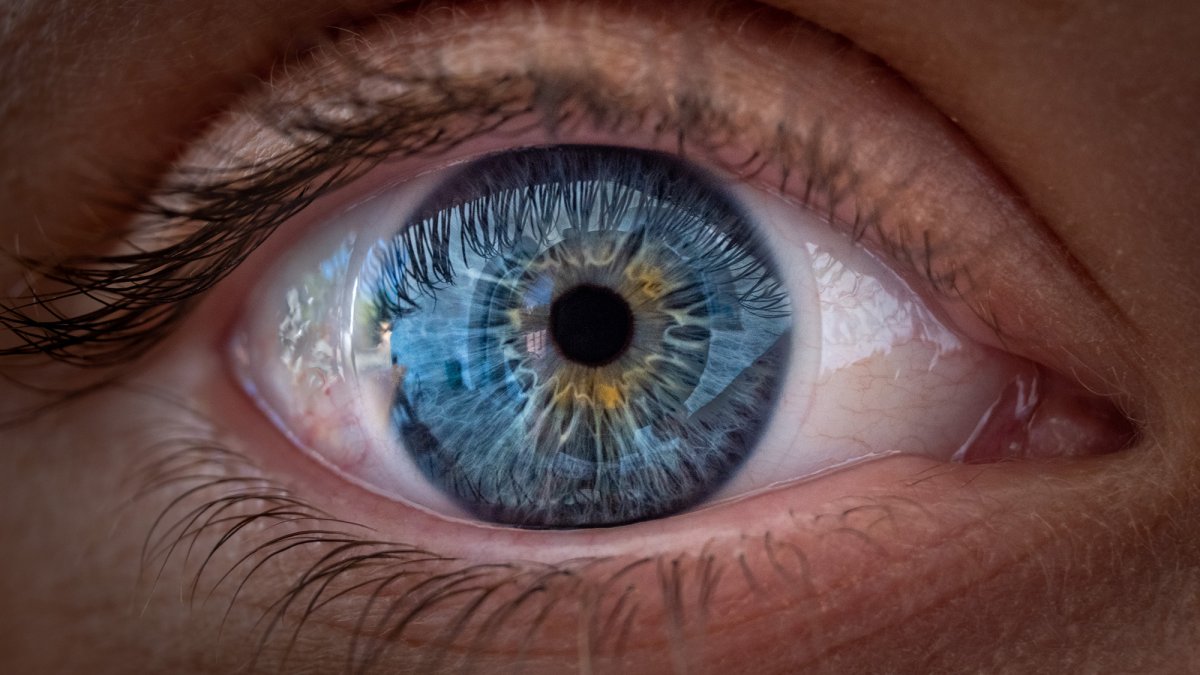
The distinctive appearance of the human eye, characterized by a large, visible white area surrounding a dark iris, represents a significant evolutionary departure from the ocular anatomy of nearly all other primate species. While most mammals possess dark sclerae that blend with the iris to camouflage the direction of their gaze, humans have evolved a high-contrast ocular structure that serves as a vital tool for social interaction, cooperation, and survival. This anatomical feature, known as the sclera, is not merely a structural housing for the eye’s internal components but is increasingly recognized by the scientific community as a sophisticated communicative organ that may have played a pivotal role in the development of human civilization and complex language.
The Anatomical Distinction of the Human Eye
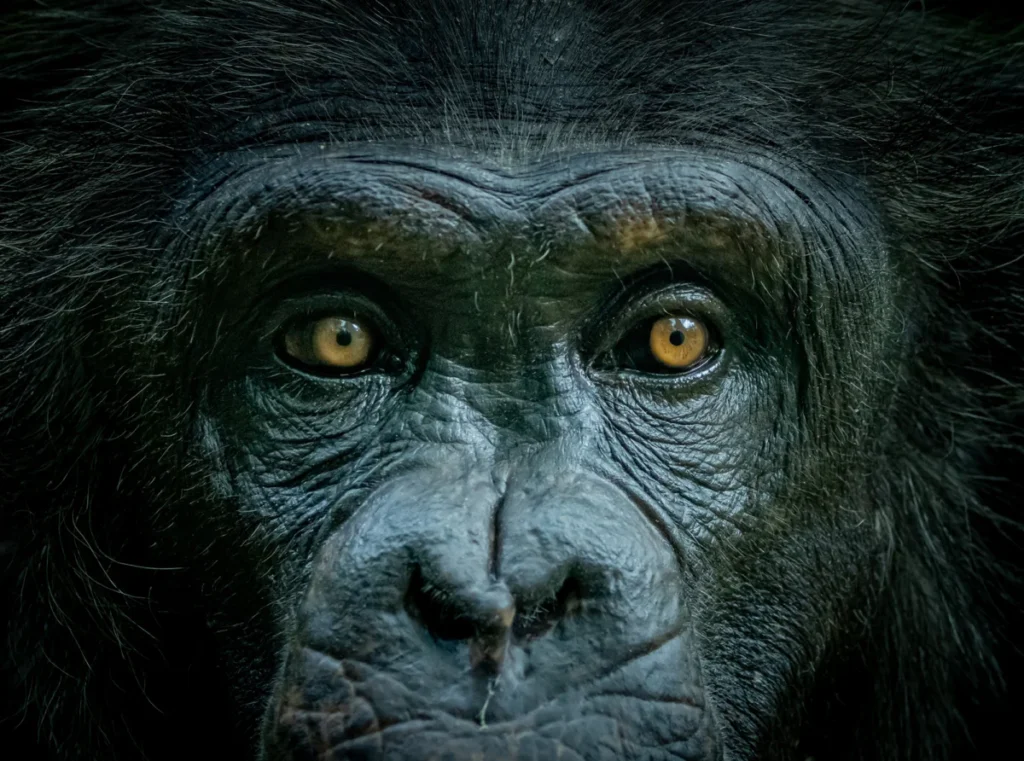
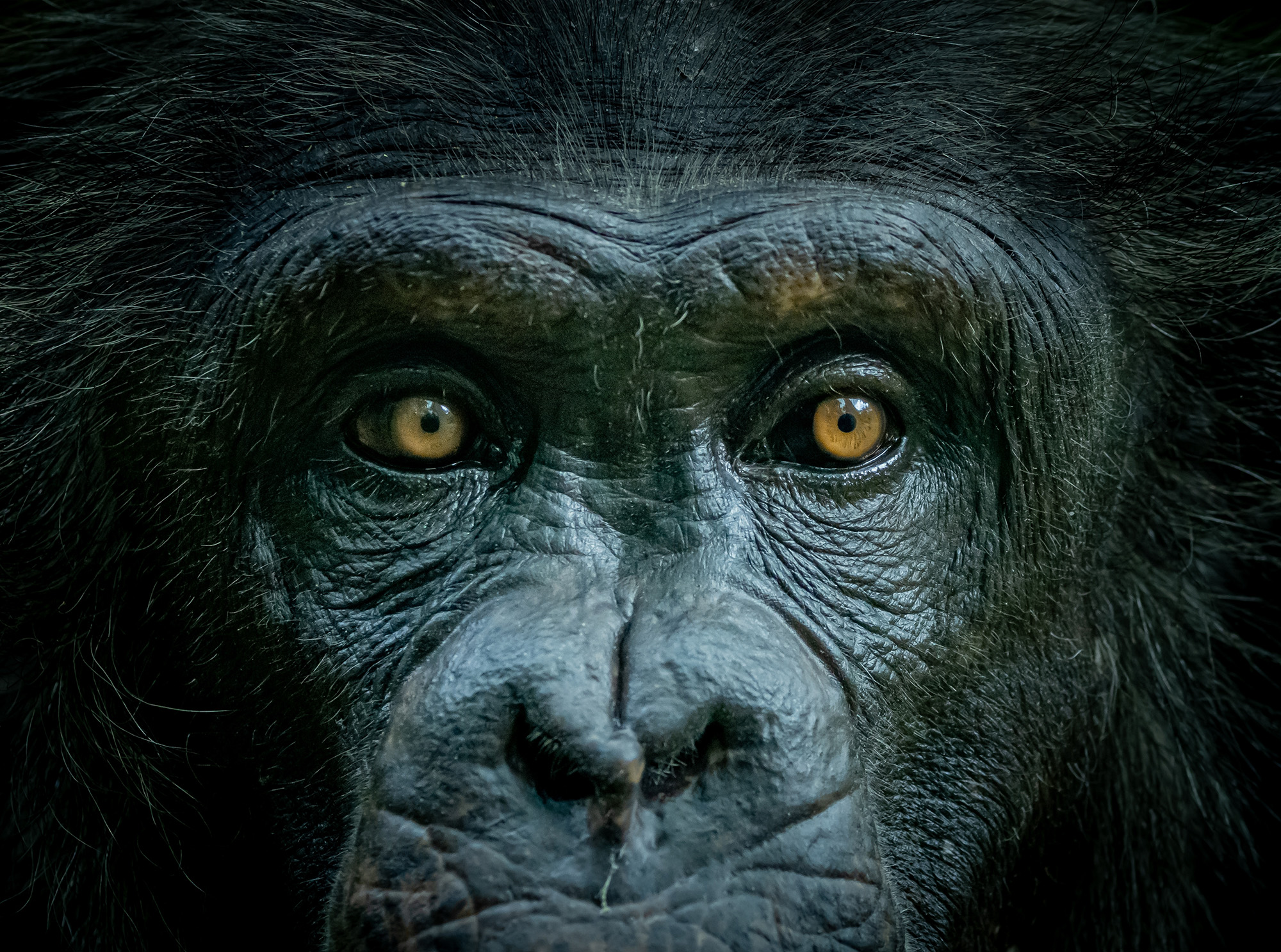
In the broader context of mammalian biology, the human eye is an anomaly. In most non-human primates, including our closest relatives such as chimpanzees, gorillas, and bonobos, the sclera is heavily pigmented, typically appearing brown or black. This dark coloration makes it difficult for an observer to distinguish the pupil and iris from the rest of the eye, effectively masking the direction in which the animal is looking. From an evolutionary perspective, this "gaze camouflaging" is highly advantageous in the wild. It allows predators to stalk prey without revealing their focus and enables primates to avoid social confrontation or aggression within their own hierarchies, as direct eye contact is often perceived as a threat in the animal kingdom.
Humans, conversely, possess a sclera that is devoid of dark pigment and an eye shape that is more horizontally elongated than that of other primates. This combination maximizes the visibility of the white area. When a human moves their eyes, the dark iris moves against a stark white background, creating a high-contrast signal that is easily detectable even from a distance or in low-light conditions. This "gaze signaling" allows for the instantaneous transmission of information regarding an individual’s focus, intentions, and emotional state.
A Chronology of Ocular Research: From Kohshima to Tomasello
Scientific inquiry into the unique nature of human eyes remained relatively dormant until the late 20th century. The timeline of modern understanding began in 1997 when Shiro Kohshima, a biologist at Kyoto University, published a landmark comparative study. Kohshima examined the eye morphology of 88 primate species and confirmed that humans were the only species among them to possess a clear, white sclera. He hypothesized that this feature evolved specifically to enhance the visibility of gaze direction, suggesting that for humans, the benefits of sharing one’s focus outweighed the predatory advantages of hiding it.
Building upon Kohshima’s findings, Michael Tomasello, a psychologist at Duke University, proposed the "Cooperative Eye Hypothesis" in 2007. Tomasello argued that the white sclera was an essential adaptation for the unique level of cooperation required by human societies. According to this theory, the ability to follow another person’s gaze—referred to as joint attention—allowed early humans to hunt more effectively, gather resources collectively, and share complex information before the full development of spoken language.
To validate this hypothesis, Tomasello and his team conducted a series of comparative experiments involving human infants and great apes. The researchers tested how subjects responded to a human experimenter who looked at the ceiling using only their eyes, only their head movement, or both. The results were stark: human infants as young as 12 months old primarily followed the direction of the eyes, even when the head remained stationary. In contrast, chimpanzees, gorillas, and bonobos relied almost exclusively on head movement to determine where the researcher was looking, showing little to no response to eye movement alone.
Developmental Biology and the Role of Gaze in Language Acquisition
The importance of the white sclera is evident from the earliest stages of human development. Research indicates that the human brain is hard-wired to prioritize eye contact from birth. A study involving five-day-old newborns demonstrated that infants spend significantly more time looking at faces that engage in direct eye contact compared to those with an averted gaze. By the age of four months, infants begin to actively follow the gaze of others, and by eight to ten months, this behavior becomes a consistent and essential part of their social toolkit.
This ability to track gaze is a fundamental precursor to language. When a parent looks at an object and names it, the infant uses the high-contrast signal of the parent’s white sclera to pinpoint the exact object of focus. This "pointing" mechanism allows the child to map words to objects with high precision. Data suggests a strong correlation between gaze-following proficiency and linguistic development; infants who are more adept at following eye direction at ten months of age typically possess a significantly larger vocabulary by eighteen months. Without the visual clarity provided by the white sclera, this rapid transfer of information would be far more prone to error and ambiguity.
Challenging Human Exceptionalism: The Debate Over Contrast
While the Cooperative Eye Hypothesis remains the dominant theory, it has faced recent scrutiny from researchers who caution against "human exceptionalism." Juan Perea-García, an evolutionary biologist at the University of Las Palmas de Gran Canaria, has pointed out that the presence of white sclerae may not be as exclusive to humans as previously thought. Recent observations have identified certain individual chimpanzees and other primates with lighter sclerae, suggesting that the trait might exist on a spectrum within the primate lineage.
Perea-García also highlights the diversity of human ocular pigmentation. In many populations across South Asia, Africa, and Australia, the sclera is not a uniform "paper white" but may contain significant amounts of melanin or yellowish tinting. He argues that the primary driver of gaze following is not "whiteness" per se, but rather the "contrast" between the sclera and the iris. In this view, even a pigmented human sclera provides enough contrast against the dark iris to signal gaze direction, provided the overall eye shape remains large and exposed.
However, subsequent research led by Fumihiro Kano at Kyushu University suggests that whiteness still provides a unique advantage. In experiments where chimpanzee eyes were digitally altered to include white sclerae, the ability of both humans and other chimpanzees to track their gaze improved dramatically. Kano’s findings indicate that the white sclera makes the entire outline of the eye more visible against the skin of the face, a feature that remains superior for communication even when compared to the high-contrast but dark-colored eyes of some other species.
The Sclera as a Biological Indicator of Health and Vitality
Beyond communication, the white of the eye serves as a critical biological "billboard" for an individual’s physiological state. Because the sclera is white, it is the most sensitive area of the body for detecting subtle changes in health.
As humans age, the sclera naturally loses its pristine white color, often becoming more yellow or "muddy" due to the accumulation of fatty deposits, or redder due to an increase in visible blood vessels. However, sudden or acute changes in sclera color are significant diagnostic indicators. A yellowing of the sclera, known as icterus, is a primary symptom of jaundice, indicating that the liver is failing to process bilirubin correctly. Redness can signal anything from simple fatigue and allergies to serious bacterial or viral infections.
From an evolutionary standpoint, the whiteness of the eye may have acted as a signal for mate selection. A clear, bright white sclera is an honest signal of youth, health, and a robust immune system. In psychological studies where images of eyes were digitally manipulated to appear slightly redder or yellower, participants consistently rated the individuals as less healthy, older, and less attractive. This suggests that humans have evolved a deep-seated psychological preference for white sclerae as a proxy for genetic fitness.

Broader Implications: Social Cohesion and the "Trust" Signal
The evolution of the white sclera reflects a broader shift in human history toward high-trust, cooperative social structures. By making our gaze visible, we are essentially "showing our cards." While this makes us vulnerable—as we cannot easily hide our interests or distractions—it fosters an environment of transparency that is essential for complex group dynamics.
In modern society, the white of the eye continues to facilitate non-verbal communication in ways that are often taken for granted. It allows for the "shared look" between strangers, the subtle cues during a negotiation, and the emotional bonding between partners. It is a silent language that operates beneath the level of conscious thought, ensuring that despite the complexities and ambiguities of spoken words, humans remain uniquely capable of understanding one another’s focus.
In summary, the white of the human eye is a multifaceted evolutionary adaptation. It serves as a high-contrast signaling device that enables joint attention, accelerates language acquisition in children, facilitates large-scale cooperation, and provides an immediate window into an individual’s health. While the debate continues regarding the exact degree of human uniqueness in this area, the evidence remains overwhelming that the sclera is a cornerstone of the human social experience, turning the simple act of looking into a profound act of connection.