


The acquisition of a new language is often perceived as a monumental task requiring the memorization of tens of thousands of words; however, linguistic research consistently demonstrates that a functional grasp of high-frequency vocabulary can facilitate the majority of daily interactions. In the context of the Turkish language, a strategic focus on core nouns, verbs, adjectives, and social formulas allows learners to navigate complex social environments, understand the primary themes of conversation, and establish a foundation for advanced fluency. As Turkey continues to grow as a global hub for tourism, international trade, and education, the demand for accessible language-learning frameworks has reached an all-time high, highlighting the necessity of a structured approach to the most common Turkish lexical units.
The Strategic Importance of High-Frequency Lexical Units
Linguistic studies, including those applying the Pareto Principle to language acquisition, suggest that approximately 80% of daily spoken communication in any given language is comprised of just 20% of its total vocabulary. For the Turkish language, which is an agglutinative tongue belonging to the Turkic family, this principle is particularly useful. Because Turkish relies heavily on suffixes to modify meaning, mastering the "root" words—the essential nouns and verbs—is the first critical step toward communicative competence.
By categorizing these essential words into functional groups such as greetings, polite expressions, and situational nouns, learners can build "building blocks" for sentence construction. This method is increasingly endorsed by educational institutions and digital platforms as the most efficient pathway for expatriates and short-term visitors to integrate into Turkish society.
The Evolution of Modern Turkish: Historical Context
To understand the current Turkish vocabulary, one must consider the linguistic reforms of the early 20th century. Following the establishment of the Republic of Turkey in 1923, Mustafa Kemal Atatürk initiated a series of sweeping reforms, including the 1928 Alphabet Revolution. This replaced the Arabic-based Ottoman script with a Latin-based alphabet, specifically designed to be phonetic and regular.
This transition was accompanied by the "Öztürkçe" (Pure Turkish) movement, which sought to replace many Persian and Arabic loanwords with Turkic roots. The result is a modern language that is remarkably consistent in its spelling and pronunciation. For the modern learner, this means that once the basic sounds and high-frequency roots are mastered, the barrier to entry is significantly lower than in languages with irregular orthography, such as English or French.
Social Lubricants: The Role of Etiquette and Greetings
In Turkish culture, social harmony is highly valued, and the use of correct greetings and polite phrases is essential for making a positive impression. Communication often begins with "Merhaba" (Hello) or the more informal "Selam" (Hi). However, Turkish distinguishes between formal and informal addresses, a nuance that is vital for professional and social integration.
For instance, the word for "Welcome" changes depending on the level of formality: "Hoş geldin" is used for friends and peers, while "Hoş geldiniz" is required for elders, superiors, or groups. Similarly, "How are you?" is rendered as "Nasılsın?" in informal settings and "Nasılsınız?" in formal ones.
Beyond simple greetings, Turkish features unique "social formulas" that reflect the country’s hospitable culture. Phrases like "Kolay gelsin" (May it be easy for you) are used when addressing anyone engaged in work, from a shopkeeper to a colleague. Another essential phrase is "Elinize sağlık" (Health to your hands), used to compliment a cook or a craftsman. These expressions are more than just words; they are cultural markers that signify respect and community awareness.
Navigating Daily Life: Nouns and Situational Vocabulary
The most common Turkish nouns are centered around the themes of food, family, and navigation. In the culinary sphere, words such as "Ekmek" (Bread), "Su" (Water), and "Peynir" (Cheese) are foundational. Understanding these terms is crucial for navigating the Turkish marketplace and restaurant scene. However, learners must be wary of "false friends"—words that sound like English terms but have different meanings. A notable example is "Pasta," which in Turkish refers to "cake," while the word for Italian-style pasta is "Makarna."
Family terminology in Turkey is notably more specific than in English, reflecting a culture that historically placed high importance on kinship structures. Turkish distinguishes between maternal and paternal relatives. For example, a paternal uncle is "Amca," while a maternal uncle is "Dayı." Similarly, a maternal aunt is "Teyze," and a paternal aunt is "Hala." This specificity allows for clear communication regarding family hierarchies and relationships, which remain a cornerstone of Turkish social life.
Structural Mechanics: Verbs and the Agglutinative System
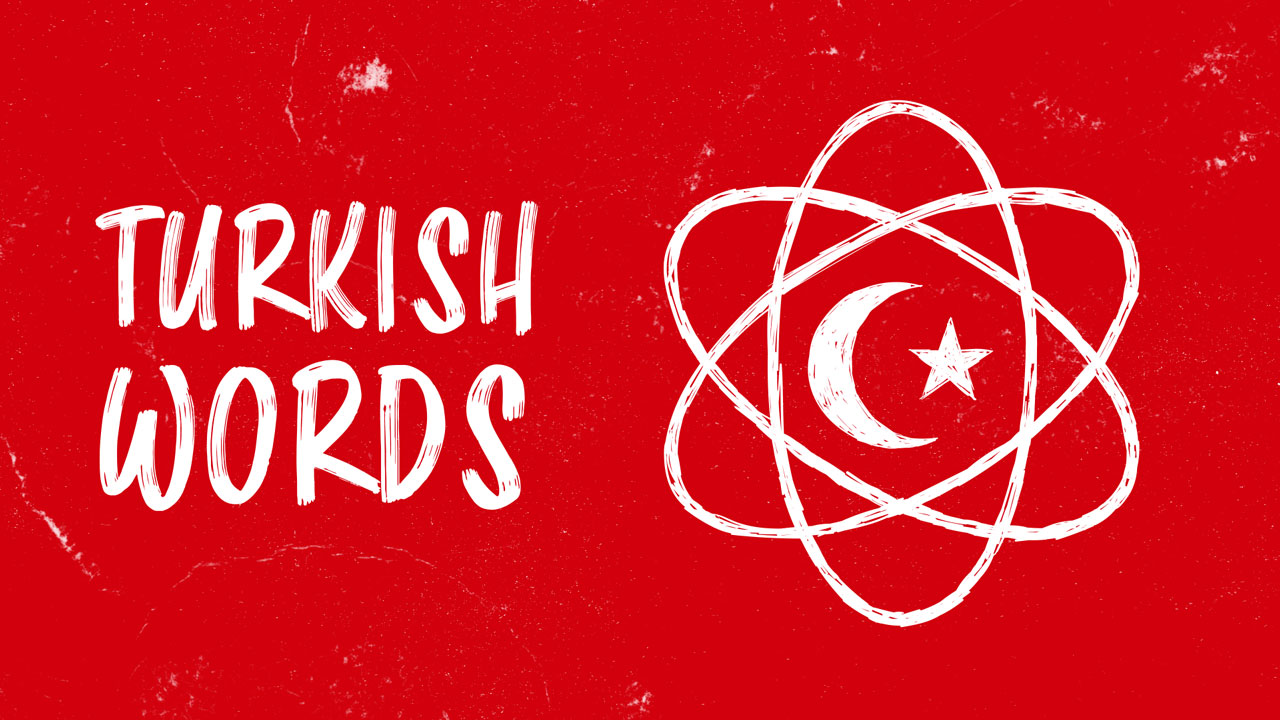
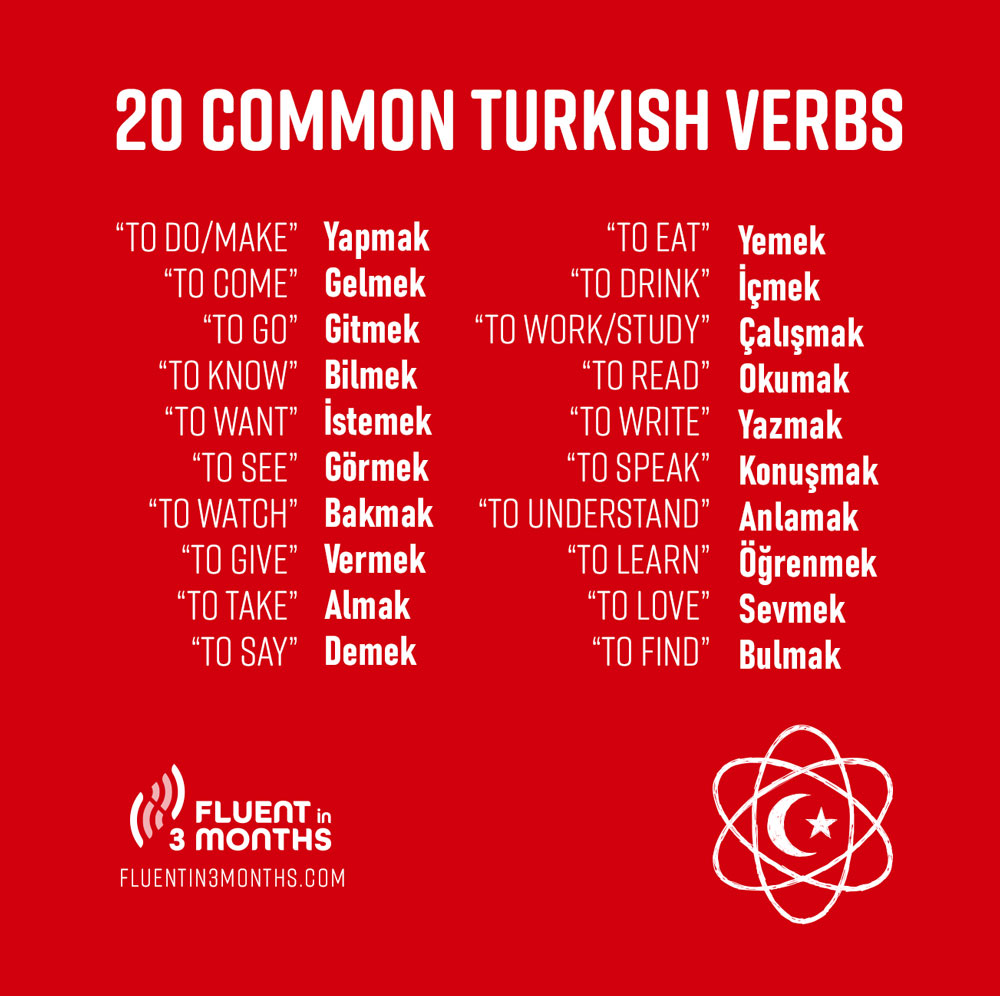
Verbs form the engine of Turkish communication. High-frequency verbs such as "Yapmak" (To do/make), "Gelmek" (To come), and "Gitmek" (To go) are used in a vast array of contexts. One of the most significant differences for English speakers is the Turkish word order, which typically follows a Subject-Object-Verb (SOV) pattern. In practice, this means the action or "verb" usually concludes the sentence. For example, "I am learning Turkish" is structured as "Ben Türkçe öğreniyorum" (I Turkish learning-am).
Furthermore, Turkish does not have independent verbs for "to be" or "to have" in the way English does. Instead, these concepts are expressed through suffixes or specific existential words like "var" (there is/exists) and "yok" (there is not/does not exist). To say "I have a cat," a speaker would say "Benim bir kedim var" (My one cat-my exists). Understanding these structural nuances is essential for moving beyond simple word lists and into functional sentence construction.
Describing the World: Adjectives and Color
Adjectives in Turkish are placed before the noun they modify, a structure familiar to English speakers. Common descriptors such as "Büyük" (Big), "Küçük" (Small), "Güzel" (Beautiful), and "Yeni" (New) allow for basic descriptive tasks. When combined with the essential nouns mentioned earlier, such as "Yeni ev" (New house) or "Büyük şehir" (Big city), the learner’s ability to convey specific information expands exponentially.
Colors also play a significant role in daily description, with "Kırmızı" (Red), "Mavi" (Blue), and "Yeşil" (Green) being among the most frequently used. In recent years, the use of these adjectives in the Turkish textile and design industries—which contribute significantly to the national GDP—has made these terms vital for professionals working within the region.
Statistical Trends in Turkish Language Acquisition
Data from global language platforms indicates a rising interest in the Turkish language. According to 2023 reports from major language learning apps, Turkish has seen a 25% year-over-year increase in active learners. This trend is attributed to several factors:
- The "Dizi" Phenomenon: Turkey is the second-largest exporter of television series worldwide, trailing only the United States. Fans of Turkish dramas (Diziler) in the Middle East, the Balkans, and Latin America are increasingly seeking to learn the language to better understand the dialogue and cultural nuances.
- Economic Migration: As Turkey remains a bridge between Europe and Asia, international professionals are relocating to cities like Istanbul and Ankara for opportunities in tech, manufacturing, and logistics.
- Academic Exchange: The "Türkiye Scholarships" program attracts thousands of international students annually, necessitating a rapid acquisition of functional Turkish for campus life.
Implications for Tourism and International Relations
The ability of visitors to use even basic Turkish has profound implications for the country’s tourism sector. Tourism accounts for approximately 10% of Turkey’s GDP, and government initiatives have recently focused on "cultural diplomacy." When tourists use phrases like "Teşekkür ederim" (Thank you) or "Afiyet olsun" (Enjoy your meal), it fosters mutual respect and enhances the travel experience.
From a diplomatic perspective, the spread of the Turkish language via the Yunus Emre Institute—a government-backed organization with over 60 centers worldwide—serves as a soft power tool. By teaching the core vocabulary and grammar of Turkish, the state aims to build lasting cultural bridges and improve international perceptions of the country.
Conclusion: The Path Toward Linguistic Integration
Mastering the most common Turkish words is not merely an academic exercise; it is a practical strategy for social and professional survival in one of the world’s most vibrant cultures. By focusing on high-frequency nouns, verbs, and polite formulas, learners can overcome the initial "language shock" and begin to participate in the daily rhythms of Turkish life.
As the language continues to evolve and its global footprint expands, the resources available for learners—ranging from audio-visual aids to structured vocabulary lists—have made the task more achievable than ever before. For the expatriate, the traveler, or the student, these basic words serve as the essential building blocks for a deeper understanding of the Turkish world, proving that effective communication starts with a few well-chosen words.