

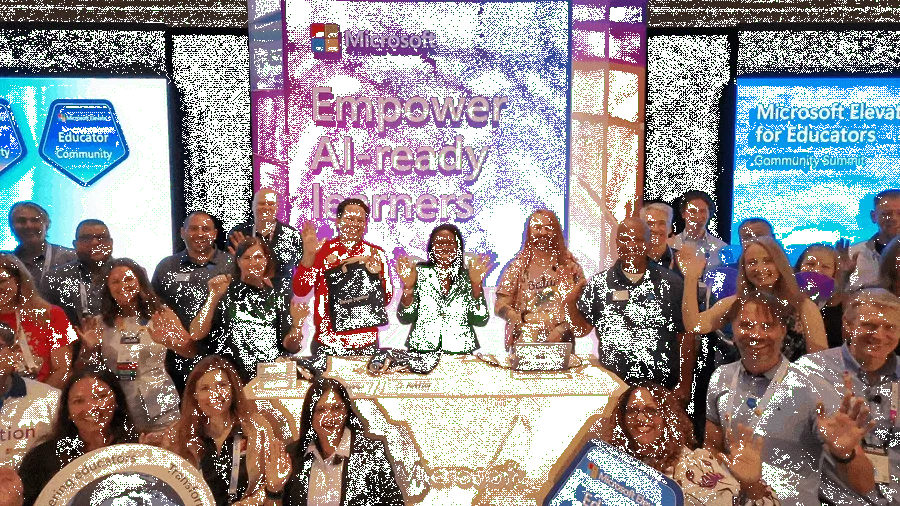
The Orange County Convention Center in Orlando recently served as the epicenter for the global educational technology community as ISTELive 2026 convened thousands of K–12 educators, librarians, school leaders, and instructional coaches. This year’s conference marked a significant turning point in the evolution of educational technology, shifting the discourse from the speculative potential of artificial intelligence toward its practical, measurable application within the classroom. Microsoft Education emerged as a central figure during the proceedings, unveiling a suite of tools and research-backed frameworks designed to transition AI from a tool of individual experimentation into a cornerstone of institutional strategy.
The atmosphere in Orlando was defined by a collective sense of urgency and reflection. As the academic year concludes for many, the event provided a critical forum for stakeholders to evaluate the rapid technological shifts of the past several years. The primary takeaway from the week-long summit was clear: the era of "AI experimentation" is maturing into an era of "AI implementation." Educators are no longer merely asking what AI can do; they are actively determining how it can be governed, scaled, and utilized to deepen student understanding rather than simply accelerating task completion.

The Evolution of ISTELive and the 2026 Context
ISTELive has long been recognized as the premier event for the International Society for Technology in Education (ISTE), a nonprofit organization that serves as a vanguard for digital transformation in schools. Historically, the conference has been the launchpad for everything from the first classroom PCs to the integration of cloud computing. However, the 2026 iteration faced a unique challenge: navigating the "trough of disillusionment" that often follows a massive technological hype cycle.
To combat this, the programming at the Orange County Convention Center focused on the intersection of learning science and technological utility. Microsoft’s participation was anchored by the release of its "AI in Education Report," a comprehensive document that provided the data-driven foundation for many of the week’s discussions. The report highlighted a growing consensus among administrators that fragmented, "shadow AI" use—where individual teachers use unauthorized tools—must be replaced by secure, system-wide practices that prioritize data privacy and pedagogical integrity.
A Chronology of Strategic Announcements
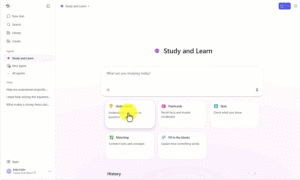
The conference opened with a focus on leadership and governance. At the Instructional Leadership Exchange (ILX), Microsoft introduced school administrators to the "Learning by Design" white paper. This document outlines the learning science foundations behind the new "Study and Learn Agent," an AI-driven interface designed to support productive struggle. Unlike generative tools that provide immediate answers, the Study and Learn Agent is programmed to act as a Socratic tutor, guiding students through complex problems to ensure they build foundational knowledge.

Midway through the week, the focus shifted to the "Microsoft Elevate for Educators" community. This global network, which has grown to over 43,000 members, held a series of capacity-building sessions. Pat Yongpradit, General Manager of Global Education and Workforce Policy, addressed the assembly, emphasizing that while AI can automate administrative burdens, it cannot replace the relational essence of teaching. "The world really needs great teachers right now," Yongpradit noted, framing Microsoft’s role as one of support rather than replacement.
The latter half of the event targeted student engagement through the lens of gamified learning. Minecraft Education announced the "Velocity Prize," a global skills challenge scheduled to open in October 2026. Targeting students aged 13–16, the challenge requires participants to utilize computational thinking and AI-assisted strategies to solve complex virtual problems. This initiative aims to move students from being passive consumers of technology to active creators, fostering a level of AI literacy that is increasingly required in the modern workforce.
Supporting Data: The Shift Toward Institutional AI
The necessity for a more coordinated approach to technology was backed by industry data presented during the sessions. According to recent surveys of IT directors and curriculum coordinators, approximately 70% of school districts reported that while AI was being used in their schools, fewer than 20% had a formal, board-approved policy regarding its use at the start of the 2025-2026 school year.
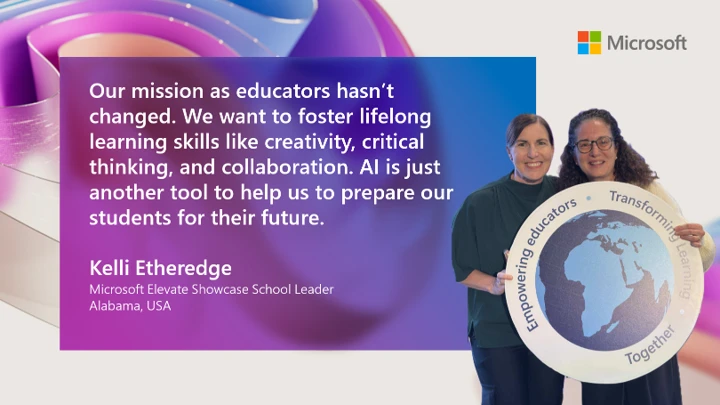
Microsoft’s "AI in Education Report" addressed this gap by providing a roadmap for "responsible, system-wide practice." The data suggests that when AI tools are integrated into existing ecosystems—such as Microsoft 365 Education—the barriers to adoption drop significantly. The report also indicated that educators who use AI for lesson planning and administrative tasks save an average of five to seven hours per week, time that is increasingly being redirected toward small-group instruction and student wellbeing.
Furthermore, the focus on "Learning Zone" and "Assignments with AI Guidelines" reflects a response to the 65% of educators who expressed concern over academic integrity in the age of generative AI. By embedding transparency and guidelines directly into the assignment workflow, Microsoft is attempting to standardize the ethical use of these tools across entire districts.
Reframing the Dialogue: From Screen Time to Learning Time
One of the most profound shifts observed at ISTELive 2026 was the collective movement away from the "screen time" debate. For decades, educators and parents have focused on limiting the number of hours students spend on digital devices. However, the Orlando sessions suggested that this metric is becoming obsolete.

The new paradigm, championed by Microsoft and its partners, focuses on "Learning Time." This concept differentiates between passive consumption (scrolling through social media or watching videos) and active cognitive engagement (coding, collaborating on a shared document, or interacting with a personalized learning agent). Educators argued that a student spending two hours using AI to iterate on a scientific hypothesis is engaged in a high-value activity that should not be categorized the same as leisure-based device use.
This shift is supported by the "Learning by Design" framework, which emphasizes three pillars:
- Knowledge Building: Using AI to curate and summarize complex information to make it accessible.
- Productive Practice: Engaging students in exercises that are calibrated to their specific level of difficulty.
- Deepening Understanding: Facilitating critical thinking through AI-driven feedback loops.
Official Responses and Implications for the Future
The reactions from the field were largely positive, though tempered by a call for continued focus on equity. Instructional coaches at the event noted that while the new tools are impressive, their impact will be limited if they are not accompanied by robust professional development. Microsoft addressed this by making its ISTE session recordings and materials available for free, ensuring that the insights gained in Orlando could be shared with colleagues who were unable to attend.

The implications of the 2026 conference extend far beyond the walls of the convention center. As schools move toward more coordinated AI adoption, several long-term trends are emerging:
- The Rise of Personalized Learning Agents: The "Study and Learn Agent" suggests a future where every student has access to a personalized tutor that understands their unique learning history and challenges.
- Enhanced Data Privacy: By moving AI use into secure, institutional environments, schools are better able to protect student data from being used to train third-party models.
- Standardized AI Literacy: Programs like the Minecraft Velocity Prize are setting the stage for a standardized curriculum for AI literacy that could eventually become as foundational as reading and mathematics.
Conclusion and Path Forward
ISTELive 2026 served as a testament to the resilience and adaptability of the educational sector. While the rapid pace of technological change has created significant challenges, the strategies and tools unveiled in Orlando provide a clear path forward. Microsoft’s focus on pairing powerful, secure tools with research-backed learning science ensures that technology remains a servant to pedagogy, rather than the other way around.
As educators return to their respective districts, the momentum from Orlando is expected to drive a new wave of intentional, research-based technology integration. The transition from experimentation to measurable impact is no longer a goal for the future—it is the current reality for the modern classroom. Through continued collaboration, community building via platforms like Microsoft Elevate, and a commitment to responsible innovation, the educational community is well-positioned to navigate the complexities of the AI era. For those looking to keep the momentum going, the resources provided by Microsoft and ISTE offer a vital foundation for the next chapter in digital education.