


The landscape of corporate learning and development (L&D) is undergoing a profound transformation, shifting from a focus on mere knowledge dissemination to the cultivation of adaptive, inclusive, and continuously learning workforces. At the forefront of this evolution are Chief Learning Officers (CLOs) and learning executives who are redefining how organizations foster talent and drive performance. In a recent in-depth interview as part of the Chief Learning Officer‘s esteemed "Learning Insights" series, a prominent L&D leader shared their journey, strategic initiatives, and vision for the future of workplace learning, offering a compelling case study for organizations seeking to harness the full potential of their employees.
The Genesis of a Learning Advocate: From HR Curiosity to Strategic Imperative
The leader’s path into L&D was not a predetermined one, but rather a journey sparked by an enduring curiosity about leadership efficacy. "I didn’t begin my career intending to specialize in learning and development," they explained. "What drew me in was a deep curiosity about why some leaders thrive while others plateau, even when they have similar technical expertise." This early observation in their Human Resources and Organizational Development (HR/OD) work led to a critical realization: the most significant differentiator in leadership success was not innate intelligence or years of experience, but rather a leader’s capacity for learning, adaptation, and the ability to foster an inclusive environment. This insight became the bedrock of their career, propelling them into the realm of capability building.
Over the years, their role has expanded significantly. From initial experiences in facilitating learning programs, their focus evolved to architecting comprehensive learning strategies within both corporate and academic settings. This transition was fueled by a deeper understanding of the behavioral factors that either accelerate or impede learning. Concepts such as self-awareness, humility, accountability, and psychological safety emerged as crucial elements. These insights ultimately coalesced into the "ALL IN Mentality™," a framework that redefines leadership development not as an abstract inspirational theory, but as a practical discipline grounded in intentional behavior. This philosophical shift signifies a move away from passive knowledge acquisition towards active behavioral development.
Driving Employee Growth Through Strategic L&D Initiatives
When asked about key initiatives implemented to foster employee development and a robust learning culture, the leader highlighted three core areas: leader capability, culture clarity, and system alignment. While specific program details were not fully elaborated in the initial excerpt, the underlying principle is clear: learning must be integrated into the organizational fabric, not treated as an isolated event. "My most impactful initiatives have centered on leader capability, culture clarity and system alignment," they stated. The overarching goal is to shift learning from an occasional occurrence to an ingrained behavioral expectation, making it an intrinsic part of how the organization operates.
This strategic approach is exemplified by the development of a highly impactful leadership accountability and inclusion lab. Initially a standalone initiative, it was subsequently integrated as a core module within a comprehensive leadership course designed for both developing and emerging leaders. This academic integration allowed for the embedding of principles that inform the "ALL IN Mentality™" within a structured, semester-long learning experience.
The "ALL IN Mentality™" Lab: A Behavioral Immersion for Leadership Excellence
The leadership accountability and inclusion lab, which evolved into a cornerstone of a dynamic leadership course, represents a significant contribution to employee growth and business success. Unlike traditional workshops, this program functioned as a deep behavioral immersion. Participants engaged in targeted exercises designed to cultivate critical leadership skills. These exercises focused on developing practical acumen in areas such as:
- Self-awareness: Enhancing understanding of personal biases, assumptions, and their impact on leadership style.
- Accountability: Fostering a sense of ownership for individual and team outcomes, particularly in fostering inclusive environments.
- Inclusion: Equipping leaders with the skills to actively solicit, value, and integrate diverse perspectives.
- Psychological Safety: Creating an environment where individuals feel safe to take risks, voice concerns, and be their authentic selves without fear of reprisal.
By embedding these principles within a dynamic leadership curriculum, participants were encouraged to apply these concepts across various modules, including communication, influence, and systems thinking. This iterative process, spanning an academic semester, allowed for the sustained development of confidence and capability.
The results of this immersive program have been demonstrably positive. Participants reported heightened self-awareness, a marked improvement in collaboration skills, and a more profound understanding of how inclusive practices directly correlate with enhanced performance. Faculty observed a more intentional and mature dialogue within the cohort, indicating a significant uplift in leadership maturity. Graduates have reportedly carried these enhanced behaviors back into their respective workplaces, contributing to increased trust levels, more effective problem-solving, and the development of more resilient teams. The program serves as a powerful testament to the idea that when emerging leaders internalize inclusive leadership as a daily discipline, they become catalysts for both personal growth and significant organizational impact.
Addressing Misconceptions: L&D as a Strategic Accelerator, Not a Repair Shop
A pervasive misconception within the L&D field is that the function is solely responsible for "fixing" leaders or addressing organizational deficiencies. Many assume that L&D teams can simply "train away" complex cultural issues or performance gaps. However, the leader firmly refutes this notion, emphasizing that L&D is not a reactive "repair shop" but a proactive "strategic accelerator."
This misconception is addressed by reframing the L&D function as a "capability engine" rather than a mere "content provider." The approach involves a strategic partnership with organizational leaders, focusing on:
- Co-creating capability strategies: Working collaboratively to identify critical skills and behaviors needed for future success.
- Designing for behavioral change: Developing learning experiences that are intentionally designed to drive sustained behavioral shifts.
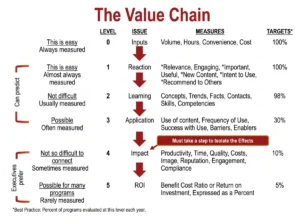
- Measuring impact: Establishing clear metrics to track the influence of learning initiatives on business outcomes and organizational culture.
By positioning L&D as a strategic lever rather than a transactional service desk, leaders are encouraged to engage more proactively, becoming co-owners of capability development rather than passive consumers of training. This collaborative model ensures that learning initiatives are strategically aligned with business objectives and have a tangible impact on organizational performance.
The Future of Workplace Learning: Embracing Capability Development and Adaptive Cultures
The future of workplace learning, according to the leader, is characterized by a pivotal shift from mere knowledge transfer to comprehensive capability development. The focus is moving beyond simply imparting more information to empowering individuals to effectively apply, adapt, and integrate their knowledge in real-time. This evolution is fueled by several energizing trends:
- Personalized learning pathways: Leveraging technology and data to tailor learning experiences to individual needs, career aspirations, and learning styles. This aligns with growing demand for bespoke development, moving away from one-size-fits-all approaches.
- Continuous learning ecosystems: Integrating learning seamlessly into the workflow, making it an ongoing process rather than a discrete event. This includes microlearning, just-in-time resources, and embedded learning tools.
- AI-powered learning augmentation: Utilizing artificial intelligence to personalize content, provide real-time feedback, and automate administrative tasks, thereby freeing up L&D professionals to focus on higher-value strategic work.
To prepare organizations for this dynamic future, the leader advocates for building robust "learning cultures" rather than solely focusing on developing discrete learning programs. This involves:
- Fostering curiosity and psychological safety: Creating an environment where employees feel encouraged to explore, experiment, and learn from both successes and failures.
- Empowering continuous feedback: Establishing mechanisms for regular, constructive feedback that supports ongoing development and learning.
- Championing learning as a strategic imperative: Ensuring that learning and development are recognized and valued at the highest levels of the organization as critical drivers of competitive advantage.
Organizations that embrace learning as a core strategic capability, rather than a compliance-driven necessity, are poised to thrive in the evolving business landscape.
Essential Qualities of a Successful L&D Leader
The effectiveness of an L&D function is intrinsically linked to the caliber of its leadership. Successful L&D leaders, according to the interviewed executive, require a sophisticated blend of strategic foresight, deep behavioral understanding, and rigorous operational discipline. Key essential qualities include:
- Strategic Acumen: The ability to align learning initiatives with overarching business goals and anticipate future workforce needs. This involves understanding market trends, competitive landscapes, and organizational challenges.
- Behavioral Insight: A profound understanding of human motivation, learning processes, and the dynamics of organizational culture. This allows for the design of interventions that drive genuine behavioral change.
- Curiosity: An insatiable desire to learn, question assumptions, and explore new approaches to development and capability building.
- Empathy: The capacity to understand and connect with the diverse needs and perspectives of learners across the organization.
- Resilience: The ability to navigate challenges, learn from setbacks, and persevere in driving impactful change within complex organizational structures.
- Systems Thinking: The ability to see how different parts of an organization interact and how learning initiatives can be integrated to create holistic positive impact.
Cultivating these traits involves intentional practice. The "ALL IN Mentality™" principles serve as a grounding framework for staying aware, accountable, and action-oriented. For team development, this translates into consistent coaching, encouraging reflective practices, and fostering a shared sense of ownership for achieving desired outcomes.
Game-Changing Advice for a Younger Self
Reflecting on their career trajectory, the leader offers powerful advice to their younger self, emphasizing the importance of presence and intentionality over sheer pace. "Slow down enough to see what’s really happening," they advise. This sentiment underscores the critical need for observation, analysis, and thoughtful action in leadership, rather than being driven by constant activity.
Further guidance includes:
- Embrace vulnerability: Recognizing that true leadership involves acknowledging limitations and seeking collaboration.
- Seek feedback relentlessly: Actively soliciting diverse perspectives to gain a more comprehensive understanding of one’s impact and areas for growth.
- Prioritize relationships: Understanding that strong, trust-based relationships are foundational to effective influence and collaboration.
Most importantly, the message is one of empowerment: "Your voice matters—use it intentionally." This highlights the critical role of L&D professionals in shaping organizational culture and driving strategic change through clear, impactful communication.
The Widening Gap: The Biggest Challenge Facing L&D
Currently, the single most significant challenge confronting L&D professionals and the industry as a whole is the substantial and widening chasm between stated organizational values and the systemic reinforcements that govern behavior. Many organizations publicly espouse commitments to learning, inclusion, and leadership development. However, their internal structures, reward systems, and operational metrics often prioritize speed, output, and short-term gains.
L&D professionals are frequently tasked with driving transformative change initiatives, yet they often lack the necessary organizational alignment and systemic support to ensure these changes are sustained. The core challenge, therefore, is not in designing innovative and effective programs, but in ensuring that the broader organizational environment actively supports and reinforces the desired behaviors that these programs aim to instill.
This is where frameworks like the "ALL IN Mentality™" prove particularly valuable. By articulating that inclusion, continuous learning, and high performance are not competing priorities but rather mutually reinforcing disciplines, L&D leaders can begin to bridge this critical gap. This requires a strategic dialogue with senior leadership, demonstrating how investing in these seemingly "softer" skills and cultural elements directly contributes to tangible business outcomes, ultimately fostering a more resilient, adaptable, and high-performing organization.
Organizations that successfully navigate this challenge, by aligning their systems and cultures with their stated values, will be best positioned to attract, develop, and retain top talent, thereby securing a sustainable competitive advantage in the years to come.