


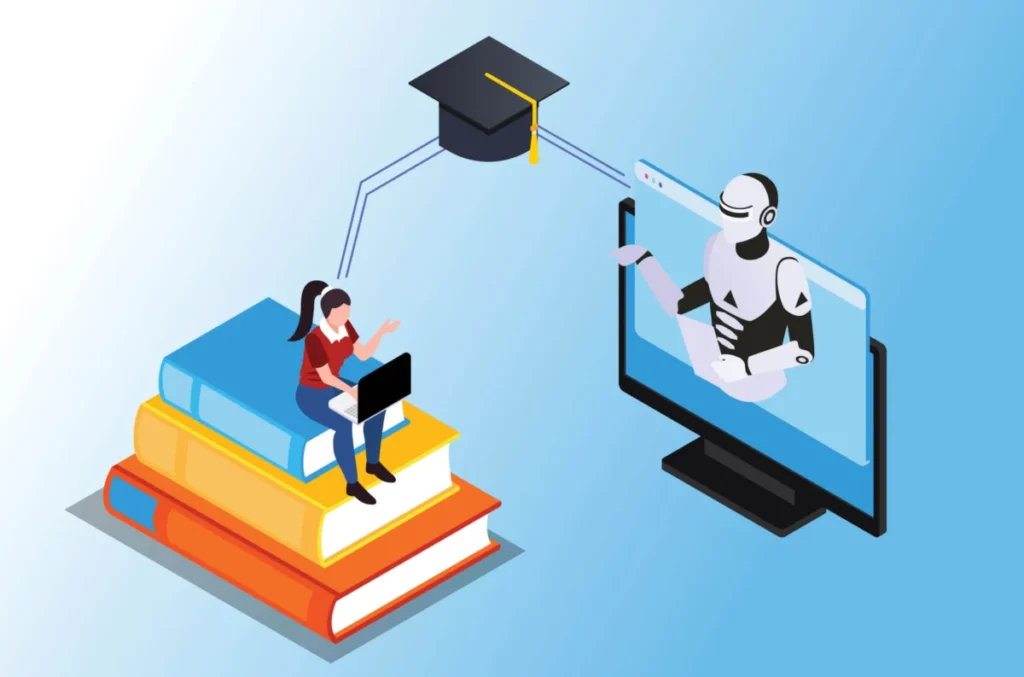
Universities, often lauded as bastions of enduring knowledge and tradition, stand on the precipice of a profound transformation, driven by the accelerating capabilities of artificial intelligence. For centuries, these institutions have maintained a remarkably stable core: the transmission of expert, often tacit, knowledge from experienced educators to students through structured courses and examinations. While the physical campuses and technological tools may have evolved, the fundamental pedagogical approach has remained largely consistent. However, the advent of AI is poised to disrupt this equilibrium by offering machines the unprecedented ability to capture and deploy the very tacit knowledge that has historically defined expert value.
The true significance of artificial intelligence extends far beyond its capacity for tasks such as essay generation, document summarization, or email drafting. Its revolutionary potential lies in its burgeoning ability to codify and operationalize "tacit knowledge" – the intuitive, experience-based expertise that professionals possess but struggle to articulate explicitly. This practical know-how has long been the bedrock of professions like medicine, law, and academia, making human experts indispensable. Prior to the advent of sophisticated machine learning, the limitations of what machines could achieve were intrinsically linked to the limitations of what humans could write down.
Machine learning, however, has fundamentally altered this paradigm. Instead of relying on explicit, codified instructions, modern AI systems learn by observing patterns within vast datasets of contexts, actions, and outcomes. This allows them to infer relationships and make predictions. For instance, a machine learning model trained on extensive clinical interaction data can begin to assist in medical diagnoses. Similarly, models trained on thousands of customer service conversations can learn to emulate the nuanced communication strategies of top-performing agents. This learned expertise can then be deployed to automate customer service functions or to augment the capabilities of human workers who may not possess the same depth of experience. Emerging research underscores this impact: studies have demonstrated that AI-powered conversational assistants can significantly boost productivity, particularly among less experienced customer service representatives, by enabling them to respond with the efficacy of their more seasoned colleagues.
The education sector, inherently rich in tacit knowledge, is particularly susceptible to these advancements. Exceptional educators do more than simply convey information; they possess an intuitive understanding of student confusion, an ability to select impactful examples, and the pedagogical skill to adjust their teaching pace and approach dynamically. Professors, beyond imparting textbook knowledge, contextualize information through their specialized, often unspoken, expertise. Effective academic advisors understand the delicate balance between granting students autonomy and providing necessary structure, thereby imparting the craft of research. Similarly, experienced admissions officers, fundraisers, and department chairs often rely on judgments honed over years of practical engagement.
Historically, core educational activities such as teaching, advising, and research have proven difficult to automate or scale without compromising quality. This has contributed to what economists term "Baumol’s cost disease," where productivity gains in technologically advanced sectors drive up wages across the economy. Universities, requiring significant human capital and expert time, have faced persistent upward pressure on the real cost of delivering high-quality education.
Artificial intelligence presents the first credible opportunity to break this cycle. For the first time, a technology is emerging that can augment or automate many of the activities central to the functioning of universities. This inherent exposure necessitates a proactive approach to integration, rather than reactive adaptation.
Rethinking Higher Education in an AI-Integrated World
The transformative impact of AI does not portend the obsolescence of professors, the reduction of universities to mere applications, or the emptying of campuses. Instead, it promises to make activities previously constrained by the scarcity of expert time widely accessible. Tutoring, personalized advising, in-depth feedback, sophisticated translation, nuanced explanation, comprehensive research synthesis, and tailor-made learning experiences can now be delivered at an unprecedented scale. The critical question facing educational institutions, particularly in Canada, is not whether they will be transformed, but whether they will lead this transformation or have it dictated to them by technology companies, global competitors, and evolving student expectations.
A useful framework for understanding this organizational and economic reshaping is the "3R" model: Replace, Reimagine, and Recombine. This framework, developed through analysis of how general-purpose technologies impact various sectors, is equally applicable to higher education.
Phase 1: Replace – Augmenting Existing Processes
The initial phase involves using AI to perform existing tasks more efficiently, cost-effectively, or at a greater volume, effectively replacing older technologies or manual processes. This should be the immediate starting point for all universities. The evidence supporting AI’s efficacy in this regard is compelling. Studies have shown that AI tools like ChatGPT can significantly improve productivity in professional writing tasks, reducing both the time required and enhancing the quality of output. In software development, tools such as GitHub Copilot have been observed to accelerate task completion by over 127 percent. Furthermore, research conducted with management consulting firms indicates that consultants utilizing advanced AI models like GPT-4 can complete a higher volume of tasks, work at a faster pace, and produce superior quality results.
Within universities, opportunities for "Replace" are abundant across various functions. In teaching and learning, AI can assist in generating comprehensive course content, including outlines, lecture notes, slides, illustrative examples, simulations, assignments, comprehensive exams, and detailed grading rubrics. It can also streamline the grading process, provide students with timely and personalized feedback, and automate the drafting of routine course communications. In research, AI can conduct extensive literature reviews, identify novel research questions, facilitate data collection, cleaning, and analysis, develop specialized software tools, assist in complex theorem proving, contribute to paper writing, and support grant application processes. On the operational side, AI can enhance efficiency in critical administrative areas such as recruitment and hiring, marketing strategies, fundraising efforts, financial reporting, accounting, procurement processes, and scheduling. It can also significantly improve student and staff access to essential information.
However, it is crucial to recognize that "Replace" is a foundational step, not a strategic end in itself.
Phase 2: Reimagine – Redefining Core Functions
The true transformative potential of AI lies in the "Reimagine" phase, where fundamental organizational structures and processes are rethought in light of new technological capabilities. The impact of electricity on manufacturing, for instance, was not merely about replacing steam engines with electric motors; it was about redesigning factories around the possibilities of distributed power. Similarly, the computer revolution in business was driven not just by replacing typewriters and calculators, but by rethinking supply chains, customer relationships, global operations, and organizational hierarchies. Business models that fully embraced the internet, such as Amazon, ultimately surpassed legacy models that merely adopted it for basic functions, as exemplified by the struggles of Barnes & Noble and Blockbuster.
This same logic now applies to higher education.
The most significant "Reimagine" opportunity lies within teaching and learning. For decades, Benjamin Bloom’s "two-sigma problem" has highlighted a central dilemma in education: one-on-one tutoring combined with mastery-based learning demonstrably outperforms conventional classroom instruction, yet it has historically been too expensive and resource-intensive to scale. AI fundamentally alters these economics. Early evidence from a 2025 randomized controlled trial conducted in a Harvard undergraduate physics class revealed that students utilizing an AI tutor achieved significantly greater learning gains in less time compared to those in a traditional active-learning classroom. Moreover, these students reported higher levels of engagement and motivation.
The future university course will likely transcend the model of a recorded lecture supplemented by a chatbot. Instead, it will be characterized by personalization, mastery-based progression, and adaptive learning pathways. Students will advance at their own pace, with AI tutors providing real-time insights into their mastered concepts, areas of misunderstanding, effective learning approaches, relevant examples, and readiness for subsequent material. In this evolved landscape, the professor’s role will shift from that of a broadcaster of standardized content to that of a designer of dynamic learning environments, a mentor, a critical provocateur, a disciplinary guide, and a guardian of academic standards.
This evolution necessitates a fundamental rethinking of assessment. If AI can readily generate competent essays or solve complex problem sets, these tasks can no longer serve as sole indicators of student learning. There will be a growing emphasis on alternative assessment methods, including oral examinations, live problem-solving scenarios, collaborative team-based simulations, comprehensive project portfolios, and laboratory demonstrations. Each of these will likely be accompanied by short defenses where students articulate their reasoning, justify their choices, present their evidence, and explain their utilization of AI tools. The encouraging news is that AI itself can help make these alternative assessment modes more scalable. AI tutors, by continuously evaluating and providing feedback, will blur the lines between teaching and assessment, facilitating ongoing evaluation rather than discrete testing events.
Research will also undergo a profound transformation. AI can excel at identifying knowledge gaps across diverse fields, pinpointing contradictions within existing literature, generating novel hypotheses, designing experiments, simulating alternative explanations, and even proposing candidate materials or compounds. The research enterprise will increasingly resemble a human-AI collaborative discovery system, moving away from the image of a solitary scholar in a library. Universities that lead this transition will invest in shared research platforms, robust and trusted data infrastructure, secure model environments, and sophisticated AI research assistants. Just as "dark software factories" are emerging, where AI agents manage significant portions of the coding, testing, and deployment lifecycle with minimal human oversight, some university research groups may evolve into "dark research factories." In these labs, AI agents could perform the bulk of the experimental work and data analysis, freeing human researchers to focus on crucial higher-level tasks such as setting standards, framing research questions, evaluating outputs, and governing the overall research system.
Operational functions within universities also offer substantial opportunities for AI-driven transformation. Universities should be actively developing AI-enabled advising systems capable of monitoring student progress in real-time, identifying potential risks early, and triggering timely human interventions. Admissions processes can be reimagined from passive application review to proactive talent discovery, with a particular focus on identifying and recruiting underrepresented students who might not otherwise consider a particular institution. Partnerships with employers, including co-op programs, can become more targeted and effective, utilizing AI to identify emerging industries and employers, optimally matching students to opportunities, and assisting firms in understanding how to leverage student talent within AI-augmented workplaces. Fundraising efforts can be made more personalized and strategic, not by diminishing human connection, but by alleviating administrative burdens on staff and providing them with deeper insights into donor engagement.
Furthermore, university curricula must undergo equally profound adaptation. The future labor market will increasingly reward skills that complement AI capabilities and devalue those that are easily substitutable by it. While skills like writing, coding, editing, and background research will not disappear entirely, their market value is likely to diminish. The premium will shift towards higher-order cognitive and interpersonal skills, including problem framing, entrepreneurial thinking, critical analysis, strategic decision-making, aesthetic judgment, leadership, effective communication, and the ability to collaborate seamlessly with intelligent tools. Every graduate, regardless of their chosen discipline, must acquire a strong foundation in AI literacy, not with the expectation that they will all become technologists, but because every profession will be fundamentally reshaped by AI.
Crucially, all these advancements must be governed with careful consideration. Universities bear significant responsibilities concerning accessibility, data privacy, fairness, academic integrity, and maintaining public trust. While these obligations are real and important, they cannot be allowed to foster paralysis. An institution that prohibits students and staff from using AI tools is akin to a city banning electricity due to the initial risks of fires and electrocutions. The appropriate response to such risks has historically been the development of robust standards, regulations, safety inspections, and comprehensive training, not the preservation of outdated technologies. The responsible path forward involves deliberate institutional adoption, characterized by clear guidelines, secure and ethical tools, transparent accountability mechanisms, and a culture that embraces experimentation and continuous learning.
Phase 3: Recombine – Pioneering New Frontiers
The third phase, "Recombine," envisions AI integrating with other emerging technologies such as robotics, the Internet of Things (IoT), extended reality (XR), synthetic biology, and quantum computing, leading to the creation of entirely new technological paradigms. Predicting these future combinations with certainty is challenging. This inherent uncertainty underscores the vital role of universities as centers for technological research and exploration. Universities are among the few institutions designed to scan the horizon, facilitate interdisciplinary collaboration, and explore novel possibilities before market demands fully materialize. The future trajectory of universities will, in part, depend on their ability to transform campuses into living laboratories for such technological recombination.
It is important to emphasize that none of these transformations render the traditional university campus obsolete. On the contrary, the campus environment and student life are poised to become even more essential. As the availability of content becomes abundant, the value of in-depth discussion and critical debate will rise. With scalable AI-powered tutoring, the importance of human mentorship will be amplified. When AI can readily generate solutions, the human capacities to formulate insightful questions, embrace calculated risks, and lead teams will become increasingly valuable. The residential experience, extracurricular activities such as clubs and athletics, design teams, student government, laboratory work, entrepreneurship programs, and co-op placements are not peripheral to the AI-integrated university; they are central to its mission. These experiences are critical for developing the leadership, judgment, interpersonal, and other distinctly human skills whose value is amplified in an AI-rich world.
The current era represents a structural break in the evolution of higher education – an opportunity to construct universities that are more personal, more ambitious, and more profoundly human than those of today.
The greatest peril facing universities is not the risk of moving too quickly, but rather the danger of inertia. A slow response risks allowing external forces—elite global institutions, proprietary technology platforms, employers, and evolving student expectations—to define the future university without institutional input. The AI-powered university is not a distant hypothetical; it is rapidly becoming a reality. The choice for current institutions is whether they will proactively build this future in a way that strengthens public education, broadens access and opportunity, upholds research excellence, and enriches the human experience of university life, or whether they will attempt to defend an outdated model until it is no longer viable.
Universities have demonstrated remarkable longevity by adapting slowly, prioritizing the preservation of their core values. However, there are critical junctures in history where preservation necessitates bold reinvention. This moment in the evolution of artificial intelligence is precisely one of those junctures.