

Canada’s healthcare system, grappling with a persistent and growing shortage of registered nurses (RNs), has long relied on the influx of foreign-educated nurses (IENs) to fill critical gaps. While thousands of these internationally trained professionals arrive annually, eager to contribute their skills, provincial nursing regulations often present significant hurdles, transforming their aspirations into protracted and costly journeys. This complex landscape has spurred innovative solutions, with the University of New Brunswick (UNB) at the forefront of a pioneering dual nursing program designed to ethically recruit and integrate international nurses, ensuring a smoother transition into the Canadian healthcare workforce.
The Challenge of Internationally Educated Nurses
The reality for many IENs is a daunting process of navigating diverse provincial licensing requirements. These rigorous examinations, coupled with the necessity of upgrading language proficiency and clinical skills to meet Canadian standards, can consume years and substantial financial resources. Despite these formidable challenges, a significant number of IENs have successfully integrated into Canada’s nursing ranks. Data indicates that over 53,000 IENs are currently employed as RNs in Canada, representing approximately 15% of the total registered nursing workforce. The province of Ontario, for instance, has seen a notable trend, with over half of new RN licenses issued in recent years going to IENs, according to the Ontario College of Nurses. This statistic underscores the vital contribution of foreign-trained nurses to the Canadian healthcare landscape.
However, the current system is not without its drawbacks. A concerning number of IENs, after investing time and money in the licensing process, are forced to abandon their nursing careers altogether. They often accept positions in lower-paying, more accessible roles, such as personal care workers or cleaning staff, a phenomenon that deeply troubles Dr. Lorna Butler, Dean of Nursing at the University of New Brunswick. Dr. Butler highlights the "de-skilling" of these qualified professionals as a significant concern, lamenting the loss of their expertise within the nursing profession.
Ethical Recruitment and the "Brain Drain" Concern
The issue of IENs is further complicated by broader international implications. The International Council of Nurses (ICN) has raised concerns that wealthier nations, by actively recruiting nurses from developing countries, are contributing to a "brain drain" that can devasten the healthcare systems of these lower-income nations. A 2025 ICN report estimates that Canada alone avoids over $1 billion annually in training costs by recruiting nurses from countries like the Philippines, India, and Nigeria. This practice, while beneficial for Canadian healthcare staffing, raises ethical questions about the impact on the countries of origin, which may be stripped of their senior nursing professionals, leaving their own populations vulnerable.
The University of New Brunswick’s Dual Nursing Program: A Proactive Solution
In direct response to these multifaceted challenges, Dr. Butler and the faculty of nursing and health sciences at UNB launched an innovative dual nursing program in 2022. This initiative represents a significant departure from traditional recruitment models, aiming to create a more ethical and efficient pathway for international nurses. The program partners with the Manipal Academy of Higher Education (MAHE), a leading university in India, to deliver a four-year nursing curriculum that seamlessly integrates Canadian nursing standards.
The core of this dual program lies in its forward-thinking design. Students enrolled in the program at MAHE receive instruction that incorporates Canadian nursing competencies from the outset. This preemptive approach means that upon graduation, these Indian-trained nurses are eligible to sit for the New Brunswick nursing college examination while still in India. The theoretical outcome is that graduates can arrive in New Brunswick with their licensing requirements significantly advanced, potentially holding job offers in hand, thereby minimizing the typical delays and uncertainties.
Building Bridges: Collaboration and Curriculum Development
The development of this groundbreaking program was a complex undertaking, requiring extensive collaboration and meticulous curriculum adaptation. The UNB team conducted a thorough line-by-line review of the MAHE curriculum to identify any gaps in relation to Canadian nursing standards. Specific modules were then developed and integrated to address these areas, with a particular focus on crucial components such as social justice in healthcare and advanced clinical decision-making.
Beyond curriculum refinement, UNB actively sought to immerse potential students in the Canadian healthcare environment. Two cohorts of students from India were invited to Fredericton for summer institutes. These immersive experiences provided students with firsthand exposure to UNB’s nursing program and the local medical facilities. This initiative served not only to assess the students’ adaptability and engagement but also to foster a sense of connection and understanding of the Canadian healthcare system.
Engaging Stakeholders for Seamless Transition
A cornerstone of the dual program’s success is its comprehensive stakeholder engagement strategy. From its inception, Dr. Butler and her team have actively involved multiple levels of government, including Immigration, Refugees and Citizenship Canada, provincial medical regulators, and key healthcare providers in Fredericton, such as Horizon Health Network and Shannex nursing homes. These organizations are crucial, as they will serve as internship sites for the students and potential future employers.
"We will make sure students succeed," Dr. Butler affirms, highlighting the program’s commitment to student welfare. Currently, 99 students are enrolled in the four-year program in Udupi, India, with an additional 25 new students scheduled to begin this fall as the inaugural cohort nears graduation.
Dr. Butler emphasizes the importance of this multi-faceted engagement: "We’ve made sure that anyone that would have influence or could support the movement of the students to and from Canada are engaged. Because if there’s not a seamless transition when nurses finish this degree and get to Canada, then that’s a [reputational] issue for Canada." This proactive approach aims to mitigate potential bureaucratic roadblocks and ensure a welcoming environment for the incoming nurses.
To further solidify this collaborative foundation, Canadian stakeholders, including New Brunswick nursing regulators, UNB’s registrar, and executives from Horizon Health Network and Shannex, accompanied Dr. Butler on visits to India. These visits were designed to provide a direct and unvarnished understanding of the educational standards at MAHE. "I felt that if they didn’t see for themselves what Manipal had to offer it would be very difficult for us to explain or represent them properly," Dr. Butler explains. "We didn’t want any assumptions or any preconceived ideas from television or social media. We wanted them to go and experience it themselves. And I really think that made a difference."
Ensuring Domestic Capacity at Partner Institutions
A critical consideration for the program’s ethical framework was ensuring that the admission of Canadian-bound students would not diminish opportunities for domestic nursing graduates in India. MAHE successfully secured permission from India’s nursing council to increase its student quota, allowing for the admission of additional students for the UNB dual program without reducing the number of seats available for Indian students pursuing a domestic nursing degree. "Manipal still has its 100 seats a year… so they (will) graduate the same number that they always did," Dr. Butler clarifies, underscoring the program’s commitment to balancing international recruitment with the needs of the host country’s healthcare system.
A Pathway to Immigration and Integration
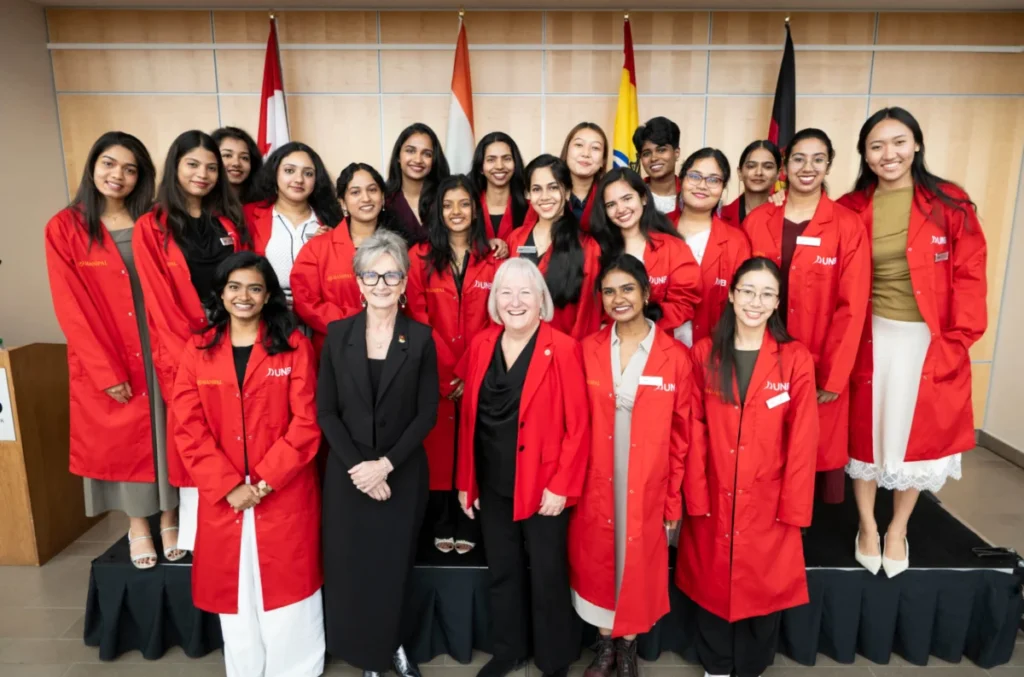
The dual nursing program offers a structured path for international graduates to not only practice nursing in Canada but also to immigrate. UNB faculty members deliver a significant portion of the curriculum virtually, working in tandem with MAHE professors. In the final year, students have the option to undertake a six-week preceptorship in Fredericton, gaining invaluable hands-on experience within Horizon Health Network and local Shannex nursing homes. This year, 19 students embarked on this journey, many experiencing international travel for the first time.
Dr. Butler views this preceptorship as more than just a clinical requirement; it is a crucial period for assessing the students’ overall integration into Canadian society. "Being here for the preceptorship is not just about nursing," she states. "It’s also whether or not they feel that this is a community where there they will be welcomed, whether it is safe to bring their families, whether they are valued." This holistic approach aims to foster a sense of belonging and support for the incoming nurses and their families.
The program is designed to facilitate immigration for its graduates. Starting this fall, UNB will offer dedicated licensure preparation classes and essential immigration assistance services to graduates intending to work in New Brunswick. This comprehensive support system is intended to streamline the transition from student to licensed nurse and resident.
Della Raju, a MAHE student participating in the program, expressed her enthusiasm to CBC News, stating, "If I get a job opportunity here, I’ll be coming back." This sentiment highlights the program’s success in attracting and retaining talented nursing professionals.
The dedication and work ethic of the MAHE students have also been a point of admiration for UNB faculty. During the preceptorships, Canadian faculty observed the students’ intense focus and eagerness to learn. "We found that the students were so intense and they just wanted to learn everything," Dr. Butler remarks. "We were exhausted by the end of the day." This observation speaks volumes about the caliber of students attracted to the program and their commitment to excelling in the nursing profession.
A Scalable Model for the Future
While currently operating on a smaller scale compared to national recruitment efforts, UNB’s dual nursing program offers a replicable and scalable model that could be adopted by other educational institutions and healthcare organizations. "This model would be transferrable to any other organization or nursing program that wanted to do this," Dr. Butler suggests. By fostering ethical recruitment practices, streamlining the licensing process, and providing comprehensive support for integration, this innovative approach holds significant promise for addressing Canada’s ongoing nursing shortage while upholding principles of global health equity. The success of this program could pave the way for a more sustainable and ethically grounded future for international nurse recruitment in Canada and beyond.