


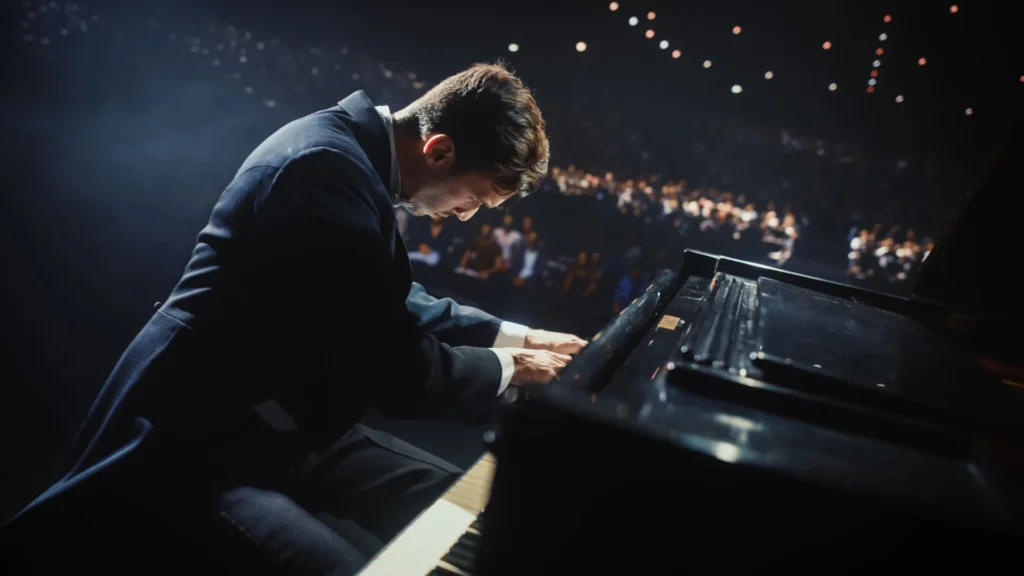
For generations, the nuanced artistry of piano performance has been a subject of fervent discussion, particularly regarding the elusive concept of "touch." Pianists and music teachers have long asserted that a performer’s touch can fundamentally alter the character and emotional quality of a piano’s sound, crafting tones described as warm, bright, dark, or heavy. Conversely, a significant cohort of skeptics, often rooted in physics and acoustics, maintained that once a piano hammer strikes a string, the resulting tone — its timbre, pitch, and loudness — is almost entirely predetermined by the instrument’s mechanical properties, with any perceived differences being merely psychological or attributable to variations in volume and timing. Now, a groundbreaking scientific study has provided the clearest, most compelling evidence to date, definitively proving that pianists truly possess the ability to shape a piano’s timbre through touch alone, bringing a long-standing artistic intuition firmly into the realm of measurable science.
The Century-Old Enigma: Artistry Versus Acoustics
The debate over the pianist’s touch is not new; it has simmered within musical and scientific circles since the early 20th century, if not before. Early acousticians, notably Hermann von Helmholtz in his seminal 1863 work "On the Sensations of Tone," laid much of the groundwork for understanding sound in terms of its physical properties. Helmholtz’s theories, focused on the overtone series and the physics of vibrating strings, suggested a highly deterministic view of tone production, leaving little room for subjective "touch" to alter intrinsic sound quality beyond dynamics (loudness) and articulation (timing). This perspective was often reinforced by the limitations of early sound recording and analysis technologies, which struggled to isolate and quantify the minute differences musicians claimed to produce.
Musicians, however, continued to describe their craft in terms of tonal color and expressive nuance, believing that the way a finger engaged with the key—the speed of impact, the depth of depression, the subtle pre-strike preparations—imbued the sound with unique qualities. Legendary pianists and pedagogues like Alfred Cortot, Josef Hofmann, and Heinrich Neuhaus spoke extensively about "producing tone" and "singing on the piano," concepts that implied a direct, artistic control over the very fabric of sound beyond mere volume. For decades, this schism persisted, with the scientific community largely dismissing the musicians’ claims as subjective interpretation or conflation with other, more easily quantifiable elements of performance like tempo, rhythm, and dynamics. The challenge lay in devising a scientific methodology that could precisely measure the incredibly subtle physical actions of a pianist and correlate them directly with perceived tonal changes, isolated from other confounding factors.
A Technological Leap: Unveiling Hidden Movements
The breakthrough arrived through the meticulous work of researchers led by Dr. Shinichi Furuya of the NeuroPiano Institute and Sony Computer Science Laboratories, Inc. Their innovative approach leveraged ultra-high-speed sensing technology, a significant advancement over previous methods, to meticulously record the otherwise imperceptible movements involved in expressive piano playing. Their findings, published in the prestigious Proceedings of the National Academy of Sciences (PNAS), illuminate the complex interplay between a pianist’s motor control and the resulting auditory perception.
Central to their methodology was a custom-built noncontact sensing system dubbed "HackKey." This sophisticated system represented a critical leap, capable of recording the movements of all 88 piano keys at an astonishing speed of 1,000 frames per second. Crucially, it achieved microscopic spatial precision, resolving key movements down to a few micrometers—a level of detail previously unattainable without interfering with the delicate mechanics of the piano action. This noncontact approach was vital because traditional sensors, which often attach directly to keys or hammers, can subtly alter the instrument’s response, thereby contaminating the very phenomenon they aim to measure. HackKey’s ability to monitor key behavior without physical contact ensured that the measurements accurately reflected the pianist’s interaction with a standard, unaltered instrument.
To generate the data, the team enlisted twenty internationally acclaimed concert pianists, recognized for their exceptional artistry and technical command. These virtuosos were tasked with a unique challenge: to play individual notes and short musical phrases while intentionally producing contrasting tonal qualities. For instance, they were asked to play the "same" note to sound distinctly "bright" versus "dark," or "light" versus "heavy." This experimental design aimed to isolate the timbral variations directly attributable to touch, controlling for pitch, duration, and overall loudness as much as possible.
Following the performance recordings, a comprehensive listening test was conducted. A diverse panel of participants, including professional musicians, experienced pianists, and individuals with no formal musical training, evaluated the recorded notes. They were asked to describe and categorize the sounds based on the intended timbral qualities. The results were remarkably consistent: listeners, across all levels of musical experience, reliably recognized the intended timbres. Professional pianists, as might be expected, demonstrated particular sensitivity to these subtle differences, often identifying the intended character with near-perfect accuracy, further validating the musicians’ long-held belief in the power of their touch. This statistical robustness provided concrete, empirical evidence that the timbral distinctions were not merely subjective interpretations but objectively discernible auditory phenomena.
The Microscopic Choreography of Expressive Touch
The true genius of the study lay in correlating the perceived timbral changes with the ultra-precise kinematic data captured by the HackKey system. The researchers discovered that only a handful of extremely precise movement features were strongly and causally connected to the changes in perceived timbre. These features included minute variations in the acceleration profile of the key press, the exact timing of hammer-string contact relative to the finger’s initial key engagement, and the synchronization—or subtle desynchronization—between the two hands when playing chords or arpeggios.
One of the most significant findings was the demonstration of a direct causal link: altering a single, isolated movement feature could reliably and predictably change how listeners described the sound. This was not merely an association but a demonstration of cause and effect. For example, a slightly faster initial acceleration of the key leading to hammer strike might consistently produce a "brighter" tone, while a more gradual, sustained pressure could yield a "warmer" or "darker" quality. This provided unequivocal evidence that touch itself plays a direct, causal role in shaping timbre, rather than merely accompanying other musical effects like loudness or tempo, which had been the prevailing scientific counter-argument.
The study characterized these subtle gestures as components of a "shared motor skill," developed through years of advanced piano training. This implies that the exquisite artistry behind piano tone is not merely metaphorical or subjective; it is grounded in measurable, repeatable physical actions. Dr. Furuya articulated this profound implication, stating that the work effectively bridges a long-standing gap between artistic intuition and scientific understanding. "These findings support what many pianists have believed for decades, while also offering a clearer, data-driven understanding of how skilled movement creates profound emotional and aesthetic experiences in music," he explained. The study offers a detailed mechanistic explanation for how pianists achieve their expressive goals, transforming the abstract concept of "touch" into a quantifiable biomechanical reality.
Broader Implications: Beyond the Concert Hall
The ramifications of this research extend far beyond the confines of concert halls and music conservatories, promising to reshape understanding and application in diverse scientific and technological fields.
Transforming Music Education and Pedagogy: One of the most immediate and impactful applications lies in music education. For generations, piano pedagogy has relied heavily on abstract metaphors ("play with more warmth," "use a lighter touch," "sing through the keys") to convey expressive techniques. While these metaphors resonate with experienced musicians, they often pose significant challenges for students trying to translate abstract concepts into precise physical actions. The NeuroPiano Institute’s findings suggest a paradigm shift. Future training systems could move beyond vague instructions, potentially using real-time visual feedback to show students the exact physical movements—the acceleration curves, the micro-timing adjustments, the synchronization patterns—associated with specific tonal qualities. Imagine a digital interface displaying a student’s finger trajectory and key velocity against an "ideal" curve for a "singing" tone, or a "brilliant" articulation. This objective, data-driven approach could accelerate learning, make advanced techniques more accessible, and potentially democratize expressive mastery, allowing students to develop a more efficient and nuanced "shared motor skill."
Advancements in Rehabilitation Science: The study’s insights into advanced motor control have significant implications for rehabilitation. Conditions affecting fine motor skills, such as stroke recovery, Parkinson’s disease, or nerve damage, often necessitate extensive physical therapy. By identifying the precise, subtle movements linked to complex sensory outcomes, researchers could develop novel rehabilitation protocols. For instance, musical exercises tailored to specific movement parameters (e.g., precise control over finger acceleration) could be designed to improve dexterity, coordination, and motor control in patients, leveraging the inherent motivational and cognitive benefits of music. The immediate, tangible feedback of producing a desired tonal quality could provide powerful reinforcement for therapeutic exercises.
Neuroscience and Human-Computer Interaction: For neuroscientists, the study offers a crucial window into how the brain integrates complex motor commands with sensory perception. It highlights how exquisitely fine-tuned motor control can sculpt perception itself, providing clues about the neural pathways involved in motor learning, sensory processing, and aesthetic judgment. Understanding how the brain learns and executes these "micro-gestures" to produce desired timbres can shed light on broader principles of skilled human movement. In Human-Computer Interaction (HCI), these findings could inspire the design of more intuitive and expressive interfaces. Imagine controlling digital instruments or virtual environments with nuanced gestures that evoke specific sensory experiences, moving beyond simple button presses or broad movements.
Robotics and Artificial Intelligence in Music: The research also provides a rich dataset for advancements in robotics and artificial intelligence. AI and music technology researchers are already exploring ways to model timbre, generate realistic piano motion, and build systems that can reproduce subtle expressive nuances in performance. The detailed kinematic data from the HackKey system can inform the development of robotic pianists capable of replicating human-like expressivity, or AI models that can synthesize musical performances with unprecedented timbral realism. This could lead to more expressive digital instruments, "smarter" training tools that adapt to individual learners, and even new forms of computational music composition that incorporate a deeper understanding of human touch.
The Science of Creativity: Unlocking Artistic Expression
Beyond its practical applications, this study makes a profound contribution to the nascent "science of creativity." For decades, research into music perception primarily focused on easily quantifiable elements like pitch, loudness, and rhythm. Timbre, however, has remained far more elusive to scientific inquiry due to its complex perceptual nature, involving higher-level sensory interpretation and deeply ingrained emotional responses. By identifying the specific physical actions that directly influence timbre perception, Dr. Furuya’s team has opened a critical door to understanding how artistic expression emerges from the intricate interaction between the body, the brain, and the resulting sound.
This work is a cornerstone of a broader, emerging field sometimes referred to as "dynaformics"—the science of music performance. Dynaformics seeks to holistically understand the biomechanical, neurological, and psychological underpinnings of musical creation and performance. Supporters believe that such research can not only help musicians train more efficiently but also contribute to injury prevention, optimize ergonomic design for instruments, and help performers overcome physical limitations that often accompany years of intense practice. It provides a scientific framework for the "how" behind musical artistry, giving empirical weight to the intuitive practices of generations of musicians.
The excitement surrounding these findings stems from more than just solving a long-standing musical mystery. It reveals that some of the most profound emotional power of music may come from movements so infinitesimally small they are nearly invisible to the naked eye, yet so precise and meaningful that human listeners, whether trained or untrained, can instinctively feel and interpret the difference. This study stands as a testament to the intricate connection between human physicality, cognitive processing, and the profound aesthetic experience of music, underscoring that the art of performance is deeply embedded in the science of movement. The era where artistic intuition and scientific rigor stood in opposition is giving way to a new age of integration, where each enriches the other, revealing the deeper truths behind human creativity.