


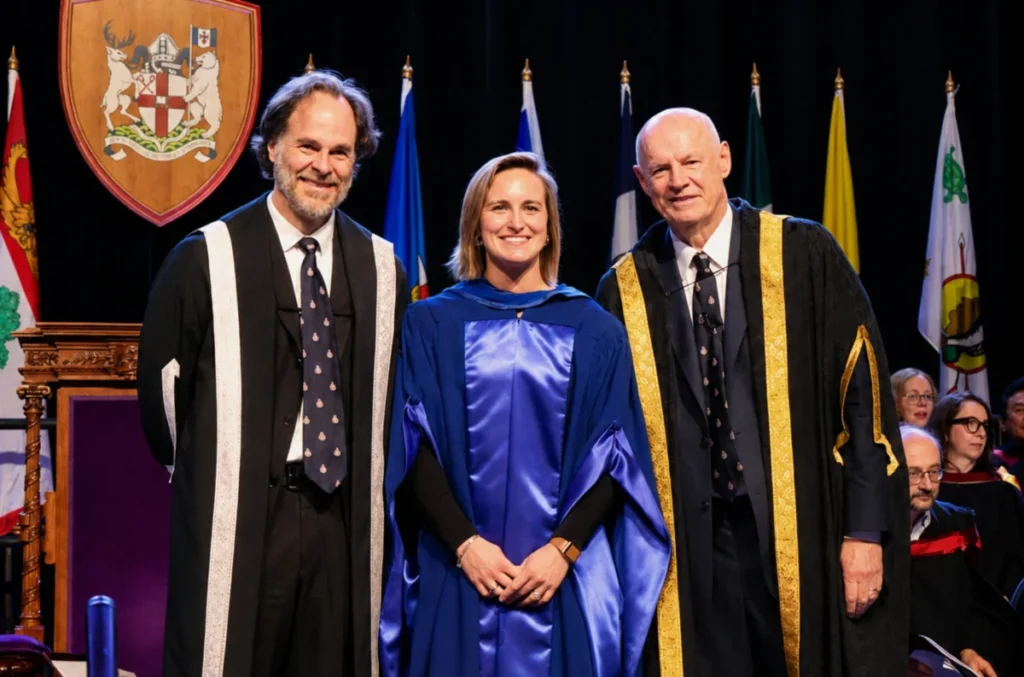
The traditional commencement address, often a clarion call to ambition and bold risks, has taken a decidedly more introspective turn across Canadian universities this year. In an era marked by persistent global conflicts, profound political polarization, and pervasive economic anxieties, a growing chorus of honorary degree recipients is urging graduates to prioritize empathy, understanding, and collective well-being as they step into their post-academic lives. This subtle but significant recalibration in commencement messaging reflects a broader societal reckoning with the complex challenges facing the next generation.
The shift from outright exhortations for individual achievement to a focus on character and communal responsibility is palpable. This evolution in tone is not merely anecdotal; it is being articulated by distinguished individuals from diverse fields, each drawing from their unique experiences to offer guidance to the graduating classes. Their words, delivered at ceremonies held throughout the spring and early summer of 2024, offer a compelling snapshot of the values deemed most critical for navigating an increasingly interconnected and often turbulent world.
A Call for Empathy in an Era of Division
One of the most resonant voices has been that of Marion Buller, a retired judge and former chief commissioner for the National Inquiry into Missing and Murdered Indigenous Women and Girls. Accepting an honorary degree from the University of Toronto, Buller’s address challenged graduates to fundamentally re-evaluate their perception of others. She posed a powerful question: "What would our world look like if we saw every person we met as part of our shared journey? Not a threat to defeat, but a human to walk alongside." This framing shifts the paradigm from adversarial interaction to collaborative existence, a crucial perspective in a society often characterized by division and competition.
Buller further elaborated on this theme, drawing inspiration from the Lekwungen-speaking People, the traditional stewards of the land where the University of Victoria is located. She emphasized the necessity of collective action and the importance of bringing "good hearts and minds" to all endeavors. Her message resonated deeply, particularly for a generation that has witnessed firsthand the fragility of social cohesion and the enduring impact of historical injustices. The University of Victoria, in its commitment to Indigenous reconciliation, has actively integrated Indigenous perspectives into its curriculum and institutional culture, making Buller’s invocation of Lekwungen teachings particularly pertinent.
Her exhortation extended to the diverse professional paths graduates will undertake. Whether in technology, civil service, research, education, health, or the arts, Buller underscored that graduates will inevitably shape policy, culture, and, most importantly, other people. She implored them to make kindness a cornerstone of their legacy, advocating for empathy, generosity over ego, and the careful articulation of truth. "Degrees open doors," she concluded, "but it’s your character that walks you through those doors. And, in a world that often tells us to be right, to be fast, to be first, choose instead to be fair, compassionate, choose to be kind." This sentiment aligns with a growing body of research in psychology and sociology that highlights the correlation between prosocial behavior and individual and societal well-being.
Navigating the Ethical Frontiers of Artificial Intelligence
The rapid advancement of artificial intelligence (AI) presents a unique set of challenges and opportunities for the graduating class. Latha Vishnubhotla, a prominent technology executive and mentor, addressed this critical issue at Carleton University, where she received an honorary doctorate in engineering. Her message was a direct appeal to graduates to become ethical stewards of AI development.
Vishnubhotla, having witnessed multiple technological revolutions from networking to cloud computing, stated that the work she is most proud of is that which "expanded opportunity, connected people and improved lives." She cautioned that graduates are entering the AI era at a "consequential moment in history," asserting that AI will amplify the values embedded within it, for better or worse. "AI will amplify whatever values we build into it – inclusion or exclusion, trust or fear, empowerment or concentration of power," she warned.
Her call to action was clear: "Be the person in the room who asks what positive impact will this create at scale and will this be expansive and inclusive? Ask this question. Do not wait for someone to assign meaning to your work. Bring meaning to whatever work you do." This proactive stance is vital, especially as global discussions intensify around AI’s potential to exacerbate existing inequalities, automate jobs, and raise profound questions about human agency. Organizations like the IEEE Standards Association and the Partnership on AI are actively working to establish ethical guidelines, underscoring the timeliness and significance of Vishnubhotla’s advice.
The Power of Connection in Adversity
Marie-Philip Poulin, a celebrated professional hockey player and three-time Olympic gold medalist, offered insights drawn from the demanding world of elite sports at Bishop’s University. Her address at the Quebec institution focused on the indispensable role of teamwork and connection, particularly during times of hardship.
"The best teams are not perfect teams," Poulin asserted. "They are connected teams. They are groups that stay together when things become difficult." She recounted personal experiences of losses, injuries, and immense pressure, emphasizing that resilience and eventual triumph were often forged through the strength of interpersonal bonds. The principle of "how people chose to show up for one another" emerged as the key differentiator.
While encouraging graduates to pursue excellence, ambition, and big dreams, Poulin also stressed the parallel importance of character development. "Be someone people trust. Be someone who brings energy into a room. Be someone who listens. Be someone who helps others succeed. Be someone who stays kind even in competitive environments." This message holds particular weight in a society that often celebrates individual victories over collective achievements, reminding graduates that sustainable success is built on a foundation of strong relationships and mutual support. The longevity of championship teams across various sports often hinges on this very principle of sustained cohesion.
Social Purpose as a Business Imperative
In an increasingly interconnected global economy, the integration of social conscience into business practices is no longer a niche concern but a fundamental expectation. Murad Al-Katib, an entrepreneur recognized with the Oslo Business for Peace Award in 2017, articulated this perspective at the University of Saskatchewan.
Al-Katib challenged the notion of a distinct "social entrepreneurship," arguing instead for "entrepreneurship or business or life with social purpose." He declared that "Social purpose is no longer optional. It’s essential, and consumers and stakeholders, your employees, people who are counting on your company, are actually driving that purpose." He highlighted how consumer purchasing power and employee expectations are increasingly aligned with companies that demonstrate a commitment to societal well-being.
His philosophy of "compassionate entrepreneurism" involves leveraging private enterprise to address societal problems while simultaneously creating economic opportunities. He provided a powerful example of aligning profit and purpose through initiatives that provide refugee meals with organizations like the United Nations World Food Program and the International Red Cross/Red Crescent. "When you can do that effectively," he stated, "you have an unlimited license to do good in the world." This perspective is gaining traction in the corporate world, with a rise in ESG (Environmental, Social, and Governance) investing and a growing demand for transparency and accountability from businesses.
Leading with Tolerance and Empathy in a Complex World
Evolutionary biologist Peter Grant, accepting an honorary degree from the University of British Columbia alongside his wife and scientific collaborator Rosemary Grant, invoked the wisdom of Michelle Obama to advocate for tolerance and empathy. He acknowledged that the post-graduation world is not always characterized by harmonious coexistence, stating that "conflicts inevitably arise."
Grant urged graduates to "be as tolerant and understanding as best we can, in conflict with others who are different from us." He echoed Michelle Obama’s poignant post-White House appeal: "Lead in hope, not in fear." These words, he argued, have amplified in importance, and the themes of tolerance and leadership must be interwoven.
He recognized that while some graduates will attain overt positions of leadership, many more will lead by example through their "rational, kind and socially responsible behavior, by your opinions and ethics, fundamentally by your attitudes towards others." This underscores the idea that leadership is not solely defined by title but by the consistent application of positive values in everyday interactions. The contemporary discourse on leadership increasingly emphasizes emotional intelligence and inclusive practices, aligning with Grant’s message.
A Poetic Call for a Kinder Future
At Dalhousie University, educator and philanthropist Roslyn Bern offered a unique and memorable closing to her address. In a creative departure, she delivered a spoken-word piece that encapsulated the essence of her advice to graduates.
Her poem painted a vivid picture of the graduates’ journey: "You sit in your seats. You stare at the screen. You begin your journey sight unseen, but you view the world unfurled before you." She encouraged them to engage with ethical questions and diverse choices, asserting, "It’s your world, not mine, to create."
Bern’s performance culminated in a powerful call for collective action: "Combine your forces with your voices that define a kinder, gentler population that rises with anticipation of the dawning of a new day. Hold your degree and decree your rewards in a way that allows for change." This artistic approach served as a potent reminder that the future is not predetermined but is actively shaped by the choices and actions of the graduating generation, urging them to build a more compassionate and equitable society.
Broader Implications and Societal Resonance
The recurring themes of kindness, tolerance, empathy, and social purpose in this year’s Canadian convocation speeches are more than just eloquent platitudes; they represent a significant cultural inflection point. As graduates emerge into a world grappling with the aftermath of a global pandemic, ongoing geopolitical instability, and the pervasive influence of digital technologies, the traditional metrics of success—wealth, status, individual achievement—are being re-examined.
The emphasis on character and communal responsibility reflects a growing understanding that complex global challenges require collaborative solutions and a strong ethical compass. The messages from figures like Marion Buller, Latha Vishnubhotla, Marie-Philip Poulin, Murad Al-Katib, Peter Grant, and Roslyn Bern collectively underscore a desire for graduates to not only succeed professionally but to contribute meaningfully to the social fabric.
This shift in oratory suggests a societal recognition that the skills most needed for the future extend beyond technical expertise. The ability to connect with others, to understand diverse perspectives, to act with integrity, and to prioritize collective well-being are emerging as essential competencies. The implications are far-reaching, potentially influencing the direction of corporate responsibility, public policy, and the very nature of community in the 21st century. As these graduates embark on their careers, the seeds of empathy and purpose sown during their commencement ceremonies may well blossom into a more compassionate and sustainable future.