



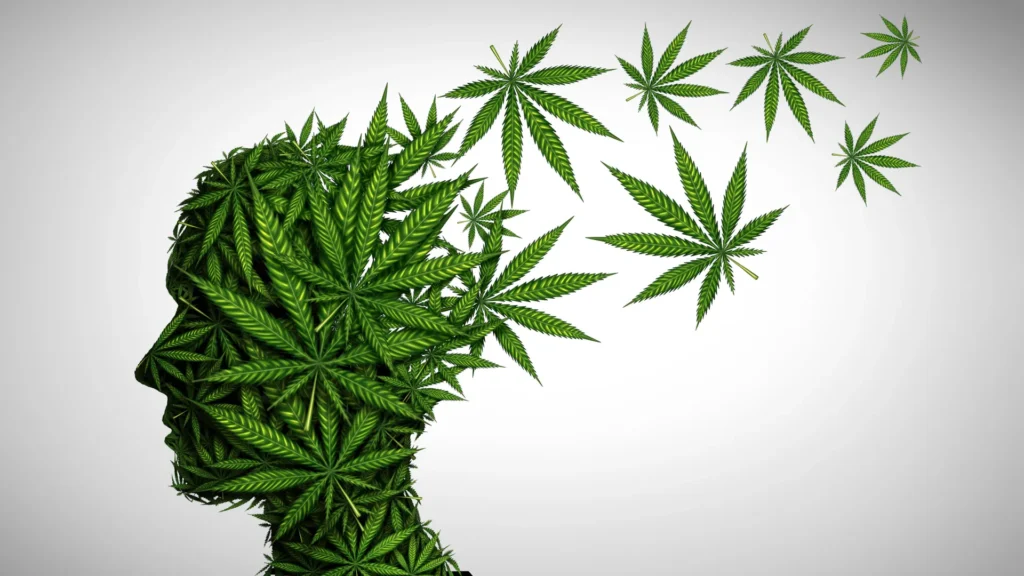
A groundbreaking study from Washington State University (WSU) has unveiled significant insights into how acute cannabis consumption impacts human memory, revealing that it does more than merely induce temporary forgetfulness; it fundamentally alters the mechanisms by which memories are formed and recalled. Published in the prestigious Journal of Psychopharmacology, the research provides one of the most comprehensive examinations to date, demonstrating that even moderate amounts of delta-9-tetrahydrocannabinol (THC), the primary psychoactive compound in cannabis, can broadly disrupt various memory systems critical for daily functioning.
The study’s findings indicate that individuals under the influence of THC were substantially more prone to recalling words that were never presented to them, a phenomenon known as false memory. Furthermore, participants experienced considerable difficulty with common memory tasks essential for everyday life, such as remembering future appointments, tracking conversations, or discerning the origin of information. This research significantly expands upon previous, often narrower, investigations into cannabis and cognition, painting a clearer picture of its pervasive influence on multiple facets of memory.
Unpacking the WSU Study: A Comprehensive Look at Memory Systems
The Washington State University study, led by senior author Carrie Cuttler, an associate professor of psychology, and co-author Ryan McLaughlin, an associate professor in the Department of Integrative Physiology and Neuroscience, meticulously investigated how acute cannabis intoxication affects a wide array of memory functions. Previous research typically focused on only one or two types of memory, such as simple recall of word lists. This study, however, adopted a holistic approach, examining verbal, visuospatial, prospective, source, false, episodic content, and temporal order memory systems simultaneously.
To achieve this, researchers recruited 120 regular cannabis users and employed a rigorous double-blind, randomized, placebo-controlled experimental design. Participants were assigned to one of three groups: vaporizing a placebo cannabis, 20 milligrams of THC, or 40 milligrams of THC. This methodology ensured that neither the participants nor the researchers knew who received which substance, minimizing bias. Following the consumption of their assigned substance, participants engaged in approximately an hour of diverse memory tests. The results were stark: those who consumed cannabis performed significantly worse than the placebo group on the majority of assessments, with significant differences observed in 15 out of 21 memory tests. This broad disruption across most memory measures underscores the widespread impact of acute THC exposure.
A particularly surprising revelation from the study was the lack of meaningful differences in memory impairment between participants who consumed 20 milligrams of THC and those who consumed 40 milligrams. This suggests a potential threshold effect, where even a moderate amount of THC may be sufficient to cause significant interference with memory, and doubling the dose does not necessarily lead to a proportionally greater impairment. This finding has crucial implications for users who might assume higher doses correlate linearly with greater cognitive impact, potentially underestimating the effects of what they consider a "moderate" amount.
The Peril of False Memories and Source Confusion
Among the most pronounced effects identified by the WSU team were impairments in false memory and source memory. These two systems are fundamental to accurately recalling information and correctly attributing its origin, forming the bedrock of reliable memory.
In one illuminating test, participants were presented with lists of thematically related words, but the central keyword connecting them was deliberately omitted. For instance, a list might include "bed," "rest," "dream," and "snore," but not the word "sleep." Subsequently, individuals who had consumed cannabis were markedly more likely to confidently assert that they remembered hearing the central, unpresented keyword. Cuttler noted, "I found it was really common for people to come up with words that were never on the list. Sometimes they were related to the theme of the list, and sometimes they were completely unrelated." This tendency to generate false memories highlights a significant vulnerability in cognitive processing under cannabis intoxication.
Concurrently, participants who had consumed cannabis exhibited greater difficulty in accurately identifying where previously learned information originated. This impairment in source memory means struggling to recall whether a piece of information came from a trusted news source, a casual conversation with a friend, or an unverified online post. Such distortions can have profound consequences in various real-world scenarios. For example, in legal contexts, issues with false memory and source confusion could critically compromise the reliability of eyewitness testimony, especially if suggestive questioning is involved. In an era saturated with information, the inability to accurately trace the origins of data can lead to the unwitting spread of misinformation or the acceptance of unreliable narratives.
Impacts on Everyday Functioning: Prospective Memory and Daily Tasks
Beyond the more abstract concepts of false and source memory, the study also identified significant impairments in prospective memory. This crucial cognitive function governs our ability to remember to perform intended actions in the future – the kind of memory we rely on constantly for daily responsibilities. Examples include remembering to take medication, attending scheduled meetings, picking up groceries on the way home, or returning a phone call.
"These are things we rely on constantly in our day-to-day lives," Cuttler emphasized. "If you have something you need to remember to do later, you probably don’t want to be high at the time you need to remember to do it." The implications here are far-reaching, affecting personal safety, professional responsibilities, and overall daily competence. For individuals with chronic conditions requiring regular medication, impaired prospective memory could have serious health consequences. Similarly, in professional settings, forgetting critical tasks or appointments could lead to significant repercussions.
Interestingly, one form of memory—episodic content memory, which involves recalling personal experiences—did not show a statistically significant effect in this particular study. However, Cuttler cautioned that further research is essential before drawing definitive conclusions about this specific type of memory, as other factors or study designs might yield different results.
Chronology and Context: Cannabis Use, Legalization, and Research Gaps
The WSU study emerges at a critical juncture in the societal perception and legal status of cannabis. Over the past two decades, there has been a dramatic shift in cannabis policy across North America, with numerous states, including Washington, legalizing or decriminalizing its recreational and medical use. This evolving legal landscape has fueled a rapid expansion of the cannabis industry and a significant increase in public consumption.
- Early 2000s: Medical cannabis laws begin to gain traction in several states, but recreational use remains broadly illegal. Research is severely hampered by federal classification.
- 2012: Colorado and Washington become the first states to legalize recreational cannabis, marking a pivotal moment in policy. This spurred increased public interest and consumption.
- Mid-2010s to Present: More states follow suit, leading to a patchwork of state-level regulations. The cannabis market booms, offering a wide range of products with varying THC concentrations. Public perception generally shifts towards viewing cannabis as less harmful than other illicit substances, and in some cases, as having therapeutic benefits.
- Ongoing: Despite widespread legalization and increasing use, scientific understanding of the acute and long-term cognitive effects of cannabis has struggled to keep pace with policy changes. The federal classification of cannabis as a Schedule I substance under the Controlled Substances Act, alongside heroin and LSD, has historically created immense bureaucratic and logistical hurdles for researchers seeking to study the plant. This classification implies a high potential for abuse and no accepted medical use, making it difficult to obtain research-grade cannabis, secure funding, and navigate regulatory approvals.
This historical context underscores the significance of studies like WSU’s. As Cuttler noted, "We’re living in a state where cannabis use is very common, but there’s still a lot we don’t know about its acute effects." The goal of such research is not to condemn or endorse cannabis use, but to equip the public with accurate, scientific information to make informed decisions about its risks and benefits.
Supporting Data and Previous Research
While the WSU study is unprecedented in its comprehensive approach, it builds upon a foundation of earlier research that hinted at cannabis’s cognitive impacts. Prior studies have often shown acute impairment in short-term memory, working memory, and attention, particularly with higher THC doses. For instance, meta-analyses of existing literature have consistently reported that acute cannabis intoxication can impair episodic memory retrieval, learning, and executive functions. However, these studies frequently focused on a limited number of memory domains or used less controlled methodologies.
The Centers for Disease Control and Prevention (CDC) reports that cannabis is the most commonly used federally illegal drug in the United States, with millions of adults using it regularly. Data from the National Survey on Drug Use and Health (NSDUH) consistently shows an upward trend in cannabis use, especially among young adults. This widespread use, coupled with the increasing potency of modern cannabis products (often exceeding 20% THC, far higher than products available decades ago), makes understanding its effects on fundamental cognitive processes like memory more urgent than ever. The WSU study provides critical data points for understanding the acute effects of these higher potency products.
Broader Impact and Implications: A Multifaceted Analysis
The findings from Washington State University carry significant implications across several domains:
- Public Health and Education: Public health officials are likely to leverage these findings to refine educational campaigns about responsible cannabis use. Warnings might emphasize the risks of impaired memory for daily tasks, driving, and situations requiring sharp recall. The lack of dose-response difference between 20mg and 40mg THC could be particularly emphasized, suggesting that even seemingly moderate use can have a substantial impact.
- Clinical Practice: For healthcare providers, especially those recommending medical cannabis, these results underscore the importance of discussing potential cognitive side effects with patients. This is crucial for patients whose daily lives or professions depend on intact memory, or for those with pre-existing cognitive vulnerabilities.
- Workplace Safety and Productivity: Industries where memory and attention are paramount—such as healthcare, transportation, or complex manufacturing—may need to consider these findings in their drug policies and safety protocols. The ability to remember critical instructions, safety procedures, or complex sequences of tasks can be compromised.
- Legal and Judicial Systems: The findings on false memory and source confusion could have ramifications for legal proceedings, particularly concerning eyewitness testimony. It highlights the need for careful consideration of a witness’s state of mind at the time of an event and during subsequent recall.
- Personal Responsibility: For individual users, the study provides concrete evidence to inform personal decisions. Understanding that cannabis can broadly disrupt memory systems, including those related to false memories and daily tasks, empowers individuals to make choices about when and how they use cannabis, especially concerning activities requiring full cognitive function.
- Memory Science: From a purely scientific perspective, this study contributes significantly to our understanding of how cannabinoids interact with the brain’s intricate memory networks. It paves the way for further research into specific neural mechanisms underlying these impairments, potentially leading to a deeper comprehension of memory formation itself.
Official Responses and Future Research Directions
While no direct "official responses" from government bodies or specific advocacy groups were part of the initial article, the implications naturally suggest certain reactions. Public health agencies like the CDC or National Institute on Drug Abuse (NIDA) would likely reiterate their calls for caution and informed decision-making, emphasizing that cannabis is not without risks, particularly concerning cognitive function. Medical professional organizations might advise practitioners to counsel patients more thoroughly on potential memory side effects.
Cannabis advocacy groups, while supporting access, often advocate for responsible use and comprehensive research. They might emphasize the need for further studies into long-term effects, the role of different cannabinoids (like CBD), and individual variability in response to THC.
Looking ahead, this study opens numerous avenues for future research. Scientists will likely explore:
- Long-term effects: Does repeated acute exposure lead to chronic memory deficits, or do these effects fully reverse upon cessation?
- Individual variability: Why do some individuals seem more susceptible to memory impairment than others? Genetic predispositions or prior cannabis use patterns could play a role.
- Role of CBD: How do other cannabinoids, particularly non-intoxicating ones like cannabidiol (CBD), modulate THC’s effects on memory?
- Specific brain mechanisms: Using neuroimaging techniques, researchers can delve deeper into which brain regions and neural pathways are most affected by THC during memory tasks.
- Ecological validity: Further studies could examine these effects in more real-world settings to understand their practical impact outside of a controlled laboratory environment.
In conclusion, the Washington State University study represents a pivotal advancement in our understanding of cannabis and memory. By comprehensively examining multiple memory systems, it has revealed that acute cannabis intoxication, even at moderate doses, broadly disrupts critical cognitive functions, notably increasing susceptibility to false memories and impairing the ability to track information origins and remember future tasks. As cannabis use continues to grow and its legal status evolves, this research provides invaluable scientific data for individuals, healthcare professionals, policymakers, and the public to make informed decisions about its use and its potential impact on daily life and cognitive well-being. The ongoing need for robust, unbiased scientific inquiry remains paramount in this rapidly changing landscape.