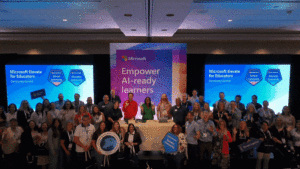




Microsoft has unveiled Microsoft Elevate for Educators, a comprehensive initiative designed to integrate advanced artificial intelligence tools, professional development, and community support into the global teaching landscape. Announced ahead of the Bett UK 2026 conference, the program represents a significant expansion of the company’s fifty-year commitment to the education sector. The initiative aims to equip schools and higher education institutions with the infrastructure necessary to navigate the rapid shift toward AI-integrated learning environments. By providing secure, education-specific technology alongside a robust framework for skill-building, Microsoft intends to address the dual challenges of administrative burden on teachers and the need for personalized student engagement.
The centerpiece of this announcement is a multifaceted ecosystem that includes the Microsoft Elevate for Educators program, new generative AI tools for lesson preparation, and enhanced learning platforms for students. This rollout is underpinned by the broader Microsoft Elevate commitment, which sets an ambitious goal of helping more than 20 million people worldwide obtain in-demand AI skilling credentials within the next two years. For the education sector, this translates into a concerted effort to move beyond theoretical AI adoption toward practical, classroom-ready applications that prioritize security, accessibility, and pedagogical integrity.
A Chronology of Integration: From Productivity to Intelligent Pedagogy
The launch of Microsoft Elevate for Educators marks a pivotal moment in the company’s long-term strategy for digital transformation in schools. For over five decades, Microsoft has provided the foundational software—ranging from the early iterations of Windows to the collaborative environment of Microsoft Teams—that has defined the modern classroom. However, the emergence of generative AI in late 2022 and 2023 necessitated a shift in focus.
Throughout 2024 and 2025, Microsoft concentrated on establishing the ethical and technical guardrails for AI in education. This period saw the introduction of the Microsoft 365 Copilot academic offering and initial pilot programs in diverse school districts across North America, Australia, and Europe. By late 2025, the results from these early adopters—including Brisbane Catholic Education and the Coquitlam School District—provided the data necessary to scale these solutions globally. The January 2026 announcement at Bett UK serves as the culmination of these pilot phases, transitioning from experimental tools to a standardized, global program.

Technical Innovations: Streamlining Instruction and Personalizing Study
At the heart of the new toolkit is "Teach," a specialized AI assistant integrated into the Microsoft 365 Copilot app. Designed specifically for the workflow of educators, Teach automates the more labor-intensive aspects of instructional design. Educators can use the tool to generate lesson plans aligned with regional academic standards, develop complex rubrics for grading, and create quizzes instantaneously. One of the most significant features of Teach is its ability to adapt instructional materials to different reading levels with a single prompt, allowing teachers to differentiate instruction for diverse student populations without the traditional time investment required for manual content adaptation.
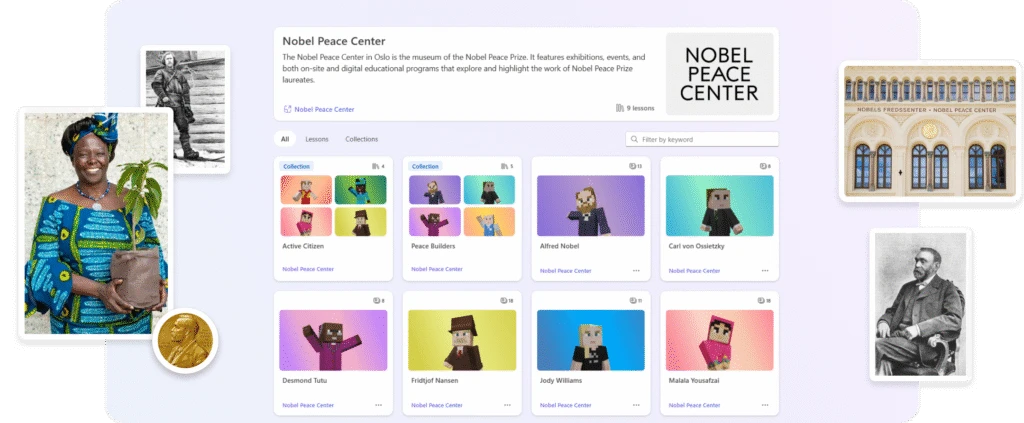
For institutions utilizing the latest hardware, the Microsoft Learning Zone app leverages the on-device NPU (Neural Processing Unit) power of Copilot+ PCs. This application is designed for real-time interactivity, allowing teachers to create and track personalized learning activities that students can engage with on any Windows 11 device. The Learning Zone has notably received the ISTE Seal of Alignment, signaling that its design adheres to research-backed teaching practices. To ensure high-quality educational content, Microsoft has partnered with prestigious organizations such as NASA, the Nobel Peace Center, and the World Wildlife Fund to provide curated, interactive lessons on topics ranging from space exploration to global human rights.
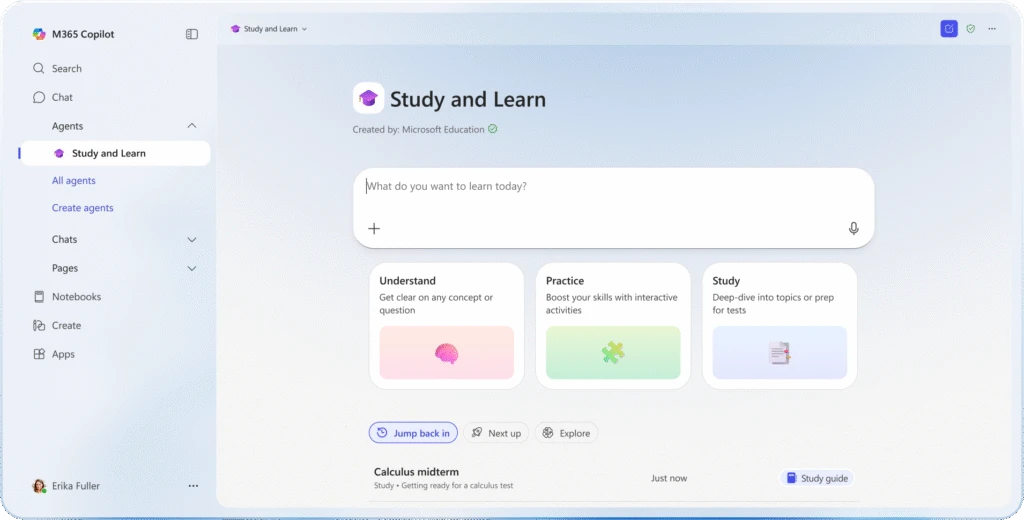
Students are also receiving direct AI support through the Study and Learn Agent. This tool, built on learning science principles, acts as a persistent learning companion for students aged 13 and older. Rather than simply providing answers, the agent is designed to foster critical thinking by guiding students through concepts using adaptive exercises, flashcards, and guided study sessions. This shift toward "process-oriented" AI aims to mitigate concerns regarding academic integrity while maximizing the potential for independent student growth.
Supporting the Higher Education Pipeline and Career Readiness
The initiative extends beyond K-12 education into the university sector, where the focus shifts toward employability and professional transition. In a strategic move to bridge the gap between graduation and the workforce, Microsoft is offering eligible higher education students 12 months of free access to Microsoft 365 Premium and LinkedIn Premium Career.
This package is intended to support the entire lifecycle of a university student—from organizing research and class notes using AI-enhanced productivity tools to optimizing their professional profiles and navigating the internship market on LinkedIn. By integrating these two platforms, Microsoft is positioning its ecosystem as a necessary utility for "career readiness" in an era where AI literacy is becoming a baseline requirement for most white-collar professions. This is complemented by the AI Skills Navigator and the Microsoft Student Ambassadors program, which provide faculty and students with official Microsoft courseware and peer-led skilling events.
Data-Driven Strategy: The IDC Blueprint for AI-Ready Schools
To support the implementation of these tools, Microsoft sponsored an IDC White Paper titled "A Blueprint for AI-Ready Schools: Strategies from the Front Lines of K-12 Education." The report provides a data-driven framework for school leaders, highlighting the strategies used by early adopters. According to the findings, successful AI integration requires a three-tiered approach focusing on infrastructure, policy, and human capacity.
The research underscores that while the technology is transformative, the primary barrier to adoption is often a lack of clear governance and professional development. In response, Microsoft has released the Education Security Toolkit and the Education AI Toolkit. These resources provide school administrators with practical guidance on maintaining a strong cybersecurity posture while fostering a culture of responsible AI usage. The Security Toolkit, in particular, addresses the unique vulnerabilities of educational institutions, which have increasingly become targets for ransomware and data breaches.
Global Reactions and Institutional Impact
While official statements from educational boards are expected to follow the Bett UK showcase, early feedback from participating districts suggests a cautious but optimistic reception. Administrators at Broward County Schools in the United States have noted that the ability to automate administrative tasks has the potential to reduce teacher burnout—a critical issue in the post-pandemic education landscape.
"The goal is not to replace the teacher, but to amplify their expertise," a spokesperson for Microsoft’s education division noted during the preliminary briefing. "By reclaiming the hours spent on lesson planning and grading, we allow educators to focus on the human connection that is the foundation of effective learning."
Industry analysts suggest that Microsoft’s aggressive push into AI skilling is also a defensive maneuver against competitors like Google and Apple, who have long held significant market shares in the classroom. By bundling advanced AI capabilities with free professional development and career-oriented incentives for students, Microsoft is attempting to create a "locked-in" ecosystem that spans from primary school to the professional world.
Broader Implications and Future Outlook
The launch of Microsoft Elevate for Educators signals a paradigm shift in how technology companies interact with the public sector. By committing to skilling 20 million people, Microsoft is acknowledging that the hardware and software are only as effective as the users’ ability to operate them. This "human-centric" approach to AI deployment may set a new standard for corporate responsibility in the tech industry.
However, the rapid deployment of AI in classrooms also raises questions regarding the digital divide. While the Learning Zone app offers revolutionary features, it requires Copilot+ PCs—hardware that may be out of reach for underfunded schools. Microsoft’s strategy to mitigate this includes making many AI tools, such as Teach and the Study and Learn Agent, available at no additional cost for existing Microsoft 365 Education customers.
As the Bett UK 2026 conference commences, the global education community will be watching closely to see how these tools perform in real-world environments. The success of Microsoft Elevate for Educators will ultimately be measured not by the sophistication of its algorithms, but by its ability to demonstrably improve student outcomes and alleviate the systemic pressures currently facing the world’s educators. With Portuguese, French, German, and other language supports planned for 2026, the program is poised to become a global benchmark for the future of AI-assisted pedagogy.