


Last fall, the Vatican hosted a significant closed-door meeting that brought together an eclectic assembly of religious thinkers, academics, and prominent figures from the technology industry to deliberate on the burgeoning ethical implications of artificial intelligence. This unprecedented gathering underscored the growing recognition that the rapid advancement of AI necessitates a profound moral and philosophical engagement from all sectors of society. Among the attendees was Meghan Sullivan, a distinguished philosopher from the University of Notre Dame, whose observations from the summit offered a telling glimpse into the complex interplay of faith, technology, and human values.
A Glimpse Inside the Vatican Meeting
The convocation at the Holy See was not merely a technical discussion but a profound dialogue aimed at grounding AI development within a framework of human flourishing and ethical responsibility. Sullivan recounted an incident from the first morning of the meeting, where she attended an optional Catholic Mass held in a venerable, ancient church. To her surprise, she observed a leading technology executive, typically associated with the casual attire of Silicon Valley, seated quietly in the pews, dressed in a formal brown suit and tie. He appeared deeply contemplative as the early morning light streamed into the sanctuary.
Following the service, a brief conversation between Sullivan and the executive revealed a motivation far deeper than professional obligation. Though not Catholic, the tech leader explained his presence with a striking candor: "We’re building something that is going to change life as we know it. I want to make sure I keep in touch with what humans have always cared about. This is a place that takes care of those values." This statement, while personal, encapsulates a broader sentiment emerging within some segments of the tech industry—a recognition of the immense power and potential societal disruption inherent in advanced AI, coupled with an earnest search for foundational ethical principles to guide its development. It highlights a nascent understanding that technological progress, divorced from human values and moral introspection, risks creating a future that is not necessarily aligned with the common good.
The Vatican, with its millennia-long tradition of moral guidance and its universal reach, has increasingly positioned itself as a crucial forum for these critical discussions. Its engagement with cutting-edge technologies like AI is not new, tracing back to its dialogues on bioethics and digital ethics. The institution’s involvement reflects a commitment to ensuring that technological innovation serves humanity, rather than dominating or dehumanizing it. This commitment is particularly salient given the often-accelerated pace of AI development, which frequently outstrips the rate at which ethical frameworks and regulatory measures can be established. The meeting at the Vatican was designed to foster a multi-disciplinary approach, bringing together philosophical, theological, and technological expertise to forge a shared understanding of AI’s challenges and opportunities.
The "Magnifica Humanitas" Encyclical: A Moral Compass for AI
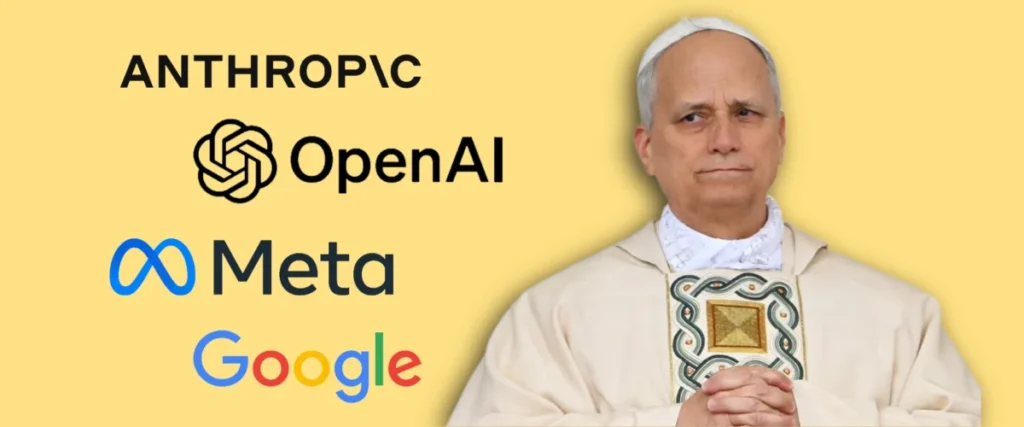
The philosophical undercurrents of these discussions at the Vatican culminated in a landmark declaration last week. Pope Leo XIV released a comprehensive 42,000-word encyclical titled "Magnifica Humanitas" (Magnificent Humanity), directly addressing the profound challenges and opportunities presented by artificial intelligence. An encyclical, a major papal letter, represents the highest form of papal teaching and typically outlines the Church’s stance on significant societal, ethical, or theological matters. Its considerable length underscores the gravity with which the Holy See views the implications of AI for human dignity, social justice, and the future of civilization.
Early summaries and analyses of "Magnifica Humanitas" indicate a strong papal message that firmly resists the narrative of an inevitable, technologically determined future, particularly one dictated by unchecked AI development. The encyclical is understood to be a powerful call to action, urging humanity to exercise moral agency and wisdom in shaping the AI era. It builds upon established Catholic social teaching, emphasizing core principles such as the dignity of the human person, the pursuit of the common good, solidarity, and subsidiarity.
A central exhortation within the encyclical resonates with profound historical and moral weight: "With the heart of a shepherd and a father, I ask everyone to abandon the construction of yet another Tower of Babel and to join forces in building up the common good, so that humanity will never lose its beauty, and the world once again will come to recognize the human heart as the place where God desires to dwell." This powerful metaphor of the "Tower of Babel" is a direct critique of unbridled ambition and technological hubris. In biblical narrative, the Tower of Babel represents humanity’s attempt to reach heaven through its own ingenuity, resulting in confusion, division, and ultimate failure. Pope Leo XIV employs this imagery to warn against an AI development trajectory that prioritizes technological advancement for its own sake, or for the benefit of a select few, without sufficient regard for human dignity, ethical safeguards, and the broader societal impact.
Deconstructing the "Tower of Babel" Warning
The "Tower of Babel" analogy within "Magnifica Humanitas" extends beyond a simple warning against hubris; it critiques a specific mindset that has, at times, permeated the AI industry. This mindset often manifests as a quasi-religious fervor, where AI is portrayed not merely as a tool but as a transformative force with the potential to usher in either a utopian future or an apocalyptic reckoning. As noted by various observers, including Elizabeth Lopatto, there has been a perception that some segments of the AI industry have shifted their focus from building practical, useful products to "inventing the future" in a more messianic sense. This elevates AI companies and their leaders to roles akin to priests and prophets, predicting impending societal shifts and even warning of "holy wrath" from the digital deities they believe they are summoning.
This perspective often fuels discussions around concepts like "existential risk" (x-risk) posed by advanced AI, the inevitability of widespread job automation, and the need for universal basic income (UBI) as a societal safety net. For instance, some prominent AI leaders have previously advocated for government-provided "guaranteed income" once their AI models automate significant portions of the global workforce. Others have envisioned a future where humans coexist "happily alongside ‘machines of loving grace’." While these discussions may stem from genuine concern, the Pope’s encyclical re-frames them not as forward-looking pragmatism but as expressions of a profound technological hubris, constructing a "new Tower of Babel built out of GPUs."
The Vatican’s intervention serves as a crucial counter-narrative, asserting that tools should primarily be useful, enhancing human lives and contributing to the "common good." It challenges the notion that humanity must passively accept a future dictated by technological advancement. Instead, "Magnifica Humanitas" calls for active, ethical stewardship of AI, ensuring that technology remains a servant of humanity, rather than becoming its master or an object of worship. This perspective is rooted in a long philosophical tradition that places human agency and moral responsibility at the center of progress.
The Tech Industry’s Evolving Discourse on AI Impact
In recent weeks, coinciding with the growing global debate and the Vatican’s robust intervention, a noticeable shift has occurred in the public discourse emanating from leading figures in the technology industry regarding the immediate societal impact of AI. This pivot marks a departure from earlier, more alarmist predictions that had contributed significantly to public anxiety about widespread job displacement and the rapid onset of an AI-dominated future.
Historically, some prominent voices within the AI community, including investors and CEOs, have frequently articulated concerns about AI’s potential to automate vast swathes of human labor, leading to unprecedented economic disruption. These predictions often accompanied calls for radical societal adjustments, such as universal basic income, to mitigate the perceived inevitability of a jobless future. For instance, the concept of "guaranteed income" was often presented as a necessary consequence of AI’s transformative power, implying that human labor would soon become largely redundant. Such statements, while perhaps intended to highlight AI’s transformative potential, inadvertently fueled public apprehension and created a narrative of technological determinism.
However, the tone has begun to change. Jensen Huang, the CEO of Nvidia, a company at the forefront of AI hardware innovation, recently issued a sharp rebuke to executives who attribute layoffs to AI. Huang explicitly "called BS" on such claims, characterizing the excuse as "lazy" and merely a "way for them to sound smart." His comments signify a pushback against the casual weaponization of AI as a scapegoat for business decisions, urging greater transparency and accountability from corporate leaders.
Perhaps even more significantly, Sam Altman, CEO of OpenAI and one of the most influential figures in the AI landscape, publicly admitted that he had been "pretty wrong" about his previous predictions regarding AI’s rapid automation of large numbers of jobs. This admission, delivered at a high-profile event, represents a notable retraction from a voice that has been instrumental in shaping the public’s perception of AI’s trajectory. Altman’s revised outlook suggests a more nuanced understanding of AI’s integration into the workforce, emphasizing augmentation rather than wholesale replacement in the near term.
From Existential Threats to Practical Applications
This recalibration in rhetoric from tech leaders is multifaceted. While it may partly reflect a genuine reassessment of AI’s immediate capabilities and integration challenges, it is also widely interpreted as a strategic response to growing public scrutiny, regulatory pressure, and perhaps a desire to temper the anxieties that earlier, more speculative pronouncements had generated. The "p(doom) genie," as some have termed the widespread fear of AI-induced existential risks, proved difficult to manage once unleashed, creating a climate of unease that could hinder AI adoption and foster anti-technology sentiment.
The shift towards a more grounded perspective aligns with the Vatican’s call for AI to serve the common good as a useful tool. Instead of focusing on far-off, potentially dystopian or utopian scenarios, the emphasis is slowly returning to practical applications that demonstrably improve human lives and enhance productivity in existing sectors. This includes AI’s role in healthcare diagnostics, agricultural optimization, climate modeling, and educational tools, where its utility is clear and its benefits can be directly measured.
Analysts suggest that the industry is recognizing the imperative to build trust and demonstrate tangible value, rather than merely promising a revolutionary, yet ambiguous, future. The economic realities, too, play a role; while AI investment continues to soar—reaching an estimated $150 billion globally in 2023, according to a recent report by Stanford University’s AI Index—the pressure to demonstrate concrete returns on investment through practical, deployable solutions is intensifying. Public opinion data further supports this shift; a 2024 Pew Research Center survey indicated that while 70% of adults believe AI will significantly change society, a growing number are seeking tangible benefits and clearer ethical guidelines rather than abstract promises or warnings.
Global Repercussions and the Path Forward
The confluence of the Vatican’s ethical leadership, the evolving narrative within the tech industry, and increasing global regulatory efforts signals a critical juncture for artificial intelligence. The Pope’s encyclical "Magnifica Humanitas" is expected to galvanize ethical discussions not only within Catholic intellectual circles but also among interfaith communities, policymakers, and civil society organizations worldwide. It provides a robust philosophical framework for evaluating AI development through the lens of human dignity and the common good, offering a powerful counterpoint to purely technological or economic imperatives.
Governments and international bodies are also intensifying their focus on AI governance. The European Union’s AI Act, a pioneering comprehensive regulatory framework, is set to become fully applicable in the coming years, aiming to categorize and regulate AI systems based on their risk levels. Similarly, the United States, through executive orders and legislative initiatives, is exploring pathways to balance innovation with safety and ethical considerations. The United Nations and UNESCO have also issued recommendations and frameworks for ethical AI, highlighting a global consensus on the need for responsible development.
The challenge now lies in translating these ethical frameworks and shifting narratives into concrete actions and policies. This requires ongoing dialogue between technologists, ethicists, policymakers, and the public. The Vatican’s call to avoid a "Tower of Babel" built of GPUs is a potent reminder that technological progress must be guided by shared human values and a collective commitment to a just and sustainable future. Leaving the realm of speculative prophecy to religious leaders, the imperative for technology executives is to focus on creating beneficial tools, fostering transparency, and actively engaging in the collaborative construction of an AI future that truly serves "Magnifica Humanitas"—magnificent humanity—in all its complexity and potential. This means prioritizing robust ethical design, investing in AI safety research, ensuring equitable access, and mitigating bias, rather than simply pursuing innovation at any cost. The conversation has clearly moved beyond merely asking "Can we build it?" to the more profound and urgent question: "Should we build it, and if so, how do we ensure it truly benefits all?"