



The demanding landscape of modern education places significant cognitive and organizational burdens on its professionals, often requiring an executive functioning capacity that is not universally distributed. For many educators, particularly those who identify as neurodivergent—a term encompassing conditions such as ADHD, autism spectrum disorder, dyslexia, and Tourette’s syndrome—the daily realities of teaching can present unique challenges, despite these individuals often bringing invaluable strengths to the classroom. This growing recognition highlights a critical need for educational systems to adapt and embrace neuro-inclusive practices, moving beyond a one-size-fits-all model to foster environments where all teachers can thrive.
The Invisible Burden: Executive Functioning in the Classroom
Teaching is an inherently complex profession, demanding continuous multitasking, meticulous planning, rapid decision-making, and sustained attention. From crafting intricate lesson plans and managing diverse student needs to navigating administrative paperwork and maintaining communication with parents, the role requires exceptional executive functioning skills. For a neurotypical individual, these tasks, while challenging, often integrate seamlessly into established routines. However, for neurodivergent educators, particularly those with ADHD, these demands can transform routine duties into formidable obstacles. The constant juggling, improvisation, and frantic efforts to stay afloat, often masked beneath a veneer of professionalism, can lead to chronic overwhelm and burnout. Studies on teacher attrition consistently point to workload and stress as primary factors, and these are often exacerbated for neurodivergent individuals operating within systems that do not accommodate their cognitive profiles.
The "Lost Generation" and Late Diagnoses

A significant portion of current educators, particularly those in their 30s, 40s, and 50s, belong to a "lost generation" of neurodivergent individuals whose conditions went undiagnosed during their formative years. In the 1980s and 1990s, diagnostic criteria for neurodevelopmental conditions were often narrower and more biased towards specific presentations. For instance, ADHD was predominantly associated with hyperactive boys, leading to the underdiagnosis of inattentive types and presentations in girls, who often internalize symptoms or develop sophisticated masking strategies. Similarly, autism spectrum disorder was often defined by more pronounced presentations, overlooking those with subtler traits or high-achieving profiles.
The rise of public discourse around neurodiversity, amplified by social media and accessible information, has led to a surge in adult diagnoses. Many educators are now connecting the dots, realizing that lifelong patterns of disorganization, intense focus on specific interests, sensory sensitivities, or social challenges are not personal failings but manifestations of their neurodivergent brains. This newfound understanding, while bringing immense relief, often comes with a profound sense of grief for decades spent struggling in silence, self-blaming, and enduring unnecessary exhaustion while trying to conform to neuronormative expectations. The irony is stark: these educators were trained to identify and support neurodivergent traits in their students, yet lacked the framework to recognize them in themselves. This reinterpretation of one’s personal and professional narrative can be both liberating and destabilizing, profoundly altering how they view their work, their students, and the educational systems they inhabit.
Navigating Stigma and the Professional Imperative
Despite increased societal awareness, significant stigma surrounding neurodiversity persists, particularly in professional settings. Admitting difficulties with executive functioning, attention regulation, or sensory processing can be perceived as a sign of incompetence, especially in a profession where "having it all together" is often conflated with professionalism. This fear of misinterpretation leads many neurodivergent teachers to remain silent, expending considerable energy on masking their traits, which only exacerbates burnout and prevents them from accessing necessary support. A 2022 survey by the National Education Association revealed that a significant percentage of educators feel unsupported in their roles, a sentiment likely amplified for those managing neurodivergent traits without formal accommodations or understanding from their leadership.
The Unsung Strengths of Neurodivergent Educators
Far from being a deficit, neurodiversity brings a wealth of unique strengths to the educational landscape. When viewed as variations in cognitive processing rather than impairments, these traits emerge as powerful assets:
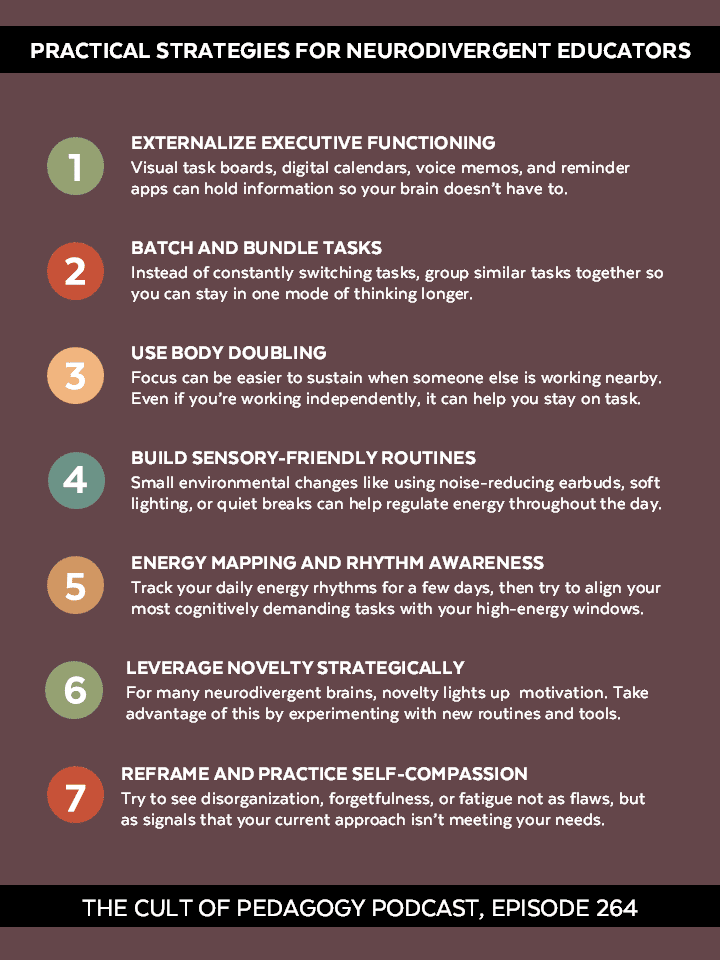
- Innovation and Creative Problem-Solving: Neurodivergent brains often approach problems from unconventional angles, fostering innovative teaching methods, engaging curriculum design, and novel solutions to classroom challenges. Their non-linear thinking can spark creativity and inspire students to think outside the box.
- Deep Empathy and Authenticity: Having navigated a world often not designed for their neurology, many neurodivergent educators possess a profound sense of empathy for students who struggle or feel different. This lived experience fosters a classroom environment of genuine understanding, acceptance, and psychological safety, making them powerful advocates for inclusive practices.
- Specialized Knowledge and Passion: Neurodivergent individuals, particularly those with autism or ADHD, often develop intense, focused interests. When these align with their teaching subjects, it translates into deep, passionate expertise that can captivate students and ignite a love for learning. Their ability to "hyperfocus" can lead to exceptional mastery and dedication in specific areas.
- Diverse Perspectives and Student Advocacy: Neurodivergent teachers inherently model diversity. They challenge the notion of a single "right" way to learn or think, validating diverse learning styles and advocating for differentiated instruction that benefits all students. They often excel at connecting with neurodivergent students, offering insights and strategies that neurotypical educators might overlook.
- Attention to Detail and Pattern Recognition: For some neurodivergent profiles, a keen eye for detail and an ability to spot patterns can be highly beneficial, leading to meticulous planning, insightful student assessments, and the identification of subtle learning needs.
These strengths flourish when educators feel safe and supported, allowing them to bring their authentic selves to work rather than expending energy on masking. This not only benefits the individual teacher but also enriches the entire school community, modeling self-awareness and creative problem-solving for students.
When Systems Fail: Structural Barriers in Education
Despite the clear advantages neurodivergent teachers offer, existing educational structures frequently operate on neuronormative assumptions, inadvertently creating significant barriers. These systemic issues chip away at energy, focus, and confidence:
- Sensory Overload: Classrooms and school environments are often chaotic, noisy, and visually stimulating. Fluorescent lighting, constant movement, loud bells, and the cacophony of multiple conversations can be overwhelming for those with sensory sensitivities common in autism and ADHD, leading to exhaustion and difficulty concentrating.
- Demands for Rapid Transitions and Multitasking: The school day is a relentless series of transitions: shifting between subjects, managing multiple groups of students, moving between different roles (teacher, disciplinarian, counselor). This constant "gear-shifting" is profoundly draining for brains that thrive on sustained focus.
- Rigid Routines and Lack of Flexibility: While some neurodivergent individuals benefit from routine, excessively rigid structures can be counterproductive. Unanticipated changes, last-minute demands, or an inability to adapt schedules can cause significant stress and disrupt workflow for those who require predictability or flexibility in task execution.
- Administrative Burdens: The sheer volume of administrative tasks—data collection, compliance paperwork, individualized education program (IEP) documentation, report card comments—can be overwhelming. These tasks often require meticulous organization and sustained attention, areas where some neurodivergent individuals face inherent challenges, leading to missed deadlines or late-night work.
- Professional Development Formats: Traditional professional development (PD) sessions, often characterized by long lectures, group discussions, and minimal opportunities for movement or individual processing, can be inaccessible and ineffective for many neurodivergent learners, including teachers.
- Communication Overload: Constant emails, impromptu meetings, and varied communication channels can create an overwhelming information stream, making it difficult to prioritize, process, and respond effectively.
The paradox lies in the discrepancy between schools’ stated values—innovation, empathy, diversity—and their operational realities, which often struggle to support these traits in practice.
Empowering Neurodivergent Educators: Practical Strategies
While systemic change is paramount, individual neurodivergent educators can adopt strategies to manage their energy and enhance sustainability:
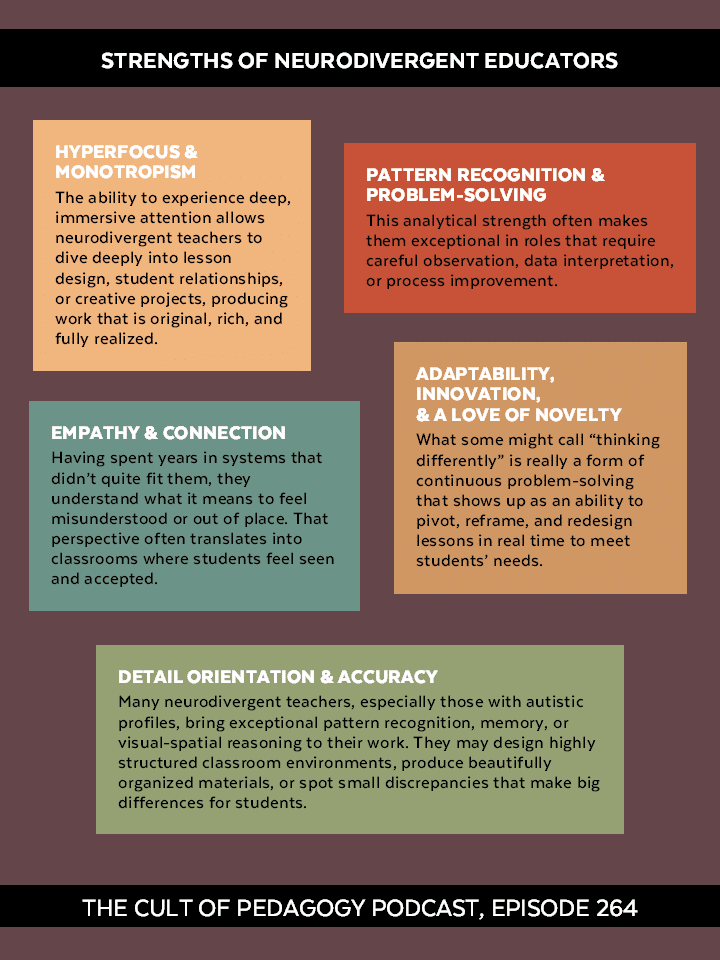
- Externalize Executive Functioning: Do not rely solely on internal memory or mental organization. Utilize visual schedules, digital calendars, reminder apps, task management software (e.g., Trello, Asana), or even voice memos to offload mental burdens. Tools like If This Then That (IFTTT) can automate routine digital tasks, freeing up cognitive resources.
- Batch and Bundle Tasks: Minimize cognitive "gear-shifting" by grouping similar tasks. Dedicate specific blocks of time for grading, lesson planning, or responding to emails. This allows for deeper focus within a single cognitive mode, improving efficiency and reducing mental fatigue.
- Utilize Body Doubling: The presence of another person working nearby can significantly aid focus and task initiation. This can involve co-working with a colleague during planning periods, joining virtual accountability sessions, or even using apps designed for body doubling.
- Cultivate Sensory-Friendly Routines and Environments: Implement small, intentional environmental adjustments. Use noise-reducing headphones, adjust lighting (preferring natural light or lamps over harsh fluorescents), incorporate brief movement breaks, and create a designated "reset ritual" (e.g., a few deep breaths, a sip of water) between transitions.
- Map Energy and Rhythms: Track personal energy levels throughout the day or week. Identify peak focus times and periods of fatigue. Schedule cognitively demanding tasks during high-energy windows and reserve lower-energy periods for less intensive work. This self-awareness enables proactive energy management.
- Leverage Strategic Novelty: For brains that thrive on newness, incorporate small variations into routines. Experiment with new lesson formats, rearrange the classroom, or explore new digital tools to re-engage motivation, ensuring novelty serves as a fuel for productivity rather than a distraction.
- Practice Self-Compassion and Reframe Challenges: View organizational difficulties or fatigue not as personal failures but as signals that current approaches are not meeting neurodevelopmental needs. Self-compassion allows for experimentation without shame and fosters a sustainable mindset, recognizing that "professionalism" does not equate to perfection.
These strategies are about working differently, not harder, aiming to reduce friction, conserve energy, and allow individual strengths to lead.
Systemic Change: What Schools and Administrators Can Do
True inclusion requires systemic shifts that move beyond individual coping mechanisms to create genuinely supportive environments. This is not about lowering standards but about equitable access to the profession:
- Flexible Work Arrangements and Scheduling: Explore options for flexible hours, remote work for administrative tasks, or modified schedules where feasible. Recognize that a standard 8-to-4 day may not optimize every teacher’s productivity or well-being.
- Clear Communication and Predictability: Establish clear communication protocols, provide agendas in advance for meetings, and minimize last-minute changes to schedules or expectations. Predictability reduces anxiety and allows for better planning.
- Accessible Professional Development: Offer varied PD formats, including asynchronous options, smaller group discussions, or self-paced modules, to accommodate diverse learning and processing styles. Ensure quiet spaces are available during in-person sessions.
- Technology and Tools for Support: Invest in and train staff on assistive technologies and organizational tools that can aid executive functioning, such as project management software, dictation tools, or digital note-taking applications.
- Mentorship and Peer Support Networks: Create formal or informal mentorship programs where neurodivergent educators can connect with peers or experienced mentors who understand their challenges and can offer practical advice and emotional support.
- Sensory-Friendly Environments: Conduct "sensory audits" of school environments. Consider adjustable lighting, designated quiet zones for staff, noise-dampening materials, and flexibility regarding personal comfort items (e.g., fidget tools, specific seating).
- Training for Leadership: Educate administrators and school leaders on neurodiversity, unconscious biases, and effective accommodations. This training should foster a culture of empathy, understanding, and proactive support, moving beyond a reactive, compliance-driven approach.
- Review of Administrative Burdens: Critically evaluate the necessity and efficiency of administrative tasks. Streamline paperwork, explore digital solutions, and ensure that data collection serves a clear purpose rather than becoming an onerous, time-consuming obligation.
The Broader Impact: A Stronger Educational Ecosystem
When schools intentionally embrace and support neurodivergent educators, the benefits ripple throughout the entire educational ecosystem. Teachers who feel safe and empowered to work in ways that align with their cognitive profiles are not only more effective and less prone to burnout but also become powerful models for their students. Children witness adults utilizing visual schedules, taking sensory breaks, or openly discussing their attention patterns, learning that these are not signs of weakness but effective strategies for success. This normalizes neurodiversity, fostering an inclusive classroom culture where difference is celebrated as an integral part of learning, rather than something to be concealed or corrected.
For school leadership, an empathetic and flexible approach to neurodiversity builds trust, enhances staff morale, and significantly improves teacher retention. A culture that prioritizes sustainability over an unattainable ideal of perfection is better equipped to attract and retain high-quality educators, thereby strengthening the entire institution. As awareness of neurodiversity continues to grow, the conversation must evolve from mere recognition to concrete action. Schools that proactively design for flexibility, clarity, and belonging are not just making life better for their neurodivergent staff; they are creating more robust, innovative, and equitable environments where every teacher and every student can fully engage, knowing they are valued and belong.