



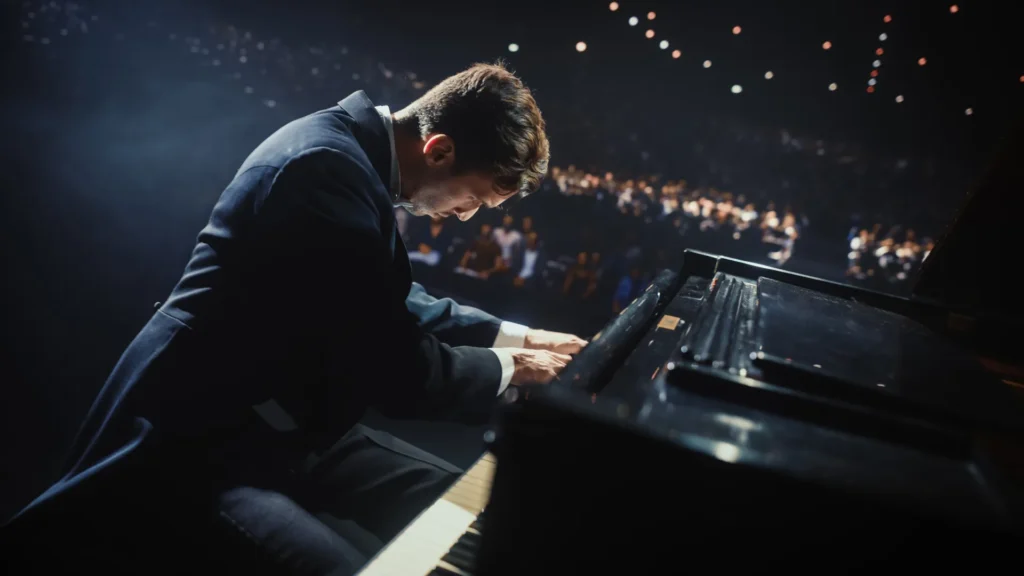
For generations, the assertion that a performer’s touch could profoundly influence a piano’s inherent sound quality, or timbre, was a cornerstone of music pedagogy and a deeply held belief among pianists. Conversely, a significant faction of scientists and instrument engineers maintained that once a piano hammer made contact with a string, the resulting tone was almost entirely dictated by the instrument’s physical properties, with variations in perceived sound attributed primarily to changes in volume (dynamics) and timing (rhythm and tempo). This century-old debate, often pitting artistic experience against physical mechanics, has now seen a decisive shift with findings published in the prestigious Proceedings of the National Academy of Sciences (PNAS).
Unveiling the Mechanisms of Expressive Touch
The pivotal research, spearheaded by Dr. Shinichi Furuya of the NeuroPiano Institute and Sony Computer Science Laboratories, Inc., utilized cutting-edge ultra-high-speed sensing technology to meticulously capture the previously invisible movements that underpin expressive piano playing. Their comprehensive investigation has revealed that the subtle, minute motions of a pianist’s fingers and hands exert a quantifiable influence on how listeners perceive a note’s intrinsic qualities, such as its brightness, perceived heaviness, or clarity. This breakthrough moves the discussion from subjective interpretation to objective, measurable phenomena.
The study’s genesis lies in addressing a persistent enigma in music performance science. While musicians commonly employ terms like "warm," "dark," "bright," or "heavy" to describe tonal qualities, many scientific perspectives had historically dismissed these distinctions as primarily psychological phenomena or secondary effects of loudness and timing. Dr. Furuya’s team set out to challenge this assumption directly, aiming to isolate the impact of touch itself.
A Century of Debate Culminates in Empirical Evidence
The intellectual battle over "piano touch" dates back to the early 20th century. Visionaries like Theodor Leschetizky, a renowned piano pedagogue, famously taught students to cultivate a "singing tone" and distinguish between various qualities of touch, believing it directly affected the instrument’s sound. However, the prevailing scientific understanding, rooted in the physics of sound production, argued that a piano string’s vibration characteristics – and thus its timbre – are determined primarily by the initial impulse from the hammer strike. Once the hammer leaves the string, the string’s vibration is largely independent of the finger’s subsequent actions or the initial "touch" beyond its impact velocity. Therefore, skeptics posited that a pianist could only control the loudness and duration of a note, not its inherent tonal color.
This scientific viewpoint gained traction through acoustic studies that struggled to find direct, consistent correlations between subtle finger movements and distinct timbral shifts independent of volume. The challenge lay in the limitations of available technology to capture the infinitesimally precise movements of a pianist’s hand and fingers at the exact moment of key depression and subsequent release, and to correlate these with highly nuanced auditory perceptions. The new research, however, has fundamentally altered this landscape.
Groundbreaking Methodology: The HackKey System
To overcome previous technological barriers, Dr. Furuya’s team engineered a bespoke non-contact sensing system named HackKey. This sophisticated device was capable of recording the movements of all 88 piano keys with extraordinary precision: 1,000 frames per second and microscopic spatial resolution. This level of detail allowed the researchers to capture the nuanced kinematics of key depression and release, providing unprecedented insight into the physical interaction between pianist and instrument.
The experimental design was rigorously structured to test the hypothesis directly. Twenty internationally acclaimed pianists were recruited for the study – a critical factor, as these individuals possess decades of highly refined motor control and artistic training. These expert musicians were tasked with playing individual notes and short musical phrases while intentionally producing contrasting tonal qualities, such as "bright" versus "dark" sounds, and "light" versus "heavy" sounds. This intentional manipulation was crucial for establishing a causal link.
Following the performance phase, a series of listening tests were conducted. Participants, comprising both musically trained individuals (including professional pianists) and those with no formal musical training, were asked to identify the intended timbral qualities (e.g., "was this note bright or dark?"). The results were striking: listeners consistently and reliably recognized the intended timbres, irrespective of their musical background. Professional pianists, as anticipated, demonstrated an even higher degree of sensitivity to these subtle differences, underscoring the perceptual reality of these timbral variations.
The Hidden Choreography of Musical Expression
The detailed kinematic data collected by the HackKey system allowed the researchers to pinpoint the specific movement features associated with these perceived timbral changes. They discovered that only a select handful of extremely precise movement characteristics were strongly correlated with shifts in perceived timbre. These included minute variations in acceleration during key depression, the exact timing of the key strike, and the intricate synchronization between different fingers or hands in more complex passages.
One of the study’s most significant revelations was the demonstration that altering a single specific movement feature could reliably and reproducibly change how listeners described the sound. For instance, a subtle variation in the key’s acceleration profile, even with identical key velocities (which typically determine loudness), could transform a "bright" perception into a "darker" one. This direct evidence definitively established that touch itself plays a causal role in shaping timbre, rather than merely being a concomitant factor to other musical effects like changes in loudness or tempo. This finding directly refutes the long-standing argument that timbre variations were solely a product of dynamic or temporal shifts.
The study further characterized these subtle gestures not as arbitrary actions, but as integral components of a highly refined, shared motor skill developed through years of advanced piano training. This implies that the artistry behind a pianist’s tone is far from being a metaphorical or purely subjective experience; it is, in fact, grounded in measurable, repeatable physical actions. Dr. Furuya articulated this profound implication, stating that the research successfully bridges a long-standing gap, bringing artistic intuition into the rigorous domain of scientific inquiry. The findings not only corroborate what countless pianists have inherently believed for decades but also provide a clearer, mechanistic understanding of how skilled movement generates rich emotional and aesthetic experiences in music.
Beyond the Concert Hall: Far-Reaching Implications
The ramifications of this groundbreaking research extend well beyond the confines of concert halls and practice rooms, promising to influence diverse fields from education to advanced technology.
Transforming Music Education: The most immediate and profound impact is anticipated in music education. Historically, piano students have often grappled with abstract instructions from teachers, such as "play warmer," "use a lighter touch," or "make the melody sing." While these metaphors are effective for experienced musicians, they can be challenging for novices to translate into concrete physical actions. The study suggests a paradigm shift: future training systems could leverage this newfound understanding to provide students with visual and quantitative feedback on the exact physical movements associated with specific tonal qualities. Imagine a digital interface showing a student the precise acceleration curve of a concert pianist’s finger for a "warm" tone, allowing them to compare and refine their own technique in real-time. This could revolutionize how expressive techniques are taught, making them more accessible, measurable, and efficient to acquire.
Advancements in Rehabilitation Science and Neuroscience: The research offers critical insights into the intricate relationship between advanced motor control and sensory perception, holding significant promise for rehabilitation science and neuroscience. By identifying how minute physical actions shape auditory experience, the study provides clues about the brain’s remarkable capacity to integrate complex movement plans with sensory feedback. This understanding could inform therapies for individuals recovering from neurological conditions that affect fine motor control, such as stroke or Parkinson’s disease. Developing rehabilitation programs that incorporate musical movement, precisely tailored to target specific motor features linked to perception, could enhance dexterity, coordination, and even cognitive functions. Neuroscientists, in turn, gain a novel framework for investigating the neural pathways involved in complex motor learning, artistic expression, and multisensory integration.
Shaping Robotics and Human-Computer Interaction: In the realm of technology, the findings could inspire a new generation of more expressive digital instruments, advanced robotics, and intuitive human-computer interaction (HCI) systems. Current digital pianos, while highly sophisticated, often struggle to replicate the nuanced expressivity of an acoustic instrument. By identifying the key kinematic features that contribute to timbre, developers can design digital interfaces and synthesis algorithms that more accurately model and reproduce these subtle expressive nuances. Similarly, robotics research could benefit from understanding how human pianists achieve such fine motor control to produce desired perceptual outcomes. This could lead to robots capable of performing complex, nuanced tasks that require human-like dexterity and responsiveness, or even developing robotic pianists that can truly "play" with expressive touch.
Artificial Intelligence and Music Technology: The study directly feeds into ongoing work in artificial intelligence (AI) and music technology. Researchers are actively focused on modeling timbre, generating realistic piano motion for virtual performances, and building AI systems that can interpret and reproduce subtle expressive nuances from human performances. This new data provides a robust foundation for training AI models to not only recognize but also generate performances with specific, desired timbral qualities. This could lead to AI composers that understand and manipulate timbre with greater sophistication, or intelligent tutoring systems that can provide personalized feedback on expressive performance.
The Science of Creativity: A New Frontier
Beyond its practical applications, the study makes a significant contribution to the burgeoning scientific effort to understand the elusive nature of creativity itself. For decades, much of the research on music perception focused on objectively measurable elements such as pitch, loudness, and rhythm. Timbre, however, has proven far more challenging to study scientifically because it involves higher-level sensory interpretation, emotional response, and subjective aesthetic judgment.
By meticulously identifying specific physical actions that are causally linked to timbre perception, Dr. Furuya’s team has opened a crucial door. Their work enables scientists to investigate how artistic expression – often considered an intangible, almost mystical quality – emerges from the dynamic interaction between the human body, the brain, and the resulting sound. This represents a pivotal step in demystifying the creative process, grounding it in observable and quantifiable mechanisms.
This research aligns with a broader interdisciplinary movement sometimes referred to as "dynaformics," the science of music performance. Proponents of dynaformics believe that a deep, scientific understanding of the biomechanics, motor control, and neuroscience underlying musical performance can lead to tangible benefits for musicians. This includes more efficient training methodologies, strategies to prevent common performance-related injuries, and innovative approaches to overcome physical limitations that often accompany years of intense, repetitive practice. It draws parallels with sports science, where detailed kinematic analysis helps athletes optimize performance and minimize injury risk.
The profound excitement surrounding these findings stems from more than just resolving a long-standing musical mystery. It underscores a fundamental truth about human artistry: some of the most potent emotional power and aesthetic beauty in music emanates from movements so minuscule they are almost imperceptible to the naked eye, yet so exquisitely precise that the human ear and brain are capable of discerning and being moved by the difference. This study not only validates the intuitive wisdom of generations of pianists but also paves the way for a deeper scientific appreciation of the intricate artistry that defines human musical expression.