


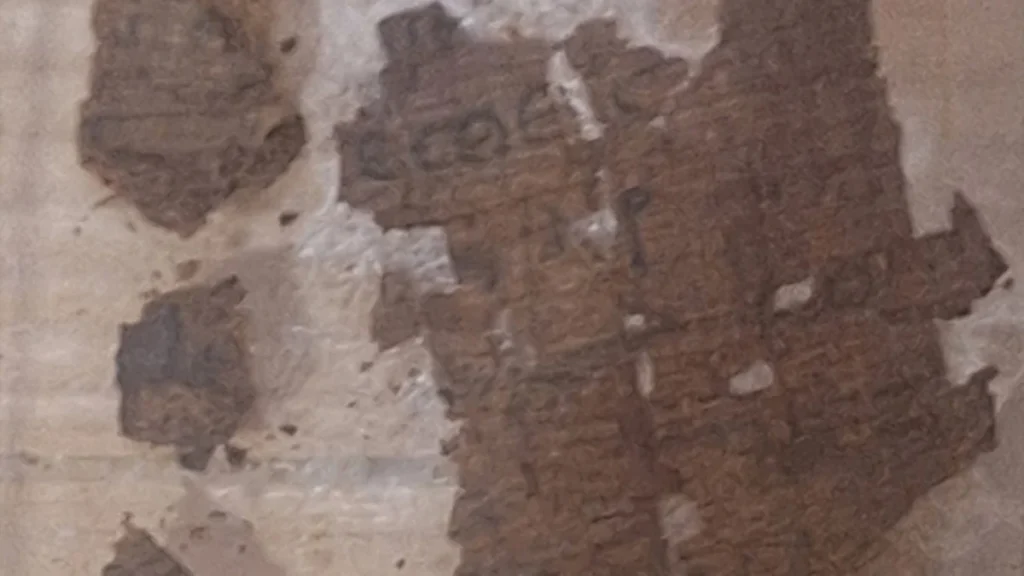
In a discovery that bridges the gap between classical literature and ancient funerary rites, archaeologists working at the historic site of Oxyrhynchus, Egypt, have identified a 1,600-year-old mummy containing a fragment of Homer’s "The Iliad." The find, announced by researchers from the University of Barcelona, represents the first documented instance of a Greco-Roman literary text being repurposed as packing material for the mummification of a human body. While the use of recycled papyrus—known as cartonnage—was a common practice in ancient Egyptian embalming, such materials typically consisted of administrative documents or magical incantations. The inclusion of one of the foundational pillars of Western literature marks a significant shift in the archaeological understanding of late-antique burial customs.
Located approximately 120 miles south of Cairo on the Bahr Yussef branch of the Nile, Oxyrhynchus was once a bustling provincial capital and a major center of Hellenistic and Roman culture. The site has long been a treasure trove for papyrologists, but this recent discovery provides a rare glimpse into the physical intersection of Greek intellectual life and Egyptian religious tradition during the 4th century CE.
The Discovery at Oxyrhynchus
The discovery occurred during an excavation of a funerary complex consisting of three limestone chambers. Within these chambers, the University of Barcelona team, led by project director and philologist Ignasi-Xavier Adiego, uncovered several mummies from the Roman era housed in wooden sarcophagi. Although many of the tombs had been disturbed by looters over the centuries, at least one mummy remained sufficiently intact for a comprehensive bioarchaeological examination.
It was during the detailed study of the remains that papyrologist Leah Mascia noticed an unusual piece of parchment situated within the mummy’s chest cavity. Upon closer inspection and cleaning, the Greek script revealed itself not as a prayer or a spell, but as a passage from Book II of "The Iliad." Specifically, the fragment contains a portion of the "Catalogue of Ships," a famous and lengthy section of the epic poem that lists the various Greek contingents and their leaders who sailed to Troy.
The "Catalogue of Ships" is often cited by scholars as a vital historical and geographical record of the Mycenaean world, even if filtered through the lens of Homeric poetry. Finding this specific text inside a mummy suggests that the manuscript was available in the city’s libraries or private collections before being discarded or sold to embalmers for secondary use.
The Evolution of Mummification in Late Antiquity
By 400 CE, the period from which this mummy dates, the practice of mummification in Egypt had undergone significant transformations. The influence of the Roman Empire and the spread of Greek culture had created a syncretic approach to the afterlife. While the core Egyptian belief in the preservation of the body remained, the methods of achieving it had evolved.
Traditionally, during the Pharaonic periods, internal organs were removed and placed in four canopic jars representing the sons of Horus. However, by the Greco-Roman period, this practice had largely fallen out of favor. Instead, embalmers began to leave the organs inside the body or, more commonly, replace them with packing materials designed to maintain the body’s shape after dehydration.
The process involved several distinct stages:
- Dehydration: The body was covered in natron, a naturally occurring salt, for approximately 40 days to remove all moisture.
- Wrapping: The corpse was wrapped in multiple layers of linen bandages.
- Internal Packing: To prevent the chest and abdomen from collapsing, priests stuffed the cavities with a mixture of resin, linen, and repurposed papyrus fragments, sometimes encased in clay.
In the case of the Oxyrhynchus mummy, the "Iliad" fragment served this structural purpose. The transition from using "magical" texts—designed to protect the deceased in the underworld—to using "literary" texts suggests a more utilitarian approach to the materials provided to embalmers, or perhaps a surplus of literary manuscripts in the urban centers of the time.
A Legacy of Papyri: The Context of Oxyrhynchus
The significance of Oxyrhynchus as an archaeological site cannot be overstated. Since the late 19th century, when British explorers Bernard Grenfell and Arthur Hunt first began excavating the city’s ancient rubbish mounds, the site has yielded hundreds of thousands of papyrus fragments. These documents have provided historians with an unparalleled look at daily life, ranging from tax receipts and private letters to lost plays by Sophocles and poems by Sappho.
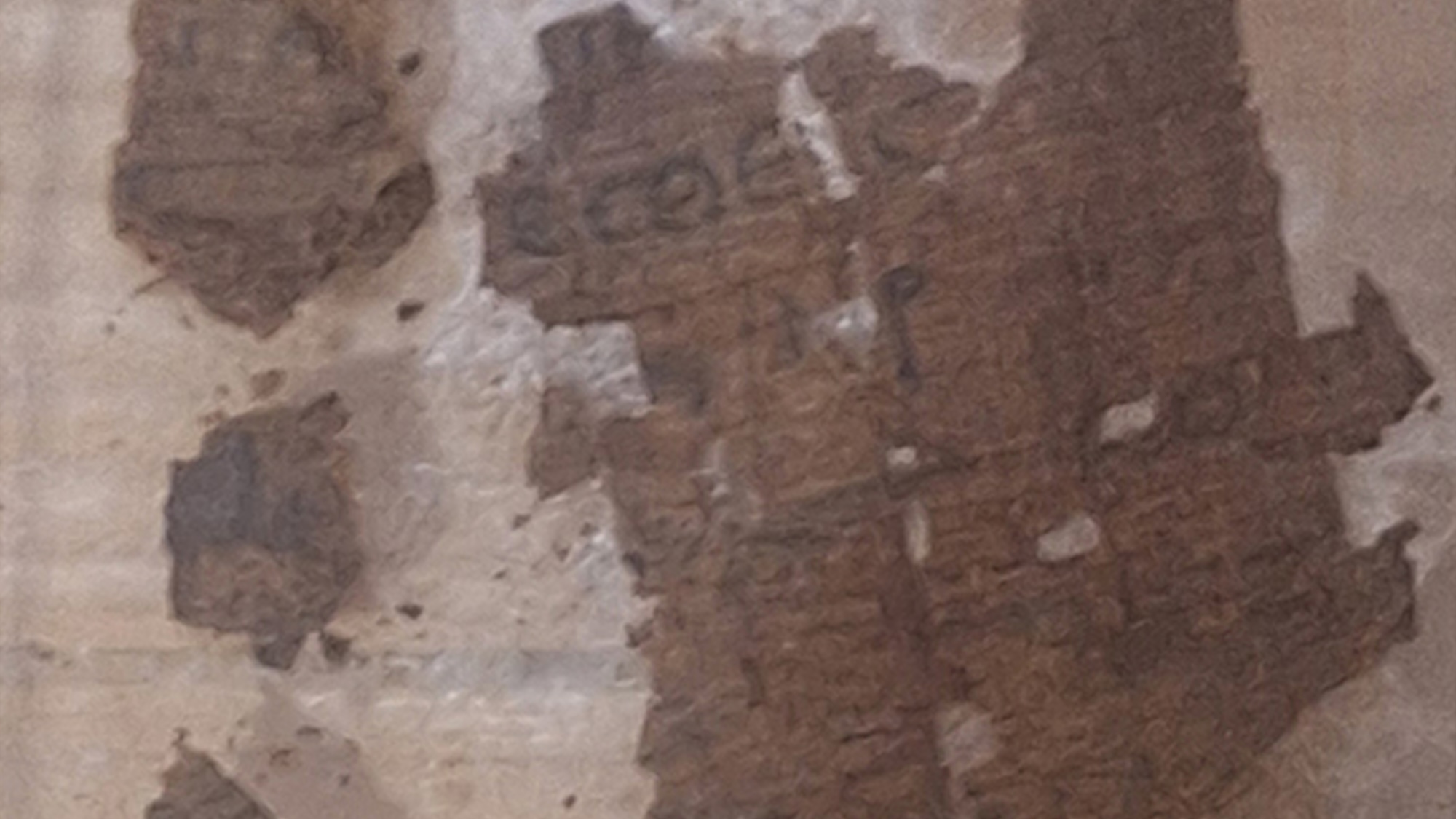
"Since the late 19th century, a huge number of papyri have been discovered at Oxyrhynchus, including Greek literary texts of great importance," Ignasi-Xavier Adiego stated. He noted that while Greek texts are common at the site, finding them specifically within a funerary context as part of the mummy’s physical composition is a "real novelty."
The dry climate of Egypt, particularly in areas away from the damp Nile Delta, allowed these fragile organic materials to survive for nearly two millennia. At Oxyrhynchus, the lack of rainfall and the alkaline nature of the soil created the perfect conditions for the preservation of papyrus, which would have rotted away in almost any other part of the Roman Empire.
Scholarly Implications and the "Catalogue of Ships"
The choice of the "Catalogue of Ships" for use in a burial raises several intriguing questions for philologists and historians. In the ancient world, "The Iliad" was the centerpiece of the "paideia"—the classical Greek system of education. Students were required to memorize vast swathes of Homer’s work, and the "Catalogue of Ships" was frequently used as a mnemonic exercise to teach geography and genealogy.
The presence of this text in a 4th-century mummy suggests that even as Egypt became increasingly Christianized and moved toward the Byzantine era, the classical Greek literary tradition remained deeply embedded in the social fabric. It is possible that the papyrus was a discarded school text or a worn-out scroll from a local library.
However, some researchers speculate whether the inclusion of such a text was entirely accidental. While Adiego and Mascia emphasize the utilitarian nature of the packing, the "Catalogue of Ships" deals with a grand journey and the mobilization of a great fleet. In the context of the soul’s journey to the afterlife, an imaginative connection—however tenuous—might have been made by the family of the deceased or the embalmers themselves.
Official Responses and Archaeological Analysis
The University of Barcelona’s mission has been working at Oxyrhynchus for decades, slowly pieceing together the layout of the ancient city and its necropolis. The discovery of the "Iliad" mummy is being hailed as a milestone for the project, illustrating the complex cultural identity of the city’s inhabitants.
Leah Mascia, the papyrologist who first identified the text, noted that the find challenges the previous assumption that only religious or magical texts were deemed appropriate for inclusion within the body. This discovery suggests that by the 4th century, the "sanctity" of the text used for packing was perhaps less important than the physical requirement of preserving the corpse’s volume.
Archaeologists also point out that the looting of the site has likely destroyed hundreds of similar examples. The fact that this mummy survived in a condition good enough to be analyzed is a stroke of luck that allows for a more nuanced data set regarding Roman-era burials.
Broader Impact on Egyptian History
This discovery contributes to a growing body of evidence regarding the "Hellenization" of Egypt. Following the conquest by Alexander the Great and the subsequent Ptolemaic dynasty, Egypt became a bilingual and bicultural society. Even after the Roman conquest in 30 BCE, Greek remained the language of administration, literature, and the elite.
The use of "The Iliad" in a burial 1,600 years ago underscores the enduring power of Homeric epic. It shows that even in death, the inhabitants of Oxyrhynchus were surrounded by the echoes of Troy. As the University of Barcelona continues its excavations, researchers hope to find more evidence of how classical literature was integrated into the daily—and eternal—lives of ancient Egyptians.
The mummy and its papyrus fragment are currently undergoing further conservation and multispectral imaging. These techniques will allow scholars to read any faded ink that is not visible to the naked eye, potentially revealing more lines from Book II or notes in the margins that could shed light on the manuscript’s original owner. For now, the "Iliad" mummy stands as a testament to a world where the epic poems of the past were literally woven into the fabric of the future.