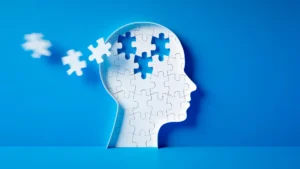




Some memories are vividly etched into the mind, replete with sensory detail and emotional resonance, as fresh as the moment they were formed. Others are fleeting, fading into a hazy background, while the most elusive refuse to surface at all, leaving a frustrating void. This profound variability in recall has long perplexed neuroscientists: what mechanisms dictate which experiences our brains deem worthy of indelible preservation and which are allowed to dissipate into oblivion? A groundbreaking new study from Boston University offers a compelling potential answer, positing that the brain assigns extra "sticking power" to memories of otherwise mundane moments when they become intrinsically linked to a significant event – something emotionally charged, surprising, or highly rewarding.
This pivotal research, published in the esteemed journal Science Advances, introduces the concept of "graded prioritization," a novel principle suggesting that emotional salience can retroactively and proactively stabilize fragile, everyday memories. Imagine the euphoria of winning a substantial lottery prize; the Boston University findings suggest that this intense emotional peak would not only cement the memory of the win itself but also sharply enhance your recall of the seemingly unremarkable actions and observations leading up to that life-altering moment. You might suddenly remember the specific brand of coffee you drank, the stranger you briefly passed on the street, or the mundane thought that crossed your mind just before checking your winning numbers. The implications of this discovery are far-reaching, potentially paving the way for improved therapeutic interventions for individuals grappling with memory impairments and offering innovative strategies for educators to boost student retention of challenging concepts.
The Brain’s Selective Archiving System: A New Understanding
"Memory isn’t merely a passive recording device; it’s an active, dynamic process where our brains constantly evaluate and decide what truly matters," explains Robert M.G. Reinhart, a lead author of the study and an associate professor of psychological and brain sciences at Boston University’s College of Arts & Sciences. "Emotional events possess a unique capacity to reach back in time, influencing and stabilizing memories that would otherwise be fragile and easily forgotten. Developing precise strategies to strengthen useful memories, or conversely, to weaken harmful ones, has been a longstanding aspiration within cognitive neuroscience. Our study strongly suggests that emotional salience can be harnessed in remarkably precise ways to achieve these critical goals."
Reinhart, who also holds an associate professorship in biomedical engineering at the College of Engineering and is a faculty member at the BU Center for Systems Neuroscience, illustrates this phenomenon with a vivid scenario: a hiker traversing Yellowstone National Park unexpectedly encounters a majestic herd of bison. The profound "wow" factor of this awe-inspiring experience, the researchers found, doesn’t just solidify the memory of the bison encounter itself. It extends its mnemonic influence to numerous smaller, more routine occurrences immediately preceding and following it – perhaps the distinct pattern of a rock on the path, the fleeting glimpse of a small animal darting into the undergrowth, or the particular scent of pine needles. These peripheral, otherwise forgettable details become imbued with enhanced recall by their association with the emotionally significant event.
"The fundamental question we sought to address was: what are the underlying mechanisms driving this selective memory enhancement?" Reinhart elaborates. "Our objective was to uncover how the brain intelligently selects and strengthens those fragile, peripheral memories, preventing them from being lost."
Challenging Previous Notions: A Comprehensive Methodological Approach
While the intuitive notion that significant, emotionally charged moments leave an indelible mark on our memory banks is widely accepted, the precise mechanisms of how these powerful events influence adjacent weaker memories have been a subject of considerable debate within the scientific community. Specifically, researchers have long been divided on the concepts of retroactive and proactive memory enhancement – the idea that memories immediately before (retroactive) or immediately after (proactive) a salient event are preferentially prioritized and made easier to recall. Previous studies attempting to clarify whether weaker memories are truly stabilized by their attachment to a more prominent one have often yielded conflicting or inconclusive results.
The latest project from Boston University stands apart due to its unprecedented scale and rigorous methodology. Comprising nearly 650 participants across ten distinct individual studies, and employing sophisticated artificial intelligence algorithms to analyze a broad and complex dataset, this research is the first to definitively demonstrate that memory enhancement, driven by emotional salience, unequivocally occurs. A critical distinction of this study compared to its predecessors lies in its finding that the brain does not operate on a simple binary switch for memory preservation. Instead, it utilizes a sophisticated "sliding scale" – a graded prioritization – to determine which memories are preserved and to what extent.
Many of the team’s experiments involved presenting participants with dozens of diverse images, each associated with varying levels of potential rewards. The following day, participants were administered a surprise memory test, allowing researchers to meticulously assess the recall of both the salient, reward-linked images and the mundane images that surrounded them.
The Nuances of Proactive and Retroactive Memory Enhancement
The study meticulously delineated the distinct characteristics of proactive and retroactive memory enhancement:
-
Proactive Memories (Events Occurring After Salience): For events that occurred after a significant, emotionally charged experience, the strength of recall was directly correlated with the emotional impact and enduring nature of the salient event itself. The more profound and lasting the emotional resonance of the central event, the more likely everything that followed it was to be robustly remembered. For instance, the day a student receives an acceptance letter to their dream university, they might remember the details of their walk to the mailbox, the color of the sky, and the mundane conversations they had after opening the letter with surprising clarity. This suggests a forward-propagating influence of emotional salience.
-
Retroactive Memories (Events Occurring Before Salience): Conversely, when reaching back to strengthen memories of events that happened before the pivotal, emotionally charged moment, the mechanism differed significantly. These retroactive memories were more likely to be cemented and recalled if they possessed inherent similarities or conceptual overlap with the pivotal event. This could manifest as a shared visual cue, a matching color, a thematic connection, or even a subtle contextual link. Returning to the Yellowstone example, the memory of a specific rock might be enhanced not just because it was before the bison, but because its rugged texture somehow resonated with the primal majesty of the animals.
Chenyang (Leo) Lin (GRS’30), the paper’s first author and a doctoral student in the Reinhart Lab, emphasizes this critical distinction: "For the first time, we provide clear, compelling evidence that the brain actively ‘rescues’ weak memories in a graded fashion. This rescue is not solely guided by temporal proximity, but critically, by their high-level similarity or conceptual overlap to the emotional events. It’s not just timing that matters, but also the nuanced connections and conceptual architecture." This finding represents the first human validation of "graded prioritization," a groundbreaking principle for understanding how the brain consolidates our everyday experiences.
Furthermore, the research uncovered an intriguing additional layer of complexity: if any of the secondary, peripheral memories themselves carried a significant emotional weight, the overall memory enhancement effect was diminished. This suggests a sophisticated neural prioritization system at play. "The brain appears to prioritize and rescue precisely those fragile memories that would otherwise inevitably slip away," Reinhart notes. His extensive research, including a series of highly cited papers on memory function and the use of noninvasive brain stimulation techniques to improve memory in older adults or mitigate obsessive-compulsive behaviors, provides a robust foundation for these latest insights.
A Historical Perspective on Memory Research
The journey to understanding memory has been long and winding, punctuated by significant breakthroughs and persistent enigmas. From Hermann Ebbinghaus’s pioneering work on the "forgetting curve" in the late 19th century to the discovery of long-term potentiation (LTP) in the 1970s, which provided a cellular basis for learning and memory, scientists have continually sought to unravel the brain’s remarkable capacity to encode, store, and retrieve information. Early theories often focused on repetition and intensity as primary drivers of memory strength. However, the role of emotion has been increasingly recognized as a powerful modulator. Studies on flashbulb memories – vivid, highly detailed recollections of momentous, emotionally significant events – highlighted this connection, but the precise mechanism by which emotion influences adjacent mundane memories remained elusive and contentious. The Boston University study, with its large participant pool and advanced analytical techniques, provides a crucial missing piece to this complex puzzle, offering a definitive answer where previous, smaller-scale investigations often led to conflicting results.
Transformative Implications: From Clinic to Classroom
While the immediate focus of this latest study was on elucidating a fundamental mechanism governing memory encoding, Reinhart underscores its profound potential to lay the groundwork for future clinical interventions and real-world applications. The discovery of graded prioritization could usher in a new era of targeted strategies for memory enhancement and modulation.
Clinical Applications: Rescuing and Re-shaping Memories
The implications for individuals suffering from memory-related disorders are particularly significant. Globally, millions are affected by conditions like Alzheimer’s disease, various forms of dementia, and age-related cognitive decline, all characterized by impaired memory recall. The ability to "rescue" weak or inaccessible memories could revolutionize treatment approaches.
-
Combating Age-Related Memory Decline and Dementia: For older adults experiencing normal cognitive aging or early stages of neurodegenerative diseases, this research suggests novel avenues. Clinicians could explore techniques to associate new, crucial information (e.g., medication schedules, names of loved ones, recent events) with emotionally resonant cues. By strategically pairing "fragile concepts" with stimuli that evoke positive emotions or a sense of reward, it might be possible to strengthen their consolidation into long-term memory. This could involve personalized memory training programs that leverage individual emotional triggers or even biofeedback systems.
-
Addressing Trauma-Related Disorders (PTSD): The principle of graded prioritization also offers a double-edged sword, presenting potential for both strengthening and weakening memories. For individuals with trauma-related disorders like Post-Traumatic Stress Disorder (PTSD), where distressing memories are painfully vivid and intrusive, the ability to weaken or diminish the emotional salience attached to specific components of a traumatic memory could be transformative. While complex and fraught with ethical considerations, future research could explore methods to decouple the emotional charge from specific details of a traumatic event, potentially reducing their intrusive nature. "You can flip it, too, for people with trauma-related disorders – maybe you don’t want to rescue a distressing memory," Reinhart points out, highlighting the therapeutic versatility of this discovery. This would require careful ethical oversight and patient-centered approaches, ensuring interventions are used to alleviate suffering without erasing personal history.
-
Rehabilitation for Brain Injury: Patients recovering from stroke or traumatic brain injury often face significant memory deficits. Applying the principles of graded prioritization could aid rehabilitation efforts, helping patients re-learn essential skills or remember critical information by linking it to emotionally meaningful experiences or personalized rewards.
Revolutionizing Educational Strategies
Beyond the clinical realm, the study’s findings hold immense promise for the field of education. Educators constantly grapple with the challenge of helping students retain complex or abstract information that lacks inherent emotional appeal.
-
Enhancing Learning and Retention: The concept of "pairing emotionally engaging material with fragile concepts" could fundamentally reshape pedagogical approaches. Imagine history lessons where key dates and facts are interwoven with dramatic, emotionally resonant narratives, or scientific principles demonstrated through surprising, awe-inspiring experiments. Language learning could be boosted by associating new vocabulary with culturally significant stories or personal achievements. Rather than rote memorization, learning could become an experience designed to trigger mild emotional responses, thereby strengthening the memory of the associated academic content. For example, a student struggling with a particular mathematical formula might recall it more easily if its initial introduction was linked to a surprising puzzle solution or a fun, competitive game that evoked excitement.
-
Personalized Learning: This research could also inform the development of personalized learning platforms that adapt to individual students’ emotional profiles and interests, presenting information in contexts most likely to elicit positive emotional engagement and thus optimize memory consolidation. Educational reform advocates and learning scientists are keenly observing these developments, envisioning a future where curriculum design inherently incorporates principles of emotional engagement.
The Path Forward: Research and Ethical Considerations
The Boston University study, funded by prestigious organizations including the National Institutes of Health, the International Obsessive-Compulsive Disorder Foundation, the AE Research Foundation, and various philanthropic contributions, represents a significant leap forward in our understanding of memory. However, the researchers emphasize that this is just the beginning. Future work will undoubtedly delve deeper into the precise neural circuits and molecular mechanisms underlying graded prioritization. This includes exploring the roles of specific neurotransmitters and brain regions (e.g., the amygdala for emotional processing, the hippocampus for memory consolidation) in mediating these effects.
Furthermore, as the potential to manipulate memory becomes more tangible, the ethical implications warrant careful and extensive consideration. Discussions around consent, the potential for misuse, and the definition of "useful" versus "harmful" memories will be paramount as these therapeutic and educational strategies evolve.
In summary, the Boston University team has not only provided a definitive answer to a long-standing debate in memory research but has also illuminated a powerful, nuanced mechanism by which our brains prioritize and preserve experiences. The discovery of graded prioritization – where emotional salience acts as a sophisticated editor, enhancing adjacent mundane memories based on proximity and similarity – offers a profound new lens through which to view human cognition. It promises a future where memory challenges might be overcome, and learning experiences are more effective and enduring, fundamentally reshaping our understanding of how we remember the tapestry of our lives.