



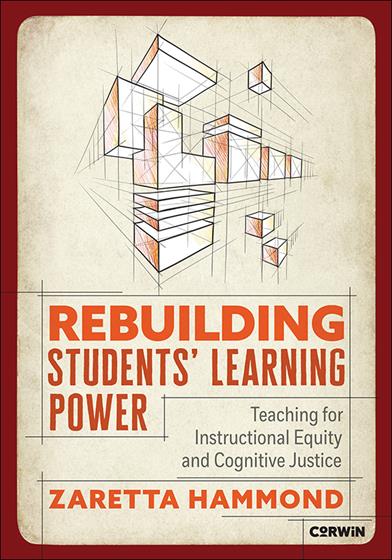
A common and persistent challenge facing educators is the observed disconnect between student engagement and genuine ownership of learning, a frustration articulated by countless teachers striving to empower their students. Despite the implementation of innovative pedagogical approaches, many students remain reliant on teacher directives, leading to a superficial engagement with content rather than a deep, internalized understanding. This phenomenon underscores a critical need within modern education: the explicit instruction of "learn-to-learn" skills, which equip students with the cognitive tools necessary to navigate and master their own intellectual development. This imperative is at the core of Zaretta Hammond’s work, particularly highlighted in her forthcoming book, Rebuilding Students’ Learning Power (Corwin, 2025), which advocates for a systemic shift towards fostering metacognitive independence.
The scenario of a teacher expressing exasperation—"They are sweet. They do what I ask, but they just won’t own it"—is a familiar refrain in educational circles. It reflects a fundamental misunderstanding about the learning process: while teachers can design compelling lessons, provide extensive scaffolding, and create dynamic learning environments, the ultimate act of learning remains an internal, individual endeavor. Neuroscientific principles confirm that the brain’s information processing cycle—involving attention, elaboration, and consolidation—cannot be externally compelled. Learning truly happens only when the learner’s intellectual curiosity is ignited, when the environment is perceived as intellectually safe, and crucially, when the student possesses the specific skills to effectively move new information through these processing phases. Without these foundational "learn-to-learn" capabilities, even the most powerful and evidence-backed pedagogical practices, such as project-based learning (PBL), Universal Design for Learning (UDL), or makerspace learning, may fall short of their full potential in cultivating independent learners. Hammond posits that by coupling motivational strategies with explicit, actionable tools and techniques, educators can transform students into adept information processors, making learning "sticky" and deeply embedded.
Defining Metacognitive Mastery: The "Learn-to-Learn" Framework
The concept of "learn-to-learn" skills, though seemingly intuitive, represents a distinct and powerful educational framework. Unlike traditional executive function skills, which primarily focus on organizational aspects like planning and time management (e.g., using binders or study schedules), learn-to-learn skills delve into the cognitive mechanics of how individuals process, integrate, and retain new information. Educational thought leaders like David Perkins of Harvard’s Project Zero refer to this as the "game of learning," while Ron Berger, founder of EL Education, frames it as the "craftsmanship of learning." Hammond characterizes these as the "trade secrets" of learning, often hidden in plain sight, and critically, views them through an equity lens as a "hidden curriculum" essential for closing opportunity gaps and promoting equitable academic outcomes.
To effectively teach these skills, Hammond introduces a precise distinction between "moves" and "skills." A "move" is a specific, discrete action or technique executed in a particular moment, much like a chess move or a dance step. It is concrete and has a clear beginning and end. A "skill," conversely, is a broader, developed ability or competency that encompasses understanding, judgment, and the capacity to execute various moves effectively. Skills involve knowing when, how, and why to deploy different moves adaptively. For instance, in basketball, a crossover dribble is a move, but ball-handling is a skill that allows a player to choose the right dribbling move at the appropriate time and execute it proficiently. Thus, the five "learn-to-learn" moves proposed by Hammond constitute a robust skill set designed to help students process new content meaningfully, leading to deeper understanding and cognitive independence.

The Five Foundational "Learn-to-Learn" Moves
Hammond outlines five critical "learn-to-learn" moves that students can consciously employ to enhance their information processing and ownership of learning:
-
Move 1: Size It Up and Break It Down: This foundational move begins with task analysis, where students engage in a structured cognitive routine to comprehend the demands of a task. It involves asking a series of decision-making questions that ignite the information processing cycle, helping the learner identify the appropriate emotional stance and formulate a strategic plan. This proactive approach helps students manage cognitive load by segmenting complex problems and mapping out a sequence of actions, thereby reducing overwhelm and fostering a sense of control over the learning process. Questions students might ask include: "What is this task really asking me to do?", "What prior knowledge might be relevant?", "What resources do I need?", and "What are the first three steps I should take?"
-
Move 2: Scan the Hard Drive: Building on established cognitive science, this move emphasizes the crucial role of activating prior knowledge, or "funds of knowledge" (schema), before engaging with new content. The brain’s fundamental rule is that all new learning must connect to existing learning. During the attention phase of information processing, the brain naturally scans its existing schema for related experiences, definitions, or concepts, no matter how tangential. Explicitly prompting this "scavenger hunt" helps students consciously bridge new information with what they already know, enhancing comprehension and retention. This move can be particularly powerful for students from diverse backgrounds, allowing them to connect academic content to their personal experiences and cultural knowledge.
-
Move 3: Chew and Remix: This move is central to the elaboration phase of information processing. Once students have activated their schema, they actively integrate new content with the identified related knowledge. This "chewing" and "remixing" of the "new with the known" is where meaning-making actively occurs. It requires productive struggle within the student’s zone of proximal development (ZPD), pushing them to make sense of complex, conflicting, or competing information. This active engagement moves learning beyond surface-level recall to deeper understanding, aligning with higher levels of Bloom’s Taxonomy (e.g., analysis, synthesis, evaluation) and Webb’s Depth of Knowledge wheel. It encourages students to question, rephrase, challenge, and connect ideas in novel ways.
-
Move 4: Engage in Skillful Practice: While "Chew and Remix" focuses on general meaning-making, "Skillful Practice" targets the deepening of understanding with core concepts and the development of automaticity in skills and procedures, particularly vital in subjects like mathematics and reading. This move involves deliberate practice aimed at myelination—the process of insulating neural pathways to increase processing speed and efficiency. Students execute this move when they need to refine their application of a skill or concept, focusing on repetition with continuous refinement. This metacognitive practice involves self-assessment to identify weak points in execution and then concentrating on small, specific adjustments for improvement. This iterative process is crucial for moving from conscious effort to fluent, automatic performance.

-
Move 5: Make it Sticky: This final move is dedicated to strengthening the consolidation phase of information processing and counteracting the brain’s natural pruning mechanism, which eliminates fragile neural connections if new learning isn’t reinforced within a critical window (typically 24-48 hours). The goal is to transform fragile dendrites into robust neural pathways through varied application of newly acquired content. Students are encouraged to use this move at the conclusion of a learning episode and crucially, within a short timeframe thereafter, often outside of traditional classroom settings. Strategies include teaching the material to someone else, applying the new skill in a different context, summarizing the content in their own words, or creating analogies, all of which force active retrieval and deeper processing.
Implementing Metacognitive Mastery: Strategies for Educators
For these "learn-to-learn" skills to become ingrained and consistently utilized, educators must strategically integrate them into their instructional practices. Hammond outlines three key strategies for fostering this cognitive independence:
-
Initiate Students into a Cognitive Apprenticeship: Drawing parallels to traditional apprenticeships in crafts and trades, this approach positions the classroom as a cognitive workshop. Students embark on an "onboarding process" that spans 4-6 weeks, explicitly laying out the path to mastery as a learner. During this period, teachers act as mentors, guiding students through skill-building and habit formation. This involves explicit modeling of the five learn-to-learn moves, followed by guided practice and eventual independent application. The overarching goal is to cultivate six capacities of a proficient information processor: self-awareness, self-management, self-efficacy, self-regulation, self-directedness, and self-advocacy. This systematic initiation ensures that students understand the "why" and "how" of metacognitive strategies, fostering intentional engagement rather than mere compliance.
-
Invite Students to Revise Their Learner Identity: A student’s self-perception as a learner significantly impacts their motivation, engagement, and academic outcomes. Many underperforming students struggle not only with content but also with a diminished sense of themselves as capable learners, often evidenced by self-limiting beliefs like, "I’m not a math person." A cognitive apprenticeship provides a structured opportunity for students to reconsider and revise these identities. By explicitly teaching them effective learning strategies and demonstrating their inherent capacity for growth, educators can foster a growth mindset and enhance students’ self-efficacy. This reframing of identity, from passive recipient to active agent of learning, is a critical component of school belonging and academic resilience.
-
Integrate Regular Opportunities for Reflection: Developing robust learning power is an iterative process that demands continuous reflection and feedback. Teachers must create structured instructional conversations that prompt students to regularly reflect on their learning journey. This includes examining their successes, analyzing mistakes, identifying areas of confusion, and consciously evaluating the effectiveness of the "moves" they employed to overcome challenges. These reflective practices help students recognize "choke points"—natural cognitive constraints, such as the limited capacity of working memory (typically 3-5 "chunks" of information)—and "pitfalls"—self-sabotaging behaviors like cramming or multitasking during learning. By making these internal processes explicit and subject to discussion, students develop metastrategic awareness, allowing them to adapt and refine their learning approaches.
Broader Implications and the Equity Imperative
The explicit teaching of "learn-to-learn" skills transcends individual classroom strategies; it is a fundamental pillar of instructional equity. By demystifying the learning process and providing all students with the "craftsmanship of learning," educators can dismantle the "hidden curriculum" that often disadvantages students who lack exposure to these metacognitive strategies outside of school. This approach not only addresses academic opportunity gaps but also prepares students for the complexities of a rapidly evolving world where continuous learning is paramount.
Educational leaders and policymakers increasingly recognize that fostering self-directed learners is essential for cultivating a future workforce capable of critical thinking, problem-solving, and adaptability. Initiatives promoting 21st-century skills implicitly rely on students’ ability to learn new things efficiently and effectively. Furthermore, the integration of technology, as seen with platforms like SchoolAI (a sponsor of the original discussion), can play a supportive role by providing tools for personalized practice, feedback, and tracking of learning progress, thereby reinforcing the "learn-to-learn" moves. However, technology serves as an enabler, not a replacement for explicit instruction and mindful application of these cognitive strategies.
In conclusion, moving beyond mere engagement to genuine ownership of learning requires a deliberate and systemic approach to cultivating metacognitive skills. By initiating students into a cognitive apprenticeship, inviting them to revise their learner identities, and integrating regular reflection, educators empower students to become independent, resilient learners. This commitment to teaching the "craftsmanship of learning" is not just a pedagogical choice; it is a profound commitment to educational equity, ensuring that every student has the tools to unlock their full intellectual potential and navigate a lifetime of learning.