



A growing awareness of neurodiversity is prompting a reevaluation of the educational landscape, particularly concerning the experiences of teachers. Many educators, often part of a "lost generation" overlooked by earlier diagnostic criteria, are now recognizing their own neurodivergent profiles—including ADHD, autism, and dyslexia—and confronting systems not designed to accommodate their unique cognitive strengths and challenges. This recognition is not merely a personal journey but a critical juncture for schools, presenting an opportunity to foster more inclusive environments that benefit both staff and students.
The Unseen Burden: Executive Functioning Demands in Teaching
The teaching profession is inherently demanding, requiring an extraordinary range of executive functioning skills. From meticulous lesson planning and curriculum development to managing complex classroom dynamics, tracking student progress, adhering to administrative deadlines, and navigating constant interpersonal interactions, educators juggle hundreds of micro-decisions daily. For many, these tasks, which may appear routine, translate into a relentless mental load. The individual often grappling with these demands may experience a constant state of improvisation and frantic effort to stay afloat. What seems effortless for some colleagues can feel like an insurmountable task, leading to significant stress and burnout. This often unrecognized struggle points directly to the impact of neurodivergent traits on professional performance within traditional educational structures.

The "Lost Generation": A Historical Context of Late Diagnoses
A significant cohort of current educators, particularly those in their 30s, 40s, and 50s, came of age during a period when the understanding and diagnosis of neurodiversity were far less sophisticated than today. In the early 1990s, for instance, ADHD was predominantly associated with hyperactive boys, leading to many girls and individuals with less outwardly disruptive presentations being overlooked. Similarly, autism diagnostic criteria were much narrower, often resulting in diagnoses primarily in early childhood and failing to capture the spectrum of presentations, especially in women or those with high masking abilities.
This historical oversight has created a "lost generation" of neurodivergent adults. For many, the realization of their own neurodivergence often comes later in life, sometimes triggered by a child’s diagnosis, or through increased public discourse via social media and podcasts. This newfound understanding provides language for lifelong patterns of overwhelm, inconsistency, and persistent exhaustion, replacing years of self-blame with a mix of profound relief and disorientation. The irony is stark: these educators were trained to identify and support neurodivergent traits in their students, yet they often lacked the framework to understand their own experiences, frequently attributing their struggles with paperwork or lesson planning to personal failing rather than a mismatch between their cognitive profile and systemic expectations. Recent studies indicate that a significant percentage of adults seeking assessment for ADHD or autism report a history of academic or professional struggles that align with neurodivergent traits, only realizing the underlying cause decades later.
Beyond Deficit: The Invaluable Strengths of Neurodivergent Educators
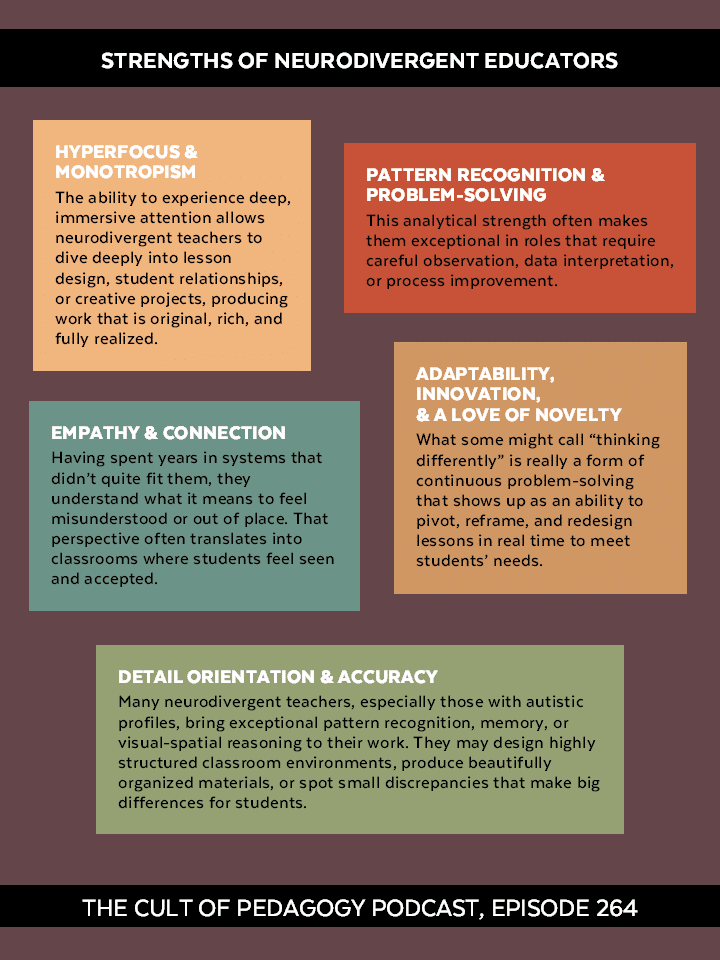
Despite the systemic challenges, neurodivergent teachers are often lauded for their unique contributions, bringing innovation, profound empathy, and authenticity to their roles. When schools shift their perspective from viewing neurodivergent traits as deficits to recognizing them as inherent variations in thinking and processing, the immense value these educators bring becomes clear.
- Deep Empathy and Understanding: Many neurodivergent teachers possess an innate ability to connect with and understand diverse learners, particularly those who also experience neurodivergence. Their personal experiences often translate into highly empathetic and individualized approaches to student support.
- Innovative and Creative Problem-Solving: Neurodivergent minds frequently excel at thinking outside conventional frameworks. This can lead to highly creative lesson designs, novel classroom management strategies, and innovative solutions to complex educational challenges.
- Authenticity and Role Modeling: When supported, neurodivergent teachers can model self-acceptance and authenticity for their students. They demonstrate that there isn’t one "right" way to learn or think, fostering a classroom culture that celebrates individuality and diverse cognitive styles.
- Hyperfocus on Passion Areas: For some, the ability to hyperfocus can be a powerful asset, allowing them to delve deeply into curriculum development, master specific subject matter, or create highly engaging, specialized projects.
- Systems Thinking and Pattern Recognition: Individuals with certain neurodivergent profiles often exhibit exceptional abilities in identifying patterns, understanding complex systems, and noticing details that others might miss, which can be invaluable in curriculum design, assessment, and identifying student needs.
These strengths not only enhance the learning experience for students but also enrich the entire school community, promoting a more diverse and dynamic educational environment. Research indicates that diverse teams, including those with neurodivergent individuals, often outperform homogeneous groups in innovation and problem-solving, a principle highly applicable to school staff.
Systemic Roadblocks: When School Structures Clash with Neurodivergent Needs
While neurodivergent educators bring significant assets, these often exist within structures that inadvertently deplete their energy and confidence. Schools are largely designed around neuronormative expectations, assuming a uniform ability to transition quickly between tasks, multitask seamlessly, and tolerate a constant stream of sensory and social input. For neurodivergent individuals, these same environments can become profound stressors.
- Sensory Overload: The typical classroom and school environment can be a sensory minefield—fluorescent lighting, constant noise, strong smells, and visual clutter can be overwhelming for those with sensory sensitivities, leading to fatigue and reduced focus.
- Constant Task-Switching: The fragmented nature of a teacher’s day, requiring rapid shifts from instruction to classroom management, administrative duties, parent communication, and student support, can be particularly draining for brains that thrive on focused, uninterrupted work.
- Rigid Routines and Lack of Flexibility: While routines are essential, overly rigid schedules, inflexible meeting structures, and a lack of autonomy in managing one’s workload can stifle creativity and lead to burnout for those who benefit from more adaptable frameworks.
- Administrative Burden: The incessant flow of paperwork, data entry, and compliance documentation can be a significant challenge for educators with executive functioning difficulties, often leading to missed deadlines and increased stress.
- Social and Communication Demands: Navigating complex social hierarchies, managing parent expectations, and participating in frequent staff meetings can be exhausting for neurodivergent individuals who may find social processing more demanding.
The paradox lies not within the teachers themselves, but within environments that, while celebrating diversity in principle, often struggle to support it in practice. This misalignment contributes significantly to teacher burnout, a critical issue given reports of high attrition rates in the profession, with some studies suggesting up to 40% of new teachers leave within five years.
Empowering Strategies for Neurodivergent Teachers: A Personal Toolkit
While systemic change is crucial, individual neurodivergent educators can adopt practical strategies to manage their energy, enhance focus, and make their demanding roles more sustainable. These are not one-size-fits-all solutions but a starting point for experimentation.
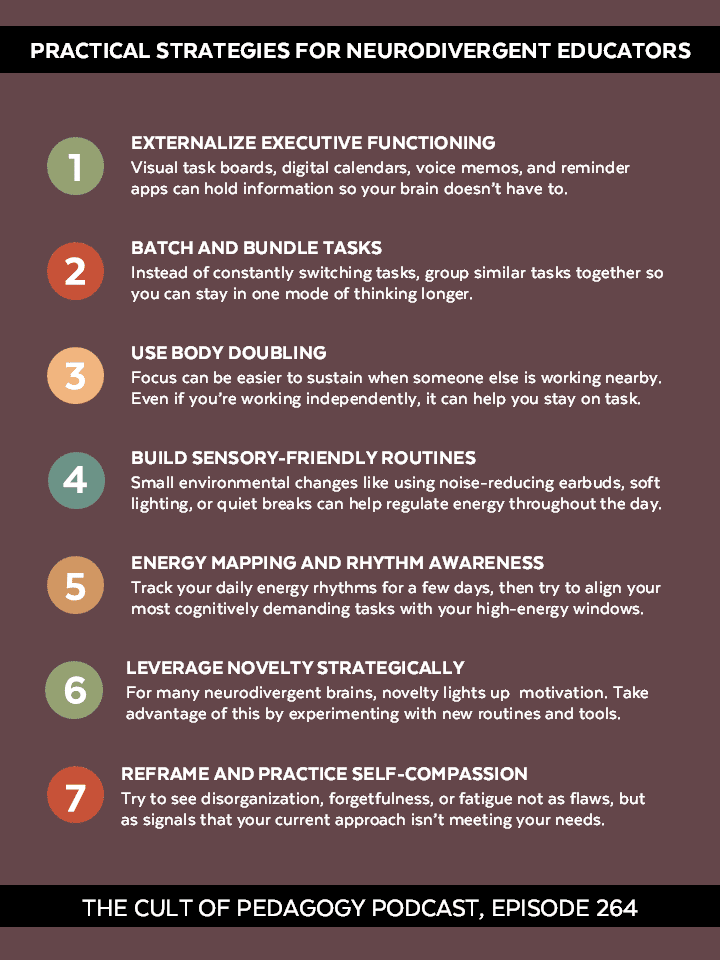
- Externalize Executive Functioning: To combat the mental load, offload tasks from memory to trusted external systems. Utilize digital calendars, visual task boards, reminder apps, and voice memos to capture ideas. Automation tools like IFTTT can streamline routine digital tasks, freeing up cognitive resources.
- Batch and Bundle Tasks: Minimize the energy lost to task-switching by grouping similar activities. Dedicate specific blocks of time for grading, lesson planning, or email correspondence. This allows for deeper focus within a single cognitive mode.
- Leverage Body Doubling: The presence of another person working nearby can significantly improve focus and accountability. Collaborate with a colleague during planning periods or utilize virtual co-working sessions for tasks like grading or report writing.
- Build Sensory-Friendly Routines: Implement small environmental adjustments to mitigate sensory overload. Use noise-reducing headphones, adjust lighting (favoring natural light or lamps over harsh fluorescents), and incorporate brief movement or grounding breaks throughout the day. A "reset ritual" between transitions can help regulate energy.
- Energy Mapping and Rhythm Awareness: Observe personal energy and focus patterns over a week or two. Identify peak concentration times and periods of fatigue. Strategically schedule cognitively demanding tasks during high-energy windows and reserve lower-focus tasks for quieter periods, also planning for necessary recovery.
- Strategic Use of Novelty: For brains stimulated by newness, introduce small, controlled variations to routines. Experiment with new teaching methods, rearrange classroom layouts, or explore new digital tools. The goal is to harness novelty as a motivator, not a distraction.
- Cultivating Self-Compassion: Reframe challenges—disorganization, forgetfulness, fatigue—as valuable information about unmet needs rather than personal failures. Embrace self-compassion to foster a safe space for experimentation and growth, recognizing that "professionalism" encompasses sustainable practice, not unattainable perfection.
A Call for Systemic Transformation: What Schools and Administrators Can Do
Supporting neurodivergent educators extends beyond individual strategies; it requires a proactive, systemic approach from school leadership and administration. This is not about granting "special treatment" but ensuring equitable access to a sustainable and fulfilling career in education.
- Foster an Inclusive Culture: Promote open dialogue about neurodiversity, actively work to reduce stigma, and celebrate cognitive diversity as a strength. Provide clear, empathetic communication from leadership.
- Offer Flexible Accommodations: Recognize that reasonable accommodations are an equity issue. This could include flexible scheduling, access to quieter workspaces, adaptive technology, or modified administrative reporting structures. The aim is to remove barriers, not lower standards.
- Provide Targeted Professional Development: Offer training for all staff, including administrators, on neurodiversity. This goes beyond understanding student needs to encompass an awareness of neurodivergent colleagues’ experiences and how to best support them.
- Streamline Administrative Processes: Review and simplify bureaucratic demands. Implement clear, accessible systems for paperwork and communication, reducing the cognitive load associated with compliance.
- Create Sensory-Aware Environments: Consider school design and classroom layouts with sensory sensitivities in mind. Offer quiet zones for staff, optimize lighting, and manage noise levels where possible.
- Promote Peer Support Networks: Facilitate formal or informal groups where neurodivergent educators can connect, share strategies, and find mutual support without fear of judgment.
- Leadership Modeling: Administrators who openly discuss the importance of well-being, flexibility, and diverse work styles set a powerful example, creating a climate of trust and psychological safety for all staff.
Broader Implications: Strengthening the Educational Landscape
When schools intentionally support their neurodivergent educators, the benefits cascade throughout the entire educational system. Teachers who feel secure and empowered to work in ways that align with their cognitive profiles are better equipped to model that same acceptance and adaptability for their students. Classrooms transform into environments where difference is understood as a natural part of learning, rather than something to be hidden or corrected. Students witness adults utilizing visual schedules, taking sensory breaks, or openly discussing their attention patterns, thereby learning that these strategies are tools for success, not indicators of weakness.
This systemic shift has significant implications for teacher retention, a critical issue in education. By creating working conditions that prioritize sustainability and well-being over rigid, neuronormative ideals, schools can retain experienced and dedicated educators who might otherwise burn out. Furthermore, a school culture that values cognitive diversity fosters innovation, improves problem-solving capabilities, and ultimately enhances the quality of education for all students. It sends a clear message that every teacher, and every student, belongs and can thrive exactly as they are. The conversation is evolving from merely acknowledging neurodiversity to implementing actionable structures that transform understanding into tangible support, building a more equitable, effective, and human-centered educational future.