


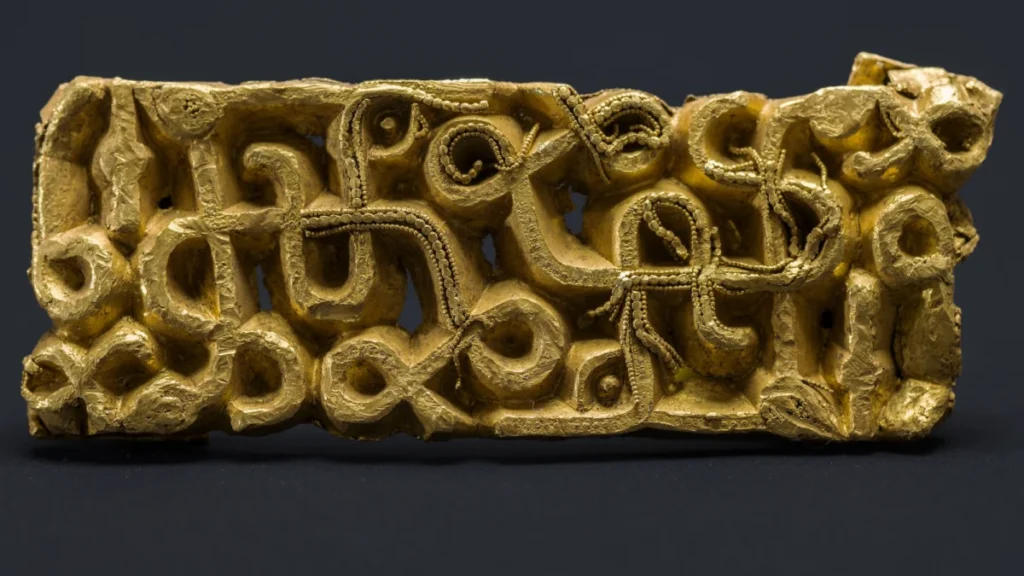
In a remarkable intersection of natural occurrence and historical preservation, a local hiker traversing the rugged hills of Austratt, Norway, has uncovered a rare gold sword scabbard fitting dating back approximately 1,500 years. The discovery occurred when the hiker paused to inspect the base of a recently uprooted tree, only to find a glimmering artifact nestled within the exposed earth and roots. Archaeologists from the University of Stavanger, who were subsequently dispatched to evaluate the find, have confirmed that the object is an exquisitely crafted gold adornment from the 6th century, a period of significant social upheaval and transformation in Northern Europe.
The artifact, while small in physical dimensions, carries immense historical weight. Measuring roughly 2.4 inches in width and less than one inch in height, and weighing approximately 1.15 ounces, the fitting is composed of high-purity gold. Its intricate design and material composition suggest it did not belong to a common foot soldier but rather to a high-ranking chieftain or a powerful regional leader. In the hierarchical society of the Migration Period, such items were not merely functional components of weaponry but were potent symbols of divine right, lineage, and political authority.
The Migration Period: A Context of Conflict and Change
The discovery of the Austratt scabbard fitting provides a rare window into the Migration Period (300–600 CE), often referred to in Scandinavian history as the "Vandringstid." This era was characterized by the collapse of the Western Roman Empire and the subsequent movement of Germanic tribes across the European continent. As Roman influence waned, Northern European societies underwent a process of militarization and the consolidation of power into smaller, warring chiefdoms.
During the 6th century, the region now known as Rogaland, where the artifact was found, was a landscape of competing power centers. Elite warriors and their lords maintained their status through a "gift-giving economy," where the distribution of gold and high-quality weapons ensured the loyalty of followers. The presence of a gold-adorned sword in this specific location suggests that the Austratt area was a significant node in this network of power.
Archaeologists note that the 6th century was also a time of environmental and social crisis. Evidence of a massive volcanic eruption in 536 CE, which led to a "volcanic winter" and subsequent crop failures across the Northern Hemisphere, coincides with a period of increased ritual activity in Scandinavia. This context is vital for understanding why such a valuable object might have been deposited in the ground.
Technical Analysis of the Gold Fitting
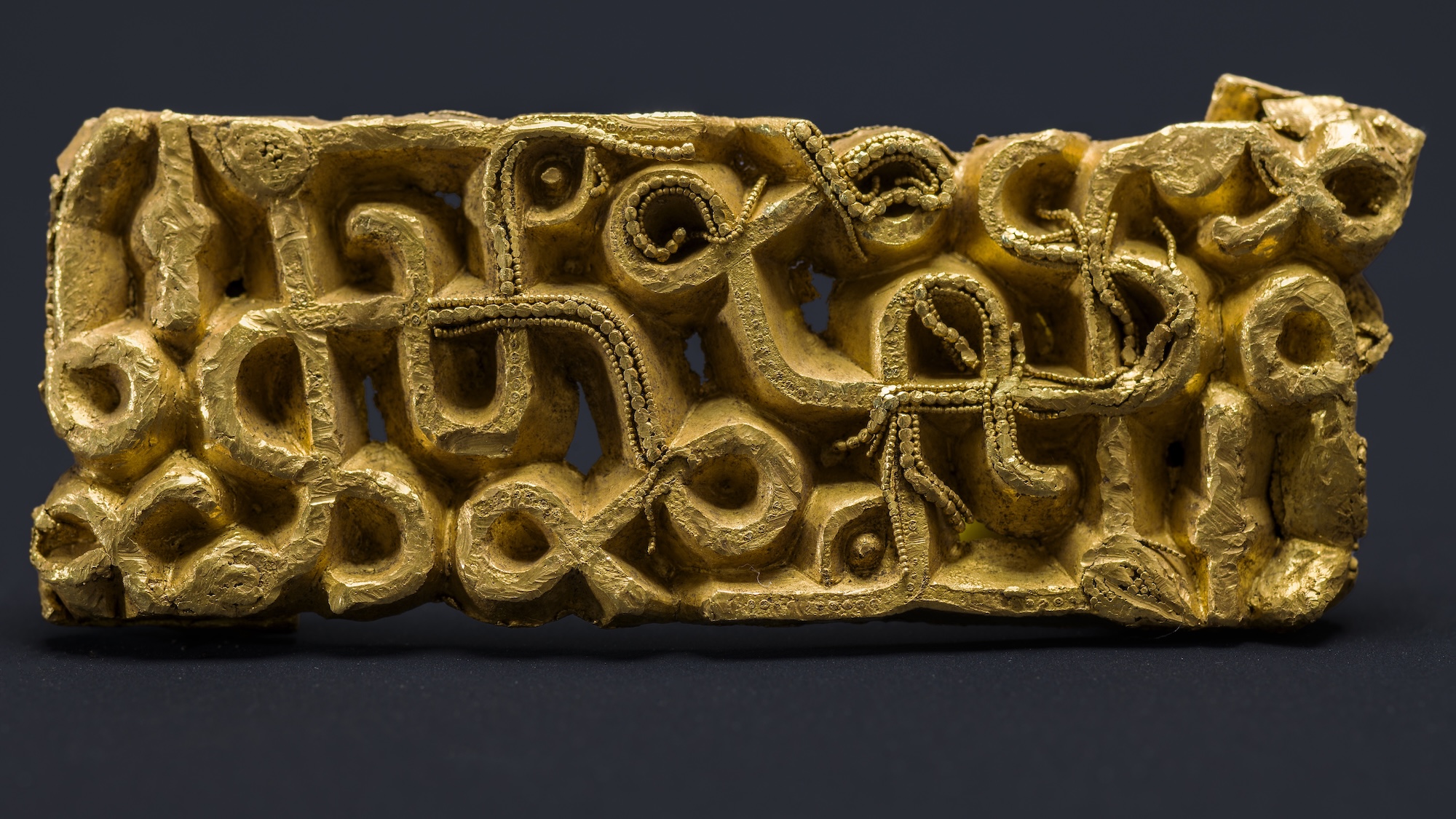
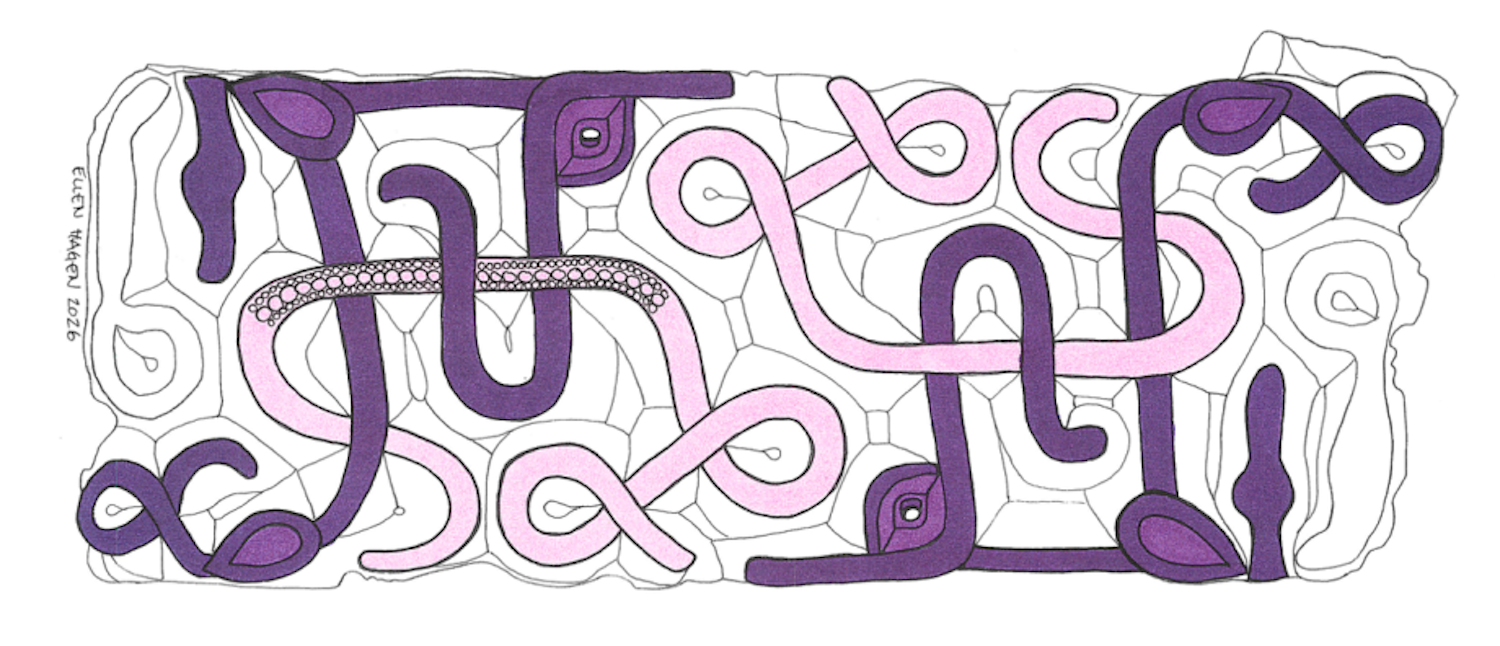
Despite spending a millennium and a half buried in the acidic soil of the Norwegian coast, the scabbard fitting remains in an exceptional state of preservation. The University of Stavanger’s archaeological team has identified clear markers of "Animal Style I" (also known as Salin’s Style I), a decorative form that flourished in the 5th and 6th centuries. This style is characterized by symmetrical, stylized animal figures and human-animal hybrids that often appear to be entwined or contorted.
Key features of the Austratt find include:
- Filigree Work: The use of fine gold wires soldered to the surface to create delicate, lace-like patterns.
- Beaded Gold Wiring: Evidence of microscopic gold beads used to outline the animal motifs, creating a shimmering effect when the weapon was drawn or held in sunlight.
- Symmetrical Iconography: The fitting features a central field where zoomorphic figures are mirrored, a design choice intended to convey balance and order—qualities highly prized by the ruling elite.
Significantly, the fitting shows signs of "heavy wear and tear." Unlike many gold artifacts found in graves, which were often minted or crafted specifically for burial (ceremonial "grave goods"), the Austratt scabbard appears to have been used in active service. The abrasions and thinning of the gold in certain areas suggest it was frequently handled and perhaps even carried into battle over many years. This detail paints a portrait of a leader who was not just a figurehead but an active participant in the martial life of his community.
The Site of Hove and the Offering Hypothesis
The location of the find, near the ancient power center of Hove, is of particular interest to researchers. Hove has long been recognized as a site of archaeological importance, featuring burial mounds and evidence of high-status dwellings. The discovery of the gold fitting nearby reinforces the theory that Hove was the seat of a powerful dynasty that controlled the coastal trade routes and agricultural lands of the district.
The specific placement of the artifact provides a crucial clue to its final purpose. Rather than being lost by accident or buried in a grave, the scabbard fitting was found tucked into a narrow crack in the bedrock. According to Håkon Reiersen, an archaeologist at the University of Stavanger, this intentional placement strongly points toward a ritual sacrifice or a votive offering to the gods.
In the 6th century, the act of "sacrificing" gold—effectively removing wealth from the economy and returning it to the earth—was a supreme gesture of devotion or a desperate plea for divine intervention. Given the environmental hardships of the mid-6th century, a chieftain may have offered the most valuable part of his most prized possession to secure better harvests, victory in war, or the end of a plague.
Comparative Rarity and Global Significance
The Austratt discovery is one of the most significant finds of its kind in recent decades. Across the entirety of Northern Europe, only 17 other similar gold scabbard fittings from this specific period have been documented. These items are so rare that each new find can fundamentally alter the understanding of Migration Period craftsmanship and trade.
The rarity of the piece places it in the same category as artifacts found in the famous Sutton Hoo ship burial in England or the Staffordshire Hoard, though the Austratt piece predates the Viking Age by several centuries. It represents the "pre-Viking" era of Norse history, a time when the foundations of the later Viking expansion were being laid through the development of advanced metallurgy and naval technology.
Official Reactions and Future Research
The Archaeological Museum at the University of Stavanger has expressed profound gratitude to the hiker who reported the find. In Norway, cultural heritage laws mandate that any artifact older than 1537 must be reported to the authorities, and the hiker’s quick action ensured that the site could be professionally excavated before any further disturbance occurred.
"The odds of finding something like this are minimal," stated Håkon Reiersen. "It is a tiny object, but its historical value is immeasurable. It tells us about the craftsmanship, the hierarchy, and the religious beliefs of a society that existed long before the written records of Norway began."
Kristin Armstrong-Oma, the director of the museum, emphasized the collaborative nature of the discovery. "We just have to say a big thank you to a very attentive hiker. Because of this discovery, we now have a new puzzle piece linked to the power center at Hove. It allows us to connect the dots between the land, the people who ruled it, and the spiritual world they inhabited."
The artifact is currently undergoing a rigorous conservation process at the University of Stavanger. Experts plan to use X-ray fluorescence (XRF) to determine the exact gold content and potential origin of the ore, which could reveal trade links between 6th-century Norway and the Byzantine Empire or the Frankish kingdoms. Following the completion of the research, the fitting is expected to be placed on public display, where it will serve as a centerpiece for the museum’s Migration Period collection.
Implications for Regional History
The discovery of the Austratt scabbard fitting serves as a reminder that the landscape of modern Norway is layered with the remnants of ancient civilizations. It highlights the sophistication of the Iron Age Scandinavians, who, despite living on the periphery of the known world, possessed the wealth and technical skill to produce art of the highest caliber.
For the local community in Austratt and the wider Rogaland region, the find provides a renewed sense of connection to a past that was characterized by both brilliance and hardship. The "Chieftain of Hove," though long gone, has had his story partially unearthed by a single tree uprooted by the wind, proving that history is often just inches beneath the surface, waiting for a keen eye to find it. As researchers continue to analyze the site, they hope to find further evidence of the structures or ritual sites that may have surrounded the bedrock crack, potentially revealing an entire sacred landscape dedicated to the gods of the old North.