


The field of robotics has long been dominated by the philosophy of biomimicry, where engineers look toward the natural world to solve complex problems of locomotion and navigation. From the quadrupedal agility of Boston Dynamics’ Spot to the wall-crawling capabilities of gecko-inspired drones, the animal kingdom has provided a reliable blueprint for mechanical design. However, a research team at Duke University’s General Robotics Lab has recently challenged this paradigm by introducing Argus, a 20-legged robot that ignores biological conventions in favor of the fundamental laws of physics. Published in the journal Science Robotics, the development of Argus marks the emergence of a new class of "dynamically symmetric machines," designed to move with equal efficiency in any direction without the constraints of a traditional front, back, top, or bottom.
A Departure from Biological Constraints
For decades, the primary challenge in mobile robotics has been the inherent trade-offs found in biological forms. Humans are bipedal, allowing for efficient upright movement but making balance precarious and multi-directional transitions slow. Quadrupeds like dogs are exceptionally fast in a forward sprint but struggle to maintain that same speed or coordination when moving laterally or in reverse. These limitations are hard-coded into the anatomy of the creatures being emulated.
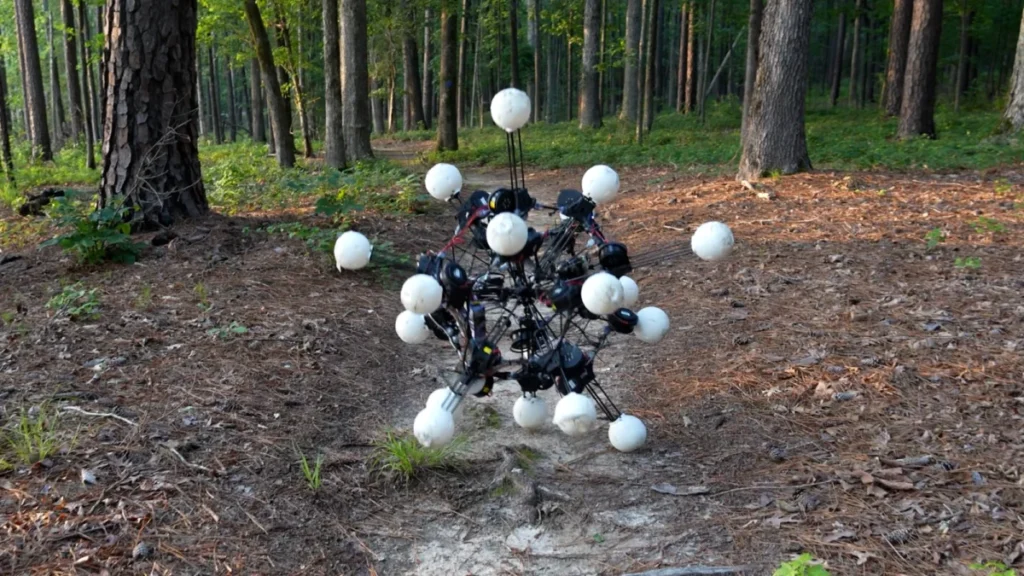
The Duke University team, led by PhD student Jiaxun Liu and postdoctoral researcher Boxi Xia, sought to bypass these evolutionary bottlenecks. Instead of asking how an animal moves, they asked how a machine could generate force and acceleration with uniform magnitude in every possible direction. This led to the concept of "dynamic symmetry." Argus is the physical manifestation of this theory—a spherical core bristling with 20 identical limbs, each functioning independently yet synchronized by a central processing unit that views the world as a 360-degree field of operation.
Technical Architecture and the 20-Legged Design
The physical structure of Argus is intentionally alien. The robot consists of a central, spherical chassis from which 20 modular legs protrude. The researchers arrived at this specific configuration after extensive computational modeling. In the simulation phase, the team tested various iterations of the robot, ranging from a minimalist eight-legged version to a highly complex 40-legged model.
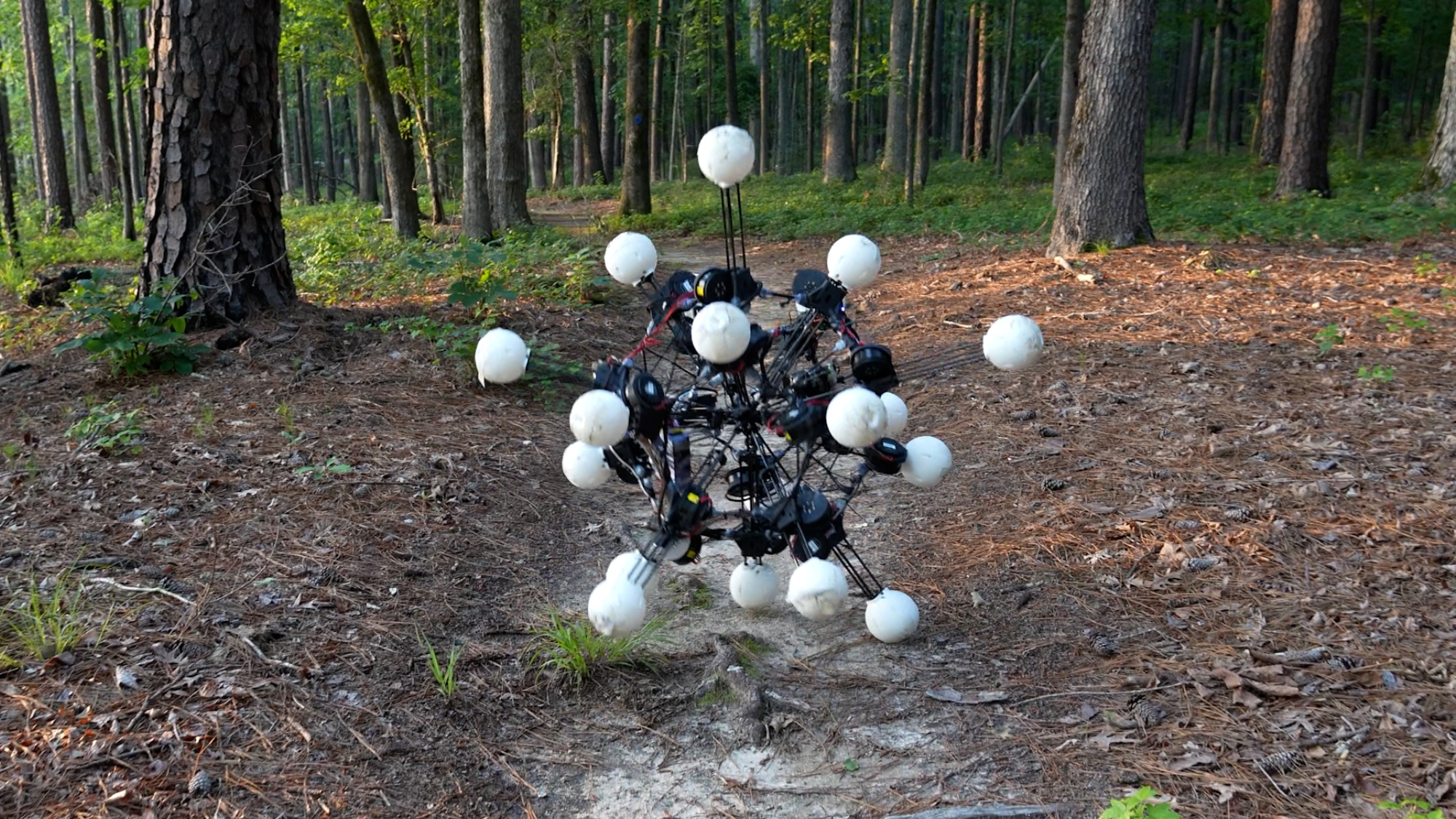
The data revealed that while 40 legs provided extreme redundancy, the complexity of the control algorithms and the power requirements made it inefficient. Conversely, the eight-legged version lacked the stability required for the "omni-directional" promise of the design. The 20-legged configuration was identified as the "sweet spot," providing enough contact points to ensure that at least several legs are always in an optimal position to exert force, regardless of the robot’s orientation or the terrain’s angle.
Each leg is equipped with its own sensor suite, most notably a camera at the tip. These cameras function as Argus’s eyes, providing a panoramic, "panoptic" view of its surroundings. This sensor integration allows the robot to perceive obstacles and terrain changes from any angle simultaneously. Named after Argus Panoptes, the many-eyed giant of Greek mythology, the robot’s visual system ensures that it never needs to "turn around" to see a threat or an objective.
Performance Metrics in Hostile Terrains
Field testing of Argus has demonstrated capabilities that exceed traditional wheeled or quadrupedal robots. Because the robot is dynamically symmetric, it does not have a "tipping point" in the traditional sense. If Argus is knocked over, its new orientation simply becomes its new "top," and it continues its mission without the need for a complex "self-righting" maneuver that often leaves other robots vulnerable.
In rigorous testing environments including deep sand, dense forest floors, and slick, wet surfaces, Argus maintained consistent velocity and stability. One of the most striking behaviors observed during testing was the robot’s ability to perform "wall jumps." By utilizing its multiple limbs to exert pressure against opposing surfaces, Argus can shimmy up narrow vertical gaps, a feat of agility that the researchers likened to a maneuver from a platforming video game.
The redundancy of the 20-legged system also provides a level of mechanical resilience rarely seen in mobile robotics. During "damage simulations," researchers disabled or physically removed several of the robot’s legs. The control algorithm, designed to handle dynamic symmetry, automatically redistributed the workload to the remaining functional limbs. Argus was able to continue traversing uneven terrain with nearly 25% of its legs out of commission, a failure rate that would immobilize almost any other modern robot.

The Role of DARPA and Defense Implications
The development of Argus was supported by the Defense Advanced Research Projects Agency (DARPA), the United States Department of Defense’s wing for high-risk, high-reward technological development. DARPA’s interest in Argus stems from the need for highly resilient, autonomous platforms capable of operating in unpredictable environments where traditional locomotion fails.
Historically, DARPA has funded some of the most significant breakthroughs in robotics, including the early development of the Atlas humanoid and the Legged Squad Support System (LS3). However, Argus represents a shift toward "expendable" and "unstoppable" design philosophies. In a search-and-rescue scenario involving a collapsed building or a subterranean cavern, a robot that can lose limbs and still navigate through rubble is far more valuable than a more "intelligent" humanoid that is rendered useless by a single fall.
Furthermore, the Duke team noted that the design of Argus makes it an ideal candidate for extra-planetary exploration. In low-gravity environments or on the unpredictable surfaces of asteroids and moons, the ability to move in any direction and survive tumbles without damage is a critical requirement. The "amorphous" nature of Argus’s movement allows it to tumble, climb, and scurry in ways that wheels or tracks cannot replicate in vacuum or low-G settings.
Statements from the Research Team
The success of Argus has opened a new dialogue within the robotics community regarding the future of machine form factors. "Watching Argus move is unlike watching any other robot we’ve worked with," said Jiaxun Liu in a statement following the publication of the research. "The first time we saw it navigate among trees and rough terrain, even under heavy collisions, we knew this was something different. It doesn’t react to the world like a creature; it reacts like a system of forces."
Postdoctoral researcher Boxi Xia emphasized that Argus is more than just a prototype; it is a proof of concept for a new engineering methodology. "Argus is an existence proof," Xia stated. "It shows that designing for dynamic symmetry isn’t just a theoretical curiosity. It produces a robot you can deploy in the wild, on uneven ground and in clutter, even in low-gravity settings. It changes what’s possible by removing the ‘biological bias’ that has limited robotics for decades."

Broader Impact and Future Outlook
The implications of the Argus project extend beyond the military and space sectors. The principles of dynamic symmetry could eventually influence the design of consumer robots, industrial automation, and disaster response tools. By moving away from the "head-and-tail" design of the last century, engineers can create machines that are inherently safer around humans—since they have no blind spots—and more durable in the face of mechanical wear and tear.
As the team at Duke University continues to refine the control algorithms for Argus, the next phase of research will likely involve scaling the design. A miniaturized version could be used for internal inspections of complex machinery or pipes, while a larger version could serve as a heavy-duty transport vehicle in environments where roads do not exist.
The transition from bio-inspired robotics to physics-inspired robotics represents a maturation of the field. While nature has provided millions of years of research and development through evolution, those designs were optimized for survival and reproduction, not necessarily for the specific tasks required by modern industry or exploration. Argus serves as a reminder that in the realm of synthetic machines, engineers have the freedom to surpass the limitations of the flesh and build according to the pure, unbiased geometry of the universe.