



The teaching profession, often romanticized as a calling, demands an extraordinary array of executive functioning skills, emotional intelligence, and resilience, placing unique and often unacknowledged pressures on neurodivergent educators. For individuals with conditions such as ADHD, autism spectrum disorder, dyslexia, and other forms of cognitive diversity, navigating the intricate, often rigid structures of modern educational institutions can be a constant, exhausting endeavor. Despite bringing invaluable strengths like innovative thinking, profound empathy, and authentic connection, these educators frequently operate within systems not designed with their neurocognitive profiles in mind. Recognizing and strategically supporting neurodivergent teachers is not merely an act of accommodation; it is a vital investment in strengthening school communities, fostering a richer learning environment for students, and addressing the critical issue of teacher retention.
The Evolving Understanding of Neurodiversity and the "Lost Generation" of Educators
The concept of neurodiversity, which posits that neurological variations are natural and valuable rather than deficits, has gained significant traction in recent years. However, this understanding is relatively nascent. Many educators currently in their 30s, 40s, and 50s grew up in an era where discussions about neurodiversity were largely absent or highly stigmatized. Diagnostic criteria for conditions like ADHD were often narrowly focused on hyperactive boys, frequently overlooking girls, high achievers, or those whose presentations were more internalized or subtle. Similarly, autism was historically defined by a more restrictive set of characteristics, leading to widespread underdiagnosis, especially in individuals who learned to "mask" their traits to conform to societal expectations.
This historical context has given rise to what some refer to as a "lost generation" of neurodivergent adults, many of whom are now receiving diagnoses later in life. Often, this realization dawns after a child receives a diagnosis, prompting self-reflection, or through increased awareness disseminated via social media, podcasts, and personal narratives. For these educators, the late diagnosis brings a complex mix of relief—finally understanding lifelong patterns of overwhelm, inconsistency, and burnout—and a profound sense of grief for decades spent in self-blame, battling unseen struggles, and experiencing unnecessary exhaustion trying to meet neuronormative expectations. Research by organizations like the Autistic Self Advocacy Network (ASAN) and ADHD Foundation highlights the significant emotional and psychological impact of late diagnosis, underscoring the urgent need for greater awareness and support.

The irony for these educators is palpable: they were trained to identify and support neurodivergent traits in their students, meticulously collecting data, documenting behaviors, and devising interventions, yet they remained largely unaware of their own neurocognitive differences. This disconnect led to persistent struggles with tasks that seemed effortless for colleagues, such as managing voluminous paperwork, maintaining meticulous organization, or adhering to rigid schedules, often culminating in late nights reinventing lesson plans or battling administrative backlogs. The moment of self-recognition can be profoundly destabilizing, prompting a reinterpretation of one’s entire professional and personal narrative.
The Demands of the Classroom and Systemic Mismatches
Teaching is a profession laden with immense executive functioning demands. From the meticulous planning of lessons, differentiation for diverse learners, and classroom management, to the constant juggling of administrative tasks, grading, parent communication, and individual student support programs, the cognitive load is staggering. For neurodivergent individuals, whose executive functions (e.g., working memory, attention, organization, task initiation, emotional regulation) may operate differently, these seemingly routine tasks can become formidable obstacles.
Traditional school environments, largely constructed around neuronormative expectations, exacerbate these challenges. Key areas of systemic mismatch include:
- Sensory Overload: Classrooms and school hallways are often cacophonous, visually busy, and feature harsh fluorescent lighting—environments that can be highly dysregulating for individuals with sensory sensitivities common in autism and ADHD.
- Constant Transitions and Task-Switching: The school day is a relentless series of transitions: from one lesson to the next, from direct instruction to group work, from classroom to meetings. Each transition requires a cognitive "gear shift" that can be energy-draining and disruptive for neurodivergent brains.
- Administrative Burden and Paperwork: The sheer volume of documentation, compliance forms, and bureaucratic procedures often lacks flexibility in deadlines or format, posing significant challenges for those with difficulties in organization, task initiation, or sustained attention.
- Social and Emotional Labor: Teachers are constantly engaging with students, colleagues, and parents, requiring continuous social processing and emotional regulation. For neurodivergent individuals, particularly those on the autism spectrum, this constant social interaction and "masking" can lead to profound exhaustion.
- Lack of Flexibility: Rigid schedules, standardized professional development, and uniform expectations for lesson delivery often leave little room for adaptive practices that would better suit neurodivergent thinking styles.
A 2022 survey by the National Education Association revealed that over 55% of educators are considering leaving the profession earlier than planned, citing burnout as a primary factor. While not specific to neurodivergent teachers, it is plausible that the added cognitive load and systemic friction experienced by neurodivergent individuals contribute disproportionately to these alarming burnout rates, further exacerbating the national teacher shortage.
The Unique Strengths Neurodivergent Educators Bring
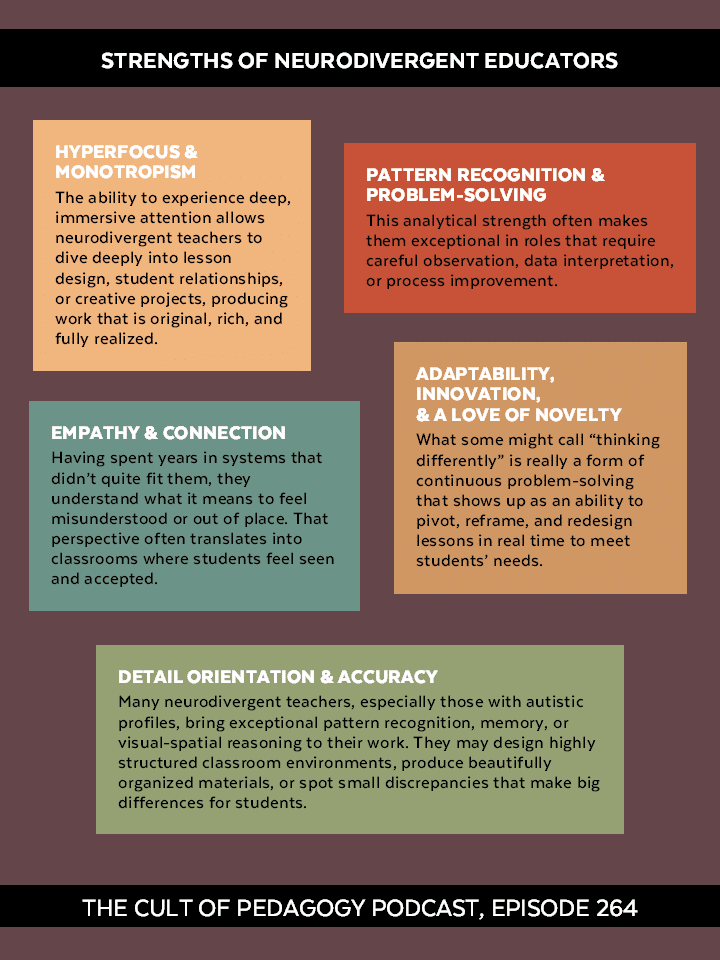
Despite these systemic challenges, neurodivergent teachers are often among the most innovative, empathetic, and dedicated professionals in education. Their unique cognitive profiles, when understood and supported, translate into distinct pedagogical advantages:
- Innovative Problem-Solving: Neurodivergent thinking often involves divergent thought processes, leading to highly creative and unconventional solutions to classroom challenges, novel lesson designs, and unique ways of explaining complex concepts.
- Deep Empathy and Connection: Many neurodivergent educators possess a profound capacity for empathy, particularly towards students who may also be struggling or feel misunderstood. They often connect deeply with students who are neurodivergent themselves, offering a sense of belonging and validation.
- Authenticity and Role Modeling: When safe to be themselves, neurodivergent teachers model authenticity, self-awareness, and creative problem-solving. They demonstrate that there isn’t one "right" way to learn, think, or teach, which is incredibly empowering for students.
- Hyperfocus and Specialized Knowledge: The ability to hyperfocus, common in ADHD and autism, allows some teachers to delve deeply into specific subject areas, developing exceptional expertise and passion that can ignite student interest.
- Attention to Detail and Pattern Recognition: Autistic individuals, for instance, often exhibit strong pattern recognition and attention to detail, which can be invaluable in identifying subtle learning needs, developing structured routines, and analyzing complex data.
- Fairness and Justice: A strong sense of justice and adherence to rules, often observed in autistic individuals, can translate into exceptionally fair and consistent classroom management and equitable treatment of all students.
A report by the National Centre for Neurodiversity in Education (NCNDE) in the UK has highlighted that fostering neuroinclusive environments leads to not only improved well-being for staff but also enriches the entire school culture, promoting diverse perspectives and innovative teaching practices.
Empowering Neurodivergent Educators: Adaptive Strategies and Systemic Change
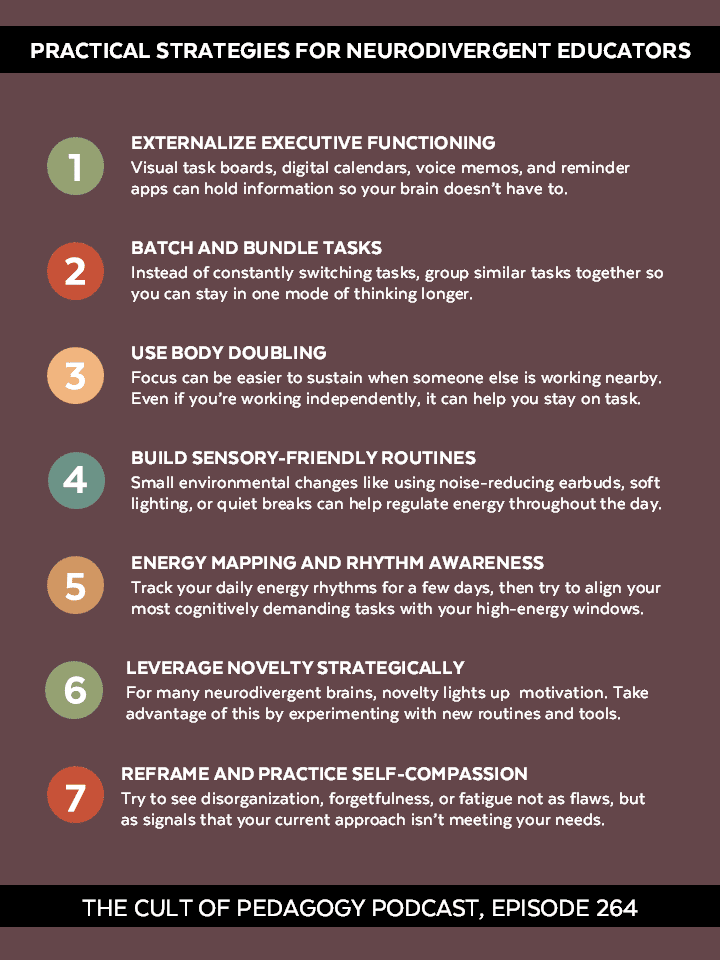
While systemic change is paramount, neurodivergent educators can adopt a range of adaptive strategies to manage their energy and optimize their work environment. These are not about "fixing" neurodivergence but about creating sustainable practices:
- Externalize Executive Functions: Rather than relying solely on internal memory, neurodivergent teachers can offload mental tasks onto trusted external systems. This includes using visual schedules, digital calendars, reminder apps, voice memos for spontaneous ideas, and automation tools (e.g., IFTTT) for routine digital tasks. The goal is to make the invisible mental workload tangible and manageable.
- Batch and Bundle Tasks: Minimizing task-switching, which is cognitively draining, can be achieved by grouping similar activities. Dedicate specific blocks of time for grading, lesson planning, or email communication, allowing the brain to stay in one mode of thinking for longer periods.
- Utilize Body Doubling: The presence of another person working nearby, even if on separate tasks, can significantly improve focus and task initiation. Colleagues can partner for shared planning periods, or virtual co-working sessions can provide accountability for tasks like grading or administrative work.
- Cultivate Sensory-Friendly Routines: Small environmental adjustments can yield substantial benefits. This might involve using noise-reducing headphones, adjusting lighting (opting for lamps over harsh fluorescents), incorporating short movement breaks, or establishing a brief "reset ritual" (e.g., a few deep breaths, a sip of water) between transitions to regulate energy.
- Energy Mapping and Rhythm Awareness: Tracking personal energy peaks and troughs throughout the day can help align cognitively demanding tasks with periods of high focus and energy, reserving lower-energy times for less intensive work. This proactive approach helps prevent burnout.
- Leverage Novelty Strategically: For many neurodivergent brains, novelty can be a powerful motivator. Introducing small variations to routines, experimenting with new lesson formats, or trying new digital tools can reignite engagement, provided novelty is used as fuel rather than a distraction.
- Practice Self-Compassion and Reframe Challenges: Viewing struggles with organization or fatigue not as personal failings but as signals that current approaches are not meeting needs fosters a space for experimentation without shame. Cultivating self-compassion is crucial for sustainable teaching, acknowledging that "professionalism" does not equate to perfection.
The Imperative for Systemic Support and Inclusive Leadership
Ultimately, the onus for creating truly inclusive educational environments lies with school leaders and policymakers. Supporting neurodivergent educators is not about lowering standards but about ensuring equitable access to the profession and creating conditions where all teachers can thrive. Key strategies for schools and administrators include:
- Promote Neurodiversity Awareness and Training: Provide professional development for all staff on neurodiversity, moving beyond a deficit model to one that recognizes strengths. This includes educating on adult presentations of ADHD and autism, challenging stereotypes, and fostering an understanding of diverse working styles.
- Offer Flexible Work Arrangements: Where feasible, provide flexibility in scheduling, deadlines for non-urgent administrative tasks, and options for remote work for specific duties. For example, allowing teachers to complete some planning or grading from a quieter home environment could be immensely beneficial.
- Create Accessible and Sensory-Friendly Workspaces: This includes considering lighting, noise levels, and designated quiet zones for staff. Providing noise-canceling headphones or options for standing desks can also be helpful.
- Establish Mentorship and Peer Support Networks: Create safe spaces and formal or informal networks where neurodivergent educators can connect, share strategies, and receive peer support without fear of judgment.
- Streamline Bureaucracy and Simplify Processes: Regularly review and simplify administrative procedures, reducing unnecessary paperwork and clarifying expectations to minimize cognitive load.
- Cultivate Inclusive Leadership: Leaders should model acceptance, understanding, and flexibility, openly discussing neurodiversity, and actively seeking feedback on how to better support their diverse staff. This builds trust and encourages educators to disclose needs without fear of reprisal.
- Invest in Technology and Tools: Provide access to assistive technologies and organizational tools that can aid executive functioning, such as project management software, dictation tools, or digital planning platforms.
In the United States, the Americans with Disabilities Act (ADA) mandates reasonable accommodations for employees with disabilities. While disclosing a neurodivergent condition can be a sensitive personal decision, schools have a legal and ethical obligation to provide support when requested. A 2023 report from the Learning Policy Institute emphasized that supportive school environments are critical for teacher retention and well-being, directly impacting student learning outcomes.
A Vision for a Neuroinclusive Future in Education
When schools intentionally design for neurodiversity, the benefits extend far beyond the neurodivergent staff. Teachers who feel safe and supported to work in ways that align with their brains are better equipped to model that same acceptance and understanding for their students. Classrooms transform into spaces where difference is not merely tolerated but celebrated as an integral part of learning and human experience. Students witness adults utilizing visual schedules, taking sensory breaks, or openly discussing their attention patterns, learning that these strategies are tools for success, not signs of weakness.
Furthermore, a culture of empathy and flexibility, fostered by neuroinclusive leadership, builds trust across the entire school community. Clear communication, reasonable expectations, and genuine openness become hallmarks of the institution. Schools that prioritize sustainability over an unattainable ideal of perfection are more likely to retain their most dedicated and innovative educators, creating a more stable and enriching environment for everyone.
As the conversation around neurodiversity continues to grow and more educators recognize their own neurocognitive profiles, the demand for systemic change will only intensify. Awareness is a crucial first step, but it must be swiftly followed by concrete action. Schools that proactively design for flexibility, clarity, and belonging will not only improve the working lives of their neurodivergent staff but will also create a more resilient, innovative, and human-centered educational ecosystem where every teacher and every student can truly thrive, knowing they are valued and belong, just as they are.