


In an increasingly fragmented global landscape where differences of opinion often escalate into personal attacks, emotional outbursts, and fractured relationships, the urgent need for constructive dialogue has become paramount. This pervasive challenge, which has deeply occupied the thoughts of educators and civic leaders for over a decade, has found a promising framework in the "growth discourse" model developed by the School for Ethics and Global Leadership (SEGL). This innovative approach aims to equip individuals, particularly high school students, with the essential skills to navigate complex, sensitive topics with courage, honesty, and a commitment to personal and collective development, moving beyond the often-superficial goal of mere civility.
The Genesis of Growth Discourse at SEGL
Founded in 2009 by Noah Bopp, SEGL is a unique semester-long residential program designed for high school juniors drawn from diverse backgrounds across the United States. Located in Washington, D.C., and Johannesburg, South Africa, SEGL’s curriculum is meticulously crafted to emphasize ethical thinking skills, leadership development, and a deep understanding of international affairs. Its overarching mission is to cultivate students who are not only academically proficient but also prepared to instigate positive change in the world. At the heart of this transformative educational experience lies growth discourse—a foundational methodology that distinguishes SEGL from conventional academic institutions.
Bopp’s vision for SEGL stemmed from a recognition of the growing chasm in public discourse and the critical need for future leaders who could bridge these divides rather than exacerbate them. The traditional emphasis on "civil discourse," while valuable, often falls short, particularly when confronting deeply held beliefs or contentious issues. As Bopp explains, "A lot of people are talking about civil discourse these days. But some people are asking, Why do I need to be civil in a time like this? We believe discourse that helps you grow is essential to our meaningful lives and is also central to a functioning civic ensemble." This reorientation from "civility" to "growth" signals a profound shift in mindset, challenging participants to embrace discomfort as a catalyst for learning and understanding. For students, the objective becomes clear: engage in conversations that foster personal and intellectual expansion. For educators, the goal transcends maintaining decorum, focusing instead on optimizing conditions for student growth.
Addressing the Perils of Polarization and Bothsidesism
The need for growth discourse is underscored by a global context marked by significant ideological polarization. Data from institutions like the Pew Research Center consistently highlight widening partisan divides in many democratic nations, affecting everything from political policy to social interactions. Social media algorithms often create echo chambers, reinforcing existing beliefs and limiting exposure to dissenting viewpoints, thereby exacerbating the problem. In this environment, discussions about anything beyond trivial matters, like pizza toppings, can indeed become a "minefield" of emotional volatility and severed connections.
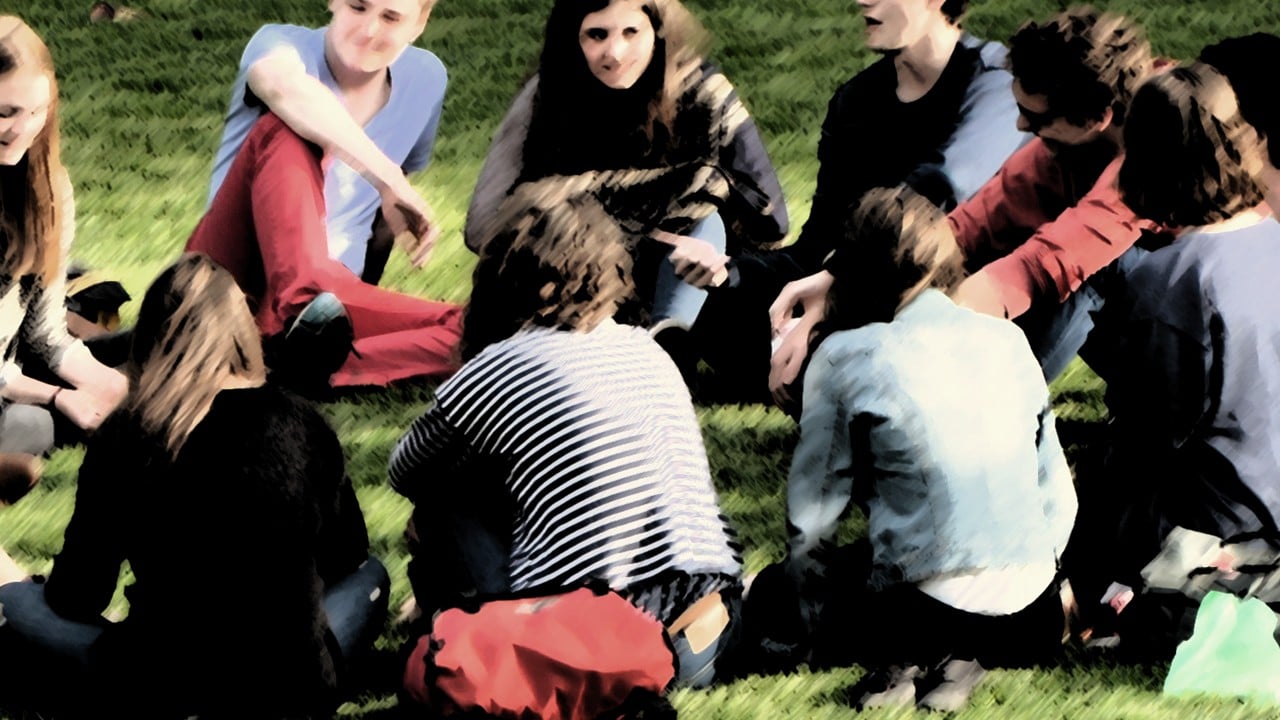
SEGL’s growth discourse framework directly confronts these challenges by creating a structured environment where genuine differences of opinion are not just tolerated but encouraged. A core tenet of SEGL’s mission is to "convene and mentor students who have different values, viewpoints, experiences, and identities." However, this commitment to diverse perspectives is carefully balanced to avoid the pitfalls of "bothsidesism" or false equivalence—the practice of presenting opposing viewpoints as equally valid, even when one side lacks substantial evidence.
Bopp articulates SEGL’s nuanced stance: "SEGL is nonpartisan. SEGL is not neutral. We don’t say, ‘The Holocaust, good or bad, you decide,’ right? We don’t say in our science classrooms, ‘Climate change, is that real or not real?’" Instead, SEGL focuses on equipping students with robust critical thinking skills. When faced with topics where "reasonable, educated people are disagreeing," students are taught how to evaluate arguments, engage with diverse perspectives representing the "best possible arguments on those different sides," and then formulate their own informed positions. This pedagogical philosophy is crucial for developing independent thinkers rather than indoctrinating specific ideologies. "We’re trying to teach students how to think, not what to think," Bopp emphasizes, warning that teaching "what to think" shortcuts the critical thinking process and leaves students vulnerable to demagoguery, a significant concern in the contemporary world.
Core Principles of Growth Discourse
The efficacy of growth discourse rests upon several meticulously developed principles designed to foster an environment of trust, intellectual rigor, and emotional intelligence.
-
Begin with Belonging: The foundation of any productive, challenging conversation is a shared sense of belonging and psychological safety. SEGL ensures this by explicitly stating its commitment to inclusivity within its discourse guidelines and through intentional activities that encourage students to share their identities and personal histories. Furthermore, the program actively recruits a diverse student body and faculty, ensuring a wide array of backgrounds, viewpoints, and lived experiences are represented. This intentional diversity is not merely tokenistic; it is a strategic element to facilitate richer, more authentic discussions. As Bopp notes, a homogenous group struggles with complex topics like immigration policy because of a lack of varied perspectives. A diverse, inclusive environment, however, allows students to engage without feeling "on edge." This aligns with extensive research in social psychology and organizational behavior, which consistently demonstrates that diverse teams, when managed inclusively, lead to more innovative solutions and better decision-making.
-
Value Intent and Impact: In discussions of sensitive issues, the potential for unintentional harm is high. Words, even when well-meaning, can deeply affect others. This often leads to a debate about whether intent or impact holds greater weight. Growth discourse posits that both are crucial. Using "Oh, I’m so sorry, that wasn’t my intent" as a "get out of jail free card" is insufficient; it necessitates personal reflection on the actual impact of one’s words. Conversely, assigning malicious motives solely based on emotional impact without curiosity or reflection on the speaker’s intent is equally problematic. This principle encourages empathy, self-awareness, and a commitment to understanding the full scope of an interaction, fostering a culture of accountability and restorative communication.
-
Avoid Echo Chambers: Human beings naturally gravitate towards those who share similar beliefs, a phenomenon known as homophily. While comforting, an exclusive reliance on echo chambers severely limits personal and intellectual growth, hindering exposure to new ideas and challenging perspectives. SEGL actively counteracts this tendency. While acknowledging the occasional need to connect with like-minded individuals, the school frames such interactions not as an end in themselves, but as a strategic pause: "at SEGL, we go to those conversations not to disengage, but to figure out how do we re-engage." This encourages students to step outside their comfort zones, confront differing viewpoints, and develop the intellectual resilience required to navigate a complex, pluralistic world.

-
Follow the STAR Model: Inspired by the renowned Thinking Routines from Harvard’s Project Zero, SEGL has adapted and integrated the STAR model as a cornerstone of its critical thinking pedagogy. This four-part framework encourages students to achieve a comprehensive understanding of an issue before forming judgments, and crucially, to translate that understanding into action. A sample lesson plan demonstrates its practical application, making it a replicable model for educators globally.
-
SEE: This initial phase emphasizes thorough observation and information gathering. "The most important part of the STAR model is to make sure you are seeing something as fully as you can before you decide what to think about it, before you make a judgment," Bopp explains. Key questions guide this process: "What can I see? What can I understand before I judge? What do the experts say? What voices are missing from this conversation? How can we find those voices before we decide what we think?" This component underscores the importance of media literacy, source evaluation, and seeking out diverse perspectives.
-
THINK: After comprehensive observation, students move to the analytical phase. "Ultimately, and particularly as a leader, you do have to decide, what do I think about this situation? Is it good? Is it bad? Is it right? Is it wrong?" This stage requires students to synthesize information, apply ethical frameworks, and formulate their own reasoned conclusions, moving beyond mere assimilation of facts to active intellectual engagement.
-
ACT: A significant addition by SEGL to the original Project Zero framework, the "ACT" phase bridges thought with tangible engagement. "Once you decide what you think… as leaders, we have to decide what to do, how to act," Bopp asserts. This could involve voting, making personal ethical choices (e.g., regarding academic integrity), or speaking truth to power. This element emphasizes the leadership development aspect of SEGL’s mission, training students to translate ethical reasoning into responsible action in the real world.
-
REFLECT: The final stage involves critical self-assessment. "We want to reflect on what we just did. Did we like it? Did we not like it? What was the response that we got? What might we do next time?" This reflective practice is cyclical; the insights gained from reflection become part of the "SEE" stage for future similar situations, creating a continuous loop of learning and refinement. This iterative process is fundamental to genuine growth and adaptive leadership.
-
Implementing Growth Discourse in Diverse Classrooms
For teachers seeking to integrate growth discourse into their own classrooms, Bopp offers practical advice, emphasizing a gradual, intentional approach. He recommends:

- Start Small: Begin with less contentious topics or simpler dilemmas to build foundational skills and trust before tackling highly charged issues. This allows students to practice the principles without the immediate pressure of high-stakes emotional content.
- Model the Behavior: Educators must embody the principles of growth discourse themselves—demonstrating active listening, intellectual humility, willingness to revise opinions, and valuing both intent and impact. Teachers act as primary facilitators and role models for their students.
- Explicitly Teach the Framework: Do not assume students instinctively know how to engage in growth discourse. Dedicate time to explicitly teach each principle, the STAR model, and the underlying rationale. Regular practice and debriefing sessions are vital for skill development.
- Cultivate a Culture of Trust and Belonging: Reinforce the "Begin with Belonging" principle daily. This involves creating a classroom where every student feels seen, heard, and respected, fostering the psychological safety necessary for vulnerability and courageous sharing.
- Embrace Discomfort as a Learning Opportunity: Frame challenging conversations not as conflicts to be avoided, but as opportunities for profound learning and growth. Teach students to lean into productive discomfort, understanding that true intellectual and personal expansion often occurs outside one’s comfort zone.
The potential for widespread adoption of growth discourse is significant. In an educational climate increasingly focused on social-emotional learning (SEL) and civic education, SEGL’s framework provides a concrete, actionable model. As educators grapple with how to prepare students for a world rife with misinformation and division, growth discourse offers a pathway to developing critical thinkers who can engage respectfully and productively, even with those holding vastly different viewpoints.
Cultivating the Potential for Good: An Optimistic Outlook
Despite the current climate of intense division and often toxic public discourse, Noah Bopp expresses a profound optimism about humanity’s capacity to navigate these challenges. His optimism is rooted in a fundamental belief in the inherent goodness and potential of every individual, echoing the ancient wisdom of Plato’s Republic: "Education is not about putting sight into blind eyes."
Bopp elaborates on this philosophical stance: "The effective educator assumes that the power to learn is already present in the soul of the learner. And that means the goal of the educator is to give the learner places to look and questions to ask." He maintains that by presenting students with the complex "current challenges that face our world" and arming them with "the classic ethical questions that cross culture and time and age and language," the innate goodness within each learner will inevitably "be uncovered." This perspective, while perhaps perceived as naive by some, serves as a powerful guiding principle for educators committed to fostering positive change. It transforms the role of the teacher from an imparter of knowledge to a facilitator of discovery, believing in the inherent capacity of students to critically engage, grow, and ultimately contribute to a more cohesive and just society.
In a world desperate for bridges rather than walls, SEGL’s growth discourse offers not just a pedagogical tool, but a philosophy—a hopeful vision for education that cultivates courageous, ethical, and engaged global citizens capable of leading meaningful change. For educators interested in implementing this transformative framework, SEGL faculty stands ready to offer support, underscoring their commitment to disseminating these vital skills beyond their residential program. This initiative represents a critical step towards re-envisioning how future generations engage with difference, fostering not just civility, but profound, collective growth.