


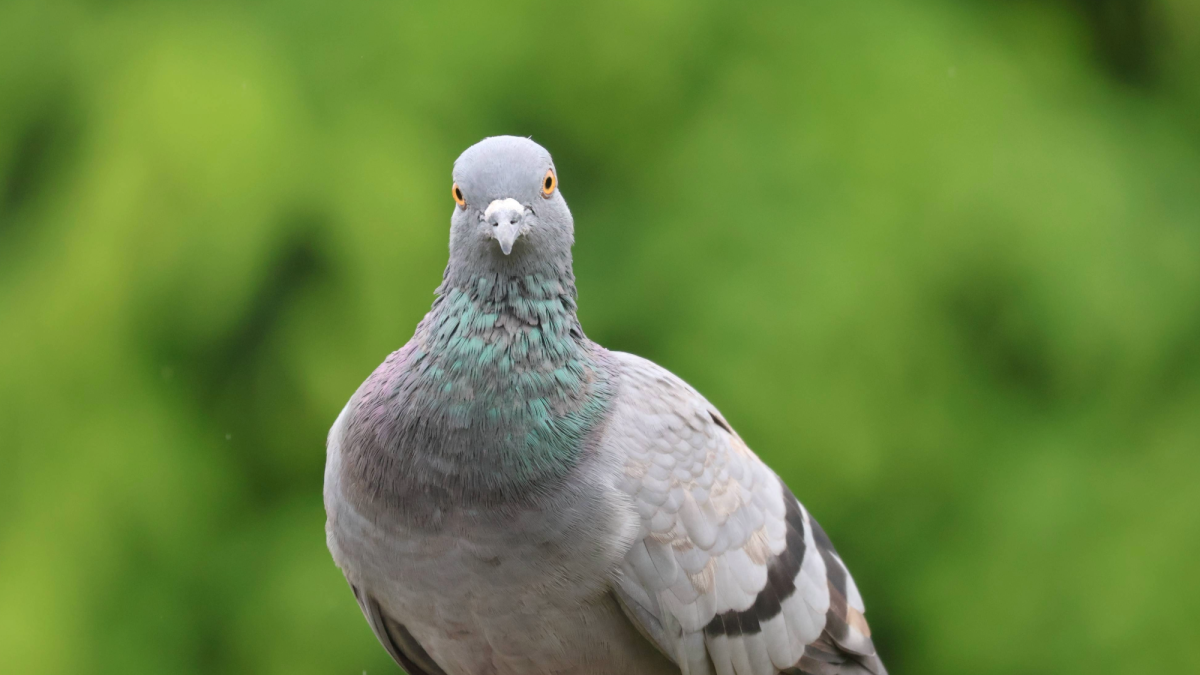
For decades, the scientific community has grappled with one of biology’s most enduring mysteries: how migratory birds and homing pigeons navigate across thousands of miles of featureless terrain with pinpoint accuracy. While it has long been established that Earth’s magnetic field serves as a primary navigational guide, the specific biological "hardware" responsible for detecting these invisible lines of force has remained elusive. A groundbreaking study published in the journal Science has now identified an unexpected source for this sensory capability. Researchers have discovered that immune cells within the pigeon liver, known as macrophages, act as a sophisticated internal compass by utilizing superparamagnetic iron nanoparticles.
This discovery, led by Clivia Lisowski of the University of Bonn and an interdisciplinary team of physicists and biologists, shifts the focus of magnetoreception research from the head and eyes to the digestive and immune systems. The findings suggest that the avian ability to "feel" the planet’s magnetic field is not localized to a single cranial organ but is instead integrated into the bird’s fundamental metabolic and immune processes.
The Biological Mechanism of the Hepatic Compass
At the heart of this discovery are macrophages, a type of white blood cell primarily known for their role in the immune system. These cells are responsible for detecting, engulfing, and destroying pathogens and apoptotic cells. In pigeons, macrophages in the liver play a critical role in recycling old red blood cells. Because red blood cells are rich in hemoglobin—and therefore iron—the process of breaking them down leads to a significant accumulation of iron within the macrophages.
The study reveals that this sequestered iron takes the form of superparamagnetic nanoparticles. Superparamagnetism is a unique physical phenomenon that occurs in small ferromagnetic or ferrimagnetic nanoparticles. Unlike a standard permanent magnet, superparamagnetic materials do not retain a permanent magnetic moment in the absence of an external field. However, when exposed to an external magnetic field—such as the Earth’s—these nanoparticles become strongly magnetized and align themselves with the field lines.
According to Clivia Lisowski, a post-doctoral researcher in Immunology at the University of Bonn, this alignment allows the pigeons to perceive the orientation of the Earth’s magnetic field. As the birds fly, the nanoparticles within the hepatic macrophages react to the shifting magnetic environment, providing a constant stream of directional data. This mechanism effectively turns the liver into a sensory hub that complements other known navigational aids, such as solar cues and landmarks.
A Chronology of Magnetoreception Research
The journey to identifying the liver as a navigational organ has been marked by several decades of shifting scientific consensus. To understand the significance of the 2026 Lisowski study, it is necessary to look at the timeline of magnetoreception discovery:
- The 1960s: Wolfgang Wiltschko and Roswitha Wiltschko first demonstrated that European robins use a magnetic compass for orientation. This established the existence of the "sixth sense" but did not identify the biological mechanism.
- The 2000s: Research focused heavily on the "chemical compass" hypothesis. This theory suggested that light-sensitive proteins called cryptochromes in the eyes of birds undergo quantum reactions that allow birds to "see" magnetic fields.
- The 2010s: Scientists investigated iron-rich dendrites in the upper beak of pigeons as potential magnetic sensors. However, subsequent studies in 2012 suggested these were actually macrophages, leading to a temporary setback in the "iron-mineral" theory of navigation, as researchers initially believed immune cells could not be sensory organs.
- The Early 2020s: Advances in nanoscience allowed researchers to look more closely at the properties of iron within various tissues. The focus shifted back to macrophages, but with a more nuanced understanding of how they might transmit information.
- 2026: The current study published in Science confirms that hepatic macrophages are indeed sensitive to magnetic fields and, crucially, are connected to the nervous system, providing a direct link to the brain.
Experimental Methodology and Data
To validate the role of hepatic macrophages, the research team conducted a series of sophisticated behavioral and physiological experiments. The study centered on a group of homing pigeons trained to return to their aviary in Konstanz, Germany, from a release point located approximately 20 kilometers (12.4 miles) away.
The researchers compared a control group of healthy pigeons with a group whose hepatic macrophages had been temporarily deactivated or removed. The results provided clear evidence of the liver’s role in navigation. Under clear, sunny skies, both groups of pigeons successfully navigated back to the aviary. This indicated that the birds were able to rely on "solar cues"—the position of the sun—to find their way.
However, the results changed dramatically under overcast conditions where the sun was not visible. The pigeons with impaired macrophages became significantly disoriented, struggling to maintain a consistent heading and often failing to reach the aviary. In contrast, the control group, with their internal magnetic compasses intact, navigated the 20-kilometer distance with ease despite the lack of visual cues.
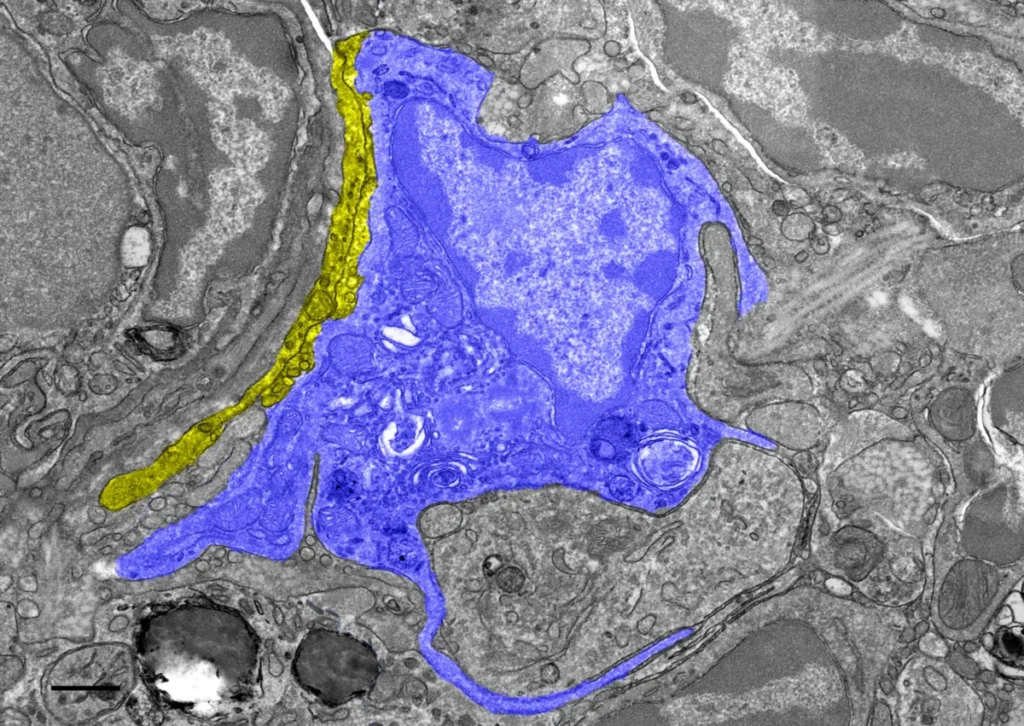
Further analysis using electron microscopy and nanoscience techniques confirmed the presence of these magnetic particles. Ulf Wiedwald, an expert in nanoscience at the University of Duisburg-Essen and co-author of the study, noted that the liver exhibited a significantly stronger magnetic response than any other tissue tested, including the brain and the beak. This data suggests that while other organs may play a role, the liver is a primary site for magnetic sensing.
The Neurological Link: From Liver to Brain
One of the most significant hurdles in previous magnetoreception research was explaining how a signal generated in a peripheral organ like the liver could be interpreted by the brain. The Lisowski study addresses this by documenting the proximity of iron-rich macrophages to nerve fibers.
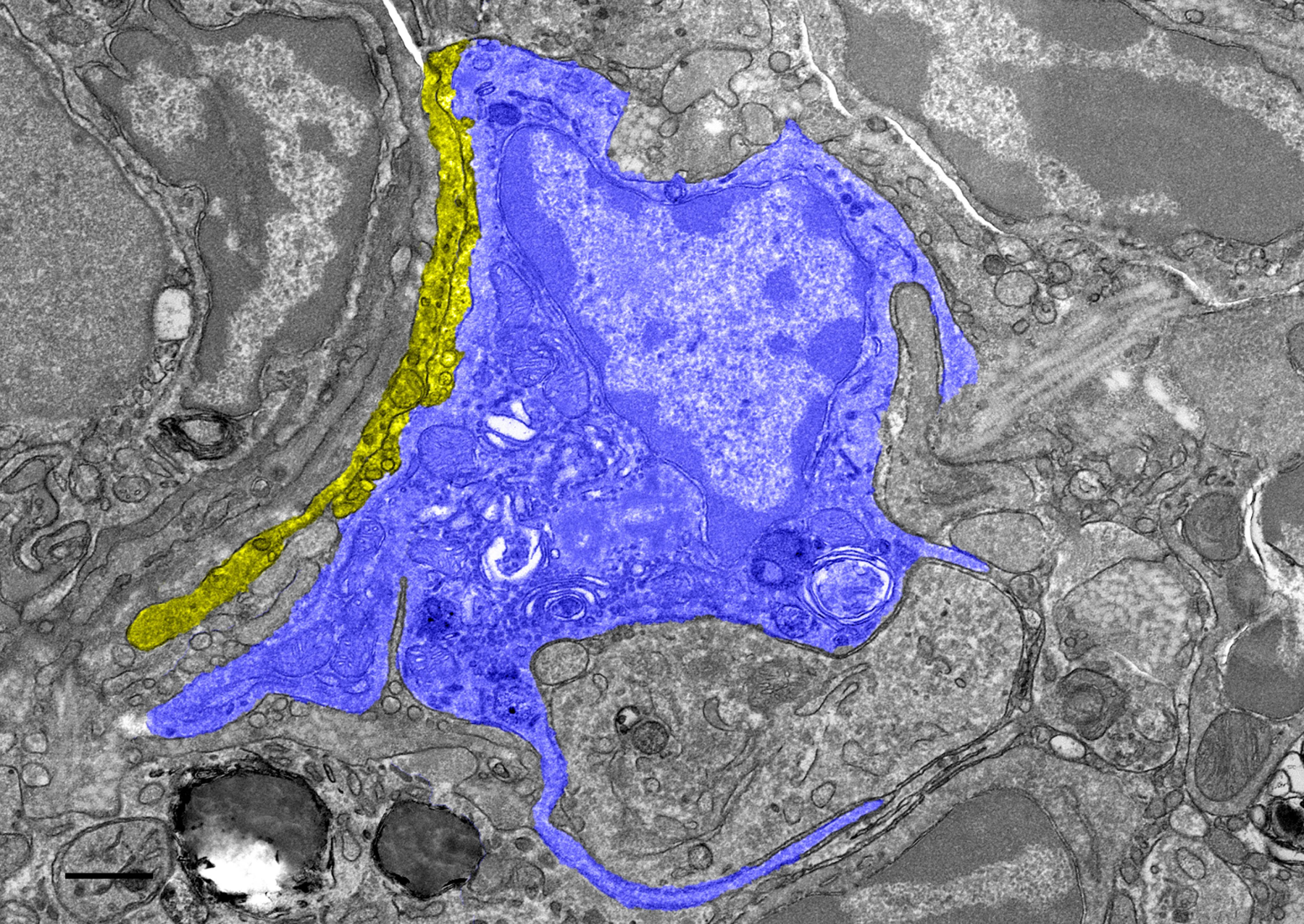
Electron microscopy images revealed that hepatic macrophages are in direct contact with nerve endings. This physical proximity suggests a pathway for "magnetic information" to be converted into electrical signals and transmitted via the peripheral nervous system to the central nervous system. While the exact signaling molecule or mechanism of transduction remains a subject for further study, the structural evidence points to a functional sensory circuit.
This finding challenges the traditional view of the immune system as a purely defensive or maintenance-oriented network. Instead, it introduces the concept of "immuno-sensation," where immune cells act as sensors for the external environment, including physical forces like electromagnetism.
Broader Implications for Animal Migration
The discovery of a ferrimagnetic mechanism in pigeons has profound implications for our understanding of other species. Magnetoreception is not unique to birds; it is found in a wide array of animals, including sea turtles, sharks, honeybees, and certain species of bats.
The researchers believe that this macrophage-based system could explain how animals navigate in environments where visual cues are completely absent. For example, nocturnal migratory birds, which fly in total darkness, or deep-sea sharks that traverse the lightless depths of the ocean, may rely on similar iron-rich immune cells to maintain their course.
"We think that this ferrimagnetic mechanism can actually explain how birds migrating at night, or sharks or bats or other animals migrating in dark environments, can perceive Earth’s magnetic field," Lisowski stated. This suggests that the "liver compass" might be an ancient evolutionary trait shared across multiple classes of vertebrates.
Scientific Reaction and Future Research
The publication of these findings has sparked significant interest across the fields of biophysics, immunology, and ethology. Independent experts have noted that the study elegantly bridges the gap between physics and biology.

Dr. Marcus G. Schmidt, a biophysicist not involved in the study, commented that the identification of superparamagnetic particles in immune cells provides a "physically plausible" model for magnetoreception that avoids some of the complexities of quantum-based cryptochrome theories. "It is an incredibly robust system," Schmidt noted. "Using the byproduct of red blood cell recycling to create a navigational tool is an example of evolutionary efficiency at its finest."
However, the study also opens new questions. Future research will likely focus on:
- The Signal Transduction Pathway: Determining exactly how the physical movement or magnetization of nanoparticles triggers a nerve impulse.
- Cross-Species Validation: Investigating whether similar hepatic structures exist in other migratory species, such as the Monarch butterfly or the Arctic tern.
- Human Applications: Exploring whether humans possess any vestigial forms of immuno-sensation, or if these principles can be applied to the development of new biotechnological sensors.
Conclusion: A New Layer of Biological Understanding
The revelation that pigeons use their liver to navigate Earth’s magnetic field represents a paradigm shift in sensory biology. By demonstrating that the immune system plays a direct role in environmental perception, the research team from the University of Bonn and the University of Duisburg-Essen has expanded the known boundaries of animal physiology.
As science continues to peel back the layers of how life interacts with the fundamental forces of the planet, the "sixth sense" of animals appears less like a mystery and more like a sophisticated integration of physics and biology. For the homing pigeon, the path home is not just seen in the sky or felt in the wind; it is processed deep within the body, where the very cells that protect its life also guide its journey.