

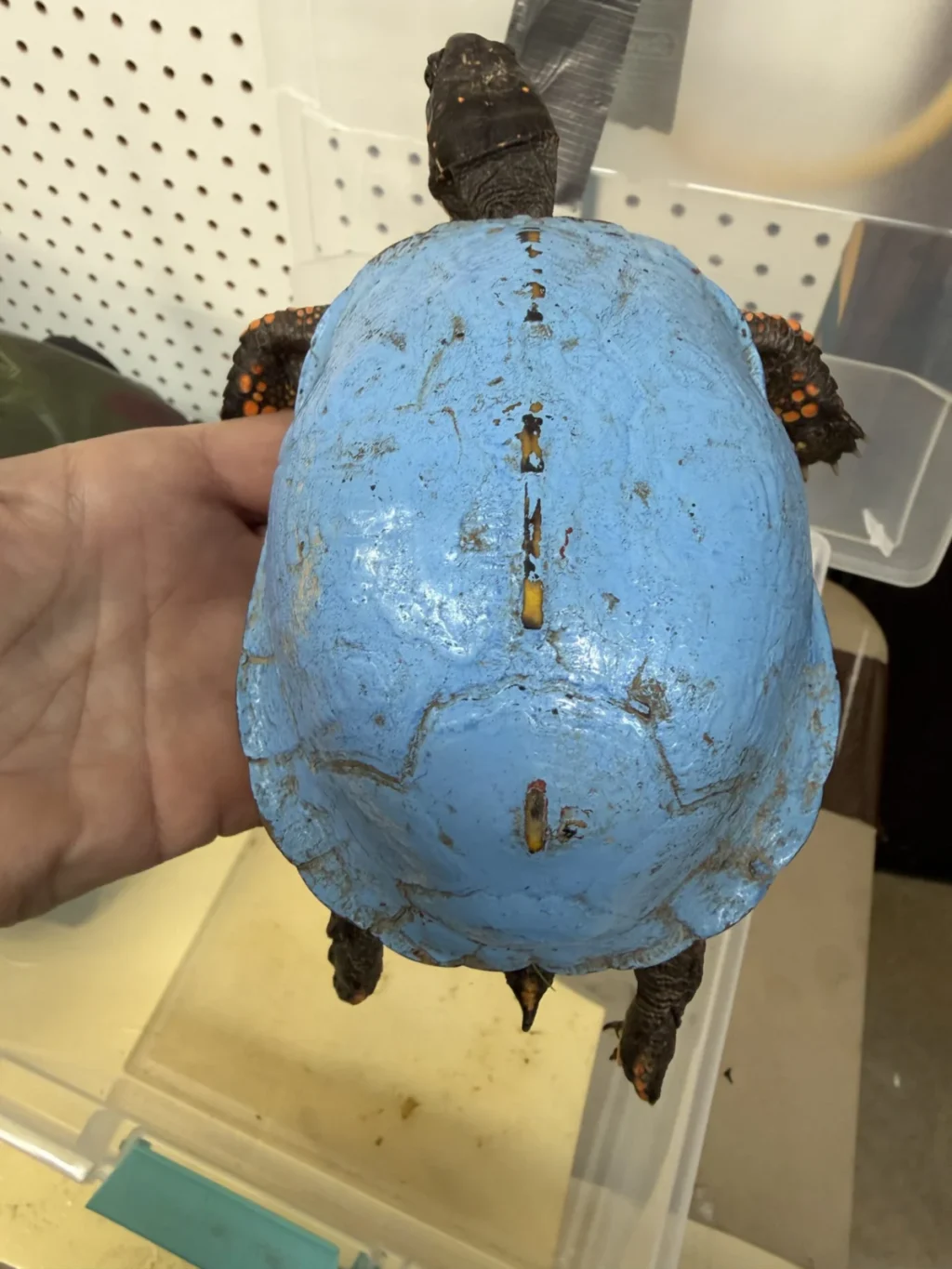
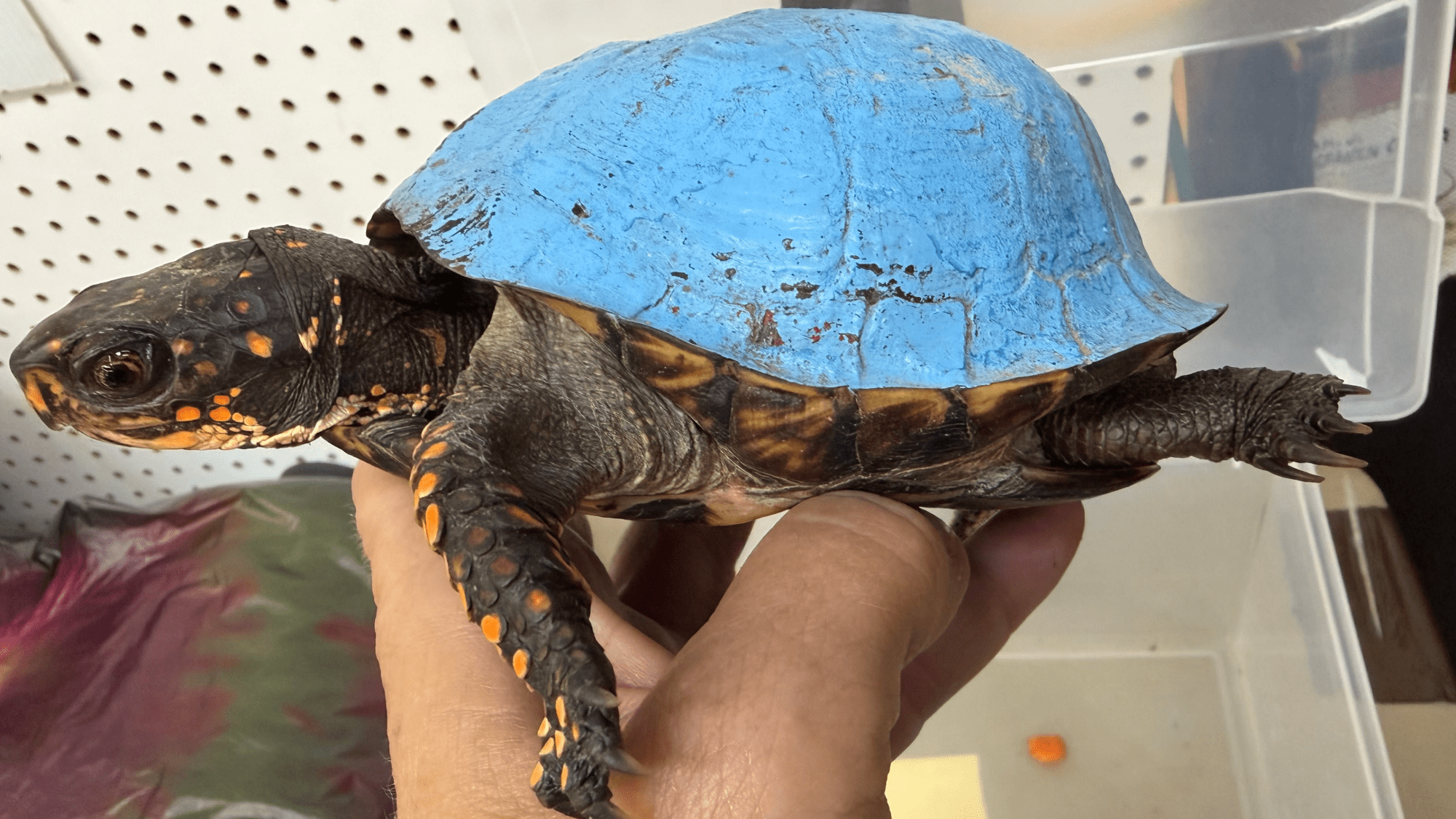
When a Kentucky resident recently purchased a home in the historic town of Campbellsville, she anticipated the usual challenges associated with moving, unpacking, and settling into a new property. What she did not expect was inheriting a resident wild animal that had been subjected to a bizarre and harmful human intervention. Among the sprawling greenery of her new yard, the homeowner discovered an adult female Eastern box turtle (Terrapene carolina carolina) whose natural shell had been completely obscured by a thick, bright coat of vibrant blue paint.
Upon consulting with long-time local residents, the new homeowner quickly learned that the coloration was far from a rare genetic mutation or a natural anomaly. A neighbor informed her that a previous occupant of the residence had engaged in a troubling habit of painting turtles found around the property. Disturbed by the discovery and concerned for the animal’s welfare, the homeowner reached out to Tonya Poindexter, a licensed wildlife rehabilitator and the director of the Wilderness Trail Wildlife Center located in London, Kentucky.
This unexpected case has since shed light on a broader, often overlooked issue regarding human interactions with local fauna, highlighting the severe biological and ecological risks of applying artificial substances to wild animals. While the turtle is currently undergoing a painstaking rehabilitation process to remove the toxic layers, wildlife experts are utilizing the incident to educate the public on why modifying nature’s design can have devastating consequences for vulnerable species.
The Discovery and Chronology of the Rescue
The sequence of events began shortly after the property title transfer was finalized in Campbellsville. While surveying the grounds of her newly acquired home, the homeowner spotted the unusual reptile moving through the grass. Recognizing that a brilliant blue shell was unnatural and potentially hazardous, she contained the animal and initiated contact with professional wildlife rescue services.
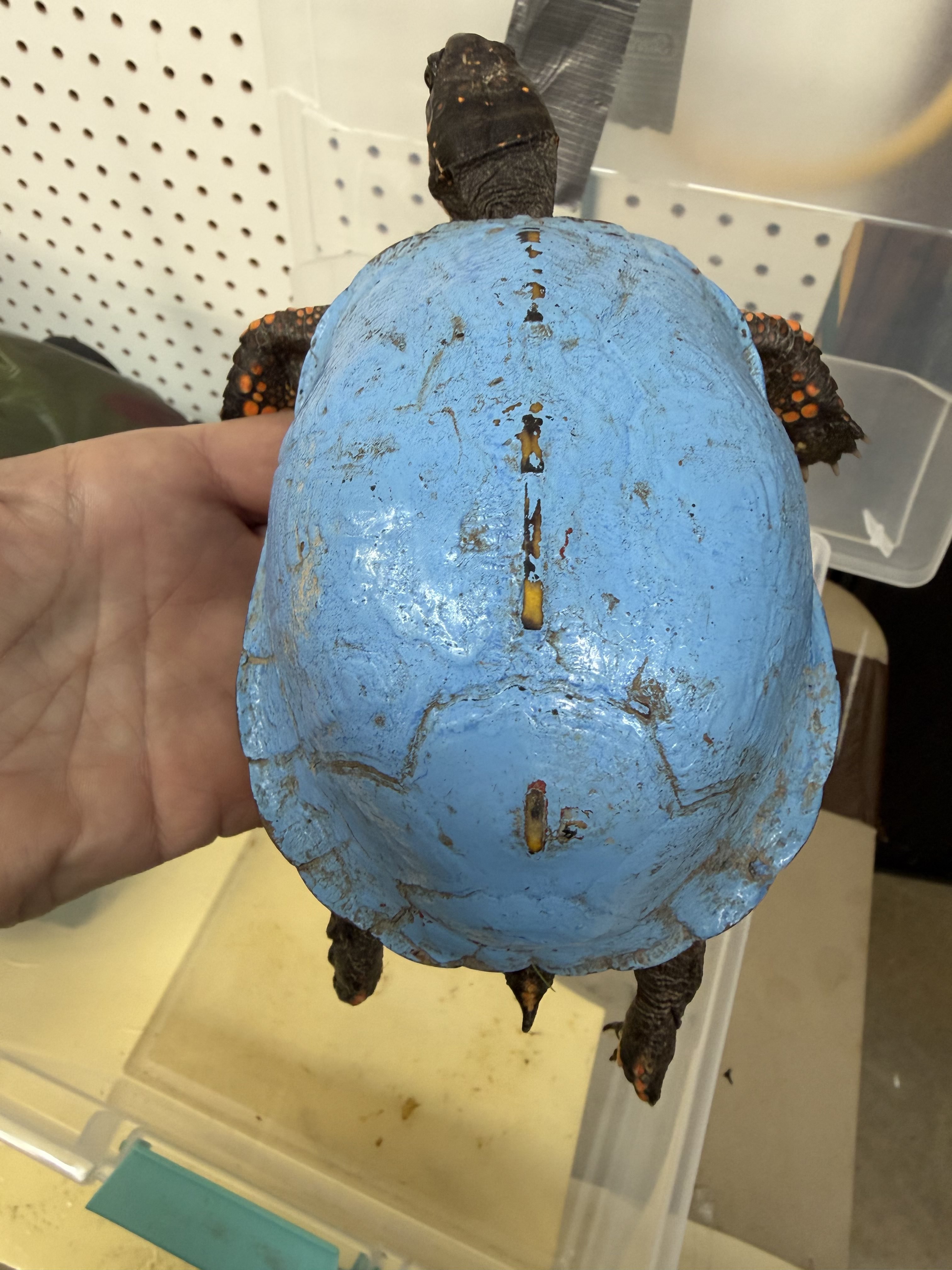
Within days, the turtle was transported approximately two hours southeast to the Wilderness Trail Wildlife Center for a comprehensive medical evaluation. Upon arrival, veterinary staff and rehabilitation specialists examined the animal, quickly realizing that the cosmetic damage extended far deeper than the initial layer of blue. Beneath the exterior blue paint, specialists uncovered a secondary, underlying layer of red paint. This forensic finding indicated that the turtle had been subjected to multiple rounds of painting by the previous property owner over an extended period.
Initial assessments determined that the paint utilized appeared to be oil-based—a heavy, resilient compound completely unsuited for contact with organic biological tissues. The layers were exceptionally thick and firmly adhered to the keratin scutes of the carapace, presenting an immediate challenge for the rehabilitation staff. Despite the chemical burden on her shell, the adult female Eastern box turtle was remarkably robust, showing no immediate signs of systemic poisoning, though her long-term survival prospects in the wild had been severely compromised.
Understanding the Anatomy and Biology of the Eastern Box Turtle
To fully comprehend the gravity of the situation, it is necessary to examine the unique physiology of the Eastern box turtle. Native to the eastern and central United States, these terrestrial reptiles are renowned for their high-domed shells, hinged lower plastrons that allow them to completely enclose themselves for protection, and striking patterns of yellow, orange, and olive-brown lines and spots.
Crucially, a turtle’s shell is not an external accessory, such as a hermit crab’s borrowed shell, nor is it merely a dead layer of keratin like human fingernails. The shell is an integral part of the animal’s skeletal system. It is composed of bone covered by living skin and protective keratin scutes, containing a rich network of blood vessels and nerve endings. Because the shell is living tissue, it grows, senses pressure, and undergoes metabolic processes alongside the rest of the turtle’s body.
Applying industrial, household, or oil-based paints to this living bone structure introduces a host of physiological hazards. Chemical solvents and synthetic resins can seep into the porous keratin, potentially causing localized tissue necrosis, chemical burns, or systemic toxicity as harmful compounds are absorbed through the shell and into the bloodstream. Furthermore, a solid, non-porous layer of paint can interfere with the shell’s natural ability to regulate moisture and temperature, both of which are critical for ectothermic animals that rely on environmental conditions to maintain homeostasis.
The Ecological Imperative of Natural Camouflage
Beyond the direct chemical toxicity, the application of bright pigments to a wild animal fundamentally disrupts its evolutionary survival strategies. In the dense underbrush of North American deciduous forests, the Eastern box turtle relies heavily on cryptic coloration to avoid predation.
The intricate mosaic of dark browns, yellows, and oranges on a natural box turtle’s shell functions as highly effective camouflage, allowing the animal to blend seamlessly into the dappled sunlight, fallen leaves, and decaying organic matter of the forest floor. This passive defense mechanism is vital, particularly for females who must occasionally travel through open terrain to locate suitable nesting sites for their eggs.
By coating the turtle in brilliant blue and red paint, human intervention effectively strips away this biological shield. In a natural ecosystem, a bright blue or red object is an immediate visual anomaly. Rather than melting into the background, a painted turtle stands out in stark contrast to its environment, turning the animal into an easily identifiable beacon for natural predators such as raccoons, foxes, crows, and coyotes.
Because of this extreme vulnerability, Poindexter and her team at the Wilderness Trail Wildlife Center made the definitive determination that the turtle could not be immediately returned to the wild following her intake. Releasing a brightly colored animal into a predator-rich environment would be tantamount to placing it in active peril, rendering the rescue effort counterproductive.
The Delicate and Meticulous Rehabilitation Process
With immediate release off the table, the staff at the Wilderness Trail Wildlife Center initiated a slow, highly controlled, and labor-intensive remediation process to strip the paint from the turtle’s shell without causing further damage to the underlying bone and keratin.
The removal procedure requires immense patience and must be executed in stages to prevent undue stress to the animal. Each session begins by soaking the turtle in warm water to soften the hardened paint layers and hydrate the keratin scutes. Following the soak, handlers use soft-bristled toothbrushes and mild Dawn dish soap to gently scrub away loosened fragments.
For the more stubborn, oil-based segments that resist standard soap and water, the rehabilitators must employ small, controlled amounts of mineral spirits. This chemical solvent helps break down the tenacious resins of the paint. However, this phase requires strict safety protocols: handlers must maintain continuous airflow around the turtle’s head and respiratory openings to ensure the animal does not inhale concentrated chemical fumes. Immediately following the application of the solvent, the area is meticulously washed with dish soap and thoroughly rinsed with clean water to neutralize any residual chemical irritants.
Poindexter strongly cautions the public against attempting similar procedures independently. The improper use of household solvents, aggressive scraping tools, or unverified chemical removers can easily result in severe trauma to the shell, permanent disfigurement, or chemical toxicity that could prove fatal to the animal. In cases where wildlife is found compromised by tar, paint, glue, or other anthropogenic pollutants, citizens are consistently advised to defer to licensed wildlife professionals or specialized veterinarians.
The Broader Implications of Human-Wildlife Conflicts
This Campbellsville incident is not an isolated event within wildlife rehabilitation circles, but rather part of a broader pattern of human-wildlife friction. Across North America, rehabilitators frequently encounter turtles and other slow-moving wildlife that have been marked, painted, or altered by humans for various reasons—ranging from misguided backyard art projects and children’s games to attempts at tracking pet turtles released into the wild.
Environmental scientists and conservationists emphasize that while human curiosity toward local fauna is natural, treating wild animals as domestic novelties or canvases violates fundamental conservation ethics. Wildlife populations—particularly species like the Eastern box turtle, which faces ongoing pressures from habitat fragmentation, vehicular mortality, and the illegal pet trade—rely on undisturbed natural behaviors to sustain their numbers.
When humans alter the physical appearance or behavior of a wild animal, they often inadvertently reduce its fitness and longevity. Education remains the primary tool for mitigating these incidents. Conservation groups continually advocate for public outreach initiatives that underscore the importance of leaving wild species unmolested in their natural habitats.
Looking Ahead: The Path to Reintroduction
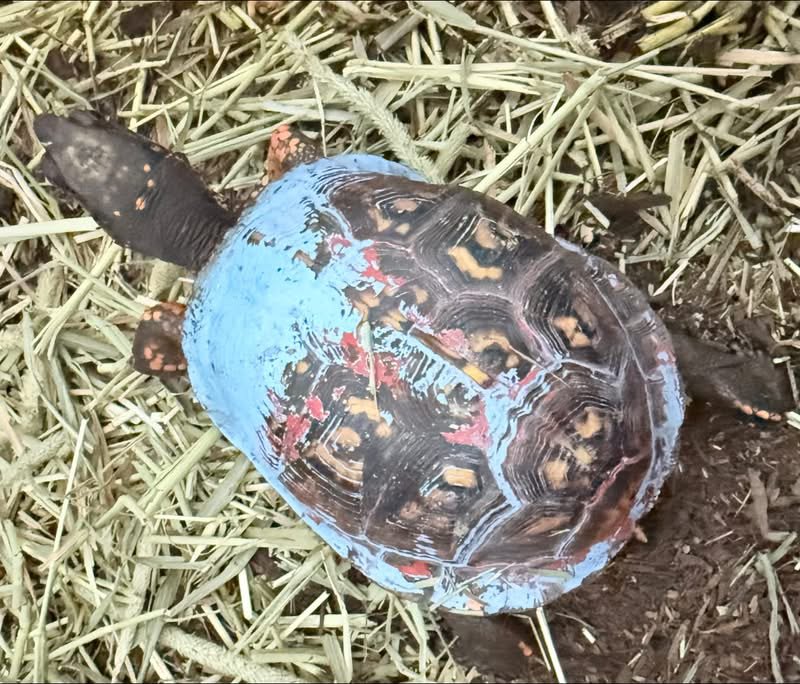
Despite the ordeal she has endured, the female Eastern box turtle has proven to be a cooperative patient throughout her tenure at the Wilderness Trail Wildlife Center. Her calm demeanor during the intensive washing and scrubbing sessions has expedited the rehabilitation schedule, allowing the staff to steadily chip away at the stubborn blue and red layers.
Progress has been steady, with large sections of the turtle’s natural, patterned shell beginning to emerge from beneath the synthetic prison. Once the rehabilitation team is fully satisfied that the paint has been sufficiently eradicated and that the structural integrity of the shell remains uncompromised, the final phase of the rescue operation will commence.
The original homeowner, who volunteered to assist in the animal’s recovery journey, will retrieve the turtle from the wildlife center and return her to the exact ecosystem from which she was collected. There, moving through the leaf litter in her natural autumnal tones, she will resume life as an ordinary wild turtle, far removed from the brushstrokes of human interference.
As Poindexter and her team continue their daily conservation work, they hope the narrative surrounding the blue-shelled turtle resonates broadly within the community. The core takeaway from the Campbellsville rescue remains simple yet profound: wild creatures do not require human enhancement to be appreciated. As nature has already demonstrated through millions of years of evolutionary design, Eastern box turtles are already intricately painted—just as they were meant to be.