




Literacy education in the United States has undergone a seismic shift over the past decade, characterized by a rigorous national debate regarding the "science of reading." While instructional shifts toward phonics-based decoding and structured literacy have gained significant policy momentum, a critical component of the literacy equation—writing instruction—has frequently been relegated to the periphery. Educators, policymakers, and cognitive scientists are now beginning to address this imbalance, emphasizing that reading and writing are reciprocal processes that share foundational neurological infrastructure.

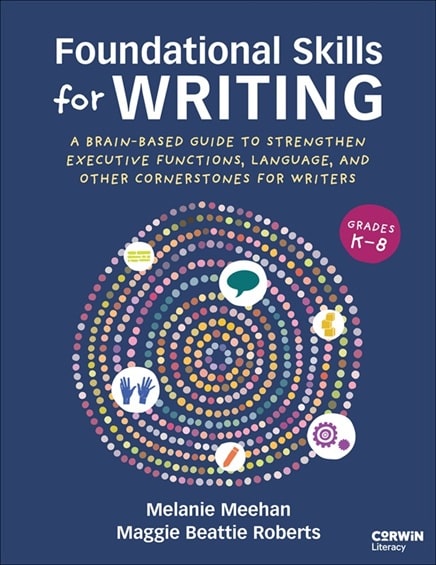
The publication of Foundational Skills for Writing: A Brain-Based Guide to Strengthen Executive Functions, Language, and Other Cornerstones for Writers, authored by literacy consultant Maggie Roberts and curriculum specialist Melanie Meehan, marks a significant intervention in this discourse. Released in March 2026, the text provides a framework for integrating neuro-education into the daily classroom environment, moving away from rote memorization and toward the development of cognitive flexibility and executive function.
The Cognitive Demands of the Written Word
Writing is a high-level cognitive task that requires the simultaneous integration of transcription skills, such as orthographic mapping and handwriting, and complex executive functions, including working memory, inhibitory control, and cognitive flexibility. Research from the National Assessment of Educational Progress (NAEP) has consistently highlighted a persistent "writing gap," with scores indicating that only a small percentage of students demonstrate proficiency in writing at their respective grade levels.
The authors argue that when foundational skills are not automatized, the brain’s limited working memory becomes overwhelmed. If a student must expend excessive cognitive energy on the mechanics of spelling or basic sentence construction, the higher-level functions required for rhetoric, organization, and voice are inevitably compromised. Roberts and Meehan’s work categorizes these requirements into three pillars: transcription skills (handwriting, keyboarding, spelling), oral language (syntax, vocabulary), and executive functioning (metacognition and mental agility).
Chronology of the Literacy Shift
The transition toward a more scientific approach to writing instruction has evolved over several years. Following the widespread adoption of state-level dyslexia legislation between 2020 and 2024—which mandated evidence-based reading practices—districts began to notice that writing curricula were often misaligned with the new reading methodologies.

By late 2025, pedagogical leaders began calling for a more cohesive K-12 literacy strategy that acknowledged the interdependence of encoding and decoding. The release of the Roberts-Meehan guide arrives at a moment of transition for many school districts currently auditing their English Language Arts (ELA) materials to ensure they meet the latest neurological research standards.
Minute Moves: Bridging Theory and Practice
A core feature of the authors’ methodology is the implementation of "Minute Moves," a series of low-stakes, high-frequency exercises designed to build neural pathways without requiring extended instructional time. These strategies are structured to maximize student engagement during transitions, warm-ups, or brief windows of classroom downtime.

Enhancing Orthographic Awareness
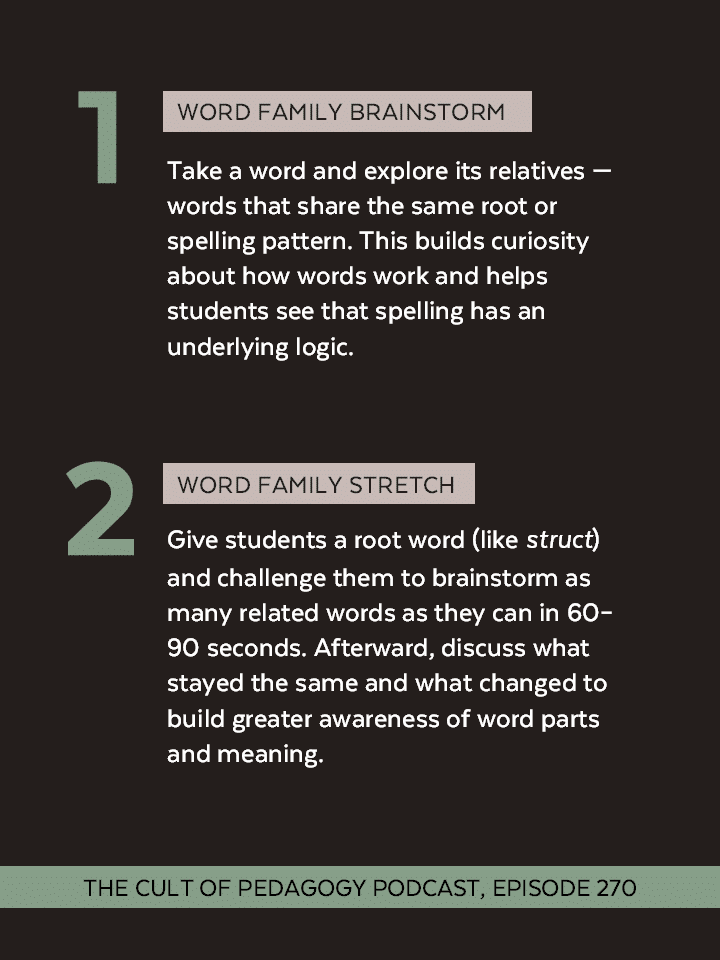
The authors suggest that spelling instruction should move beyond weekly lists to emphasize morphological understanding. By employing "Word Family Brainstorms," teachers encourage students to identify patterns within etymological roots. This practice reinforces the brain’s ability to categorize vocabulary, making retrieval more efficient. For example, understanding that the Latin root struct signifies "to build" allows students to deduce the meaning and spelling of construction, destruction, and infrastructure with greater accuracy than through memorization alone.
Syntax and Sentence Construction
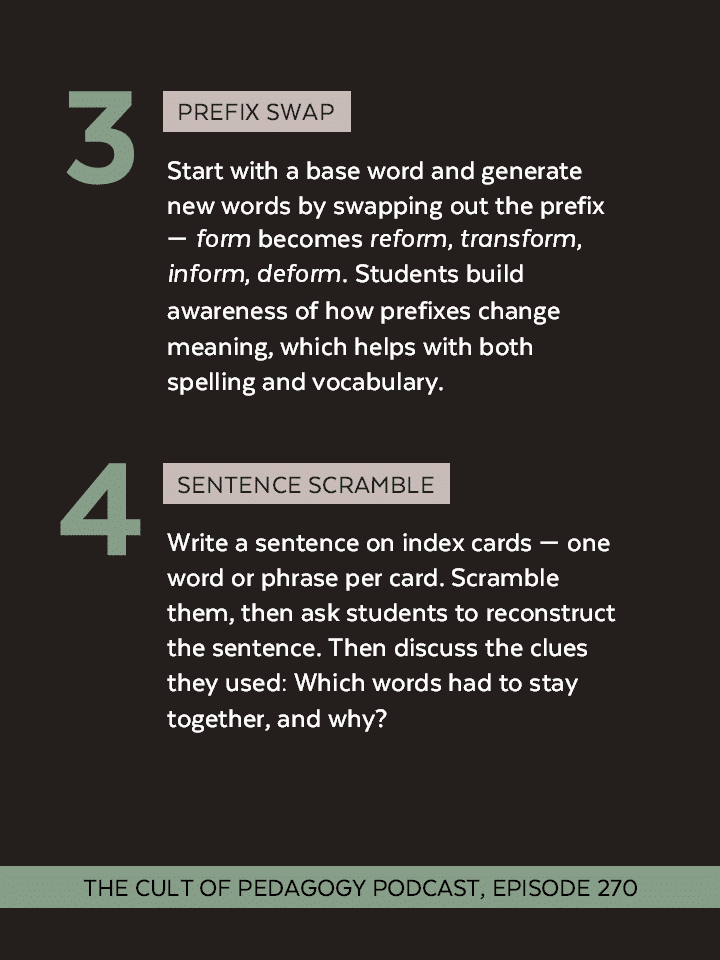
In the realm of syntax, the "Sentence Scramble" and "Sentence Expander" exercises serve as practical applications of grammar. By physically manipulating components of a sentence, students develop an intuitive sense of syntax. Data from recent classroom pilot studies suggest that students who engage in regular sentence-combining exercises demonstrate increased sophistication in their independent writing, as they transition from simple, declarative sentences to complex, multi-clausal structures.
Strengthening Cognitive Flexibility
Executive functioning is often cited as the "missing link" in student writing success. The "What’s Another Way?" exercise specifically targets cognitive flexibility—the ability to pivot between different approaches to a problem. By asking students to rewrite a sentence from multiple perspectives or with varying lengths, educators help students develop the metacognitive awareness necessary for revision. This is not merely an academic exercise; it is an essential component of critical thinking, enabling students to weigh the impact of their language choices on the intended audience.
Implications for Classroom Practice and Policy
The introduction of this brain-based framework has broader implications for how schools allocate instructional time. If writing is treated as a derivative of reading, rather than a distinct discipline requiring its own foundational training, students may continue to struggle with the transition to academic writing in middle and high school.
Educational psychologists have noted that the "Minute Moves" approach aligns with the principles of distributed practice—the idea that learning is more durable when it occurs in short, frequent intervals rather than one-off, intensive sessions. This model also supports inclusive classrooms. For multilingual learners, for instance, the focus on morphology allows them to leverage their existing linguistic knowledge to decode English patterns, thereby bridging the gap between their primary language and academic English.
Future Outlook
As the educational landscape continues to prioritize data-driven outcomes, the integration of neuro-education into writing instruction is expected to become a central theme in professional development. Roberts and Meehan’s research provides a roadmap for teachers who are often time-constrained but eager to implement evidence-based strategies.
The success of these methods will likely be measured by longitudinal shifts in student writing proficiency, particularly in the ability to generate complex, nuanced arguments. By demystifying the neurological demands of writing, the authors aim to transform the act from an intimidating academic burden into a manageable, and eventually, creative process.
The shift toward a more systematic, brain-aligned approach suggests a maturing of the literacy field. As schools begin to treat writing with the same scientific rigor as reading, the goal is not merely to improve test scores, but to provide students with the foundational tools necessary for clear, sophisticated communication in an increasingly complex world. Whether through the simple act of word family mapping or the complex exercise of perspective-shifting, the focus remains on ensuring that the cognitive energy of the student is preserved for the ultimate goal: the expression of thought.