


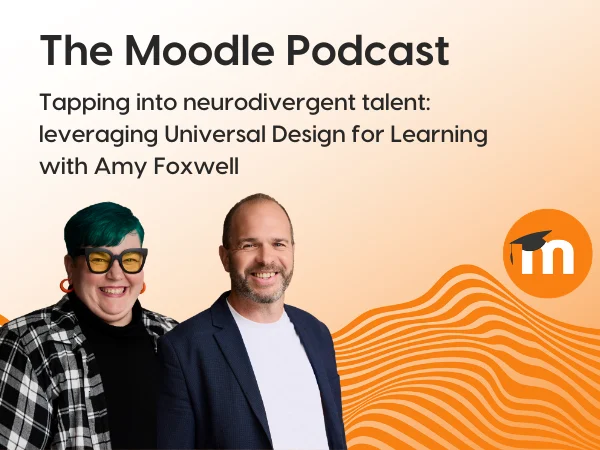
Moodle, a global leader in open-source learning platforms, is championing a paradigm shift in educational design, emphasizing inclusivity and individual learning needs. In a recent episode of the Moodle Podcast, the platform’s commitment to "learning that works for everyone, everywhere – now, and in the future" was underscored through a compelling discussion on neuro-inclusive design. Shalimar and Dan, hosts of the Moodle Podcast, were joined by Amy Foxwell from ReadSpeaker, a Moodle Certified Integration, to delve into the advantages of designing learning environments that embrace neurodiversity. This conversation highlights how a proactive approach to inclusivity not only benefits neurodivergent learners but ultimately enhances the learning experience for all.
The core of the discussion revolved around the principle that there is no such thing as an "average learner." Instead, Moodle and its collaborators advocate for the recognition of individual uniqueness and the creation of learning experiences that resonate with the diverse ways individuals interact with the world. This philosophy directly informs the development and promotion of neuro-inclusive design, a concept that seeks to build learning environments that are inherently flexible and accommodating, rather than requiring separate interventions for specific groups.
Designing for Diversity: A Proactive Approach to Learning
Amy Foxwell articulated that a fundamental goal of neuro-inclusive design is to foster a learning environment that is proactive rather than reactive. This means constructing educational platforms and content that are flexible and interactive, catering to the broadest possible spectrum of learners from the outset. "One of the core ideas behind Universal Design for Learning (UDL)," Foxwell stated, "is that variability is the norm." This perspective challenges the traditional approach of identifying neurodivergent learners as outliers who necessitate separate accommodations. Instead, the emphasis is placed on designing learning experiences that intrinsically support everyone from the very beginning.
The concept of UDL, pioneered by researchers at the Center for Applied Special Technology (CAST), provides a framework for this proactive design. It advocates for providing multiple means of representation (the "what" of learning), multiple means of action and expression (the "how" of learning), and multiple means of engagement (the "why" of learning). By offering diverse pathways for learners to access information, demonstrate their knowledge, and remain motivated, UDL aims to remove barriers and create equitable opportunities for all. This approach is not about lowering standards but about providing the scaffolding necessary for every learner to reach their full potential.
The Moodle Podcast episode also explored the significant emotional toll that "masking" can take on neurodivergent learners. Masking refers to the often-exhausting process individuals undertake to conceal their neurodivergent traits and appear "normal" within conventional learning settings. This can lead to heightened anxiety, burnout, and a diminished sense of self. By intentionally designing courses and platforms that reduce the need for such concealment, educators and institutions can foster environments where learners feel safer, more accepted, and consequently, more able to focus on their learning.
The "Curb-Cut Effect": Broadening Accessibility Benefits
A key concept discussed was the "curb-cut effect," a phenomenon where features originally designed to improve accessibility for individuals with disabilities ultimately benefit a much wider population. Foxwell explained how tools like text-to-speech technology, initially developed to assist visually impaired learners, have proven invaluable for individuals with dyslexia, ADHD, language processing differences, and even for learners who simply prefer auditory input.
This principle, named after the sloped sidewalks at street corners (curb cuts) that were created for wheelchair users but also ease the passage of parents with strollers, luggage, and cyclists, illustrates how inclusive design is not a niche concern but a universal enhancement. The widespread adoption and appreciation of text-to-speech, for instance, demonstrate that learning that is accessible, digestible, and engaging is a desirable quality for all learners, regardless of their neurotype. This has significant implications for content creation and platform design, suggesting that investing in robust accessibility features is a strategic move that pays dividends across the entire user base.
Data from various educational technology studies consistently show that features enhancing accessibility often lead to improved engagement and retention rates for all students. For example, a study by the National Center on Disability and Access to Education found that universally designed courses led to higher student satisfaction and improved academic outcomes. Furthermore, the increasing prevalence of digital learning environments necessitates a robust approach to accessibility, as evidenced by the growing number of learners who rely on assistive technologies. Global statistics from organizations like the World Health Organization indicate that approximately 15% of the world’s population lives with some form of disability, a significant portion of which can be supported through thoughtful design.
Reducing Friction and Empowering Learner Agency
The overarching argument presented in the Moodle Podcast episode is that neuro-inclusion is not merely an ethical consideration but a fundamental component of effective learning design. Environments that are neuro-inclusive are increasingly linked with enhanced innovation, creativity, and improved performance. By building adaptable and supportive learning experiences, organizations not only benefit their learners but also foster a more dynamic and productive educational ecosystem.
The implications of this approach extend to both individual educators and learning and development (L&D) professionals. By embracing neuro-inclusive principles, they can:
- Reduce learner frustration: By offering multiple ways to access and engage with content, the friction points that can lead to disengagement are minimized.
- Enhance learner agency: Providing choices in how learners interact with material empowers them to take ownership of their learning journey.
- Foster a sense of belonging: Inclusive design signals that all learners are valued and supported, contributing to a positive and motivating learning atmosphere.
- Drive innovation: By embracing diverse perspectives and learning styles, educational institutions can unlock new creative potential and problem-solving approaches.
The conversation on the Moodle Podcast serves as a call to action for educators and L&D professionals to view neuro-inclusion as a strategic advantage. The episode offers practical insights, including "quick wins" for course designers and a deeper exploration of how Universal Design for Learning can be leveraged to tap into the strengths of neurodivergent talent.
Background and Context
The discussion on neuro-inclusive design within the Moodle Podcast aligns with broader trends in education and technology. As digital learning platforms become more ubiquitous, there is a growing awareness of the need to ensure these tools are accessible and equitable for all learners. Moodle, as an open-source platform, is particularly well-positioned to facilitate such advancements, allowing for customization and integration of innovative solutions.
The partnership with ReadSpeaker, a provider of text-to-speech and other assistive technologies, further underscores Moodle’s commitment to practical implementation. ReadSpeaker’s integration with Moodle offers educators a readily available tool to enhance content accessibility, directly contributing to the principles of UDL and the "curb-cut effect."
The timing of this discussion is also significant. As educational institutions worldwide grapple with the challenges of remote and hybrid learning, the need for flexible and inclusive digital learning environments has never been more apparent. The insights shared by Amy Foxwell and the Moodle team provide a valuable roadmap for creating learning experiences that are resilient and effective in a rapidly evolving educational landscape.
Broader Impact and Future Implications
The implications of embracing neuro-inclusive design extend beyond individual learning outcomes. For educational institutions, it signifies a commitment to equity and social responsibility. For businesses, it represents an opportunity to cultivate a more diverse and innovative workforce, tapping into the unique talents and perspectives of neurodivergent individuals.
The Moodle Podcast episode, titled "Tapping into neurodivergent talent: leveraging Universal Design for Learning with Amy Foxwell," is now available for streaming. By subscribing to the Moodle Podcast, listeners can stay informed about ongoing discussions on learning, technology, and the continuous effort to make education more inclusive for everyone. This proactive engagement with the principles of neuro-inclusion promises to shape the future of learning, creating environments where every individual has the opportunity to thrive and contribute their full potential. The ongoing evolution of learning technologies and pedagogical approaches, driven by a commitment to inclusivity, signals a promising future for education.