



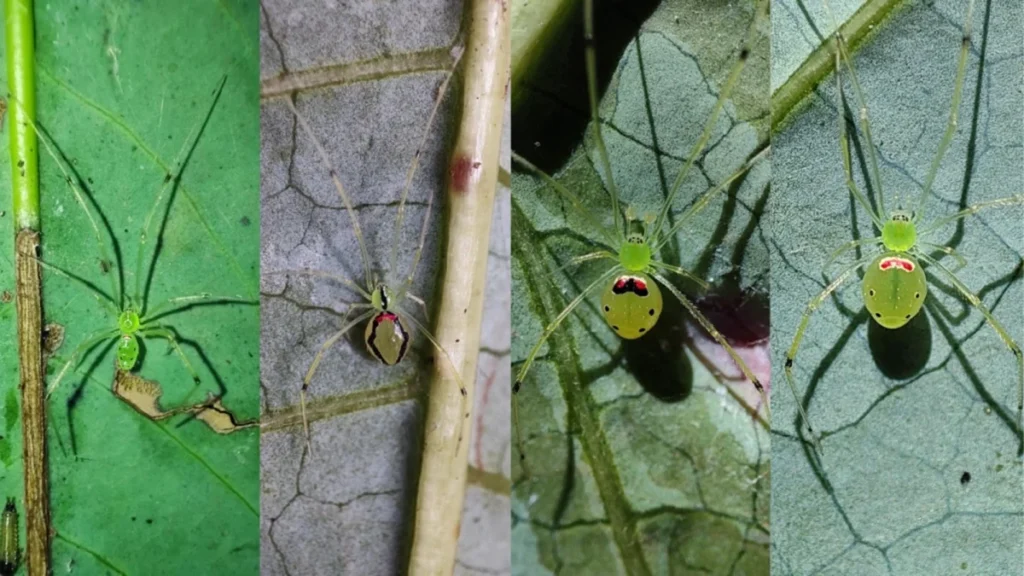
The discovery of a new arachnid species in the high-altitude forests of the Himalayas has sent ripples through the international scientific community, challenging long-held assumptions about the geographical exclusivity of certain biological traits. For over a century, the iconic "happy-face spider" was believed to be an evolutionary anomaly unique to the Hawaiian archipelago. However, a recent expedition in the northern Indian state of Uttarakhand has unveiled a sister species, Theridion himalayana, which possesses a striking morphological resemblance to its Pacific counterpart while remaining genetically distinct. This finding, published in the peer-reviewed journal Evolutionary Systematics, underscores the immense, untapped biodiversity of the Himalayan region and raises profound questions regarding convergent evolution and the historical dispersal of the genus Theridion.
The Legacy of the Hawaiian Happy-Face Spider
To understand the significance of this discovery, one must look to the history of Theridion grallator, the original happy-face spider. First described by ecologists in Hawaii in 1900, T. grallator—known locally as the nananana makaki‘i—became a symbol of island evolution. These tiny, translucent green spiders are famous for the colorful, pigment-based patterns on their abdomens that frequently resemble a grinning human face.
For decades, biologists cited T. grallator as a classic example of island endemism, where isolated environments allow for the development of unique traits found nowhere else on Earth. The Hawaiian species is known for its remarkable polymorphism, meaning that within a single population, individuals can exhibit vastly different color patterns. Some feature "smiles," others "frowns," and some possess no facial markings at all. This variation is believed to be a survival strategy, potentially confusing avian predators that develop a "search image" for a specific prey appearance. Because Hawaii is thousands of miles from the nearest continent, the idea that a nearly identical creature could exist in the landlocked, mountainous terrain of the Himalayas was considered highly improbable until now.
The 2023 Uttarakhand Expedition
The identification of Theridion himalayana was the result of a serendipitous encounter during a 2023 scientific survey. A team of researchers from India’s Forest Research Institute (FRI) and the Regional Museum of Natural History (RMNH) initially ventured into the forested slopes of Uttarakhand with a different objective: cataloging ant biodiversity. Uttarakhand, often referred to as the "Land of the Gods," is a global biodiversity hotspot characterized by a dramatic range of elevations and microclimates, from the subtropical Siwalik range to the alpine meadows of the Greater Himalayas.
During the survey, Ashirwad Tripathy, a researcher involved in the project, began noticing unusual arachnids inhabiting the local flora. While his primary focus was formicology (the study of ants), the vibrant appearance of these spiders compelled him to collect specimens for further analysis. Tripathy shared photographic evidence with Devi Priyadarshini, a biologist at the Regional Museum of Natural History. Priyadarshini, who had studied the Hawaiian happy-face spider during her academic training, immediately recognized the characteristic "smiley" patterns.
The researchers shifted their focus to document this unexpected find. Over the course of several months, they located 32 specimens, all exhibiting the translucent green body and variable abdominal markings associated with the happy-face phenotype. The spiders were primarily found on the undersides of leaves, a common habitat for small theridiid spiders seeking protection from the elements and predators.
Morphological Diversity and the Concept of Morphs
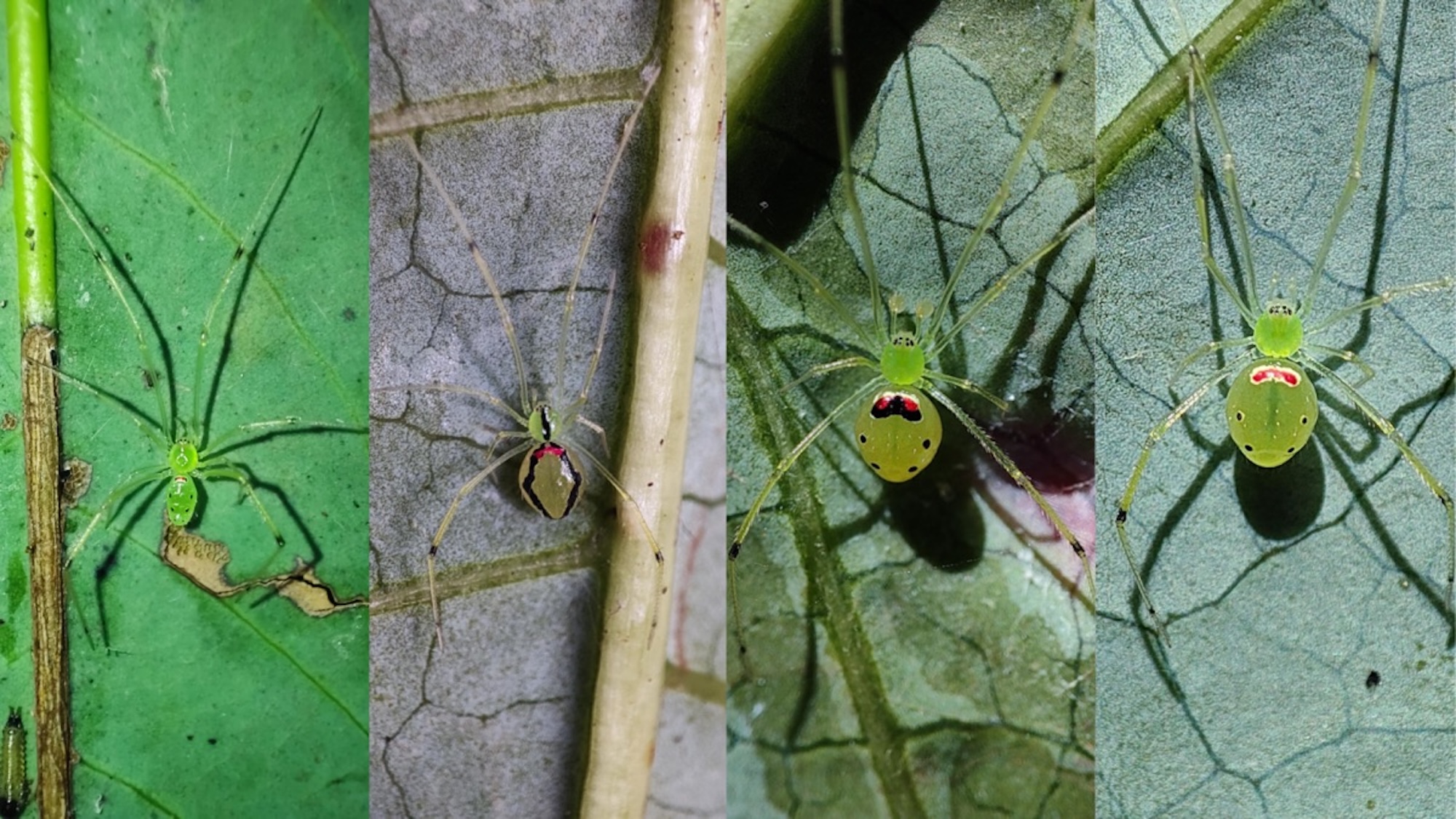
One of the most fascinating aspects of the Himalayan discovery is the degree of variation found within the 32 specimens. Much like the Hawaiian species, T. himalayana displays high levels of polymorphism. The researchers documented several distinct "morphs," or color variations. Some specimens featured two dark spots resembling eyes paired with a curved red line resembling a mouth. Others displayed more complex arrangements of dots and stripes that, while not strictly "faces," followed the same aesthetic logic of the Hawaiian spiders.
This polymorphism is significant because it suggests that the evolutionary pressures driving these patterns in the Himalayas may mirror those in Hawaii. If the patterns serve to disrupt predator recognition, it indicates that Himalayan birds or predatory insects may be exerting similar selective pressures on T. himalayana as Hawaiian honeycreepers do on T. grallator. The researchers noted that the spiders’ primary body color—a pale, vibrant green—serves as excellent camouflage against the Daphniphyllum and ginger leaves where they reside, making the bright red and black "facial" markings even more of an evolutionary puzzle.
Genetic Analysis and Taxonomic Distinction
To confirm that they had indeed found a new species and not a late introduction of the Hawaiian spider to India, the team conducted rigorous DNA analysis. They focused on genetic markers commonly used to distinguish species within the Theridion genus. The results revealed an 8.5 percent genetic variation between the Himalayan specimens and the Hawaiian T. grallator.
In the field of molecular biology, a genetic divergence of this magnitude is more than sufficient to classify the Himalayan population as a separate species. For context, in many arachnid families, a variation of 2 to 3 percent is often enough to justify a species-level distinction. The 8.5 percent gap suggests that while the two species look almost identical, they have been evolutionarily separated for millions of years.
The researchers officially named the new species Theridion himalayana as a tribute to the mountain range that serves as its home. Ashirwad Tripathy emphasized that the name was chosen to honor the "mighty Himalaya," which he described as a fortress of biodiversity that continues to guard and nurture species unknown to the modern world.
The Ginger Plant Connection: An Ecological Mystery
Perhaps the most baffling detail uncovered by the research team is a shared ecological preference between the two geographically distant species. Both the Hawaiian T. grallator and the Himalayan T. himalayana show a marked affinity for ginger plants (family Zingiberaceae).
In Hawaii, various species of ginger are considered invasive, having been introduced by humans. Despite this, the native happy-face spiders have adapted to use ginger leaves as their primary nesting and hunting grounds. In the Himalayas, ginger is native and grows abundantly in the moist, shaded understory of the forests.
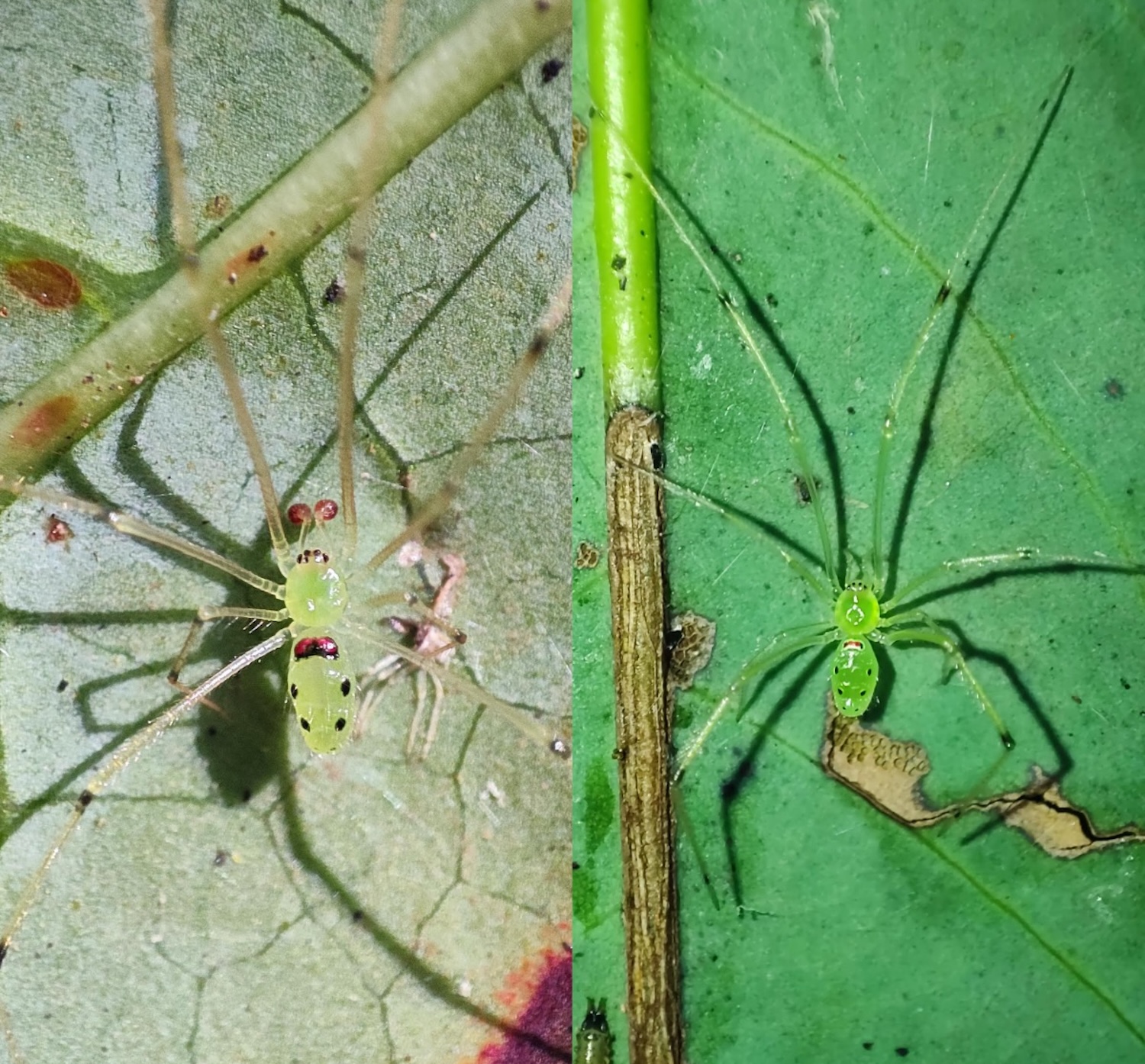
Devi Priyadarshini pointed out the strangeness of this coincidence. "How did the Hawaiian spiders choose an invasive species and ginger exactly?" she questioned. The fact that both species prefer the same type of foliage—which provides a broad, flat surface on the underside for web-building and protection—suggests a deep-seated behavioral trait that may predate the separation of the two species. Priyadarshini theorized that T. himalayana might represent an "elder cousin" of the Hawaiian species, potentially reflecting an ancestral lineage that once spanned a much larger geographic range before tectonic shifts and climatic changes isolated the populations.
Broader Implications for Evolutionary Biology
The discovery of T. himalayana provides a rare opportunity to study convergent evolution versus shared ancestry. Convergent evolution occurs when two unrelated species independently evolve similar traits as a result of having to adapt to similar environments or ecological niches. If the "happy face" pattern is a result of convergent evolution, it would suggest that there is a specific, universal advantage to that particular arrangement of pigments for small green spiders.
Alternatively, the "shared ancestry" theory suggests that a common ancestor of both spiders possessed the genetic blueprint for these patterns. This ancestor may have lived on a large landmass before some individuals were dispersed to the Hawaiian Islands—perhaps through "ballooning," a process where spiders use silk threads to catch the wind and travel vast distances across oceans.
The Himalayan discovery suggests that the Theridion genus is far more complex than previously understood. It highlights the importance of "non-target" observations during scientific expeditions. By remaining observant of the spiders while ostensibly searching for ants, Tripathy and Priyadarshini were able to correct a 124-year-old assumption that the happy-face spider was a strictly Hawaiian phenomenon.
Future Research and Conservation
The identification of Theridion himalayana is only the beginning of a larger investigation. The research team intends to conduct further genomic sequencing to determine exactly when the Himalayan and Hawaiian lineages diverged. This "molecular clock" analysis could provide insights into the geological history of the region and the migration patterns of ancient arachnids.
Furthermore, the discovery emphasizes the need for increased conservation efforts in the Himalayan foothills. As climate change alters the temperature and humidity levels of these high-altitude forests, the delicate balance of the ecosystem is at risk. Species like T. himalayana, which depend on specific host plants like ginger and Daphniphyllum, could be particularly vulnerable to habitat loss.
The presence of such a charismatic and visually striking species may serve as a "flagship" for Himalayan invertebrate conservation. While large mammals like the snow leopard often receive the bulk of conservation funding and public attention, the discovery of the Himalayan happy-face spider reminds the world that the smallest inhabitants of the mountains are equally vital to the Earth’s biological heritage. As researchers continue to explore the slopes of Uttarakhand, they remain hopeful that the "mighty Himalaya" still holds many more secrets waiting to be uncovered, one leaf at a time.