

Chinese clothing, known as Zhongguo fushi (中国服饰), represents a sophisticated tapestry of cultural heritage, social stratification, and aesthetic evolution spanning over five millennia. Far from being a static relic of the past, the history of Chinese textiles and silhouettes reflects the nation’s shifting political landscapes and its evolving role in the global community. From the structured elegance of the Hanfu to the modern resurgence of traditional styles in haute couture, the trajectory of Chinese fashion serves as a primary indicator of the country’s socio-economic transformations.
Historical Chronology and Dynastic Transitions
The development of Chinese attire is categorized by distinct eras, each defined by the prevailing ideologies and administrative decrees of the ruling dynasties. These periods established the foundational aesthetics that continue to influence contemporary designs.
The Han Dynasty (206 BCE – 220 CE): The Foundation of Hanfu
The Han Dynasty is credited with the formalization of Hanfu (汉服), the traditional dress of the Han Chinese people. This era emphasized the Confucian values of modesty, ritual, and social order. The standard attire consisted of the yi (衣), a narrow-sleeved, knee-length tunic, and the chang (裳), a narrow, ankle-length skirt. A hallmark of this period was the cross-collar design, where the left side of the garment overlapped the right, a style known as youren. This was not merely a fashion choice but a cultural signifier; overlapping in the opposite direction was often associated with non-Han ethnic groups.
The Tang Dynasty (618 – 907 CE): The Golden Age of Cosmopolitanism
Often regarded as the peak of Chinese civilization, the Tang Dynasty introduced a period of unprecedented cultural exchange via the Silk Road. Fashion became more diverse, colorful, and expressive. For women, the high-waisted skirt (qixiong ruqun) became iconic, often paired with sheer outer garments that reflected the era’s relative social liberalization. The influence of Central Asian styles was evident in the adoption of more practical, tighter sleeves for men and the use of bold, floral patterns.
The Ming Dynasty (1368 – 1644 CE): Restoration and Refinement
Following the collapse of the Mongol-led Yuan Dynasty, the Ming Dynasty sought to restore traditional Han Chinese customs. Clothing became more structured and elaborate. This era saw the rise of the "Mandarin collar"—a high, standing collar that would eventually become a staple of global fashion. The Ming period also institutionalized the use of "rank patches" (buzi) on official robes, featuring embroidered birds for civil officials and animals for military officers to denote specific bureaucratic grades.
The Qing Dynasty (1636 – 1912 CE): Manchu Influence and the Qipao
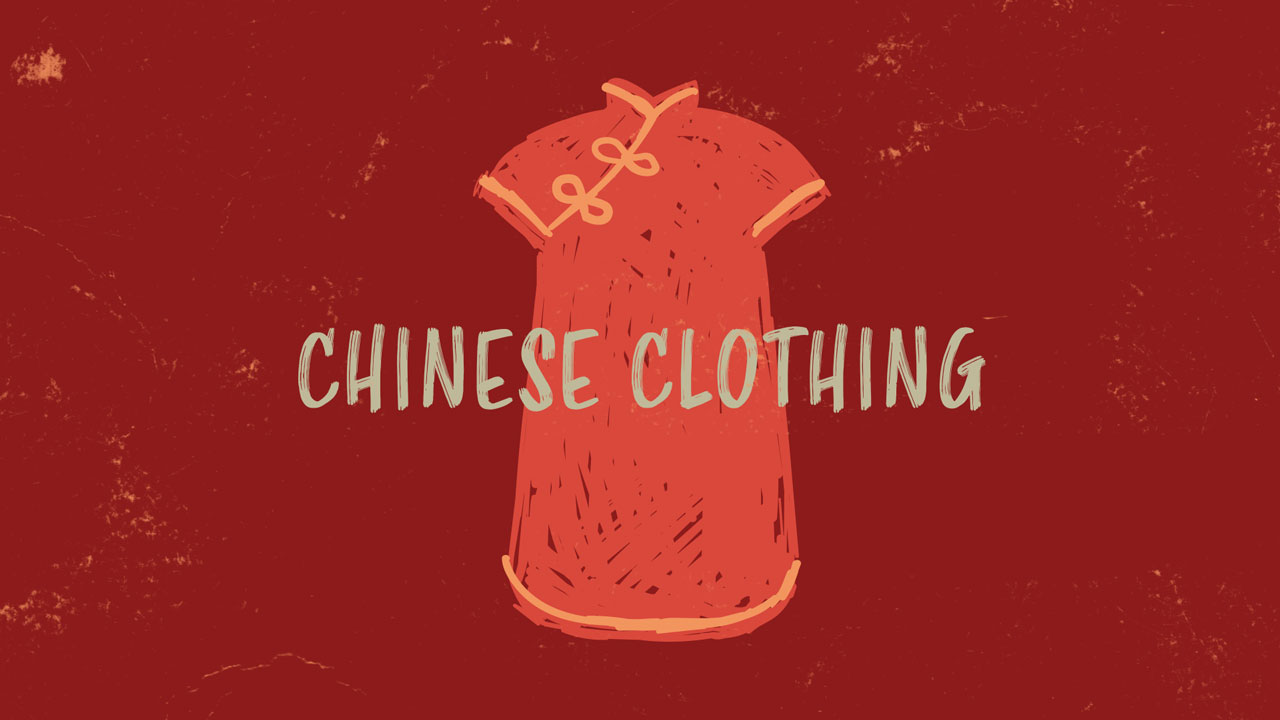
The Manchu conquest brought a radical shift in Chinese aesthetics. The Qing government enforced the adoption of Manchu-style clothing, leading to the development of the changpao (long robe) for men and the evolution of the qipao (旗袍) for women. Originally a loose-fitting garment designed to conceal the figure, the qipao underwent a dramatic transformation in early 20th-century Shanghai, becoming the form-fitting, high-slit dress that remains a global symbol of Chinese elegance today.
Ethnic Diversity and Regional Variations
China’s textile heritage is further enriched by its 55 officially recognized ethnic minority groups. Each group maintains distinct sartorial traditions that are deeply influenced by geography, climate, and local mythology.
Southwestern Tropical Influences: The Dai People
In the Yunnan Province, the Dai people (傣族) wear clothing suited for a tropical climate. Their attire typically features short, tight-fitting blouses and wrap-around skirts (sarongs) made of light silk or cotton. The designs often incorporate Southeast Asian motifs, reflecting the cross-border cultural ties with neighboring nations such as Thailand and Laos.
High-Altitude Adaptations: The Tibetan Minority
Tibetan clothing, or Zangzu fushi, is characterized by the chupa (藏袍), a long, wide-sleeved robe. Due to the extreme temperature fluctuations of the Tibetan Plateau, the chupa is often worn with one sleeve off or tied around the waist during the heat of the day. Materials like sheepskin and heavy wool are utilized for insulation, while vibrant turquoise and coral jewelry serve as markers of wealth and religious devotion.
Silk Road Heritage: The Uyghur Minority
The Uyghur people (维吾尔族) of Xinjiang utilize attire that reflects Central Asian Islamic influences. Key elements include the atlas silk—a traditional ikat-dyed fabric with vibrant, flowing patterns—and the doppa, a four-cornered embroidered cap. Their clothing emphasizes intricate embroidery and bold geometric designs, facilitating both practical desert wear and ceremonial display.
Supporting Data and Economic Impact of the Hanfu Movement
In the 21st century, China has witnessed a significant cultural phenomenon known as the Hanfu Movement (汉服运动). This resurgence is not merely a nostalgic trend but a multi-billion dollar industry fueled by the younger "Gen Z" demographic.
According to data from iiMedia Research, the market value of the Hanfu industry in China exceeded 10 billion yuan (approximately $1.4 billion USD) in recent years, with a consumer base surpassing 10 million people. This growth is supported by:
- Social Media Proliferation: Platforms like Douyin (the Chinese version of TikTok) and Xiaohongshu have become hubs for Hanfu enthusiasts to share photography and styling tips.
- Cultural Tourism: Historic sites in cities like Xi’an and Hangzhou have seen a surge in visitors renting traditional attire for "time-travel" photography experiences.
- Domestic Brand Growth: Thousands of independent design studios now specialize in "Neo-Chinese" style (新中式), which blends traditional silhouettes with modern fabrics like denim or high-tech synthetics.
Technical Elements: Materials and Symbolism
The sophistication of Chinese clothing lies in its meticulous attention to material science and symbolic communication.
Textile Innovation
- Silk (丝绸): As the birthplace of sericulture, China has used silk for over 5,000 years. Historically, silk was a currency and a strictly regulated luxury.
- Cotton and Linen: While silk was for the elite, cotton (mianhua) and linen (yama) provided the durable, breathable foundations for the agrarian population.
- Wool: Primarily used in Northern and Western regions, wool (yangmao) remains essential for nomadic and high-altitude communities.
The Semiotics of Color
Colors in Chinese attire are governed by the "Five Elements" theory (Wu Xing), which assigns specific meanings to the primary palette:
- Red (红色): Symbolizes fire, joy, and prosperity; it is the mandatory color for traditional weddings.
- Yellow (黄色): Represents earth and was historically reserved exclusively for the Emperor, symbolizing supreme power.
- White (白色): Associated with metal and is the traditional color of mourning and funerals.
- Black (黑色): Symbolizes water and was considered the most dignified color in early dynasties like the Qin.
Iconography and Embroidery
Embroidery (cixiu) serves as a visual language. Common motifs include the dragon (imperial power), the phoenix (grace and the Empress), the crane (longevity), and the lotus (purity and Buddhist enlightenment). These symbols are often rendered using specialized techniques such as "Su embroidery" or "Xiang embroidery," which are recognized as intangible cultural heritages.
Global Impact and Contemporary Implications
The influence of Chinese fashion has transcended national borders, impacting international haute couture and soft power diplomacy. High-fashion houses, including Dior, Valentino, and Chanel, have frequently drawn inspiration from Chinese silhouettes and embroidery techniques. Chinese designers like Guo Pei have gained international acclaim, with her work featured in major museum exhibitions such as the Metropolitan Museum of Art’s "China: Through the Looking Glass."
Industry analysts suggest that the rise of "Guochao" (national trend) signifies a shift in Chinese consumer psychology. There is an increasing preference for domestic brands that celebrate Chinese identity over Western luxury labels. This shift has significant implications for global retail, as international brands must now integrate Chinese cultural elements more authentically to remain competitive in the Chinese market.
Conclusion: Fashion as a Cultural Bridge
The evolution of Chinese clothing from the Han Dynasty to the modern era demonstrates a resilient cultural identity that adapts without losing its core essence. As the proverb states, "People rely on clothes for appearance, just as Buddha relies on gold for decoration" (人靠衣裳佛靠金装). In the modern context, Chinese attire is no longer just a garment; it is a medium for storytelling, a tool for economic growth, and a bridge connecting China’s ancient past with its high-tech future. As the global fashion industry continues to decentralize, the "Neo-Chinese" aesthetic is poised to play a defining role in the global style landscape of the 21st century.