


The historical trajectory of Chinese apparel, known as Zhongguo fushi, serves as a profound mirror to the nation’s shifting social hierarchies, philosophical foundations, and aesthetic priorities over several millennia. Beyond mere utility, clothing in Chinese civilization has functioned as a rigid signifier of rank and a canvas for cultural expression. From the structured elegance of the Hanfu to the global resurgence of the Qipao and the contemporary "Hanfu Movement," the evolution of Chinese dress represents one of the most complex sartorial histories in the world. This analysis explores the chronological development of these styles, the distinct contributions of ethnic minorities, and the current economic and cultural impact of traditional aesthetics on the global fashion industry.
Historical Chronology and Dynastic Transformations
The evolution of Chinese clothing is traditionally categorized by the dominant dynasties, each of which introduced specific regulations regarding color, material, and silhouette to maintain social order.
The Han Dynasty (206 BCE–220 CE) and the Foundation of Hanfu
The Han Dynasty established the foundational aesthetic for what is now known as Hanfu. Rooted in Confucian values of modesty and ritual propriety, Hanfu was characterized by the yi (a narrow-sleeved, knee-length tunic) and the chang (a narrow, ankle-length skirt). A defining feature was the cross-collar design, typically wrapping the left side over the right, a style that symbolized civilization and distinguishability from neighboring nomadic groups. During this period, clothing was not merely a personal choice but a legal requirement of status; for instance, only the elite were permitted to wear finely woven silks, while the peasantry were restricted to hemp and linen.
The Tang Dynasty (618–907 CE): The Cosmopolitan Golden Age
Often cited as the peak of Chinese cultural influence, the Tang Dynasty introduced a level of sartorial diversity previously unseen. Due to the flourishing Silk Road trade, the capital of Chang’an became a melting pot of Persian, Central Asian, and Indian influences. Tang fashion moved away from the rigidity of the Han era, embracing higher waistlines, plunging necklines, and vibrant, multi-colored silks. Women’s fashion, in particular, became more expressive, featuring elaborate hair ornaments and the "Huarong" facial decorations. The introduction of the "Hufu" (foreign dress) saw men and women adopting shorter tunics and trousers influenced by Turkic and Sogdian styles, reflecting the era’s openness to external cultural exchanges.
The Ming Dynasty (1368–1644 CE): Restoration of Han Identity
Following the collapse of the Mongol-led Yuan Dynasty, the Ming Dynasty sought to restore traditional Han Chinese identity. This era saw a return to more conservative silhouettes but with increased technical sophistication in weaving and embroidery. The Ming period is notable for the development of the Mandarin collar and the widespread use of "rank patches"—intricate embroidered squares on officials’ robes that utilized animal motifs (birds for civil officials, beasts for military) to denote specific grades within the imperial bureaucracy.
The Qing Dynasty (1636–1912 CE): Manchu Integration and the Qipao’s Origins
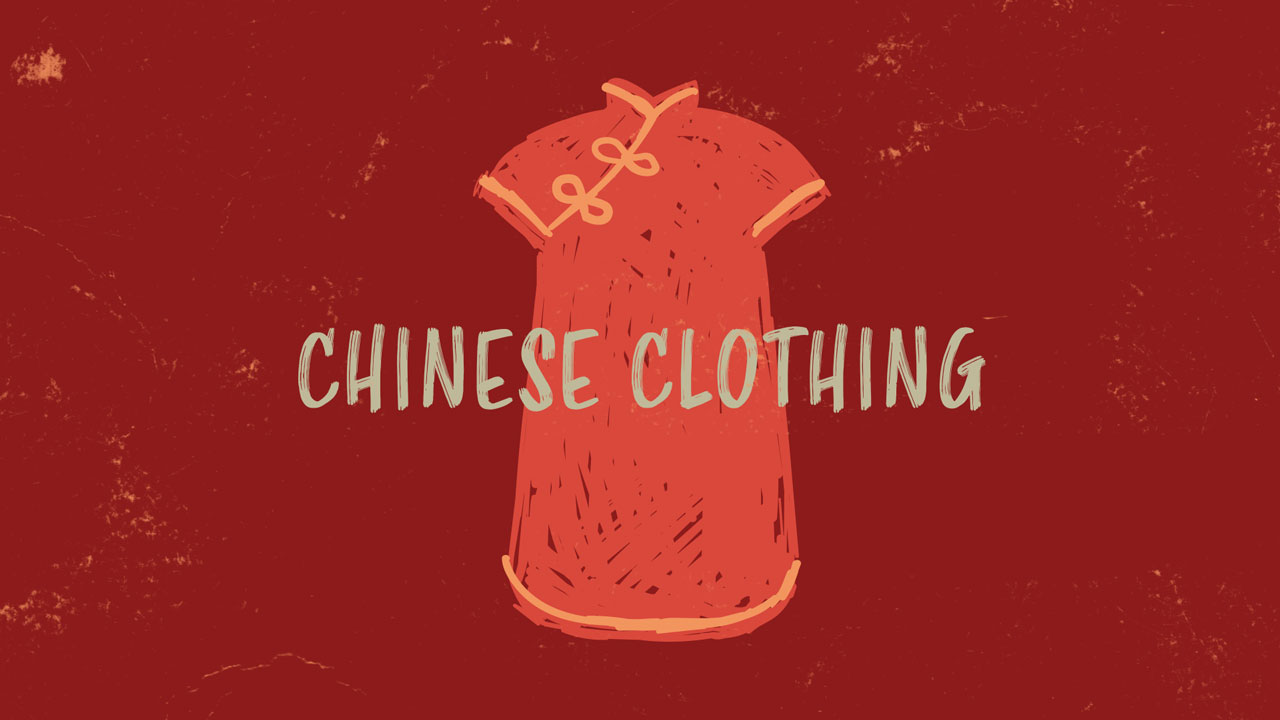
The ascent of the Manchu-led Qing Dynasty fundamentally altered the Chinese wardrobe. The ruling class mandated the adoption of Manchu styles, such as the changshan for men and the qipao (originally a loose, wide-cut robe) for women. This period introduced the "horse-hoof" cuff and the high, stiff collar. While the transition was initially met with resistance, the fusion of Han and Manchu styles eventually gave birth to the iconic form-fitting Cheongsam/Qipao seen in the 20th century, which evolved in 1920s Shanghai to incorporate Western tailoring techniques.
Ethnic Minority Apparel and Regional Diversity
While Han styles often dominate the international perception of Chinese dress, China’s 55 officially recognized ethnic minorities possess distinct sartorial traditions that reflect regional climates and spiritual beliefs.
The Dai and Southwestern Tropical Influences
The Dai people of Yunnan Province utilize clothing that reflects their proximity to Southeast Asia. Their attire typically consists of short, tight-fitting blouses and long, wrap-around skirts (sarongs). The use of light, breathable fabrics and bright floral patterns is a direct response to the tropical climate, while the silhouette emphasizes grace and fluidity, often seen in the traditional "Peacock Dance."
The Tibetan Plateau and Climate Resilience
Tibetan clothing is defined by the chuba, a long, wide-sleeved robe made from sheepskin or heavy wool. The chuba is designed for the extreme temperature fluctuations of the high-altitude plateau; it is worn tied at the waist, often with one sleeve dropped during the heat of the day and both sleeves wrapped tight at night. The heavy use of turquoise, coral, and silver jewelry in Tibetan attire serves as both an aesthetic choice and a portable form of wealth and religious devotion.
The Uyghur and Central Asian Heritage
Uyghur dress in the Xinjiang region highlights the group’s Silk Road heritage, featuring intricate Atlas silk—a traditional ikat-weaving technique known for its bold, bleeding colors. Men and women frequently wear the doppa, a four-cornered embroidered cap, which serves as a vital symbol of ethnic identity and Islamic cultural influence.
Symbolism, Materials, and Social Data
The choice of color and material in traditional Chinese clothing was rarely accidental. According to historical records, the "Five Elements" theory dictated color symbolism:
- Red (Hongse): Symbolizing fire, luck, and joy. It remains the mandatory color for traditional weddings.
- Yellow (Huangse): Representing the earth and the center. During the Qing Dynasty, "Imperial Yellow" was reserved exclusively for the Emperor; unauthorized use was a capital offense.
- White (Baise): Associated with metal and mourning. Unlike Western traditions, white is the primary color for funerals in China.
- Black (Heise): Symbolizing water and stability. It was frequently used in the earliest dynasties (such as the Qin) as a color of high status.
In terms of materiality, China remains the world’s leading producer of silk, accounting for approximately 80% of global production. Historically, silk was so valuable it was used as a form of currency along the Silk Road. Today, traditional embroidery techniques like Su Xiu (Suzhou embroidery) are recognized as National Intangible Cultural Heritages, with some hand-embroidered garments taking thousands of hours to complete and commanding prices in the tens of thousands of dollars.
The Modern Resurgence: The Hanfu Movement and Economic Impact
In the 21st century, Chinese clothing is undergoing a massive cultural revival driven by "Guochao" (National Tide), a trend where young consumers favor domestic brands that incorporate traditional elements.
The Hanfu Movement
The "Hanfu Movement" (Hanfu Yundong) began in the early 2000s as a grassroots effort among Gen Z and Millennials to reclaim Han Chinese identity. What started as a niche hobby has transformed into a multi-billion dollar industry. According to data from market research firm iiMedia Research, the number of Hanfu enthusiasts in China surpassed 10 million in 2022, with the market value of the Hanfu industry exceeding 10 billion yuan (approximately $1.4 billion USD). This movement has shifted Hanfu from being a "costume" worn only at festivals to "daily wear" (changfu) for commuting or socializing.
Global Haute Couture
Chinese aesthetics have also permeated the highest levels of global fashion. Renowned Chinese designer Guo Pei gained international fame for her "Yellow Queen" gown worn at the 2015 Met Gala, which utilized traditional imperial embroidery techniques. Major Western fashion houses, including Dior, Armani, and Valentino, have frequently released collections inspired by Chinese silhouettes and motifs. However, this has also led to increased scrutiny regarding cultural appropriation versus appreciation, prompting a more rigorous dialogue on the protection of traditional Chinese intellectual property in fashion.
Broader Impact and Future Implications
The revitalization of traditional Chinese clothing is more than a fashion trend; it is a strategic component of China’s "soft power" initiatives. By promoting traditional dress, the state and the public are fostering a sense of national pride and cultural continuity.
The implications for the global textile industry are significant. As demand for traditional fabrics like silk, linen, and ramie increases, there is a renewed focus on sustainable, natural fibers. Furthermore, the integration of traditional craftsmanship with modern e-commerce—driven by platforms like Taobao and Douyin—has created a new economic model for rural artisans who specialize in traditional weaving and embroidery.
In conclusion, Chinese clothing has evolved from a rigid system of social stratification into a dynamic medium of cultural identity and global economic influence. Whether through the minimalist lines of the Han Dynasty or the high-fashion adaptations of the modern era, Zhongguo fushi continues to be a vital expression of the Chinese spirit, bridging the gap between an ancient past and a globalized future. As the industry continues to grow, the fusion of historical reverence and contemporary innovation will likely ensure that Chinese apparel remains a cornerstone of the international fashion landscape.