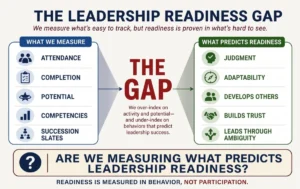




For decades, learning and development leaders have grappled with a deceptively simple, yet profoundly challenging question: "How do we know learning is working?" Historically, the answers have often been confined to readily available, albeit limited, metrics. Organizations became adept at tracking activity – the number of employees who attended a training session, completed an e-learning module, or achieved a certain score on an assessment. Feedback surveys also provided a snapshot of participant satisfaction. While these indicators offered a baseline understanding of engagement, they inadvertently created a significant gap: a struggle to demonstrate the tangible impact of learning on actual business outcomes.
This challenge is not new. Chief learning officers (CLOs) have long wrestled with the imperative to connect investments in employee development to the bottom line. However, the advent and rapid integration of artificial intelligence (AI) are now presenting a unique and powerful opportunity to finally bridge this divide. The conversation is shifting dramatically. It’s no longer solely about the quantity of individuals participating in a program, but increasingly about whether those individuals can perform differently, deliver superior outcomes, solve more complex problems, and ultimately contribute to the organization’s overarching strategic objectives. AI is not merely altering how employees acquire knowledge; it is fundamentally redefining how the effectiveness of that learning can be measured. Organizations that recognize and embrace this paradigm shift early are poised to elevate learning from a supportive function to a critical, strategic business capability.
The Measurement Problem Forged by Limited Data
The evolution of learning measurement occurred during an era when data availability was significantly constrained. Learning management systems (LMS) primarily offered access to records of attendance, course completions, assessment scores, and feedback surveys. Consequently, these metrics became the default indicators of success. However, for executive leadership, these numbers rarely translate into the crucial business concerns that drive strategic decisions. Business leaders are typically preoccupied with tangible outcomes such as enhanced productivity, fostering innovation, improving customer satisfaction, ensuring product or service quality, driving revenue growth, accelerating time-to-market, and mitigating operational risks.
This disconnect often left learning functions in a precarious position, caught between the metrics they could easily measure and the outcomes that business leaders genuinely cared about understanding.
Consider a common scenario within the dynamic IT industry. A global technology services company, for instance, might launch a comprehensive cloud transformation learning initiative aimed at upskilling its workforce for the shift to cloud-native technologies. Six months into the initiative, the learning team could proudly present a report highlighting:
- 95% completion rate for the cloud fundamentals e-learning module.
- 80% of employees achieved certification in a key cloud platform.
- An average satisfaction score of 4.5 out of 5 from participant feedback surveys.
While these figures represent significant engagement and knowledge acquisition, the executive team’s response might be a pragmatic inquiry:
- "Have we seen a measurable increase in our cloud adoption rate?"
- "Are our cloud-related project delivery times improving?"
- "Has customer satisfaction with our cloud services seen a notable uplift?"
In many instances, the learning team would likely lack a clear, data-driven answer to these critical questions. This deficiency isn’t necessarily a reflection of learning program failure, but rather a consequence of traditional measurement approaches that were never designed to address these specific business impact inquiries.
The Transformative Power of Artificial Intelligence
Artificial intelligence introduces a capability that learning functions have historically lacked: the ability to seamlessly connect and interpret data across a multitude of disparate organizational systems. In today’s complex business environment, organizations generate vast quantities of information across various platforms and touchpoints, including:
- Customer Relationship Management (CRM) systems: Detailing customer interactions, satisfaction levels, and purchase history.
- Enterprise Resource Planning (ERP) systems: Tracking operational efficiency, financial performance, and supply chain metrics.
- Project management tools: Monitoring project timelines, resource allocation, and delivery success rates.
- Productivity and collaboration platforms: Revealing team dynamics, communication patterns, and task completion efficiency.
- Sales and marketing automation tools: Indicating lead conversion rates, campaign effectiveness, and revenue pipelines.
- Customer support ticketing systems: Highlighting recurring issues, resolution times, and customer pain points.
Historically, these critical datasets have resided in isolated silos, making it exceedingly difficult to draw comprehensive insights or establish meaningful correlations. AI changes this by enabling organizations to identify intricate patterns, subtle relationships, and predictive indicators across these disconnected sources. This newfound analytical power allows learning leaders to begin answering questions that were previously out of reach, such as:
- "To what extent does proficiency in [specific skill] correlate with higher customer retention rates?"
- "Can we predict which employees are most likely to excel in new roles based on their learning engagement and performance data?"
- "How does participation in [specific leadership development program] impact team productivity and employee engagement scores?"
The focus of learning measurement thus shifts dramatically from simply tracking activity to generating actionable outcome intelligence.
Learning’s New Mandate: Cultivating Business Capability
Perhaps the most significant shift confronting learning leaders is philosophical rather than purely technological. Learning functions must evolve beyond their traditional role as mere providers of training experiences. Instead, they must embrace the identity of architects of business capability. Capability represents the crucial intersection where learning strategy and overall business strategy converge. When viewed through this transformative lens, learning measurement naturally evolves. The primary objective becomes understanding whether specific capabilities within the workforce are demonstrably improving and, critically, whether those enhanced capabilities are directly influencing desired business outcomes. As a seasoned observer in the field aptly put it, "Learning should not be measured by how many people completed a program, but by how many people became capable of doing what the business needs next."
The IMPACT Framework: A Structured Approach to Learning Measurement
To assist organizations in rethinking and restructuring their approach to learning measurement, a robust framework is essential. Based on extensive experience and observation, the IMPACT framework offers a practical, step-by-step methodology:
I – Identify Strategic Outcomes
Every learning initiative must be initiated with a clearly defined business objective. Without this foundational alignment, demonstrating value becomes an insurmountable challenge. Examples of strategic outcomes include:
- Increasing market share in a specific segment.
- Reducing operational costs by a defined percentage.
- Accelerating the launch of new products or services.
- Improving customer satisfaction scores by a target margin.
- Enhancing cybersecurity posture to mitigate risk.
If a learning program cannot be directly connected to a quantifiable strategic outcome, its inherent value becomes difficult to articulate and prove.
M – Map Capability Requirements
Once strategic outcomes are identified, the next crucial step is to meticulously determine the specific capabilities required to achieve them. These capabilities act as the essential bridge between learning interventions and desired business performance. For instance, a company embarking on a digital transformation initiative might require capabilities such as:
- Cloud architecture expertise: To design and implement scalable cloud solutions.
- Agile development methodologies: To foster faster iteration and response to market changes.
- Data analytics proficiency: To derive actionable insights from complex datasets.
- Cybersecurity awareness and best practices: To protect digital assets.
These capabilities, when developed across the workforce, directly contribute to the realization of strategic objectives.
P – Predict Performance Influencers
Leveraging AI, organizations can move beyond reactive measurement to proactively identify the factors that significantly influence employee performance. These influential factors may include:
- Access to relevant knowledge resources: The availability of up-to-date documentation and best practices.
- Effective mentorship and coaching: Guidance from experienced peers or leaders.
- Timely feedback mechanisms: Regular performance feedback to foster growth.
- Adoption of specific tools or technologies: The proficient use of new software or platforms.
- Engagement in collaborative problem-solving: Participation in team-based initiatives.
Understanding these underlying drivers allows learning leaders to strategically allocate resources and design interventions that have the greatest potential impact.
A – Analyze Learning Signals
Instead of relying solely on traditional completion data, AI enables the analysis of richer, more nuanced learning signals. These indicators provide a deeper insight into the actual development of capabilities:
- Time spent on specific learning modules: Revealing areas of difficulty or particular interest.
- Application of learned concepts in practice: Observing how knowledge is translated into action through project work or problem-solving.
- Contribution to knowledge-sharing platforms: Indicating proactive engagement and expertise.
- Performance on simulations or practical assessments: Measuring the ability to apply skills in realistic scenarios.
- Peer feedback on skill application: Gathering insights from colleagues on observed competence.
These signals offer a more holistic view of capability development than simple course completion rates.
C – Connect Learning to Business Metrics
This stage represents the core transformation in learning measurement. Organizations can begin to establish direct correlations between learning investments and critical business metrics:
- Reduced customer churn rates: Linked to improved customer service training.
- Increased sales revenue: Attributed to enhanced sales enablement programs.
- Faster product development cycles: Resulting from upskilling in agile methodologies.
- Lower error rates in production: Stemming from improved quality control training.
- Higher employee retention: Correlated with effective leadership development programs.
By demonstrating these connections, learning is no longer viewed as an overhead cost but as a direct contributor to tangible business performance.
T – Track and Refine Continuously
Learning measurement should not be a static, annual exercise. AI facilitates continuous monitoring, empowering leaders to make real-time adjustments to learning interventions and strategies based on ongoing performance data. This iterative approach ensures that learning remains agile and responsive to evolving business needs.
A Practical IT Industry Example: From Certification to Business Performance
Consider an IT organization undergoing a significant transition from traditional software development to cloud-native engineering. Historically, success might have been measured solely by the number of employees who obtained cloud certifications. An AI-powered approach, however, examines broader outcomes.
The organization begins by analyzing:
- Project timelines and delivery success rates for cloud-native projects.
- Customer feedback on the performance and reliability of cloud-based services.
- Internal incident reports and resolution times for cloud infrastructure.
- Developer productivity metrics within cloud environments.
- Employee engagement and retention rates among the cloud engineering teams.
AI then identifies a compelling correlation: teams demonstrating stronger cloud architecture and DevOps capabilities (as indicated by richer learning signals and practical application) also exhibit:
- A 20% faster deployment frequency for new features.
- A 15% reduction in critical production incidents.
- A measurable improvement in customer satisfaction scores related to cloud service performance.
Suddenly, the discussion around learning shifts from a cost center debate to a critical driver of business performance. This fundamental change in perception and measurement has profound implications for how learning is prioritized and funded.
Moving from Reporting to Insight Generation
Many current learning dashboards function primarily as reporting tools, offering a retrospective view of what has occurred. The future, however, lies in insight generation. Reporting tells us what happened, while insight helps explain why. Predictive intelligence, powered by AI, then goes a step further by helping to determine what should happen next. This progression represents the next evolutionary leap in learning analytics. The Chief Learning Officer of the future will not merely review static dashboards; they will leverage AI-powered intelligence to guide strategic workforce capability decisions, proactively shaping the organization’s future success.
The Human Element in Measurement
While AI significantly expands the possibilities for analytical depth, learning leaders must be vigilant to avoid a common trap: becoming overly reliant on quantitative data at the expense of human understanding. It is crucial to remember that:
- Context is paramount: AI can identify correlations, but human judgment is needed to understand the nuances and causal relationships within specific business contexts.
- Qualitative feedback remains vital: Employee experiences, anecdotal evidence, and direct feedback from managers provide invaluable qualitative insights that complement quantitative data.
- Change management requires empathy: Implementing new learning strategies and fostering capability development necessitates understanding human motivations, potential resistance, and the importance of supportive leadership.
Organizations that successfully balance sophisticated analytics with deep human understanding will undoubtedly generate the most meaningful and sustainable outcomes. Ultimately, capability development is a fundamentally human endeavor. Technology serves as a powerful tool to reveal patterns and illuminate opportunities, but it is people who drive transformation.
Looking Ahead: The Evolving Role of the CLO
The next decade promises to redefine the role and impact of the Chief Learning Officer. The most successful CLOs will transcend traditional responsibilities such as course management and content curation. They will:
- Become strategic business partners: Actively contributing to the development of business strategy by identifying capability gaps and opportunities.
- Champion data-driven decision-making: Utilizing AI-powered insights to inform all aspects of workforce development.
- Design and orchestrate capability ecosystems: Creating integrated learning and development strategies that foster continuous growth and adaptability.
- Foster a culture of continuous learning and experimentation: Encouraging employees to embrace new knowledge and skills.
Organizations that embrace this transformative shift will gain far more than just improved learning metrics. They will cultivate a more capable and agile workforce, build a more resilient and adaptable organization, and ultimately secure a stronger, more sustainable competitive advantage in the marketplace. The future of learning measurement is not simply about tracking what individuals learned yesterday; it is about understanding and actively shaping how learning empowers organizations to succeed tomorrow.