


Software engineering has long been viewed as the ultimate testing ground for artificial intelligence. With structured syntax, vast repositories of open-source training data, and clear logical parameters, programming seemed uniquely suited to large language models. For months, industry observers watched as AI adoption swept through development teams, with Silicon Valley firms reporting staggering productivity gains. Yet, beneath the glossy marketing campaigns and promises of hyper-efficient workflows, a more complicated and sobering reality has emerged. What once appeared to be a seamless technological revolution is now revealing critical vulnerabilities, forcing developers and enterprise leaders to reevaluate the true cost of outsourcing code creation to algorithms.
The Genesis of the Coding AI Boom
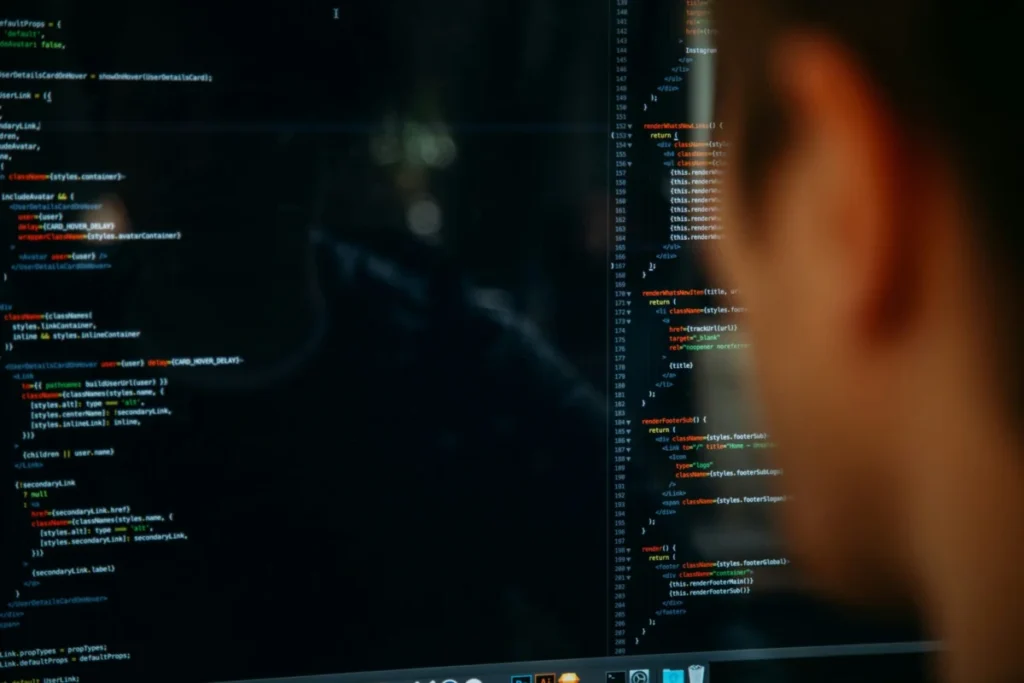
The rapid integration of generative artificial intelligence into software development cycles accelerated dramatically over the past year. Earlier in the winter, industry surveys of software developers revealed a profound shift in how professionals approached their daily tasks. Rather than manually writing boilerplate code, debugging line by line, and managing integrated development environments, a growing segment of engineers began relying entirely on autonomous AI coding agents.
Tools like advanced terminal-based agents—exemplified by platforms such as Claude Code—allowed developers to interact with their systems purely through natural language prompts. Engineers reported sweeping efficiency gains, with tasks that traditionally required a week of labor shrinking down to a matter of days. To many insiders, this transition felt irreversible. Software development was heralded as the undisputed poster child for artificial intelligence, offering a glimpse into a future where human labor would be entirely augmented, if not replaced, by autonomous computational systems.
From Productivity Marvel to Production Crisis
However, the initial euphoria surrounding fully automated coding workflows has recently encountered severe friction. Experiences from senior engineers working within competitive Silicon Valley firms highlight a growing crisis of reliability. While AI-generated code is often syntactically impressive and functions seamlessly in isolated testing environments, it harbors subtle, hard-to-spot architectural flaws.
Recent accounts from seasoned software architects illustrate the tangible dangers of over-reliance. Several developers have reported catastrophic system failures—including production crashes directly linked to features generated entirely by AI coding agents. In some cases, quality assurance issues of this magnitude have resulted in severe reprimands from executive leadership, with engineers facing termination over recurring bugs.
The core dilemma lies in the cognitive friction of code review. Software engineering principles have long dictated that understanding code written by someone else is notoriously difficult. When that code is generated instantaneously by an artificial intelligence, the temptation to bypass rigorous code review becomes overwhelming, particularly in high-pressure environments obsessed with maximizing velocity and output. As engineers race to achieve arbitrary productivity metrics, critical evaluation falls by the wayside, resulting in unstable production systems and systemic technical debt.
The Human Cost: The Erosion of Junior Expertise
Beyond immediate reliability concerns, the widespread adoption of AI coding assistants threatens the long-term pipeline of technical talent within the technology sector. Industry veterans point to a worrying trend: when junior developers rely exclusively on AI to generate code, they are deprived of the fundamental struggle required to master software architecture and debugging.
Writing code manually—slowly and deliberately—is often the only way developers truly internalize complex system logic. By bypassing this foundational learning curve, the industry risks cultivating a generation of programmers who can prompt an AI to write code, but lack the deep expertise required to diagnose systemic failures or design resilient, large-scale infrastructure.
Compounding these human and operational hurdles are shifting economic realities. As major frontier AI laboratories begin scaling back heavy subsidies on computing power, the financial cost of running continuous, token-heavy AI agents is rising. Organizations that once embraced unrestricted token consumption are discovering that brute-force AI generation is rapidly becoming financially unsustainable.
Rethinking the Role of AI in the Enterprise
In response to these compounding challenges, a notable paradigm shift is underway across Silicon Valley. Disillusioned engineers are abandoning the practice of wholesale code outsourcing, returning instead to traditional, manual programming methodologies supplemented by narrow, highly targeted AI applications.
Under this revised framework, large language models are no longer viewed as autonomous replacements for human developers, but rather as specialized utility tools. Engineers are finding optimal utility in delegating tedious, highly constrained administrative tasks to AI—such as writing automated testing suites, drafting rudimentary documentation, or generating throw-away utility scripts. Meanwhile, core application logic, architectural design, and complex problem-solving remain firmly in human hands.
This recalibration reflects a broader maturation in how the technology sector perceives artificial intelligence. Throughout the past year, aggressive public relations campaigns by major AI developers fostered a narrative of exponential, world-altering breakthroughs occurring on a weekly basis. However, an objective examination of these advancements reveals that nearly all major milestones have remained confined to highly structured domains like mathematics and computer programming—areas benefiting from unambiguous rules and massive training datasets.
Broader Implications for the Future of Work
The struggles encountered within software engineering serve as a vital case study for the integration of artificial intelligence across other professional sectors. If an industry as structurally predisposed to AI adoption as software development is grappling with reliability, workflow degradation, and quality control, other fields must approach implementation with measured caution.
This transitional phase does not imply that artificial intelligence is a failed experiment. The proficiency of modern language models in parsing syntax, translating languages, and accelerating specific technical processes remains an undeniable asset to the modern workforce. However, the software industry’s recent turbulence underscores a necessary truth: artificial intelligence is not a magical solution capable of instantaneously resolving complex human challenges.
As the initial hype cycle subsides, the technology sector is discovering that sustainable integration requires patience, rigorous oversight, and realistic expectations. By treating artificial intelligence as a powerful, conventional tool rather than an infallible oracle, enterprises can move past the limitations of the current boom and build resilient workflows that endure well into the future.