


In the early 2000s, British Columbia was on a trajectory of growth and optimism. As the province sought to transition its economy from resource extraction to a knowledge-based, technologically advanced future, a significant investment was made in its post-secondary education system. This ambitious vision, championed by the then-new B.C. Liberal government, aimed to signal a commitment to innovation and human capital development. The cornerstone of this initiative was a pledge of $1 billion by then-Premier Gordon Campbell, intended to create 25,000 new student seats by 2010. The majority of this funding was strategically allocated to the construction of new campuses and infrastructure, with a more modest portion designated for the crucial personnel of staff and faculty.
This expansionary phase continued into 2008, a period of perceived exuberance for higher education. In a move that significantly reshaped the provincial educational landscape, five colleges were transformed into "special-purpose universities." While this rebranding offered a new status and perceived prestige, it was not matched by a commensurate increase in operational funding. Instead, the system was implicitly encouraged to rely on international student tuition fees to cover any emerging financial gaps. This strategy, initially seen as a pragmatic solution to budgetary constraints, would later prove to be a precarious foundation for the province’s educational institutions.
The International Student Lifeline and Its Sudden Severance
The reliance on international student tuition became a critical component of the financial model for many B.C. post-secondary institutions. By the 2023-24 academic year, international students constituted approximately 175,000 enrolments, accounting for up to 40% of the student body at certain B.C. institutions. This demographic represented a vital revenue stream, enabling institutions to maintain operations and expand programs.
However, this crucial lifeline was abruptly and severely restricted in late 2023 and early 2024 by a federal Liberal government. Facing mounting public pressure and reports of systemic abuses, particularly in Ontario, Ottawa announced significant cuts to the number of study permits. An initial 35% reduction in study permits for 2024 was followed by a further 45% cut implemented in the subsequent year. In December 2023, the federal government authorized 32,596 study permits for British Columbia, a figure that, while offering some relief, still represented a substantial decrease. A partial exemption for graduate students in 2026 provided a glimmer of hope, but the immediate impact was undeniable. Notably, in a significant shift from the previous year when only 53% of study permits were allocated to public institutions, the province directed 80% to public institutions and only 20% to private ones in the latest allocation. This policy change, intended to prioritize public institutions, underscored the broader federal government’s intent to rebalance the international student recruitment landscape.
A System Under Strain: Deficits and Declining Reserves
The repercussions of these federal policy shifts have been profound. After years of navigating the COVID-19 pandemic, during which institutions were granted provincial permission to operate with deficits, the subsequent reductions in international student enrolment have pushed a record number of B.C. post-secondary institutions into precarious financial territory. Many are now operating on dwindling reserves or running significant deficits, raising concerns about their long-term viability.
The "Reckoning": A Comprehensive Review of Post-Secondary Education
In response to these mounting challenges, the provincial government initiated a comprehensive review of its public post-secondary system in November 2023. This review encompasses 25 institutions, including five research universities, six teaching universities, three specialized institutes, and eleven colleges, spread across the geographically diverse province. The scope of this review is substantial, given that the system currently receives $3.4 billion in government funding for approximately 450,000 domestic and international students. Crucially, the review’s mandate explicitly states that no new funding will be made available, signalling a period of significant adjustment and potential restructuring. The province’s February budget, which indicates a deepening deficit, offered no immediate financial relief for the sector, reinforcing the expectation that the review will necessitate difficult decisions.
Annabree Fairweather, Executive Director of the Confederation of University Faculty Associations of British Columbia, described the impending review as a "generational transformation," warning of potential institutional closures. She highlighted the particular vulnerability of "special-purpose teaching universities," which were often established with less robust foundational funding. The Federation of Post-Secondary Educators of BC echoed these concerns, with Executive Director Michael Conlon characterizing the situation as a "crossroads." He emphasized that British Columbia, heavily reliant on international student revenue after Ontario, is now facing a "real reckoning" about the future of its post-secondary sector. The review, he noted, is "filled with red flags about what they’re up to."
The B.C. Federation of Students has also voiced significant dismay, with regular reports of program cuts occurring even before the review’s conclusions are finalized. Federation Chair Debi Herrara Lira cited 177 program closures since 2024, including the gerontological nursing program at Selkirk College and the social worker diploma at the College of New Caledonia. These cuts, she warned, will have a detrimental impact on students, potentially delaying graduations, necessitating relocation, or resulting in the complete loss of access to higher education.
A Shifting Economic Focus and Targeted Investments
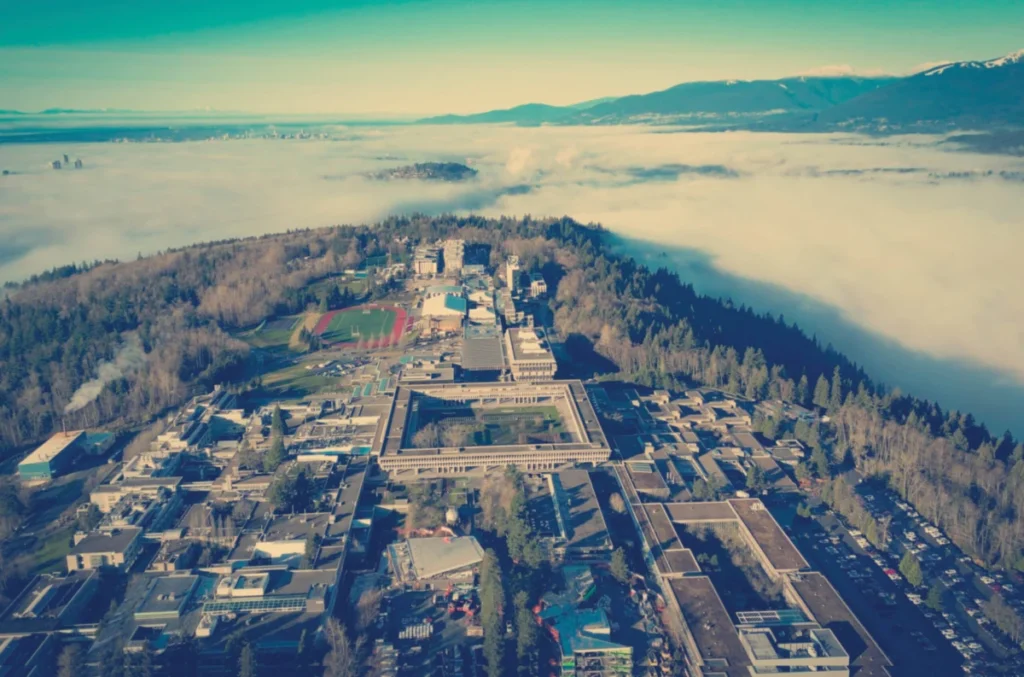
While the review grapples with systemic financial challenges, the provincial government continues to emphasize the post-secondary system’s role in strengthening British Columbia’s economy. This focus has led to targeted investments in key areas. Simon Fraser University (SFU) will receive $520 million over the next few years to establish a new medical school in Surrey, the first in Western Canada in six decades, scheduled to admit students in August. Additionally, $241 million has been allocated for trades training, aimed at addressing equipment and operational shortfalls in these often-expensive programs at institutions like Thompson Rivers University, the B.C. Institute of Technology, Vancouver Community College, and various rural campuses.
Administrators at universities and colleges have welcomed these new investments, recognizing their potential to address specific needs. However, there is a widespread acknowledgment that a significant systemic shift is inevitable. Joy Johnson, President of SFU, one of the province’s five research universities, described the system as being under "incredible stress." She pointed to the persistent issue of provincial grants failing to keep pace with rising costs, compounded by the "unannounced tsunami" of federal international student permit reductions. Furthermore, post-secondary institutions are increasingly being tasked with supporting a growing stream of provincial social initiatives, including drug-overdose prevention, naloxone training, sexual-assault response, and anti-racism education, often without adequate funding increases.
Dr. Johnson indicated that a scaling back and a close examination of each institution’s role within the broader system are necessary. She suggested that there may be an overabundance of niche course offerings with low student enrolment and that the era of inter-institutional competition may be drawing to a close. The challenge lies in precisely calculating how to achieve this efficiency, particularly while adapting to the demand for new degrees and training in emerging fields such as artificial intelligence and sustainable energy engineering.
Long-Standing Issues Under the Spotlight
The current crisis is exacerbated by pre-existing structural issues that have been identified repeatedly over the past two decades, including in a provincial review ordered in 2022. These persistent problems include a perplexing block funding system that appears disconnected from enrolment numbers, nearly two decades of a two-percent-per-year tuition increase cap that has widened inequities between institutions, and a slow decline in domestic student enrolment. The mandates of the newly established teaching universities have also become muddled, leading to confusion regarding their research responsibilities and program offerings.
The 2022 review, led by former Deputy Premier Don Wright, heavily focused on financial challenges and the overreliance on international students, who pay significantly higher tuition fees than domestic students. Wright’s interim report, obtained by the B.C. Federation of Students through a freedom of information request, highlighted that block funding amounts bore no correlation to student numbers or enrolment targets. Furthermore, institutions faced no financial consequences for under-delivering on their targets, nor did they receive additional funding for exceeding them. Wright critiqued this "zero-consequence funding approach," suggesting it fostered a management culture of complaint rather than proactive management.
University and college representatives also voiced concerns to Wright about their over-reliance on a volatile funding source from a limited number of countries. At that time, international students represented 30% of total enrolment, a level at which administrators began to observe "internal pushback from domestic students and faculty." The report concluded that a "material increase" of approximately $200 million annually would be required to stabilize the system, warning that without such an increase, the funding review would be a "zero-sum exercise with absolute winners and losers."
The Impact of Federal Policy on Institutional Operations
The subsequent federal cap on international study permits has dramatically amplified these financial pressures. Institutions are now scrambling to compensate for diminished government funding and tuition revenue. Kwantlen Polytechnic University, where international students constituted roughly 40% of its 2022 enrolment, has had to implement significant adjustments. Langara College, with international students representing 39% of its 2022-23 enrolment, has been forced to lay off over 150 faculty members. Even at the University of British Columbia (UBC), the province’s largest university, leaders are grappling with the fallout from the international student visa caps, which President Benoit-Antoine Bacon described as "damaging to Canadian higher education." UBC is actively engaging with government and sector partners to ensure its continued ability to attract international students.
The current review’s stipulation of no new funding underscores the "zero-sum, winners versus losers" scenario outlined by Don Wright. This has led to widespread speculation about potential amalgamations, streamlining, consolidations, or closures. The review’s recommendations, to be released in April by former deputy minister Don Avison, are highly anticipated.
B.C.’s Post-Secondary Education Minister, Jessie Sunner, has refrained from offering specific predictions but has not ruled out any possibilities. She has encouraged Avison to be "bold and brave" in his recommendations, aiming for creative and innovative solutions that maintain accessibility and affordability. The minister emphasized the need for long-term stability and operational resilience, ensuring the sector is not solely at the "whims of a federal government change or something else happening in the world." Sunner also acknowledged the historical context of the 2008 college-to-university transformations, describing it as a "different time" with "well-intentioned" goals, but noting that the current reality makes it unfeasible for every institution to be "everything to everyone."
Shock-Proofing the Future: Navigating Geographical and Accessibility Challenges
For British Columbia, the path to efficiency is complicated by its vast geography and its long-standing commitment to making post-secondary education accessible to as many citizens as possible. This commitment often necessitates smaller class sizes and fewer opportunities for economies of scale, particularly for institutions serving remote or less populated areas. Many institutions are actively campaigning to redefine their core focus rather than face potential absorption by larger neighbours or outright closure.
Dennis Johnson, interim president of Vancouver Island University (VIU), formerly Malaspina College, acknowledges the critical juncture his teaching university faces. He adamantly rejects comparisons to Laurentian University, which faced creditor protection, asserting VIU’s resilience. Johnson stated that efforts over the past two years are yielding results, including the phasing out or suspension of 18 programs and the discontinuation of others, such as the Master’s program in Community Planning and the Dental Hygiene Assistant certificate. He expressed confidence that VIU will emerge from its financial challenges.
Similar program and course adjustments are underway or anticipated at other institutions. At the University of Northern British Columbia (UNBC) in Prince George, interim president Bill Owen initiated a program review process four years ago, well before the recent international student cap disrupted the sector. UNBC, unlike VIU, had reserves to draw upon, having used $2.5 million last year and planning to dip into them again this year before returning to a stable financial position.
Despite the anxieties surrounding the review, university presidents highlighted collaboration and technology as key areas for system-wide improvement without significant cost increases. British Columbia’s post-secondary system is already relatively well-integrated, with a robust transfer credit system facilitating student mobility between public institutions. This system allows students to seamlessly transition from college to university or to acquire specific courses from any institution to meet credential requirements. Ajay Patel, President of Vancouver Community College (VCC), noted the growing trend of students accessing courses across multiple institutions to complete their programs, facilitated by efficient transit networks. He emphasized the "huge opportunity to collaborate across all areas of study."
Technology is also playing a crucial role in delivering education more flexibly, reducing the need for long-distance travel for in-person classes, with examples including haptic gloves for trades training and virtual nursing simulations. Dr. Airini, President of Thompson Rivers University (TRU), highlighted a different form of collaboration: the integration of teaching and research functions to serve community needs. This "use-inspired research" model allows universities to respond to local challenges, such as flood mitigation or innovation in trades.
Institutions outside the Lower Mainland are particularly eager to see a resurgence in international student enrolments, recognizing the invaluable diversity and educational benefits they bring. Dr. Airini, who pursued her PhD in Canada as an international student, stressed the importance of this global perspective.
As post-secondary leaders continue to advocate for federal policy changes, they face difficult decisions regarding program cuts, reliance on reserves, and mounting debt. Bill Owen at UNBC views the current situation as an opportunity to build a more resilient post-secondary system, capable of weathering future crises. He stated, "We’ve been framing this as resilience, because in two more years, there’s going to be a different crisis that hits us." This forward-looking perspective underscores the need for a fundamental re-evaluation and strategic adaptation within British Columbia’s post-secondary landscape.