


Last fall, a discreet yet profoundly significant closed-door meeting convened at the Vatican, bringing together an eclectic assembly of religious thinkers, distinguished academics, and prominent figures from the global technology industry to deliberate on the burgeoning field of artificial intelligence (AI) ethics. Among the participants was Meghan Sullivan, a noted philosopher from the University of Notre Dame, whose observations from this gathering have shed light on the complex interplay of technological ambition and fundamental human values now confronting society.
The Vatican Meeting: A Nexus of Faith and Future
The gathering, held in the historic heart of the Catholic Church, underscored the Vatican’s increasing recognition of AI’s transformative potential and its inherent ethical challenges. For decades, the Holy See has consistently engaged with pivotal scientific and technological advancements, from nuclear energy to bioethics, always grounding its discourse in a profound commitment to human dignity and the common good. This latest initiative on AI ethics, building upon earlier efforts such as the “Rome Call for AI Ethics” in 2020, marked a critical escalation in its outreach, seeking to foster a dialogue that transcends purely technical or economic considerations. The objective was to cultivate a shared understanding of AI’s moral implications, ensuring its development remains aligned with humanity’s deepest aspirations rather than succumbing to unbridled progress.
Sullivan recounted attending an optional Catholic Mass in an ancient church on the first morning of the meeting. Her surprise was palpable upon observing one of the tech industry’s leading executives, typically associated with casual attire and Silicon Valley’s fast-paced culture, quietly participating in the service. Dressed in a brown suit and tie, the executive absorbed the sanctuary’s ambiance as dawn broke through the windows. Following the service, their conversation revealed the executive was not Catholic. When asked about his presence, his response was both candid and revealing: “We’re building something that is going to change life as we know it. I want to make sure I keep in touch with what humans have always cared about. This is a place that takes care of those values.” This statement encapsulated a growing sentiment within the tech world—a realization that while technology can reshape the future, the enduring questions of meaning, purpose, and human flourishing often find their answers in ancient traditions and philosophical frameworks.
The "Religious Fervor" of AI Development
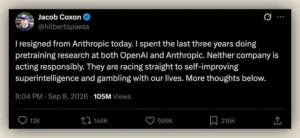
The interaction at the Vatican, while seemingly innocuous, resonated with a deeper, more unsettling observation regarding the contemporary AI industry. Commentators like Elizabeth Lopatto have highlighted what they describe as a "religious fervor" permeating the sector, where the focus has seemingly shifted from developing practical tools to "inventing the future" itself. This paradigm casts AI companies in a dual role: as both priests, interpreting the digital deity they believe they are summoning, and prophets, foretelling its impending "holy wrath" or utopian promises. The allure of such a grand narrative is undeniable, offering executives a sense of profound purpose and historical significance. However, this narrative, critics argue, risks conflating technological progress with moral imperative, potentially overshadowing the immediate ethical responsibilities inherent in developing such powerful tools.
The enthusiasm for what AI can achieve has, at times, blurred the lines between innovation and evangelism. Reports indicate that global investment in AI soared past $150 billion in 2023, with projections reaching into the trillions within the next decade. This exponential growth fuels an environment where the pursuit of cutting-edge capabilities often takes precedence over a measured consideration of long-term societal impacts. The perceived inevitability of AI’s transformative power has led some to advocate for radical societal adjustments, such as universal basic income (UBI), to mitigate widespread job displacement, or to envision futures populated by "machines of loving grace." These visions, while sometimes framed as pragmatic foresight, are increasingly viewed by external observers, including the Vatican, as expressions of technological hubris—a modern-day "Tower of Babel" constructed not of bricks and mortar, but of GPUs and algorithms.
Pope Leo XIV’s Call for "Magnifica Humanitas"
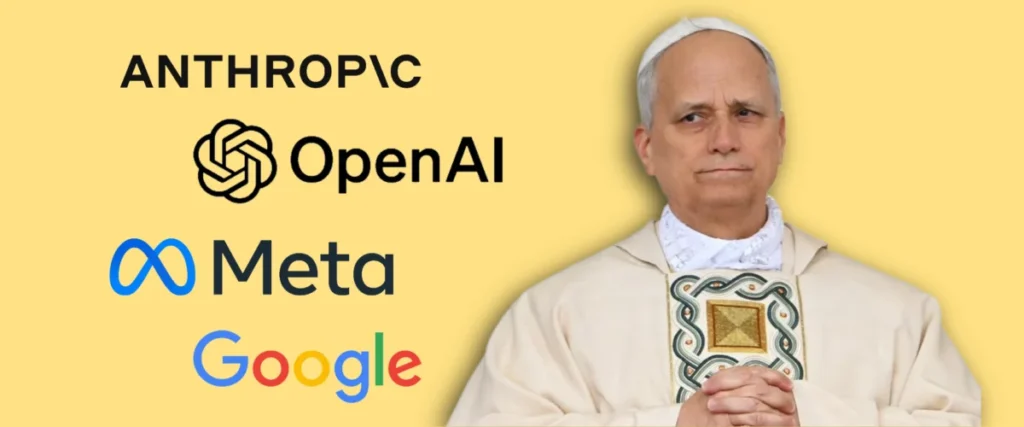
In a powerful intervention that captured global attention, Pope Leo XIV released a monumental 42,000-word encyclical titled “Magnifica Humanitas” (Magnificent Humanity) on May 15, 2026. This comprehensive document, a landmark in papal teachings, represented the Catholic Church’s most extensive official response to the multifaceted challenges posed by artificial intelligence. While the full implications of the encyclical continue to be analyzed by theologians, ethicists, and policymakers worldwide, early summaries highlighted its firm stance against an uncritical embrace of an AI-driven future.
The encyclical’s central message is a profound exhortation to humanity to prioritize the common good and preserve human dignity above all technological advancements. Pope Leo XIV, speaking with the moral authority of a shepherd and a father, implored: “With the heart of a shepherd and a father, I ask everyone to abandon the construction of yet another Tower of Babel and to join forces in building up the common good, so that humanity will never lose its beauty, and the world once again will come to recognize the human heart as the place where God desires to dwell.” This evocative imagery directly challenges the notion of technological determinism, where humanity passively accepts an "inevitable" future dictated by machines. Instead, it calls for a deliberate, ethical stewardship of technology, emphasizing that tools should serve humanity, not dictate its destiny.
The Pope’s analogy of the Tower of Babel is particularly potent in this context. In biblical narrative, the Tower of Babel symbolizes human pride and ambition leading to disunity and confusion. In the context of AI, it warns against unchecked technological ambition that seeks to transcend human limitations without regard for ethical boundaries or societal fragmentation. The encyclical implicitly critiques the narrative of AI as an autonomous force demanding adaptation rather than a human creation requiring responsible guidance. It underscores that true progress is not merely about what technology can do, but what it should do, always upholding the inherent worth and dignity of every individual.
The Shifting Sands of Tech Executive Discourse
Coincident with the Vatican’s forceful ethical pronouncement, a noticeable shift in rhetoric has begun to emerge from some of the most influential figures in the technology industry. This evolution suggests a growing awareness, whether born of genuine reflection or strategic adaptation, of the public and ethical scrutiny surrounding AI.
Nvidia CEO Jensen Huang, a titan in the semiconductor industry crucial to AI’s development, recently took a surprisingly direct stance against executives using AI as a pretext for mass layoffs. He reportedly "called BS" on such claims, labeling the excuse as "lazy" and merely "a way for them to sound smart." This statement comes amidst a period where concerns about AI-driven job displacement have intensified, fueled by earlier predictions from some tech leaders. For instance, a recent survey conducted by the Pew Research Center in early 2026 indicated that 68% of respondents expressed anxiety about AI’s potential impact on employment, with 45% believing it would lead to significant job losses across multiple sectors within five years. Huang’s remarks challenged the notion that AI is solely a job-destroying force, suggesting that responsible leadership involves leveraging AI for productivity gains and new job creation, rather than as a convenient scapegoat for cost-cutting measures.
Perhaps even more striking was the admission by Sam Altman, CEO of OpenAI, a leading developer of advanced AI models. Just last week, Altman reportedly conceded that he had been "pretty wrong" about his earlier, more dire predictions regarding AI’s potential to automate vast numbers of jobs. This public retraction from a figure often associated with the most transformative and sometimes unsettling visions of AI’s future marks a significant turning point. Altman had previously been a vocal proponent of concepts like universal basic income as a necessary societal adaptation to widespread AI-induced unemployment. His revised perspective, shared during a tech conference, acknowledged that while AI would undoubtedly change job functions, the scale of complete job automation and displacement might have been significantly overestimated.
These recent shifts in tone from influential tech executives, while welcomed by many, are open to interpretation. Some analysts view them as a genuine recalibration of expectations, reflecting a more nuanced understanding of AI’s practical deployment and societal integration. Others suggest they represent a strategic pivot—a form of "PR damage control" in response to mounting public anxiety, increasing regulatory pressure from governments worldwide, and the moral authority asserted by institutions like the Vatican. Regardless of the underlying motivation, the move away from alarmist rhetoric and towards a more grounded discussion about AI’s practical applications and ethical development is a positive development. It signals a potential for the industry to move beyond the "religion" of inventing the future and instead focus on building useful, human-centric tools that genuinely contribute to the common good.
Broader Implications and the Path Forward
The confluence of the Vatican’s robust ethical framework and the evolving discourse within the tech industry carries profound implications for the future trajectory of AI. The period during which many tech leaders "cosplayed as solemn x-risk sages"—projecting apocalyptic scenarios of job loss or existential threats—undoubtedly sowed widespread anxiety and fear among the populace. A 2025 global survey by Edelman Data & Intelligence revealed that public trust in AI developers stood at a mere 38%, largely due to concerns about job security, privacy, and control. Rebuilding this trust will be a formidable challenge, requiring sustained transparency, accountability, and a demonstrated commitment to ethical development. The "p(doom) genie" (probability of doom) that was let out of the bottle may take considerable effort and time to put back.
The Vatican’s encyclical, "Magnifica Humanitas," is poised to serve as a foundational document for global ethical discussions on AI, offering a comprehensive moral compass rooted in centuries of philosophical and theological thought. It will likely influence not only religious communities but also policymakers, academics, and even corporations seeking to develop responsible AI frameworks. The call to build the "common good" and preserve "humanity’s beauty" provides a powerful counter-narrative to purely utilitarian or profit-driven approaches to AI development.
Moving forward, the imperative is clear: the development of AI must be guided by a human-centric vision. This requires a collaborative effort between technologists, ethicists, policymakers, and civil society. Instead of focusing on abstract, potentially disempowering notions of an "inevitable" AI future, the emphasis must shift to designing AI systems that enhance human capabilities, foster creativity, address pressing global challenges, and uphold fundamental rights. The recent retractions and shifts in tone from tech executives, whether strategic or genuine, offer a glimmer of hope that the industry is beginning to internalize this responsibility. The challenge now is to sustain this shift, ensuring that the ambition to innovate is always tempered by a profound respect for human dignity and the well-being of the global community. The future of AI, as the Vatican and an increasing number of tech leaders now acknowledge, must ultimately be a testament to magnificent humanity.