



The landscape of corporate learning and development (L&D) is in a constant state of flux, driven by technological advancements, evolving business needs, and a growing understanding of human potential. At the forefront of this transformation are Chief Learning Officers (CLOs) and learning executives, individuals whose strategic vision and tireless dedication are reshaping how organizations cultivate talent and foster growth. The Chief Learning Officer magazine’s "Learning Insights" series aims to illuminate the paths and perspectives of these pivotal leaders, offering a deep dive into their experiences, innovative approaches, and the challenges they’ve overcome. This article delves into the insights of one such visionary CLO, whose journey exemplifies the evolution of L&D from a support function to a strategic imperative.
The Genesis of a Learning Leader: From Personal Growth to Business Impact
The initial spark that ignites a passion for learning and development often stems from a fundamental desire to empower others. For this CLO, that motivation was rooted in a profound belief in human potential and the satisfaction derived from witnessing individuals excel. "I was drawn to L&D because I’ve always been motivated by helping people grow and perform better," the CLO shared. This intrinsic drive has guided their career trajectory, marking a significant evolution from the tactical design of training programs to the strategic orchestration of learning initiatives that are inextricably linked to tangible business outcomes.
This evolution reflects a broader industry shift. Historically, L&D was often perceived as a departmental silo, responsible for delivering training modules upon request. However, contemporary L&D leaders are increasingly expected to demonstrate a clear return on investment, aligning learning strategies with overarching business objectives. This necessitates a move beyond mere knowledge dissemination to fostering skill development that directly impacts performance, engagement, and ultimately, profitability. The CLO’s personal journey mirrors this paradigm shift, emphasizing a strategic focus on connecting learning directly to performance, engagement, and critical business outcomes.
Architecting a Performance Ecosystem: Key Initiatives in Employee Development
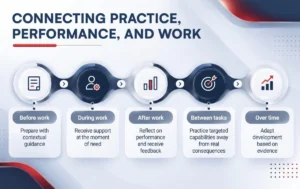
A hallmark of effective L&D leadership is the ability to move beyond traditional, isolated training events and create an integrated ecosystem that supports continuous development and performance enhancement. This CLO has championed such an approach, fundamentally transforming their organization’s L&D function. "I’ve shifted L&D from isolated training events to an integrated performance ecosystem," they explained.
This strategic overhaul encompasses several key initiatives:
- Standardized Onboarding: Recognizing that a consistent and effective onboarding experience is crucial for new hires, the organization has implemented standardized processes across all roles and locations. This ensures that every employee, regardless of their department or geographical placement, receives a comprehensive introduction to the company culture, tools, and expectations. This consistency can significantly reduce early attrition rates and accelerate time-to-productivity. Research from the Brandon Hall Group consistently shows that organizations with a strong onboarding process improve retention by 82% and productivity by over 70%.
- Competency-Based Leadership Development: Moving beyond generic leadership training, the focus has shifted to developing specific competencies directly relevant to the organization’s strategic goals. This involves identifying critical leadership skills, such as strategic thinking, change management, and emotional intelligence, and designing programs that cultivate these abilities through practical application and feedback. Such targeted development ensures that leaders are equipped to navigate complex business challenges and drive team performance effectively.
- Embedding Learning into Operational Systems: A crucial aspect of this integrated ecosystem is making learning an inherent part of the workflow. Instead of requiring employees to step away from their duties for training, learning opportunities are being embedded directly into the operational systems they use daily. This "just-in-time" learning approach ensures that employees can access the knowledge and support they need precisely when they need it, minimizing disruption and maximizing relevance. Examples include in-system prompts for new procedures or microlearning modules accessible directly through project management software.
- Data-Driven Decision Making: The CLO emphasizes the critical role of data in guiding L&D strategy. By leveraging metrics such as "time to competency," "Top Box scores" (a measure of customer satisfaction), and productivity metrics, the organization can objectively assess the effectiveness of its learning initiatives and make informed adjustments. This data-centric approach fosters accountability and ensures that learning investments are demonstrably contributing to improved performance. The ability to quantify the impact of L&D is paramount in demonstrating its strategic value.
The overarching goal of these initiatives is to foster consistency, ensure accountability, and seamlessly integrate development into the fabric of daily work, transforming learning from an optional activity into an essential component of how work gets done.
The Jewel in the Crown: Impactful Learning Programs Driving Growth
Among the suite of strategic initiatives, the redesigned onboarding and front-line performance programs have emerged as the most impactful. These programs represent a fundamental rethinking of how new employees are integrated and how existing front-line staff are equipped to excel. "Our redesigned onboarding and front-line performance programs have been the most impactful," the CLO stated.
The transformation involved a comprehensive review of training methodologies for systems, service delivery, and essential leadership behaviors. The results have been demonstrably significant:
- Reduced Time to Competency: By optimizing the learning pathways and content, the organization has achieved a remarkable reduction in the time it takes for new hires to become fully proficient. A decrease of "more than 60 percent" in time to competency signifies a substantial acceleration in employee productivity and a quicker return on the initial investment in talent. This translates to faster contribution to team goals and project timelines.
- Enhanced Customer Experience: The improved training for front-line staff has directly translated into better customer interactions. The increase in "guest experience Top Box scores" indicates a higher level of customer satisfaction, a critical metric for businesses that rely on customer loyalty and positive word-of-mouth.
- Significant Cost Savings: Beyond performance gains, the efficiency of the redesigned programs has led to substantial savings in training labor costs. This demonstrates the financial prudence and strategic foresight of the L&D department.
- Empowered New Hires: Perhaps the most profound impact is on the employee experience itself. New hires now emerge from onboarding not just "trained," but "confident, capable, and ready to perform." This fosters a sense of empowerment and belonging from day one, setting a positive trajectory for their tenure with the company.
This success story underscores the power of strategic L&D to not only develop individual capabilities but also to directly influence key business indicators and cultivate a motivated workforce.
Demolishing Misconceptions: L&D as a Strategic Partner, Not a Cost Center
A persistent challenge in the L&D field is the prevalent misconception that the function is merely a cost center or an "order-taker," responsible for fulfilling training requests without strategic input. This view relegates L&D to a supportive role, failing to recognize its potential to drive significant business value. The CLO actively combats this perception by leading with a clear, data-driven approach that directly addresses business problems and their measurable outcomes.
"That L&D is a cost center or an order-taker," the CLO identified as a common misconception. Their strategy to counter this is straightforward yet powerful: "I address it by leading with data, business problems and outcomes. If learning doesn’t move a metric, it doesn’t matter." This philosophy shifts the conversation from the activity of training to the impact of learning. By demonstrating how L&D initiatives contribute to key performance indicators, the function elevates its standing from a peripheral department to a strategic partner essential for organizational success. This approach requires L&D professionals to develop strong business acumen and a deep understanding of the organization’s strategic priorities.
Navigating the Future: Personalization, AI, and the Flow of Work
The future of workplace learning is poised for exciting advancements, driven by the convergence of technology and a deeper understanding of individual learning needs. The CLO expresses particular enthusiasm for the burgeoning trends of personalization, artificial intelligence (AI), and performance support.
- Personalization: The "one-size-fits-all" approach to learning is rapidly becoming obsolete. Learners today expect experiences tailored to their individual roles, skill gaps, and learning preferences. Personalized learning paths, adaptive learning platforms, and curated content libraries are becoming essential tools for engaging and developing a diverse workforce.
- Artificial Intelligence (AI): AI is revolutionizing L&D by enabling more intelligent content creation, personalized recommendations, automated feedback, and predictive analytics for skill gaps. AI-powered chatbots can provide instant support, while AI algorithms can identify patterns in learning data to optimize program design and delivery.
- Performance Support: This concept focuses on providing learners with the resources and support they need precisely when they need them, directly within their work environment. This can include just-in-time job aids, performance dashboards, and access to expert knowledge bases. The goal is to make learning an seamless extension of the work itself, rather than a separate activity.
To prepare the organization for this evolving landscape, the CLO emphasizes a proactive strategy: "We’re preparing by experimenting early, upskilling our team and designing learning that fits into the flow of work, not around it." This forward-thinking approach ensures that the organization remains agile and equipped to leverage emerging technologies and methodologies to foster a continuously learning workforce.
Cultivating Essential Leadership Traits: Business Acumen, Courage, and Curiosity
The demands on L&D leaders are multifaceted, requiring a unique blend of skills and personal attributes. The CLO identifies three essential qualities: business acumen, courage, and curiosity.
- Business Acumen: A deep understanding of the organization’s industry, financial drivers, competitive landscape, and strategic goals is paramount. This allows L&D leaders to align learning initiatives with overarching business objectives and speak the language of senior leadership.
- Courage: This involves the willingness to challenge the status quo, advocate for innovative approaches, and deliver difficult but necessary feedback. It also means being transparent about what works and what doesn’t, even when it’s uncomfortable.
- Curiosity: A relentless drive to learn, explore new ideas, and understand the "why" behind performance challenges is crucial. This fuels innovation and keeps L&D leaders at the cutting edge of their field.
The CLO actively cultivates these traits through several practices: "I cultivate those by staying close to operations, being honest about what works and what doesn’t, and encouraging my team to challenge assumptions – including mine." This commitment to continuous learning and open dialogue fosters a dynamic and high-performing L&D team.
A Mentor’s Wisdom: Clarity Over Complexity
Reflecting on their career journey, the CLO offers a profound piece of advice to their younger self: "Stop trying to prove your value through volume. Focus on impact, speak the language of the business, and trust that clarity is more powerful than complexity." This encapsulates a critical lesson learned: the true measure of L&D success lies not in the quantity of programs delivered, but in the quality of the impact they achieve. By prioritizing measurable business outcomes and communicating in clear, business-oriented terms, L&D professionals can gain greater influence and demonstrate their strategic worth.
The Foremost Challenge: Relevance in a Rapidly Changing World
Despite the advancements and the increasing strategic importance of L&D, a significant challenge remains: relevance. "Relevance. Too much learning still exists outside the realities of the job," the CLO states. The industry must accelerate its pace, move closer to the operational realities of the business, and be willing to divest from outdated or ineffective learning practices. This calls for a commitment to continuous evaluation, agile development, and a willingness to adapt to the ever-changing demands of the modern workplace.
The insights shared by this visionary CLO offer a compelling roadmap for the future of corporate learning. By prioritizing strategic alignment, embracing data-driven decision-making, fostering a culture of continuous learning, and remaining agile in the face of evolving technologies and business needs, L&D leaders are not just developing employees; they are actively shaping the future success of their organizations.
Organizations and individuals interested in being featured in the "Learning Insights" series can find more information and submit their interest through the designated form.