



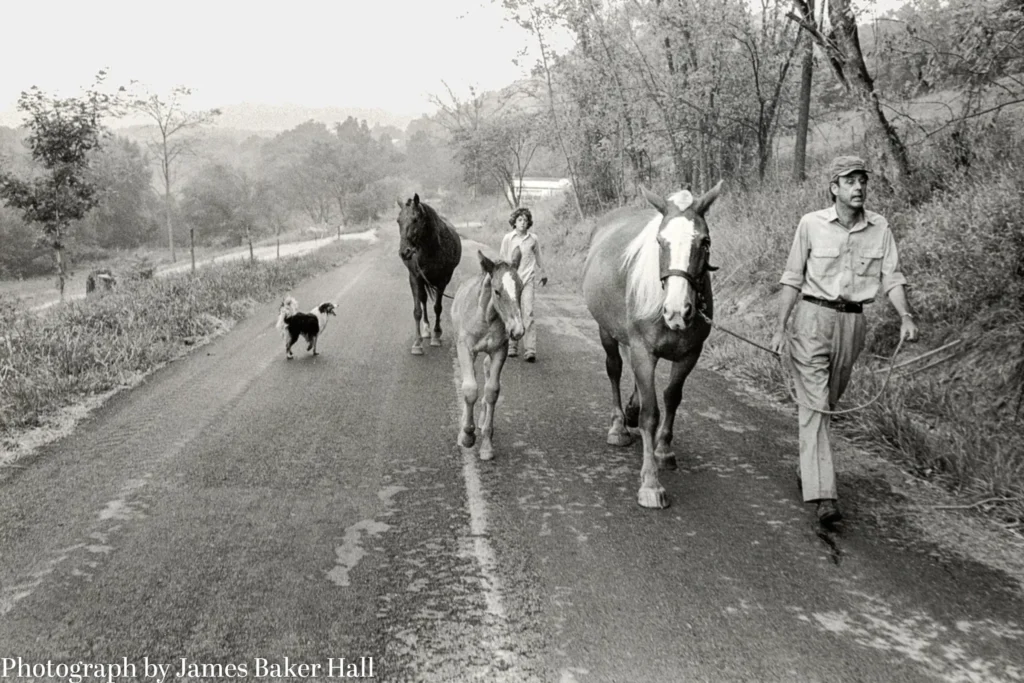
The literary world and the advocates of sustainable agriculture are mourning the loss of Wendell Berry, the acclaimed essayist, novelist, poet, and environmental activist, who passed away last week at his home in Port Royal, Kentucky, at the age of 92. Berry spent the entirety of his adult life championing the integrity of family farming, the preservation of small-town communities, and a deliberate resistance to the mechanization and industrialization of modern existence. Operating from a rural homestead without electricity, Berry famously crafted his prose using pencil and paper, maintaining a physical and philosophical distance from the digital conveniences that increasingly define contemporary life. While his most direct cultural footprint remains rooted in agrarianism and regional literature, his departure prompts a broader, more universal examination of intentional living, purpose, and the deliberate rejection of societal conformity.
A Conventional Ascent and a Radical Departure
Berry’s path to becoming an agrarian icon was paradoxically paved with traditional institutional success. Born in Henry County, Kentucky, in 1934, he pursued higher education with distinction, earning both his Bachelor of Arts and Master of Arts degrees from the University of Kentucky. He then ventured west to Stanford University to participate in its prestigious creative writing program, studying under notable literary figures of the era. His early promise was further recognized internationally when he was awarded a Guggenheim Fellowship, which enabled him to live and write in Italy and France.
Upon returning to the United States, Berry entered the upper echelons of academic prestige, securing a professorship in the English department at New York University’s Bronx campus. By all conventional metrics of the mid-20th-century American literary establishment, Berry had arrived. He was a published author, a university professor, a husband, and a father, situated securely within the cultural and intellectual hubs of the American metropolis.
Yet, beneath the surface of professional trajectory, a profound internal friction was developing. Berry grew increasingly alienated from the rapid urbanization and industrial expansion transforming post-war America. More importantly, he recognized a fundamental incompatibility between the life of an urban academic and the subjects that genuinely compelled him: the land, the agrarian community, and the human relationship to place.
In 1964, at the age of 29, Berry made a decision that baffled his academic peers and literary mentors. He resigned from his tenure-track position at New York University, packed up his young family, and returned permanently to Henry County, Kentucky, to farm the land of his ancestors.
The Confrontation with Convention
The departure from New York University was not accomplished without friction. Historical accounts of Berry’s resignation highlight the disbelief of the academic establishment. Upon submitting his formal resignation, Berry was summoned to the office of a senior faculty supervisor. The meeting served as a final, earnest intervention by the urban literary establishment to prevent a promising young mind from what they perceived as professional suicide.
According to literary historian and commentator David Demaree, the supervisor warned Berry that he was discarding extraordinary success for obscurity and intellectual isolation. Echoing the famous literary warning from Thomas Wolfe’s You Can’t Go Home Again, the senior academic argued that cutting ties with the metropolitan cultural springs amounted to intellectual death. Berry, however, remained unmoved. His conviction was rooted in the belief that an author writing about humanity and landscape must maintain a direct, accountable relationship with the subject matter.
In a subsequent 2018 interview with The New York Times, Berry reflected on the necessity of this geographic and professional anchor. He noted that the physical landscape served as an immediate check against abstraction or fabrication, observing that he could never have remained away from Kentucky simply inventing stories about backwoods communities at metropolitan cocktail parties. By embedding himself within a community of diverse individuals across all walks of life, Berry secured a reservoir of authentic experience that would fuel decades of foundational essays, poems, and novels.
The Contemporary Relevance of Intentional Living
Berry’s death at age 92 invites a critical examination of his philosophy within the context of 21st-century civilization. Modern society is increasingly dominated by digital mediation, algorithmic convenience, and technological saturation. Contemporary white-collar employment frequently reduces human effort to digital abstraction—an endless cycle of notifications, virtual meetings, and automated reporting that often leaves workers feeling detached from tangible outcomes. Simultaneously, digital platforms offer perpetual distraction, utilizing sophisticated psychological frameworks to alleviate minor cognitive discomfort and quell existential anxiety through superficial engagement.
Political discourse has similarly been compressed into polarized digital theatre, where individuals can comfortably assume radical postures from the safety of social media profiles without engaging in the difficult, localized work of community building or physical civic participation.
Berry anticipated these exact pathologies decades before the advent of smartphones and social media. His life and body of work argued that physical friction, cognitive strain, and manual labor are not adversarial forces to be eradicated by technology. Instead, when channeled toward a coherent, intentional vision of existence, these challenges forge psychological and emotional resilience. Berry’s rejection of the digital infrastructure was not merely a romantic or Luddite gesture; it was a disciplined assertion of human agency against systems designed to commodify attention and erode personal autonomy.
Implications and Legacy
The passing of Wendell Berry marks the end of an era for American letters and environmental thought. As universities, publishing houses, and cultural institutions reflect on his extensive bibliography—which includes seminal works such as The Unsettling of America and The Gift of Good Land—the broader implications of his life extend far beyond agricultural policy.
For urban professionals, digital workers, and individuals far removed from agrarian traditions, Berry’s legacy offers a framework for reevaluating personal priorities. While few contemporary citizens possess the capacity or desire to abandon modern infrastructure to farm with draft horses in rural Kentucky, the core tenet of Berry’s life remains universally accessible: the deliberate construction of a life anchored in purpose, place, and moral responsibility.
In an era characterized by digital fragmentation and rootlessness, Berry’s 92-year experiment stands as a monumental testament to the profound satisfactions available to those who possess the courage to step off the default path and construct a deeper, more intentional existence.