

Generative artificial intelligence has emerged as the most disruptive technological force in contemporary classrooms, fundamentally altering the landscape of academic assessment. As large language models (LLMs) like ChatGPT, Claude, and Gemini reach unprecedented levels of linguistic fluency, higher education institutions are grappling with a profound existential challenge: the erosion of traditional methods for verifying authorship. This shift has birthed a new pedagogical anxiety, centering on the feasibility of distinguishing between human-authored prose and machine-generated content. While the public and administrative discourse has heavily favored the adoption of AI-detection software, many educators are finding that the most robust defense against academic integrity breaches lies not in algorithms, but in the evolution of classroom pedagogy.
A Chronology of the AI Disruption in Academe
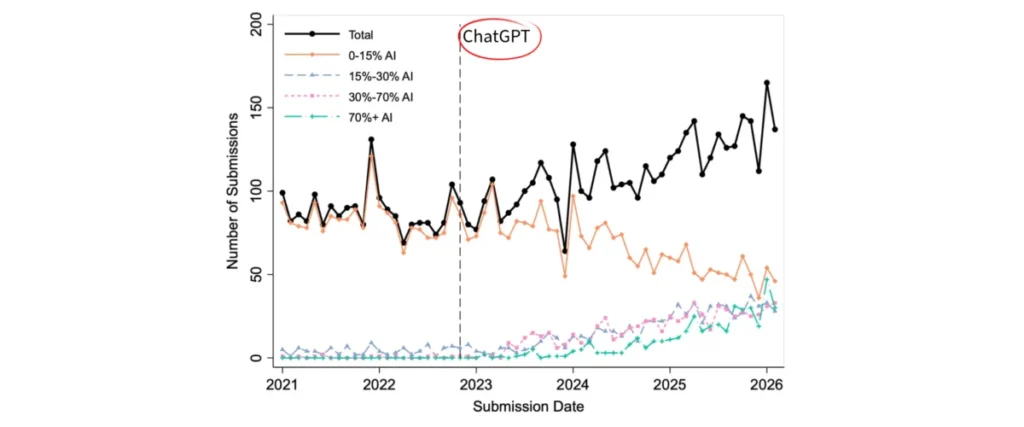
The arrival of sophisticated generative AI in late 2022 served as a watershed moment for higher education. In November 2022, the release of OpenAI’s ChatGPT sparked an immediate institutional crisis. By early 2023, universities globally reported a surge in concerns regarding student use of LLMs for essay composition and coursework.
- Q1 2023: Rapid integration of AI into student workflows leads to an immediate spike in academic integrity inquiries. Institutions scramble to draft interim policies.
- Q2 2023: The market for AI detection tools explodes. Companies such as Turnitin integrate AI-detection features into their existing anti-plagiarism suites, promising high accuracy rates.
- Q3 2023 – Present: A period of "pedagogical cooling" begins. As detection software faces scrutiny for false positives—particularly among non-native English speakers—universities begin shifting focus from technological surveillance to curriculum redesign.
The Myth of the Digital Fingerprint
Much of the effort to mitigate AI-generated submissions has focused on identifying specific "fingerprints" within text. Proponents of detection software argue that LLMs exhibit identifiable patterns, such as highly symmetrical sentence structures, an over-reliance on transitional phrases, and the frequent use of "lists-of-three" to organize information. These models often prioritize a form of sterile, "institutional" polish that lacks the uneven, idiosyncratic qualities of authentic human thought.
However, relying on these stylistic markers for formal accusations of misconduct is fraught with systemic risk. Many high-achieving undergraduate students naturally employ formal grammar and complex sentence variety, creating a significant overlap between human writing and machine output. Furthermore, there is growing evidence of "algorithmic performance" among students. Online forums and student-centric social media platforms have become hubs for peer-to-peer advice on how to bypass detection software. Students are increasingly learning to "perform humanness"—intentionally inserting grammatical quirks or varying sentence lengths—to evade the scrutiny of black-box detection logic. This development suggests that the presence of detection tools is not just failing to catch sophisticated users, but is actively distorting the writing process, forcing students to prioritize evasion over authentic academic expression.
Supporting Data and Statistical Realities
The efficacy of current AI detection tools remains a subject of intense debate. Research conducted by various academic bodies suggests that false positive rates can be as high as 10% to 15% in certain contexts, which is an unacceptable margin of error in an academic discipline. A study published by researchers at the University of Maryland found that even the most advanced detectors can be easily circumvented by simple paraphrasing techniques.
Furthermore, data from academic integrity offices indicates that the volume of AI-related cheating cases has plateaued, not because the technology has improved, but because institutions have moved toward "authentic assessment" models. As of early 2024, an estimated 60% of major North American universities have issued guidance advising faculty that AI-detection tools should be treated as diagnostic aids rather than definitive proof of plagiarism.
Institutional Responses and the Shift to Pedagogy
Academic administrators and faculty unions have largely coalesced around a consensus: surveillance is a losing battle. The prevailing view among pedagogical experts is that the "cat-and-mouse" game of detection software creates an adversarial relationship between instructor and student, undermining the foundational trust required for effective learning.
In response, many departments are mandating a return to high-visibility, low-stakes assessment. This involves a shift toward in-class writing exercises, oral examinations, and scaffolded assignments where students must submit incremental drafts, outlines, and reflections on their research process. By requiring students to demonstrate the evolution of their ideas over time, instructors gain a "baseline" of student voice. This longitudinal familiarity serves as a more reliable indicator of authorship than any software report. When a student who has demonstrated a specific level of proficiency in a handwritten, in-class assignment suddenly submits a graduate-level paper with vastly different syntax and tone, the discrepancy becomes apparent through professional judgment rather than software-generated probabilities.
Broader Implications for Higher Education
The rise of generative AI has forced a long-overdue re-evaluation of what is being measured in the classroom. If an essay can be generated by an AI, instructors are increasingly asking if the assignment itself was designed to measure critical thinking or merely the ability to synthesize information—a task at which machines now excel.
The implications for the future of higher education are two-fold:
- The Professionalization of Writing: Educators must move away from evaluating the "product" (the final essay) and toward evaluating the "process." This necessitates smaller class sizes and more labor-intensive grading, posing a resource challenge for public universities.
- The Digital Literacy Divide: As students continue to adapt to AI-detection environments, universities must decide whether to ban the technology or integrate it into the curriculum. A growing number of faculty members argue that teaching students how to use AI ethically—rather than policing its use—is a necessary skill for the modern workforce.
The Future of Academic Integrity
The most reliable safeguard against the misuse of AI is the cultivation of a robust pedagogical relationship. When instructors invest time in understanding their students’ unique voices, intellectual trajectories, and stylistic habits, the "fishiness" of an AI-generated paper becomes readily detectable through simple human intuition.
In conclusion, while the temptation to rely on technological "silver bullets" for AI detection is strong, history suggests that academic integrity is best maintained through community, accountability, and the design of tasks that require genuine human cognition. As generative AI continues to evolve, the burden of proof rests on the classroom environment itself. By making student thinking visible, educators can ensure that the pursuit of knowledge remains a human-centered endeavor, even in an age where machines can mimic the appearance of intellect. The focus for the next decade will likely be on reinforcing the value of the "unrefined" student voice—a quality that algorithms, no matter how sophisticated, have yet to successfully replicate.