


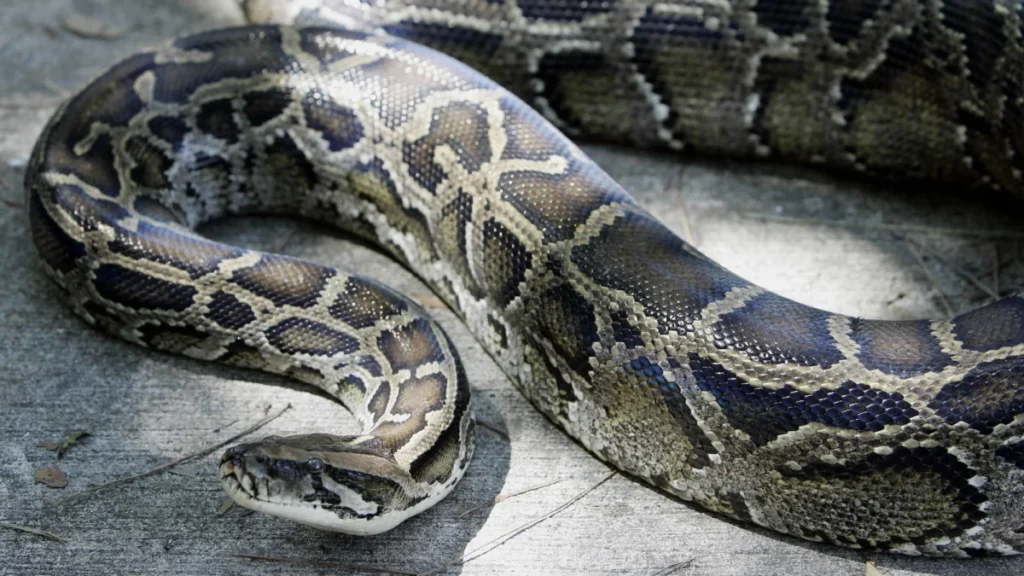
As the 2026 Florida Python Challenge reaches its midpoint, hundreds of participants are navigating the arduous terrain of the Everglades in pursuit of the Burmese python, an invasive apex predator that has decimated local wildlife populations for decades. While the primary incentive for many hunters remains the significant cash prizes offered by the state, a unique local economy has emerged in Everglades City, roughly 75 miles west of Miami. At Wildman’s Pizza, Pasta, and Python, owner Dustin Crum has instituted a novel barter system: he accepts recently harvested, humanely killed Burmese pythons as a form of currency for menu items.
This unconventional arrangement highlights the community-driven efforts to manage an ecological crisis that has proven resistant to traditional eradication methods. According to Crum, the snakes brought in by hunters serve multiple purposes for his business, ranging from culinary experimentation to artisanal manufacturing. However, due to stringent Florida health regulations regarding the sale of wild-caught game, the restaurant does not technically sell python meat. Instead, the "python toppings" and "python pizza" are provided to patrons free of charge or as part of a trade, circumventing the legal prohibitions against the commercial sale of uninspected reptile meat.
The Economics of Invasive Species Management
The 2026 Florida Python Challenge is not merely a sporting event but a high-stakes ecological intervention. This year’s competition features a $10,000 grand prize for the individual who removes the highest number of pythons, with an additional $15,000 distributed across various categories, including the longest snake captured and prizes for military veterans and professional contractors. Despite these financial incentives, the cost of equipment, fuel, and time spent in the field can be prohibitive for many amateur hunters.
Dustin Crum’s barter system provides an immediate, tangible reward for those contributing to the removal efforts. Crum’s operation is characterized by a "zero-waste" philosophy regarding the carcasses he receives. "We do python toppings, python pizza, iguana, you know, whatever," Crum stated in a recent interview. Beyond the kitchen, the biological byproducts of the snakes are repurposed into various goods. The fat is rendered to create snake oils, skin creams, and soaps, while the skeletal remains are utilized in the creation of jewelry. This holistic approach to the invasive species problem reflects a growing trend in Florida where residents seek to turn an ecological liability into a sustainable resource.
Historical Context: The Rise of the Burmese Python in Florida
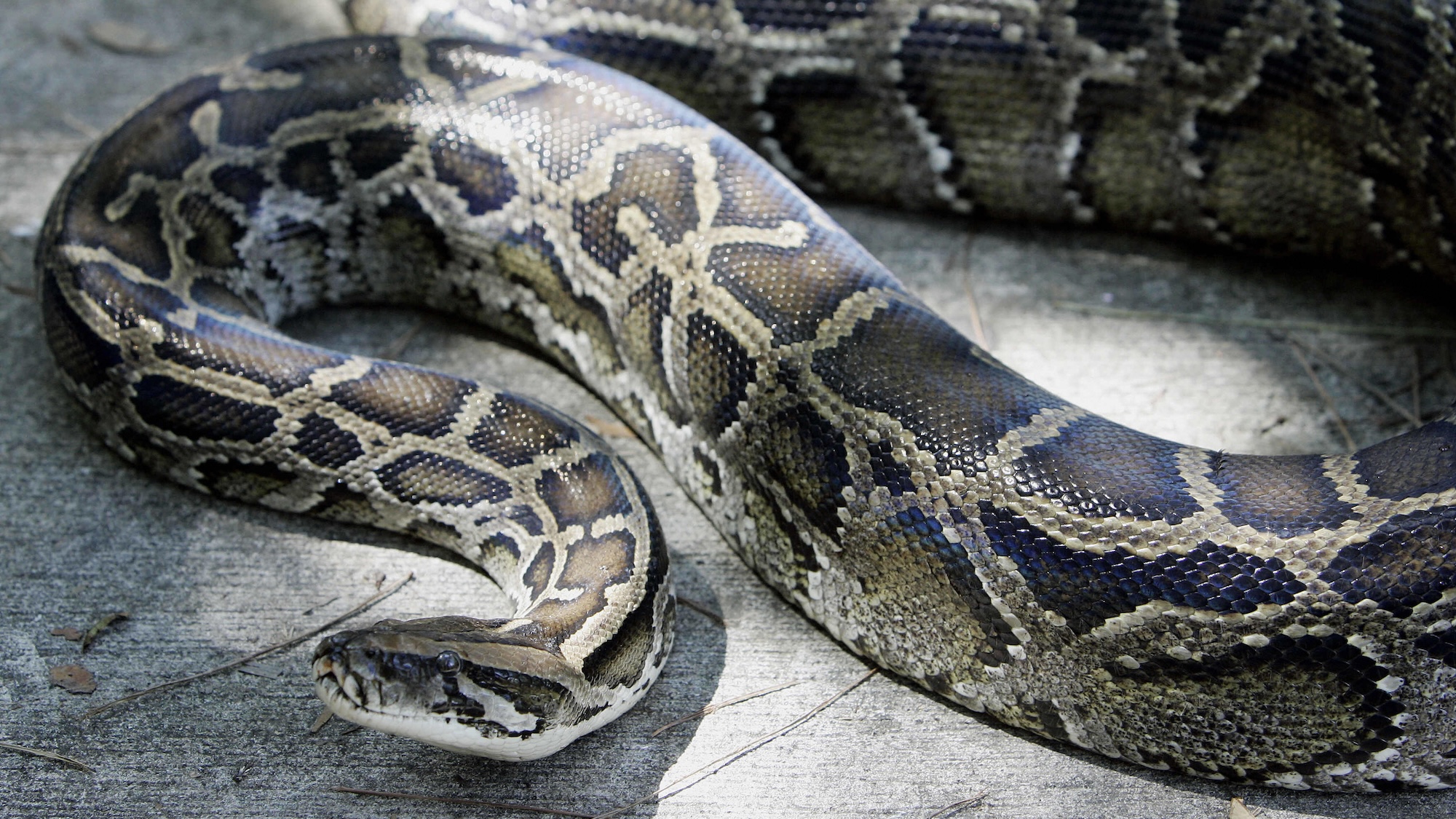
The presence of the Burmese python (Python bivitattus) in the Florida Everglades is a relatively recent phenomenon that traces back to the 1970s. Originally introduced through the exotic pet trade, the species found an ideal habitat in the subtropical wetlands of South Florida. The population saw a significant surge in the early 1990s, particularly following Hurricane Andrew in 1992. The Category 5 storm destroyed several exotic wildlife facilities and breeding centers, leading to the accidental release of numerous pythons into the wild.
By the early 2000s, the United States Geological Survey (USGS) and the Florida Fish and Wildlife Conservation Commission (FWC) officially recognized the Burmese python as an established invasive species. Since then, the population has exploded, with current estimates suggesting that between 100,000 and 300,000 pythons now inhabit the state. Their success is attributed to their status as apex predators, their high reproductive rate—females can lay between 50 and 100 eggs in a single clutch—and the lack of natural predators capable of challenging an adult python, which can grow to lengths exceeding 18 feet.
Ecological Impact and Biological Data
The biological impact of the Burmese python on the Everglades ecosystem has been catastrophic. Peer-reviewed studies conducted by the Smithsonian Institution and the University of Florida have documented a staggering decline in native mammal populations within areas where pythons are most prevalent. In some regions of the Everglades National Park, sightings of raccoons have dropped by 99.3%, opossums by 98.9%, and bobcats by 87.5%. Marsh rabbits and foxes have effectively vanished from large swaths of the ecosystem.
Pythons are opportunistic feeders with an incredibly diverse diet. They have been documented consuming more than 70 species of mammals and birds, as well as American alligators. The loss of small and medium-sized mammals has a cascading effect on the food web, depriving native predators like the Florida panther and the Everglades snail kite of their primary food sources. The 2026 Florida Python Challenge is part of a broader strategy to mitigate these losses, though experts admit that complete eradication is unlikely given the vastness and inaccessibility of the Everglades.
The Evolution of the Python Challenge
The Florida Python Challenge was first launched in 2013 as a public awareness campaign and a means to supplement professional removal efforts. After an initial period of intermittent scheduling, the FWC transitioned the challenge into an annual event starting in 2020. The competition has grown in scale and sophistication, requiring all participants to complete an online training course focused on species identification and humane killing protocols.
In 2023, more than 900 participants from across the United States and several foreign countries registered for the event. The 2026 iteration has seen similar engagement levels, bolstered by increased media coverage and the participation of high-profile hunters. The competition is strictly regulated; hunters must adhere to the American Veterinary Medical Association (AVMA) guidelines for humane euthanasia. This typically involves a two-step process: first, the snake must be rendered unconscious through a mechanical blow or captive bolt, followed by the immediate destruction of the brain to ensure the animal does not suffer.
The Legal and Health Realities of Consuming Python
While the idea of "Python Pizza" captures public imagination, the reality of consuming wild-caught python is complicated by health concerns. Research conducted by the Florida Department of Health and the FWC has revealed high levels of mercury in many Burmese pythons harvested from the Everglades. As apex predators, pythons accumulate mercury from the prey they consume—a process known as bioaccumulation.
In many cases, the mercury levels found in python tissue exceed the safety thresholds for human consumption. This is a primary reason why there is no commercial market for python meat in Florida grocery stores or standard restaurant menus. Dustin Crum’s practice of giving the meat away for free or through barter is a legal necessity, as it bypasses the commercial food safety inspections required for the sale of meat. Participants who choose to eat their catch are generally advised to do so at their own risk and to focus on smaller, younger snakes, which typically have lower concentrations of mercury than older, larger specimens.
Professional Perspectives and Future Implications
The 2026 Florida Python Challenge is scheduled to conclude at 5:00 p.m. EDT on July 19. As the deadline approaches, state officials and conservationists are looking toward the data to determine the efficacy of this year’s hunt. While the number of snakes removed during the challenge—usually numbering in the hundreds—is a small fraction of the total population, officials emphasize that every female removed represents the prevention of dozens of future hatchlings.
"The Python Challenge is a critical tool for public engagement," said a spokesperson for the FWC. "It brings national attention to the threats facing the Everglades and allows citizens to take an active role in conservation. While we rely on professional contractors for year-round removal, the influx of hunters during the challenge provides us with valuable data and removes a significant number of animals from the landscape."
The broader impact of the challenge extends beyond the number of snakes killed. It serves as a testing ground for new tracking technologies, including the use of "scout snakes"—male pythons fitted with radio transmitters that lead hunters to breeding aggregations. It also fosters a unique cultural response to environmental management, as seen in the creative utilization of snake byproducts at establishments like Wildman’s Pizza.
As the sun sets over the sawgrass prairies of the Everglades, the hunters continue their search. For some, the goal is the $10,000 prize; for others, it is the satisfaction of protecting a unique American wilderness. And for a few, it is the prospect of trading a 15-foot predator for a hot slice of pizza in Everglades City. Regardless of the motivation, the 2026 Florida Python Challenge remains a testament to the ongoing and complex battle to restore balance to one of the world’s most iconic ecosystems.