


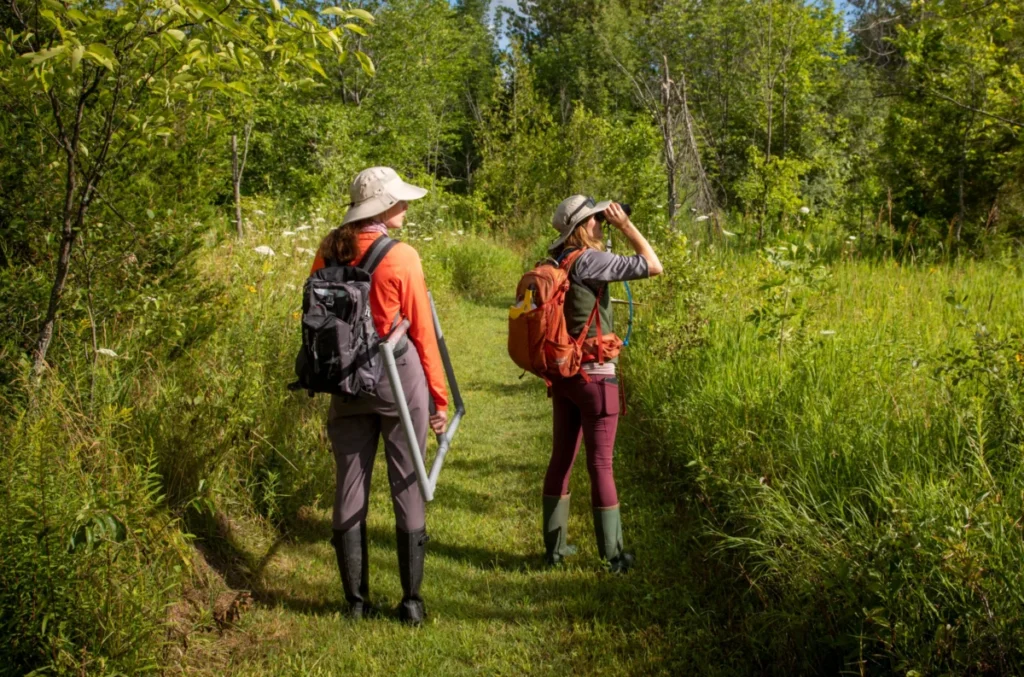
More than 360 hectares of vibrant green space on the campus of Trent University in Peterborough, Ontario, serve as a vital habitat for diverse flora and fauna, while simultaneously acting as a living testament to the deep and enduring connection with Indigenous history. This expansive natural landscape, a defining feature of the university’s identity, is now undergoing a significant transformation. Trent University has formally launched the Ggwepnandizamin Stewardship Plan, a comprehensive seven-year framework designed to meticulously manage and safeguard these ecological spaces, with a profound emphasis on weaving Indigenous knowledge into every facet of environmental research, education, land-based learning, and land management.
The Ggwepnandizamin Stewardship Plan, unveiled in late April, represents a landmark initiative born from extensive collaboration. It has been meticulously developed in partnership with the Michi Saagiig First Nations, a collective of Anishinaabe communities whose ancestral territories encompass the Trent University lands, and a consortium of dedicated local environmental organizations. This collaborative spirit extends to ongoing engagement with Trent Elders and the Knowledge Holder’s Council, as well as vital consultation with Michi Saagiig land consultation officers. The plan signifies a profound commitment to honouring and integrating Indigenous perspectives, recognizing their intrinsic value in understanding and caring for the natural world.
A Holistic Approach to Land Management
Tom Cowie, a respected consultation Indigenous Knowledge lead from Hiawatha First Nation, articulated the profound significance of these natural spaces. "When we’re looking at different things, especially around the park or around the school… there’s a lot of significant wetlands," Cowie stated, highlighting the ecological importance of these areas. He further elaborated on their cultural and medicinal value, noting, "Those are quite significant. They’re all medicine gardens." This perspective underscores a holistic understanding of the land, where ecological function is inextricably linked to cultural heritage and traditional practices.
Cowie’s insights offer a crucial counterpoint to a purely utilitarian view of land. For him, these spaces transcend mere ecological reservoirs; they are integral to a broader, living connection with the land. "We’ve always been taught that we look after the lands, to ensure that they are better for the generations to come," he explained, embodying a core tenet of Indigenous environmental ethics. "We look at the land as a familial relationship, as opposed to being a commodity or a resource. We treat it as family." This deeply ingrained worldview emphasizes responsibility, kinship, and intergenerational stewardship, contrasting sharply with Western concepts that often categorize land as a resource to be exploited or managed for economic gain.
This familial approach to land management is further illuminated by Cowie’s description of knowledge-sharing within Indigenous communities. "We’re not keepers of knowledge, we’re sharers," he emphasized. This philosophy promotes an open and inclusive exchange of wisdom, recognizing that knowledge is a collective inheritance meant to be nurtured and passed on, rather than hoarded or controlled. It aligns with the collaborative spirit underpinning the Ggwepnandizamin Stewardship Plan, fostering an environment where diverse knowledge systems can coexist and enrich one another.
National Indigenous Peoples Day and the Call for Inclusion
The Ggwepnandizamin Stewardship Plan arrives at a timely juncture, as Canada prepares to observe National Indigenous Peoples Day on June 21st. This annual observance serves as a powerful reminder of the rich cultures, histories, and invaluable contributions of First Nations, Inuit, and Métis peoples. The day provides a crucial opportunity for all Canadians to reflect on initiatives that actively seek to integrate Indigenous knowledge and amplify Indigenous voices within institutions that have historically marginalized them. Trent University’s proactive approach through the stewardship plan exemplifies such an effort, demonstrating a tangible commitment to reconciliation and the decolonization of academic and environmental practices.
Julie Davis, Trent University’s Vice President of External Relations & Development, articulated the transformative impact of embracing Indigenous worldviews. "When we listen and understand an Anishinaabe world view, and we understand familial relations and the spirit of all those species, we feel a higher calling to how we do the work," Davis remarked. This sentiment highlights how adopting Indigenous perspectives can elevate the purpose and ethical considerations of environmental work, moving beyond mere scientific inquiry to a deeper, more respectful engagement with the natural world.
Davis further underscored the intentional effort required to foster a harmonious relationship between Western and Indigenous knowledge systems. "Maintaining what is called an ethical space, where that knowledge system and the Western system are equal, happens through talking and working together," she explained. The concept of an "ethical space," as defined by Indigenous scholars and allies, refers to a physical or conceptual place where individuals from different cultural backgrounds can engage in dialogue and collaboration on equal footing, free from the power imbalances that have historically characterized intercultural interactions. Davis’s concluding statement, "How arrogant would it be for us not to recognize, and acknowledge, and collaborate," powerfully conveys the imperative for such partnerships.
Bridging Knowledge Systems for a Sustainable Future
Dr. Barbara Wall, an Associate Professor and dual-tradition scholar at Trent University’s Chanie Wenjack School for Indigenous Studies, provided further academic validation for the plan’s objectives. She stated, "doing research for and with Indigenous communities will lead to increased environmental sustainability, increased environmental health, and thus increased human health on so many different levels." This assertion is supported by a growing body of research demonstrating that Indigenous-led conservation efforts often yield superior ecological outcomes and contribute significantly to community well-being. Studies have shown that Indigenous communities often possess deep, place-based ecological knowledge that can inform more effective and culturally appropriate conservation strategies, leading to greater biodiversity and healthier ecosystems.
However, Dr. Wall also candidly addressed the persistent barriers that Indigenous-led research often encounters, particularly concerning funding and capacity. "There needs to be trusting, respectful relationships, and many times those have to be created before you can jump into any research," she emphasized. This highlights the critical importance of building genuine partnerships based on mutual respect and understanding. Academic institutions like Trent University have a crucial role to play in alleviating these challenges by providing tangible support and resources, provided that these collaborative spaces remain welcoming, equitable, and culturally sensitive. The success of such initiatives hinges on a commitment to decolonizing research methodologies and ensuring that Indigenous communities retain agency and control over their knowledge and research processes.
A New Paradigm for Environmental Stewardship
The Ggwepnandizamin Stewardship Plan is more than just a land management document; it represents a fundamental paradigm shift in how the environment and land are perceived and interacted with. It offers a profound opportunity to deepen understanding, not only of the intricate ecological systems of the land and water but also of the diverse ways of life that these systems support. By creating more connected and inclusive pathways for knowledge sharing, the stewardship plan charts a meaningful course toward a future that is both more equitable and more sustainable.
The plan’s implementation will involve a series of phased actions over the next seven years. While specific project details are still emerging, the initial phase will likely focus on establishing the foundational structures for collaboration, including workshops, cultural competency training for university staff and students, and the formalization of consultation protocols with Michi Saagiig First Nations. Subsequent phases will involve the integration of Indigenous knowledge into curriculum development, the co-creation of research projects focused on the university’s natural areas, and the implementation of traditional land management practices. The success of these phases will be measured not only by ecological indicators but also by the strength and depth of the relationships forged between the university and Indigenous partners.
The implications of the Ggwepnandizamin Stewardship Plan extend far beyond the boundaries of Trent University. As an institution of higher learning, its commitment to integrating Indigenous knowledge and fostering collaborative environmental stewardship can serve as a powerful model for other universities and organizations across Canada and globally. In an era increasingly defined by ecological crises and the urgent need for decolonization, this initiative offers a hopeful and actionable pathway towards reconciliation, environmental healing, and a more just and sustainable future for all. The university’s commitment to listening, learning, and collaborating with Indigenous peoples represents a vital step in acknowledging the historical injustices and building a more equitable and respectful relationship with the land and its original stewards.