



A recent internal pilot program aimed at enhancing managerial communication skills through an artificial intelligence-powered coach has become a stark cautionary tale for the Learning and Development (L&D) department of a prominent, unnamed organization. The initiative, designed to equip managers with advanced techniques for navigating difficult performance reviews, ultimately fell victim to classic innovation pitfalls, resulting in negligible engagement and a critical re-evaluation of the company’s approach to piloting new technologies. This extensive analysis delves into the program’s shortcomings, the broader implications for corporate L&D, and the strategic recalibrations necessary to ensure future innovations achieve meaningful organizational impact.
The Promise and the Peril: A Pilot Gone Astray
The initiative, launched approximately a year ago, was envisioned as a sophisticated solution to a perennial challenge within organizations: the effective and empathetic delivery of performance feedback. The L&D team identified a critical need to bolster managers’ proficiency in handling sensitive conversations, particularly during the crucial annual review cycle. The proposed solution was an AI-driven coaching platform designed to offer a safe, simulated environment for practice.
"On paper, the strategy appeared very promising," stated a source close to the L&D department who requested anonymity to speak freely about internal matters. "We identified a clear business need, procured a capable technology, and selected a motivated group of participants." The pilot group comprised over 20 managers who had proactively sought to improve their performance review skills by attending existing company workshops. They were granted on-demand access to the AI coach, a platform intended to allow them to rehearse challenging dialogues, such as addressing underperformance, before engaging with their direct reports.
The team’s expectations were ambitious, anticipating high levels of engagement and demonstrable learning outcomes. However, the reality proved to be a significant departure from these projections. The results were described as "a ghost town." Over several weeks, across all 20 participants, the total time spent interacting with the AI coach amounted to a mere 10 minutes – a collective figure, not an individual one. This abysmal engagement rate signaled a profound disconnect between the intended purpose of the pilot and its actual reception by the target audience.
Deconstructing the Failure: Beyond Technology
The core of the issue, as identified by the L&D team in their post-mortem analysis, was not a deficiency in the AI technology itself. The coach was deemed "very capable" and technically sound. Instead, the failure was rooted in the fundamental design of the pilot. The L&D team acknowledged they had created a "sandbox" environment, isolated from the complexities and pressures of a manager’s daily operational reality.
Several key missteps were identified:
- Inappropriate Audience Selection: The criteria for selecting participants failed to align with the true need for the tool. By choosing managers who were already motivated and engaged in developing their performance review skills, the pilot inadvertently targeted individuals who likely felt they had a sufficient handle on the process, rendering the AI coach a "nice-to-have" rather than a "must-have."
- Ignoring Workflow Friction: The pilot did not adequately consider the practicalities of integrating the AI coach into the existing daily workflows of busy managers. The tool was presented as a separate entity, requiring managers to step outside their established routines and tools, thereby increasing cognitive load and perceived effort.
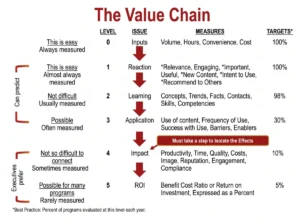
- Misplaced Measurement Focus: The team’s initial plan to measure success was based on post-pilot satisfaction scores. This approach overlooked crucial early indicators of adoption and engagement. The critical metric should have been "activation rates"—the actual usage of the tool—rather than subjective feedback gathered only after the fact.
The "Pilot Purgatory": A Widespread Corporate Challenge
This scenario is not unique to this particular organization. L&D leaders across various sectors frequently encounter what is often termed "pilot purgatory," where promising innovations, despite initial enthusiasm and investment, fail to gain traction when scaled to the broader workforce. Industry data consistently highlights the difficulty in translating pilot success into widespread organizational adoption. While specific figures for this organization’s pilot were not publicly disclosed, general trends indicate that a significant percentage of pilot programs do not transition to full-scale implementation due to issues such as low adoption, high implementation costs, or a lack of demonstrable ROI. Reports from HR and L&D consultancies often cite figures suggesting that upwards of 70% of L&D initiatives fail to achieve their desired impact, with a substantial portion of these failures originating in the pilot phase.
The L&D team is now recalibrating its strategy for a renewed AI coach experiment planned for the current year. Their objective is to move beyond the limitations of a theoretical sandbox and ensure that innovations are designed for real-world impact and scalability. This recalibration involves a commitment to three core best practices:
Best Practice 1: Target the "Point of Pain," Not the "Path of Enthusiasm"
A critical lesson learned was the fallacy of selecting participants based on pre-existing enthusiasm for a given topic. In the initial AI coach pilot, the L&D team inadvertently chose managers who were already invested in honing their performance review skills, often by attending workshops. The assumption was that their proactive engagement would translate directly into using the AI coach. This proved incorrect.
"These managers were already invested in their development," the anonymous source explained. "They likely felt competent enough to handle reviews without the AI coach’s support. For them, the tool was a ‘nice to have,’ not a ‘must-have.’"
The fundamental principle for effective piloting is to identify and engage the audience that experiences the problem most acutely. This means seeking out individuals who are genuinely struggling and for whom the proposed solution offers tangible relief. For the AI coach, this would have meant targeting managers who lacked the confidence or competence to conduct reviews effectively, those who dreaded the conversations, rather than those who actively sought to perfect them.
Identifying this "point of pain" requires looking for observable behavioral signals of struggle. In the context of performance reviews, these signals could include historically low compliance rates in completing reviews, or critical feedback from employees regarding the quality of past performance discussions.
This principle extends beyond the AI coaching scenario. For instance, if an organization is testing a new candidate assessment tool, the logical participants would not be the top-performing hiring managers who are already adept at selection. Instead, the pilot should target managers experiencing high new-hire turnover rates or consistently struggling to fill critical positions. These individuals are directly feeling the negative consequences of suboptimal hiring decisions, making them the ideal test subjects for a solution aimed at improving selection accuracy.
By focusing on the audience experiencing the highest level of pain, L&D teams can rigorously test whether their solution offers sufficient value to drive adoption. If individuals who are demonstrably suffering from a problem are unwilling to engage with a proposed solution, it strongly indicates that the solution itself is either inadequate or not effectively addressing the core issue.
Best Practice 2: Solve for Workflow Integration, Not Just Capability
A significant impediment to the AI coach’s adoption was its status as a standalone destination. Managers were required to exit their primary work tools, navigate to a separate system, and familiarize themselves with a new interface. This added a considerable layer of cognitive load, particularly during the already high-pressure performance review period. The AI coach, intended as a support mechanism, was perceived more as a distraction than an aid.
To achieve scalability, L&D teams must transition from a model of "destination learning" to one of seamless "workflow integration." The revised approach for the AI coach pilot involves embedding the solution directly into the managers’ existing flow of work. This means providing direct links to the AI coach within the very systems where performance reviews are initiated and managed.
Another highly effective strategy involves integrating supportive "nudges" into the company’s primary communication channels, such as Slack. For example, as automated reminders about performance review milestones are dispatched via Slack, simultaneous prompts could be generated to encourage practice sessions within the AI coach.
The strategic imperative here is to minimize the "distance" between the recognition of a need and the availability of a solution. Every additional click, login, or window switch represents a potential barrier that can significantly reduce adoption rates. By positioning the tool precisely where the work is being performed, decision fatigue is diminished, and engagement is more likely.
The objective, as articulated by the L&D team, is not to instruct managers to "learn," but rather to provide them with a tool that enables them to "get the job done faster and better." The ultimate goal is to make learning the path of least resistance, seamlessly woven into the fabric of their daily responsibilities.
Best Practice 3: Measure Operational Viability, Not Just Sentiment
Perhaps the most profound strategic error in the initial AI coach experiment was the reliance on a "vanity metric": manager satisfaction. The go/no-go decision for scaling the program was predicated on how helpful participants found the tool. However, with near-zero activation rates, there was insufficient data to even begin measuring satisfaction meaningfully. This left the L&D team without any basis for making informed decisions about scaling the initiative.
For innovations intended for enterprise-wide deployment, L&D departments must pivot their measurement focus from "sentiment metrics" (e.g., learner satisfaction) to "operational viability metrics." These metrics are designed to assess whether an initiative or program can realistically and sustainably function at scale.
For a pilot program like the AI coach, more appropriate metrics would include:
- Activation Rate: The percentage of targeted users who engage with the tool at least once.
- Time to First Interaction: The average time elapsed between initial access and the first substantive use of the tool.
- Completion Rates for Key Features: The percentage of users who complete core functionalities within the tool.
These metrics provide objective insights into whether a tool is intuitive enough to be adopted without extensive hand-holding and whether it truly addresses the user’s needs in a practical manner.
Equally critical is the assessment of the "invisible costs" associated with scaling. It is imperative to measure the potential load on support infrastructure. A pilot that is deemed "successful" based on user feedback but generates a significant surge in IT support tickets or requires extensive ongoing administrative intervention, ultimately represents an operational failure.
True success in scaling an L&D initiative is not merely reflected in a high star rating on a satisfaction survey. Instead, it is demonstrated by metrics such as:
- Sustained Usage: Consistent engagement with the tool over time.
- Integration into Standard Operating Procedures: The tool becomes a regular part of how work is performed.
- Positive Impact on Key Business Outcomes: Measurable improvements in performance, efficiency, or other relevant KPIs.
- Low Support Overhead: Minimal demand on IT and L&D support teams for troubleshooting and ongoing maintenance.
These are the critical metrics that often determine the fate of large-scale rollouts, and they are precisely the factors that L&D teams must prioritize for testing from the outset of any pilot program.
Innovation Demands Execution: Bridging the Sandbox and the Business
L&D departments play an indispensable role in fostering organizational innovation. As stewards of corporate culture, they are uniquely positioned to champion experimentation and the adoption of new methodologies and technologies. However, for innovation to transcend the theoretical and yield tangible benefits, it cannot remain confined to the laboratory or the "sandbox."
Too often, the concept of "innovation" within L&D becomes conflated with the mere acquisition of new tools, rather than a strategic focus on solving pressing business problems. When promising ideas are allowed to languish in the pilot phase, organizations not only squander valuable budget but also risk eroding their credibility with the broader business. The business invests in L&D not to run interesting pilot programs, but to build and enhance organizational capability.
Consequently, L&D experiments must be meticulously designed from their inception to withstand the rigors of the operational business environment. By rigorously stress-testing innovations with skeptical stakeholders and those who feel the most acute pain, by ensuring deep integration into existing workflows, and by prioritizing the measurement of operational viability, L&D teams can significantly increase the likelihood that their most impactful ideas will move beyond the confines of the sandbox and deliver demonstrable value at scale.
As organizations increasingly embrace the transformative potential of artificial intelligence and other emerging technologies, the mandate for L&D professionals is clear: it is not sufficient to merely verify that a technology works in a controlled environment. The paramount objective is to prove that it can scale effectively and sustainably within the complex ecosystem of the business.