

The Ottawa Art Gallery buzzed with intellectual energy on June 23, 2024, as Universities Canada hosted "Scholar to Scholar: Advancing Knowledge, Impact and Community." This significant event brought together over eighty scholars, academics, and stakeholders to celebrate the profound contributions of recipients from six key scholarship programs: the Canadian Federation of University Women, the Flight 302 Legacy Award, International Development Research Awards (IDRA), Queen Elizabeth Scholars, Canadian International Development Scholarships 2030 (BCDI 2030), and the Molloy Medicine Award. More than a mere awards ceremony, the day unfolded as a dynamic forum for dialogue, emphasizing a collective commitment to research that is not only academically rigorous but also deeply embedded within and responsive to the communities it serves. The overarching message resonated clearly: research’s ultimate value lies in its capacity to foster tangible, positive change in the world.
A New Paradigm in Research: Beyond Publication to Partnership
Central to the day’s discussions was a fundamental redefinition of what constitutes impactful research. For many, including Ugochukwu Okoye, a PhD candidate in anthropology at Carleton University and a 2024 SSHRC doctoral fellow, the pursuit of knowledge extends far beyond the confines of academic journals. Okoye’s work, which delves into how African societies navigate state support deficits and how community-led organizations leverage diaspora networks for grassroots development and alternative governance, exemplifies this ethos. His research is fundamentally about cultivating "meaningful, respectful and sustained relationships with the people and communities he’s studying." This relational approach, he explained, is not merely a methodological choice but the very core of his inquiry, ensuring that his academic pursuits remain grounded in the lived realities of those he engages with.
This sentiment was echoed by numerous panelists throughout the day. Dr. Atul Jaiswal, research lead at the Perley Health Centre of Excellence in Frailty-Informed Care and an adjunct professor at the University of Ottawa, articulated a powerful conviction: "Research should be a tool for change. If that’s not happening, then what’s the point of doing this research?" This statement encapsulates the prevailing sentiment that academic endeavors must translate into practical solutions and demonstrable progress. The event, therefore, served as a platform to showcase and amplify this growing movement within the Canadian academic landscape, one that prioritizes collaboration, ethical engagement, and measurable societal benefit.
The Cornerstone of Impact: Meaningful Community Engagement
The inaugural panel, aptly titled "Building Meaningful Community Connections," set the tone for the day, underscoring the critical role of community engagement in the research process. Scholars shared personal narratives illustrating how deeply ingrained connections with communities, both within Canada and internationally, shape their perspectives and refine their research questions. This session highlighted the transformative power of participatory research, where communities are not passive subjects but active partners in knowledge creation.
Dr. Mona Ghadirian, an independent researcher with Participatory Research at McGill University and a former Queen Elizabeth Scholar, offered a profound insight into the nature of community engagement. "Community engagement isn’t just one research tool," she stated, "but I think it’s the purpose of research in general; I think it gives you an opportunity to reflect on your assumptions that you have within the research." This perspective emphasizes that engagement serves as a crucial mechanism for researchers to interrogate their own biases and assumptions, thereby fostering a more equitable and effective research dynamic. The panelists collectively demonstrated that genuine partnership necessitates humility, active listening, and a commitment to co-creating knowledge that directly addresses the needs and aspirations of the communities involved. The benefits, as articulated by the scholars, extended beyond the immediate research outcomes to enrich universities with diverse perspectives and foster the personal and professional growth of academics themselves.
Mobilizing Knowledge: From Insight to Action
The subsequent panel, "Knowledge Travels Through People," shifted focus to the vital process of knowledge mobilization. Scholars explored the pathways through which their research findings reach broader audiences and translate into tangible impact. Nadia Firoz, a PhD candidate in sociology at Carleton University and a 2024 IDRA recipient, whose work examines the resilience and agency of Rohingya refugee women navigating displacement, provided three actionable pieces of advice for fellow researchers.
"My first advice would be to start thinking about knowledge mobilization from day one – don’t leave it for later. Don’t wait until your data is analyzed and your report is written and only then ask who should read this," Firoz emphasized. This proactive approach to dissemination is crucial for ensuring that research remains relevant and accessible throughout its lifecycle.
Her second point struck at the heart of relational research: "Secondly, I can’t stress this enough… invest in relationships rather than products. Sometimes what happens is we become so focused on outputs… that we often forget that knowledge does not really travel through documents. It travels through people." This potent reminder underscores the human element inherent in knowledge transfer, advocating for the cultivation of trust and rapport as foundational to effective dissemination.
Firoz concluded her insights with a call for interdisciplinary collaboration: "The third piece of advice is to step outside your own discipline whenever you can. Speak to practitioners or policy makers, community organizations, and also researchers from completely different academic fields and disciplines. Because I have found that those conversations will often challenge you to rethink your work, but it will also help you communicate it more clearly and more meaningfully." This recommendation highlights the power of cross-pollination of ideas in enriching research and enhancing its communicative power. Other panelists, including Joy Karinge, a PhD anthropology and African studies student at Carleton and a 2025 Flight 302 Legacy Award recipient, and Dr. Kenneth Gyamerah, an assistant professor at Ontario Tech University and a 2022 IDRA recipient, contributed their experiences to this vital discussion on bridging the gap between academic discovery and public understanding.
Research as a Catalyst for Societal Transformation
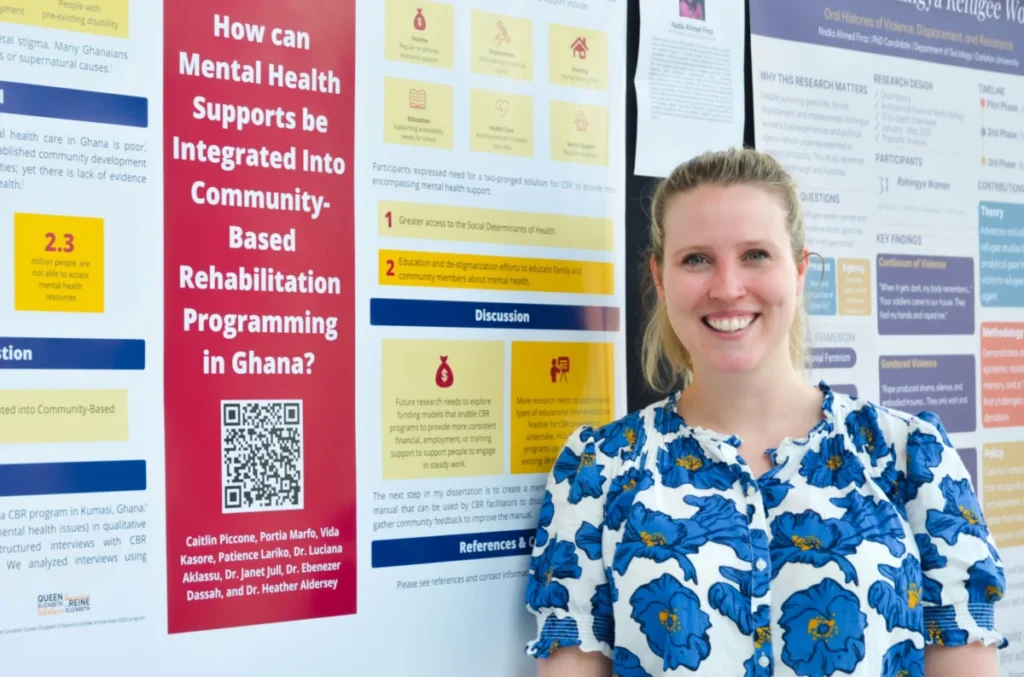
The afternoon sessions delved deeper into the transformative potential of research. A panel focused on "Research for Societal Change" featured scholars whose work directly addresses pressing global and local challenges. Nodir Ataev, a PhD candidate in global development at Queen’s University and a Flight 302 Legacy Award recipient, and Caitlin Piccone, a PhD candidate in rehabilitation science at Queen’s University and a Queen Elizabeth Scholar recipient, shared their journeys. They were joined by Claudia Gonzales, a PhD candidate in public health at Université de Montréal and an International Doctoral Research Award recipient.
Piccone articulated a crucial shift in perspective: "Research isn’t just about what issues we study, [but] it is also about how we study them. Shifting the power dynamic between the researcher and the community is a really important first step towards creating real societal impact." This statement points to a critical evolution in research methodologies, moving away from extractive practices towards models that empower and uplift. The implications of this approach are far-reaching, promising to foster more equitable and sustainable solutions to complex societal problems. By consciously working to dismantle traditional power hierarchies, researchers can unlock new avenues for co-creation and ensure that interventions are not only effective but also culturally appropriate and community-driven.
Leadership in Research: Embracing Inclusivity and Collective Success
The final panel, "Leadership Means Inclusion," explored the development of leadership skills among scholars and the impact of diverse perspectives on their academic trajectories. Yvonne Ndelle, a Queen Elizabeth Scholarship recipient from the University of Ottawa, defined leadership as the creation of inclusive environments aimed at achieving collective success. "You’re working to achieve something, you’re working to achieve success, you’re working to empower people, and at the same time, you’re learning and becoming a better version of yourself," she explained. This perspective emphasizes that effective leadership in research is not about individual dominance but about fostering an environment where all voices are valued and contributions are amplified.
The discussions throughout the day underscored a growing consensus within the academic community: the most impactful research is that which is collaboratively conceived, ethically conducted, and demonstrably beneficial to society. The event served as a powerful testament to the dedication and vision of scholarship recipients who are actively shaping a future where knowledge serves humanity. As Dr. Gyamerah aptly concluded, "Your research has something to give the world, and never underestimate the impacts that your weight can drive." This sentiment resonated throughout the gallery, a call to action for scholars to recognize their potential and harness their research for the betterment of the global community. The Universities Canada event not only celebrated past achievements but also illuminated a promising trajectory for Canadian research, one defined by its deep commitment to community, impact, and enduring positive change. The collective insights shared offer a compelling blueprint for future scholarly endeavors, reinforcing the idea that genuine progress is forged through partnership and a shared vision for a more equitable and sustainable world.