


The Federal Communications Commission (FCC) has initiated a significant review of the E-Rate program, a cornerstone federal discount initiative that has been instrumental in connecting nearly every school district in the United States to affordable internet services. This move, signaled by a notice of proposed rulemaking, has ignited widespread concern among education technology advocates and stakeholders who fear the potential dismantling or severe curtailment of a program vital to bridging the digital divide.
At its core, the FCC’s notice raises fundamental questions about the continued necessity and scope of the E-Rate program, which has been in place for over three decades. The commission acknowledges the program’s success in expanding broadband access to schools and libraries, a mission it was created to fulfill in an era of limited internet availability. However, the notice explicitly poses whether the program has "fulfilled that mission" and if its "continued funding is consistent with Congress’s original objective." This contemplation has led to direct inquiries about whether the E-Rate program should be "limited or sunset to reflect today’s extensive connectivity rates" and at what point policymakers should deem its "core objective has been achieved."
The FCC’s proposed rulemaking also explores the possibility of geographically limiting the E-Rate program. Citing the persistent issue of higher internet prices in areas with less market competition, the commission is seeking public comment on whether the program should be restricted to rural locations or areas served by only a single internet provider. This suggestion, if implemented, could drastically alter the landscape of internet accessibility for schools and libraries in more densely populated but economically disadvantaged regions.
E-rate advocates have responded with strong opposition, articulating their concerns in a joint letter submitted to the FCC on June 16th. A coalition of E-rate stakeholders, including prominent education and technology organizations, urged the commission to remove any contemplation of ending or narrowly restricting the E-Rate program from its final notice of proposed rulemaking. The letter asserts that the E-Rate statute does not grant the FCC the authority to terminate the program, either after a predetermined period or upon the achievement of certain connectivity benchmarks. This legal argument underscores the advocates’ belief that the program’s foundational framework does not permit its cessation based on current connectivity levels.
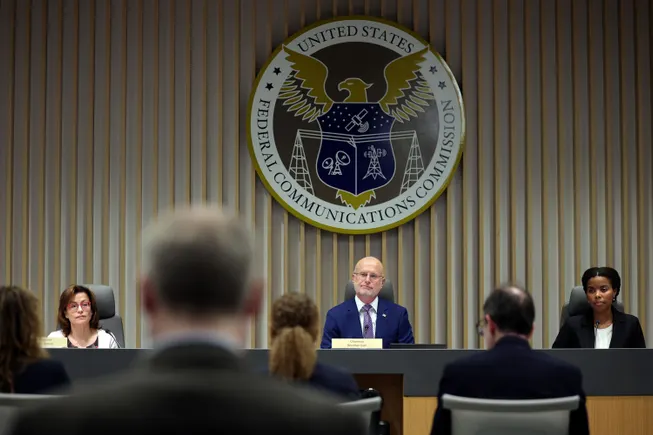
During a recent FCC meeting, Chairman Brendan Carr elaborated on the rationale behind the review, linking it to evolving societal concerns surrounding children’s screen time. Carr highlighted a growing trend of states and school districts implementing screen time bans or limitations. He pointed to the recent approval by the Los Angeles Unified School District to ban or limit screen time based on grade level, effective from the 2026-27 academic year. Carr suggested that in light of these developments, it is "appropriate for the FCC to also look at its own programs," including the approximately $3 billion E-Rate program, to ensure alignment with contemporary educational and societal discussions.
This linkage between screen time and internet connectivity has drawn criticism from program supporters. Opponents argue that the FCC’s notice conflates two distinct issues: the responsible use of technology and the fundamental need for digital access. Paul Lekas, executive vice president for global public policy and government affairs at the Software & Information Industry Association (SIIA), stated in a press release that the FCC’s approach "conflates two very different things: screen time and connectivity." Lekas urged the FCC to "recognize this distinction and target genuine concerns with precision, rather than risk severing the connectivity that closes the digital divide."
FCC Commissioner Anna Gomez, who partially approved the notice, voiced her apprehension about the potential implications of eliminating the E-Rate program. She argued that such a move would contradict the U.S. Department of Education’s emphasis on digital and AI literacy. Gomez stated, "We cannot elevate national expectations for digital and AI literacy while simultaneously stripping away the digital tools required to meet them. We cannot declare that AI leadership is a national priority while questioning whether schools should continue to receive the connectivity required to teach it." She further emphasized that concerns about children’s screen time are matters for homes, classrooms, and policymakers at various governmental levels, asserting that "The FCC is not the nation’s parent. It is not the nation’s teacher. It is not the nation’s school board."
Background and Chronology of the E-Rate Program
The E-Rate program, officially known as the Schools and Libraries Universal Support Fund, was established by the Telecommunications Act of 1996. Its primary objective was to provide discounts on telecommunications services, internet access, internal connections, and network equipment and maintenance for eligible schools and libraries across the United States. The program was designed to ensure that these institutions, particularly those in underserved areas, could afford to connect to the burgeoning digital world.
The program is administered by the Universal Service Administrative Company (USAC) under the oversight of the FCC. Funding for E-Rate is generated through fees paid by telecommunications providers, which are then passed on to consumers. Over the years, the program has undergone several reforms to adapt to technological advancements and changing connectivity needs.
- 1996: The Telecommunications Act is signed into law, creating the E-Rate program as part of the Universal Service Fund.
- Late 1990s – Early 2000s: The program is implemented, providing crucial funding for schools and libraries to acquire basic internet connectivity and telecommunications services.
- Mid-2000s: As internet speeds and bandwidth demands increase, reforms are introduced to support higher-speed internet access and internal network infrastructure.
- 2014: A significant modernization order is adopted by the FCC, refocusing E-Rate funding on broadband, Wi-Fi, and managed Wi-Fi services, and setting a goal of universal broadband access for all schools and libraries.
- Present: The FCC initiates a notice of proposed rulemaking to review the program’s effectiveness, potential for sunsetting, or geographic limitations, sparking debate about its future.
Supporting Data and Current Landscape
The E-Rate program has demonstrably contributed to increased internet connectivity in educational institutions. Data from the National Center for Education Statistics (NCES) has consistently shown a dramatic rise in broadband access in public schools since the program’s inception. For instance, in 1996, only 14% of public schools had internet access. By 2019, this figure had soared to 99%. Similarly, the percentage of public schools with high-speed internet access has also seen a significant uptick, reaching 97% in 2019.
The program’s impact extends to libraries as well. According to the Institute of Museum and Library Services (IMLS), the vast majority of public libraries offer free public internet access, a service heavily reliant on E-Rate support for many institutions.
The scale of the E-Rate program is substantial. For the program year 2023, the FCC committed over $2.4 billion in funding. Since its inception, the program has disbursed tens of billions of dollars to support connectivity for millions of students and library patrons nationwide.
However, despite these advancements, disparities in internet access and quality persist, particularly in rural and low-income communities. The COVID-19 pandemic starkly highlighted these inequities, as many students lacked reliable home internet access for remote learning, a problem that E-Rate aims to mitigate for schools and libraries.
Implications and Broader Impact
The FCC’s review of the E-Rate program carries profound implications for the future of digital equity in the United States.
- Widening the Digital Divide: If the E-Rate program is significantly curtailed or eliminated, schools and libraries in underserved areas, which often rely most heavily on its discounts, could face substantial challenges in maintaining or upgrading their internet infrastructure. This could exacerbate the existing digital divide, further disadvantaging students and communities already lacking robust digital access.
- Impact on Educational Innovation: Affordable and reliable internet access is increasingly critical for modern educational practices, including the use of online learning platforms, digital resources, and the integration of emerging technologies like artificial intelligence. A reduction in E-Rate funding could hinder schools’ ability to adopt these tools, impacting the quality and accessibility of education.
- Economic and Workforce Development: Libraries serve as vital hubs for job seekers, entrepreneurs, and lifelong learners. Maintaining their internet capabilities through programs like E-Rate is essential for supporting economic opportunity and workforce development in communities.
- Federal Policy Coherence: The debate over E-Rate occurs against a backdrop of national initiatives promoting digital literacy and AI readiness. Commissioner Gomez’s remarks underscore a potential policy conflict if federal efforts to advance digital skills are not supported by the foundational infrastructure that E-Rate provides.
- Role of the FCC: The FCC’s examination of the E-Rate program also touches upon its evolving role in the digital age. The commission’s mandate includes ensuring universal access to communications services, and the current review reflects a re-evaluation of how best to fulfill that mandate in a rapidly changing technological landscape.
The FCC’s notice of proposed rulemaking opens a critical public comment period, during which stakeholders, educators, and the public will have the opportunity to weigh in on the future of this essential program. The outcome of this review will undoubtedly shape the digital landscape for American schools and libraries for years to come.